General survey nursing: Free template + what it covers and when to do it
A general survey in nursing is the first, head-to-toe observation a nurse makes ...

1
Last Updated: Oct 19, 2026
A psychological flexibility worksheet is a clinician-guided handout that helps patients practice the six core processes of Acceptance and Commitment Therapy (ACT) between sessions.
Psychological flexibility is the ability to stay in contact with the present moment and act on personal values, even when difficult thoughts and feelings appear. Talking about these skills in session helps, but patients change more when they rehearse them during the week.
Below, you’ll find the free worksheet, how to introduce it, and how to track progress with the AAQ-II. We also cover how to store completed forms under HIPAA and UK GDPR.
A printable PDF with prompts for mindfulness, acceptance, cognitive defusion and values-based living. Patients complete it between therapy sessions and bring it to the next debrief.
Download template
Use the worksheet between sessions, since the six processes need repeated practice.
The worksheet builds skills, while the AAQ-II measures the underlying construct.
Completed worksheets are clinical records and need HIPAA or GDPR-compliant storage.
Pabau, the practice management platform we build, can file completed worksheets into the patient record through its digital forms.
A psychological flexibility worksheet is a set of written prompts that patients complete between ACT sessions to practice the six core processes. It builds skills and produces no score, so clinicians present it as homework rather than as an assessment.
It gives patients prompts for noticing thoughts, naming what matters to them, and choosing one small action before the next session. Clinicians usually introduce it after explaining the ACT model, so patients see why each prompt matters.
Most practitioners use it for three purposes:
The worksheet draws on the ACT hexaflex, which breaks psychological flexibility into six processes that work together.
Hayes, Strosahl and Wilson set out the hexaflex as the working model behind ACT. The Association for Contextual Behavioral Science maintains the research base for these processes. If you want a single-page exercise on the values process alone, the ACT bullseye worksheet pairs well with this one.
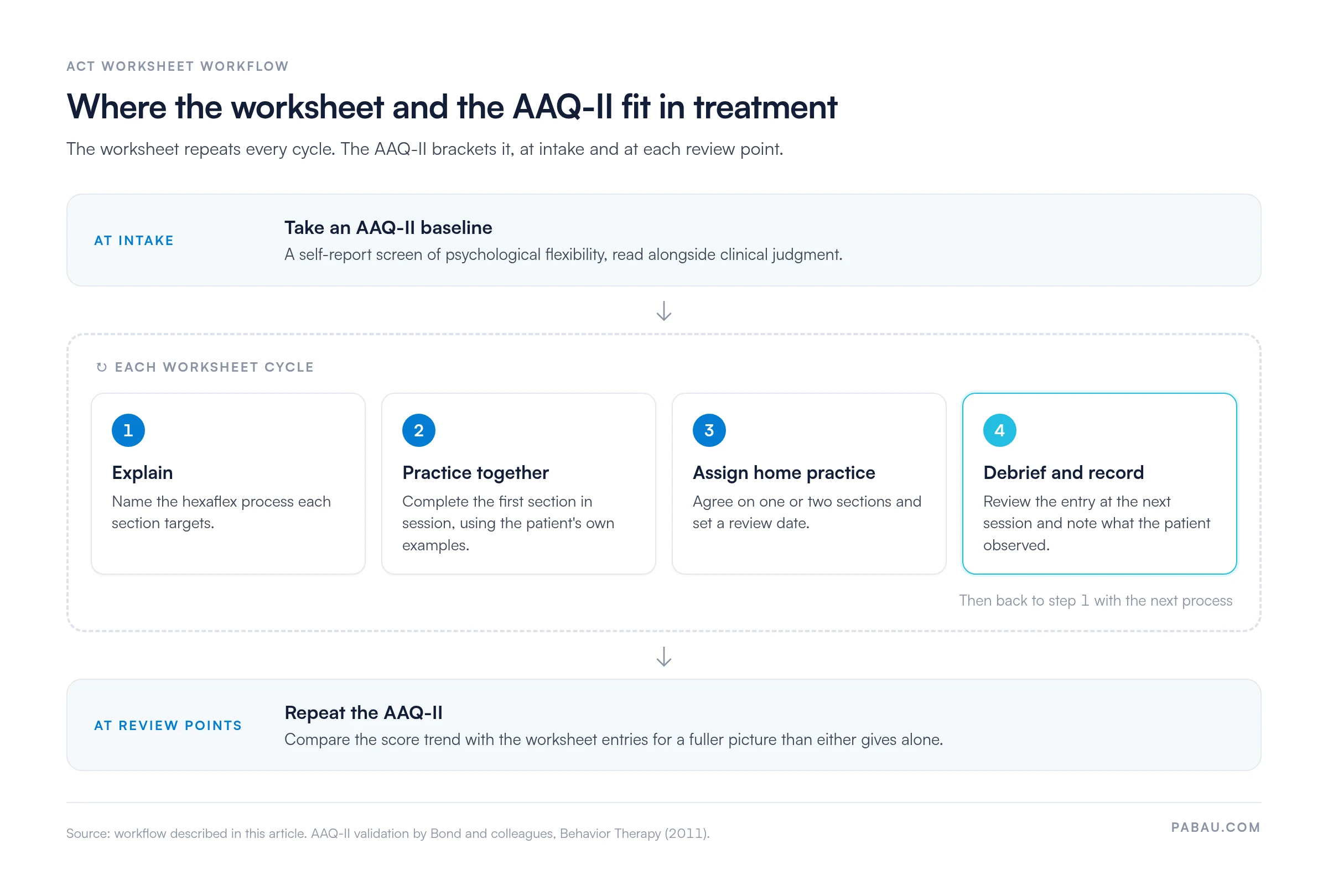
Introduce the worksheet as a practice exercise, not a test, so patients don’t read their answers as scores. Then follow this sequence in each cycle:
If patients prefer to complete forms before a session, digital intake forms let them submit responses in advance.
Therapists, psychologists and coaches who use ACT-informed approaches are the practitioners most likely to use a psychological flexibility worksheet.
For therapists in private practice, it sits alongside the intake forms, treatment plans and progress notes that therapy practice management software keeps in one place.
In psychology practices, the worksheet fits between weekly sessions and longer treatment plans. That’s where psychology practice software helps teams keep notes and documents together.
Mental health teams can use the same handout across caseloads, while mental health EMR platforms keep those records organized in one system.
Coaches can adapt the worksheet, but they should confirm their scope of practice before using it with clients who have clinical conditions.
The worksheet’s main benefit is repetition. Patients rehearse the same skills in the same format each week, and the written entries give you both something to review.
The ACT evidence base is substantial. A-Tjak and colleagues (2015) pooled trials of ACT across mental and physical health problems in a meta-analysis. A psychological flexibility worksheet supports that work, but it does not replace a full treatment protocol.
Start each cycle by reviewing the last worksheet entry, not the one you planned. Patients often report a week that went differently from what they predicted, so ask what surprised them before moving on. Track two patterns across three weeks, then choose which process to target next.
The AAQ-II is the primary validated measure of psychological flexibility, and Bond and colleagues published its validation in Behavior Therapy in 2011.
It is a self-report questionnaire, so treat it as a research and screening aid rather than a diagnostic instrument. Read the scores alongside your clinical judgment.
Use it at intake for a baseline and repeat it at review points. Comparing the trend with what patients record in their worksheet entries gives a fuller picture than either source alone, as the cycle below shows.
They are different constructs. Cognitive flexibility is a neurocognitive executive function, while psychological flexibility is a process defined within ACT.
Cognitive flexibility describes how easily someone shifts between tasks, rules or mental sets. Psychological flexibility describes how someone responds to difficult thoughts and feelings in service of valued action.
Confusing the two leads to the wrong tool, so choose a psychological flexibility worksheet only when values and acceptance are the target.
Completed worksheets are clinical records, so storage follows the privacy rules that apply where you practice.
In the US, HIPAA governs how protected health information is stored and shared, and HHS guidance on HIPAA sets out the core requirements.
In the UK and EU, GDPR applies to how long therapeutic materials are kept. Set a retention period and state it in your privacy notice. The ICO’s guidance on UK GDPR is the most direct UK reference. Compliance management software helps you keep those policies documented across the team.
Many therapy practices still hand out the worksheet on paper or email a PDF. The completed copy then gets scanned, filed in a separate folder, or left in the patient’s bag.
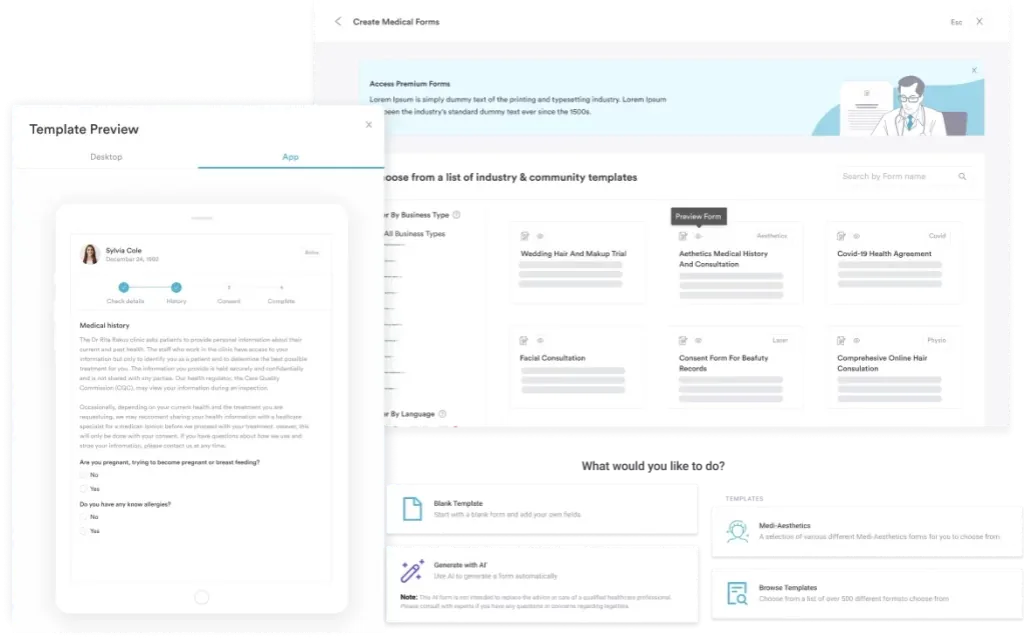
Pabau’s digital forms let you rebuild the worksheet once and send it before each session. Patients fill it in on their phone, and their answers land in the patient record next to your session notes. Medical records management keeps those entries alongside your notes and measures in one file.
You open each debrief with the week’s entries already on screen, so the conversation starts from what the patient practiced that week.

Book a demo to see how forms, session notes and patient records sit together for therapy and psychology teams.

Start small. Pick the one hexaflex process your patient struggles with most, assign a single section, and debrief it next session. Add the AAQ-II at intake so you have a baseline to compare against.
The trade-off is time. A worksheet only works if you review it every session, so assign fewer sections and read each one properly. Book a demo to see how Pabau puts each completed worksheet in front of you before the session starts.

Need a structured framework for your next assessment? Psychiatric evaluation template sets out a step-by-step structure for comprehensive clinical evaluations.
Want a values exercise to pair with this one? ACT bullseye worksheet helps patients rate how closely their actions match their values.
Looking for an in-the-moment ACT tool? Choice point worksheet maps the moves toward or away from what matters.
Working on acceptance specifically? Radical acceptance worksheet gives patients structured prompts for difficult situations.
A psychological flexibility worksheet is a clinician-guided handout that helps patients practice the six ACT processes between sessions. It supports practice and is not a diagnostic tool. Clinicians tailor how it is introduced to each patient’s goals.
No. Cognitive flexibility is a neurocognitive executive function, while psychological flexibility is an ACT-specific process linked to valued action. The two use different measures, so they should not be swapped in practice.
Yes, coaches can use it within their scope of practice. Clients with clinical conditions should be referred to a qualified clinician rather than worked with through a coaching handout alone.
Store them in the patient record, under HIPAA in the US or UK GDPR in the UK and EU. Set a retention period and limit access to clinicians involved in the patient’s care.