HCPCS code J7190: Factor VIII billing, units and reimbursement
HCPCS code J7190 bills human Factor VIII by the unit HCPCS code J7190 describes ...

Last Updated: Nov 10, 2026
L1640 is the HCPCS Level II code for hip orthosis, abduction control of hip joints, static, pelvic band or spreader bar, thigh cuffs, custom fabricated.
Getting this code right matters: L1640 sits in a cluster of closely related hip orthosis codes, and misidentifying the fitting method (custom versus prefabricated) or omitting the KX modifier are the two most common reasons Medicare administrative contractors deny these claims outright.
Let Pabau's smart automation suggest the right codes, reduce claim denials, and keep your practice compliant—effortlessly.
Automate repetitive tasks and focus on what matters most—your patients.
Reduce coding errors and ensure compliance with the latest regulations.
Clean claims, fewer denials, and faster reimbursements.
Powerful insights and reporting to help your practice thrive.
HIPAA compliant SOC 2 certified GDPR-compliant Trusted by 4,000+ clinics worldwide

HCPCS Code L1640 is a custom-fabricated hip orthosis with abduction control – not prefabricated, not flexible, and not interchangeable with L1630 or L1600.
Medicare Part B covers L1640 as durable medical equipment (DME) when medical necessity is documented per the applicable local coverage determination (LCD).
The KX modifier is mandatory when billing L1640 to attest that LCD coverage criteria have been met – omitting it is the leading cause of claim denial.
Pabau’s claims management software supports DMEPOS billing workflows including modifier prompts, documentation capture, and claim scrubbing to reduce L1640 denials.
HCPCS Code L1640 is defined by the Centers for Medicare and Medicaid Services (CMS) as: Hip orthosis (HO), abduction control of hip joint, custom fabricated. Every word in that descriptor carries billing weight.
The “custom fabricated” distinction is not administrative shorthand. CMS defines custom fabrication as the construction of a device directly from raw materials (foam, plastic, metal components) based on measurements, castings, or digital scans of the individual patient. A prefabricated device adjusted to fit – no matter how precisely – is not custom fabricated under HCPCS policy. Billing L1640 for a device that was simply sized and fitted from stock is a misrepresentation that exposes the DMEPOS supplier to audit and potential False Claims Act liability.
Three hip orthosis codes cover the abduction-control space. The correct choice depends on two variables: The type of abduction control the device provides and whether it is custom fabricated or prefabricated. Miscoding between these three accounts for a significant share of hip orthosis claim denials.
The L1640 versus L1630 decision is straightforward once the fabrication method is established. Where practices most often go wrong is billing L1640 for a device that was pulled from inventory and sized, rather than fabricated – the clinical outcome may be identical, but the billing category is not. L1600 adds a third dimension: Material rigidity. A flexible hip abduction orthosis that uses soft-goods construction belongs under L1600 regardless of whether it was custom made.
Before selecting between L1640 and L1630, document the fabrication method in the supplier’s work order. If a technician built the device from materials in the lab, record the raw materials used, the measurements or cast taken, and the fabrication time. This single record is what distinguishes a defensible L1640 claim from an L1630 that was miscoded upward.
Medicare and most commercial payers require that HCPCS Code L1640 be linked to an ICD-10-CM diagnosis code that appears on the applicable LCD’s covered diagnosis list. An ICD-10 code not on the LCD’s list will not establish medical necessity even if the clinical rationale is otherwise sound.
The physician’s order and clinical documentation must reflect the functional limitation the orthosis addresses. CMS requires documentation that shows why the patient cannot perform one or more mobility-related activities of daily living without the device. A diagnosis code alone is not sufficient: The treating physician’s notes must connect the diagnosis to the specific functional deficit.
Always verify the covered diagnosis list against the specific LCD that applies to the Medicare Administrative Contractor (MAC) in your jurisdiction. LCDs vary by MAC, and a diagnosis code that appears on one contractor’s covered list may not appear on another’s.
Medicare Part B covers HCPCS Code L1640 as durable medical equipment under the DMEPOS benefit when four conditions are met: The beneficiary has a qualifying diagnosis, a physician has conducted a face-to-face encounter, a written order exists, and the supplier holds the appropriate DMEPOS supplier number.
HCPCS Code L1640 is not subject to the Medicare DMEPOS Competitive Bidding Program in most jurisdictions as of 2026, but suppliers should verify their local Competitive Bidding Area (CBA) status with their MAC. Rates in CBAs may differ from the national fee schedule allowable.
HCPCS Code L1640 does not appear on CMS’s mandatory prior authorization list for DME as of 2026, meaning Medicare does not universally require prior authorization before dispensing this device. However, three scenarios commonly require pre-authorization in practice.
When prior authorization is required, submit the written physician order, relevant clinical notes documenting the functional limitation, the ICD-10-CM diagnosis codes, and the supplier’s fabrication plan. Processing timelines vary by payer but typically run 5 to 14 business days.
Modifier selection is where many L1640 claims fail before the clinical record is ever reviewed. Each modifier carries a specific attestation, and submitting HCPCS Code L1640 without the correct modifiers results in automatic system-level denials at most MACs.
The KX modifier is not optional. By appending KX, the supplier certifies in writing that the coverage criteria of the applicable LCD are satisfied and that supporting documentation is in the patient file. Using KX without the documentation to back it up creates compliance exposure under the False Claims Act. Ensure the clinical record is complete before the modifier is added, not after. Good clean claim submission practices mean the modifier and its supporting documentation are aligned before the claim leaves the practice.
The 2026 Medicare DMEPOS fee schedule allowable for HCPCS Code L1640 reflects the national payment limit for custom-fabricated hip orthoses with abduction control. Actual reimbursement varies by geography because CMS applies a geographic practice cost index (GPCI) adjustment and, in Competitive Bidding Areas, uses contract rates rather than the national fee schedule.
Use the AAPC Codify HCPCS lookup or the PGM Billing HCPCS lookup tool to verify current code descriptors and fee schedule cross-references. These tools pull from CMS published data and are updated annually.
Documentation errors are the second most common reason L1640 claims are denied after modifier omissions. Every item in the documentation package must be in the patient file before the claim is submitted – not assembled retroactively at the time of an audit request.
Solid billing compliance documentation practices mean storing these records in a form that can be retrieved within 24 to 48 hours of a MAC audit request. Paper files kept at a different location from the billing system create retrieval delays that can be treated as non-production – effectively a denied claim on audit.
L1640 denials follow predictable patterns. Understanding the top causes allows DMEPOS suppliers and billers to build pre-submission checklists that catch errors before the claim reaches the MAC. Effective denial management starts with prevention, not appeals.
When a denial is received, review the remittance denial codes on the Explanation of Benefits (EOB) or Electronic Remittance Advice (ERA) before drafting an appeal. The claim adjustment reason code (CARC) will indicate whether the denial is a coverage issue, a documentation issue, or a coding error – each requiring a different appeal approach.

Pabau’s claims management software helps DMEPOS suppliers and practice managers track orthotic claim status, apply the correct modifiers, and manage denial workflows – all in one place. See how Pabau supports your billing team.

HCPCS Code L1640 sits at the intersection of clinical documentation, supplier accreditation, modifier compliance, and LCD verification – four separate workflows that manual processes struggle to keep synchronized. When a biller misses the KX modifier or a supplier cannot produce fabrication records during an audit, the problem is usually a system gap, not a knowledge gap.
Pabau’s claims management software addresses these gaps by embedding compliance checkpoints directly into the billing workflow. Modifier prompts surface during claim creation so the KX modifier is applied before submission rather than discovered missing on a remittance. Documentation requirements are linked to specific HCPCS codes so billers see what records must be in file before a claim can be generated. Claim scrubbing catches missing fields and mismatched ICD-10 codes against expected coverage criteria before the claim leaves the system.
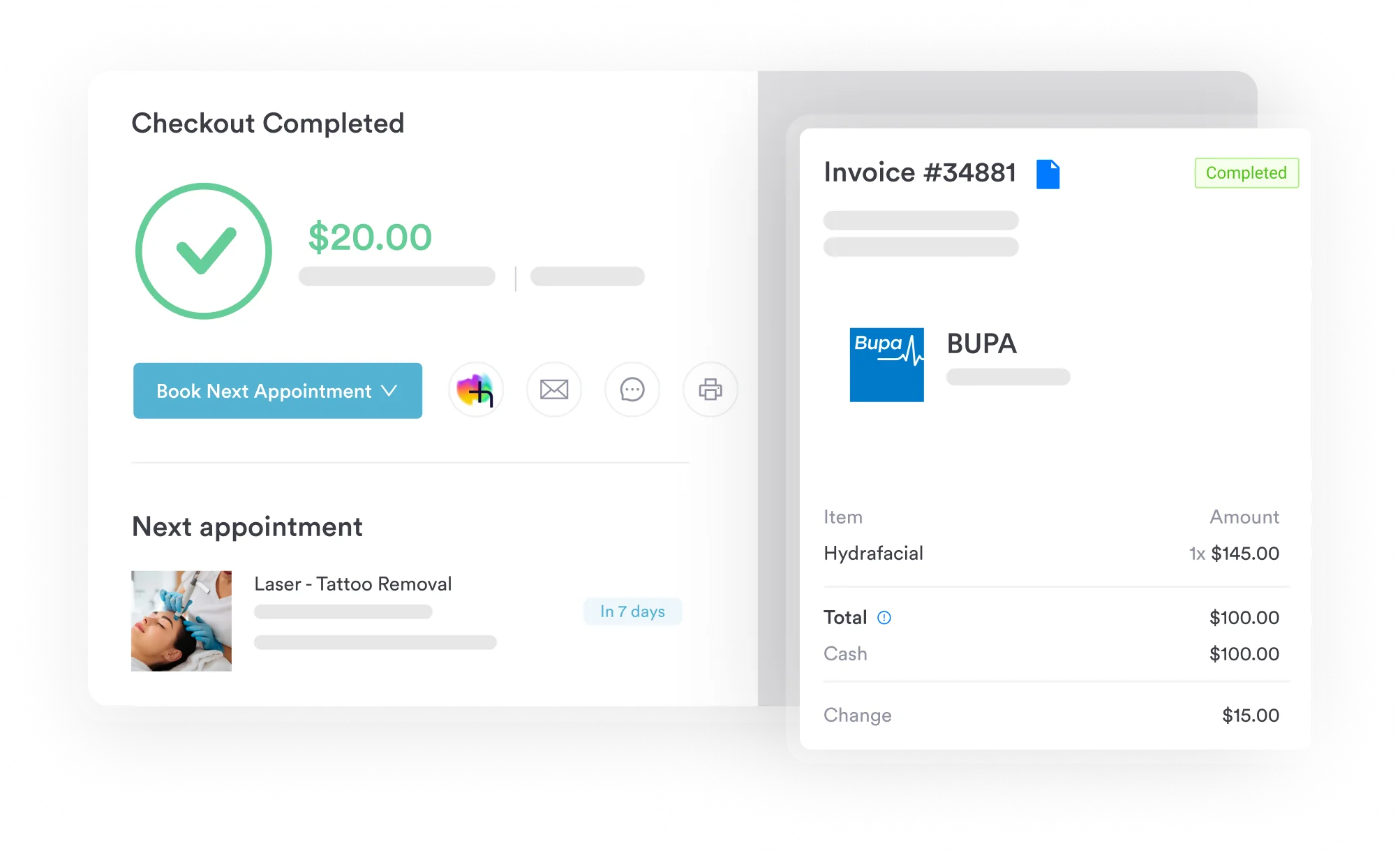
For orthotists and DMEPOS suppliers also managing broader patient care workflows, Pabau integrates the clinical and billing record – meaning the physician’s face-to-face notes, the written order, the proof of delivery, and the fabrication records sit in one retrievable location. That matters significantly during MAC audits, where retrieval delays are treated as non-production. Practices managing physical therapy and rehabilitation billing alongside orthotic HCPCS codes benefit from having both workflows in a single system rather than toggling between a clinical platform and a separate DME billing tool.
The medical billing workflows that work best for custom orthosis practices are those that treat documentation completeness as a gate, not an afterthought – requiring that every required document is confirmed before a claim line is generated rather than relying on a biller to remember the checklist. That shift from reactive to proactive is where most L1640 denial reduction happens in practice.
Run a quarterly audit of all L1640 claims submitted in the prior 90 days. Pull the denial rate by denial reason code and compare it against the prevention checklist. If the same CARC appears in more than 10% of denials, the root cause is a system or workflow gap – not a one-off error. Fix the upstream process, not just the individual claim.
HCPCS Code L1640 is a defensible claim when the documentation is clean, the modifier is correct, and the fabrication method genuinely matches the custom-fabricated descriptor. The most expensive mistake in L1640 billing is not a coding error – it is a workflow gap that lets a prefabricated device get billed as custom-fabricated, or that lets a claim go out without the KX modifier because no system rule required it.
Pabau’s claims management tools give DMEPOS suppliers and billing teams the modifier prompts, documentation checklists, and denial tracking they need to reduce L1640 rejections at source. To see how Pabau supports orthotic and DME billing workflows, explore our claims management features or speak with our team.

Need a foundation for DME billing compliance? Billing compliance documentation explains the record retention and audit-readiness requirements that apply across DMEPOS claim types.
Seeing recurring denials on orthotic claims? Denial management in healthcare covers how to structure an appeals workflow and track denial patterns by CARC code.
Want to understand how claim submission errors start? Clean claim submission breaks down what makes a claim pass or fail MAC edits before a human reviewer ever sees it.
HCPCS Code L1640 is the billing code for a hip orthosis with abduction control of the hip joint that is custom fabricated from raw materials to fit an individual patient. It covers the device itself when dispensed to a Medicare or commercial payer beneficiary with a qualifying diagnosis documented per the applicable LCD. It does not cover adjustments, repairs, or replacement components billed separately.
L1640 covers a custom-fabricated hip orthosis with abduction control, meaning the device was built from raw materials to patient measurements or a cast. L1630 covers the same device type – a hip orthosis with abduction control – but prefabricated (off-the-shelf), adjusted at point of delivery. If the device was pulled from inventory and sized to the patient rather than fabricated in a lab, L1630 is the correct code.
L1600 covers a flexible hip abduction orthosis, meaning the device uses soft or flexible materials (such as neoprene or foam) rather than rigid components for abduction control. L1640 covers a rigid custom-fabricated device. The material construction and rigidity of the orthosis, not the clinical indication, determines which code applies.
Yes, Medicare Part B covers HCPCS Code L1640 as durable medical equipment when four conditions are met: a qualifying diagnosis is documented per the applicable LCD, a physician conducted a face-to-face encounter before the order, a compliant written order exists, and the supplier holds an accredited DMEPOS supplier number. Medicare pays 80% of the fee schedule allowable after the deductible is satisfied.
The most common reasons are: the KX modifier is missing from the claim line, the submitted ICD-10-CM diagnosis code does not appear on the applicable LCD’s covered conditions list, the device was prefabricated and should have been billed as L1630, or fabrication and delivery documentation is not on file. Addressing these four causes eliminates the majority of L1640 denials before submission.
The 2026 Medicare DMEPOS fee schedule allowable for HCPCS Code L1640 is published annually by CMS and updated each January 1. Because allowables vary by geography and are subject to mid-year corrections, suppliers should pull current figures directly from the CMS fee schedule search tool rather than relying on third-party references. In Competitive Bidding Areas, contract rates apply instead of the national allowable.