



CCSD code G5100: Bypass of duodenum billing guide
CCSD code G5100 bills a bypass that leaves the duodenum in place CCSD code G5100...

Last Updated: Oct 16, 2026

CPT Code 96136 covers psychological or neuropsychological test administration and scoring by a physician or qualified healthcare professional, for two or more tests, first 30 minutes.
At least two tests must be administered in the session to bill 96136 – billing for a single test is a common denial trigger.
CPT 96137 is the add-on code for each additional 30 minutes. 96138 and 96139 are the technician-administered equivalents, and an NCCI edit prevents same-day billing without an appropriate modifier.
Pabau, practice management software with built-in claims management, helps psychology and neuropsychology practices track time-based billing, apply correct modifiers, and reduce claim denials.
CPT Code 96136 is the base code for psychological and neuropsychological test administration and scoring performed by a physician or qualified healthcare professional, covering the first 30 minutes when two or more tests are administered. Billing it correctly comes down to who can bill it, how time is tracked, and when the add-on or technician codes apply instead. For psychology practices billing testing services, these distinctions directly affect reimbursement.
This guide covers the CPT Code 96136 descriptor, qualification requirements, time-based billing rules, the relationship with codes 96137, 96138, and 96139, documentation standards, Medicare reimbursement rates, and the NCCI edit that catches same-day billing errors before they become denials.
CPT Code 96136 is described by the American Medical Association (AMA) as: “Psychological or neuropsychological test administration and scoring by physician or other qualified healthcare professional, two or more tests, any method; first 30 minutes.”
Three elements in that descriptor are non-negotiable for a valid claim. First, the administrator must be the physician or qualified healthcare professional (QHP) – not a technician (technician-administered testing uses CPT code 96138). Second, two or more tests must be administered in the session. Third, billing is time-based, covering only the first 30-minute block.
The QHP category includes licensed psychologists, neuropsychologists, and physicians whose scope of practice covers psychological or neuropsychological assessment. Scope of practice is determined by state licensure, so a licensed clinical social worker who administers cognitive testing may or may not qualify depending on their state’s practice act. Billing practices must verify this at the payer level, not just the licensure level.
Trainees, students, and unlicensed staff do not meet the QHP threshold for this code, regardless of supervision. Payers including Medicare have been explicit on this point since the 2019 code restructuring that replaced the legacy 96101 code.
CPT Code 96136 replaced the legacy code 96101 effective January 1, 2019, as part of a broader restructuring of the psychological testing code family. The previous single code (96101) was split into distinct service categories: evaluation services (96130, 96131) and test administration and scoring (96136, 96137, 96138, 96139). This separation allows more precise documentation of which service component is being billed, but it also means practices must now select the correct code for each part of a testing encounter.
Billing 96101 on claims after January 1, 2019 results in automatic rejection. For mental health EMR users migrating from older billing templates, legacy code references are a common source of preventable denials.
Code 96136 sits within a family of four test administration codes, and CPT code 96136 and 96137 form the QHP-administered pair at its core. Understanding which code applies requires knowing who administers the test and how much time is involved.
The key distinction is administrator role, not supervision level. If a psychologist administers and scores the tests personally, 96136 and 96137 apply. If a trained technician administers under the QHP’s supervision, 96138 and 96139 apply instead. The QHP cannot bill 96136 for testing they did not personally administer.
The National Correct Coding Initiative (NCCI) places an edit on the pairing of 96136/96137 and 96138/96139 on the same date of service for the same patient. This edit exists because a QHP cannot simultaneously administer tests personally and delegate test administration to a technician for the same encounter.
According to the American Psychological Association (APA) Services, same-day billing of both code pairs is permissible only when an appropriate modifier is appended to indicate distinct circumstances. Practices billing both sets without a modifier will face automatic denial. The APA guidance recommends consulting the specific payer’s policy before appending a modifier, since commercial payers may differ from Medicare in how they apply the edit.
Before billing 96136 and 96138 on the same date of service, document clearly in the record which tests the QHP administered personally and which the technician administered separately. The modifier alone is not sufficient – the documentation must support it.
Practices running ADHD evaluations, neuropsychological batteries, and personality assessments frequently mix QHP and technician involvement. Knowing which code applies to which portion of the session prevents both underbilling and claim denials.
96136 covers only the time the QHP personally administers and scores tests. If a neuropsychologist directly administers the WAIS-IV, the MMPI-3, and the Trail Making Test themselves, those 30-minute blocks bill under 96136 and 96137. If a psychometrist administers the same battery while the neuropsychologist supervises elsewhere, those blocks bill under 96138 and 96139 instead. Brief cognitive screens often precede a full battery, and our guide to MoCA score interpretation covers reading those results.
The per-session claim structure looks like this for a two-hour testing session performed entirely by the QHP:
The same two-hour session performed entirely by a technician would use 96138 plus 96139 x 3 instead.
96136 is frequently billed on the same day as the evaluation service codes 96130 (psychological testing evaluation by a professional) or 96132 (neuropsychological testing evaluation by a professional). These are distinct service components, and the CMS Medicare Coverage Database Article A57481 confirms that test administration (96136) and evaluation services (96130/96132) can be billed together on the same date when both services are genuinely rendered.
The critical documentation requirement is that the evaluation service (96130 or 96132) reflects separate professional time spent interpreting results, integrating history, and producing a report – not just restating the test scores already captured in the administration note. Bundling errors occur when practices bill 96130 and 96136 for essentially the same time, rather than separate service components.

Pabau’s claims management tools help psychology and neuropsychology practices track time-based codes, apply correct modifiers, and flag bundling errors before submission.

A GP practice platform keeps these high-volume services charted, coded, and billed from one screen.
Payer audits for psychological testing codes focus on four documentation elements. Missing any one of them is sufficient grounds for a denial or recoupment request.
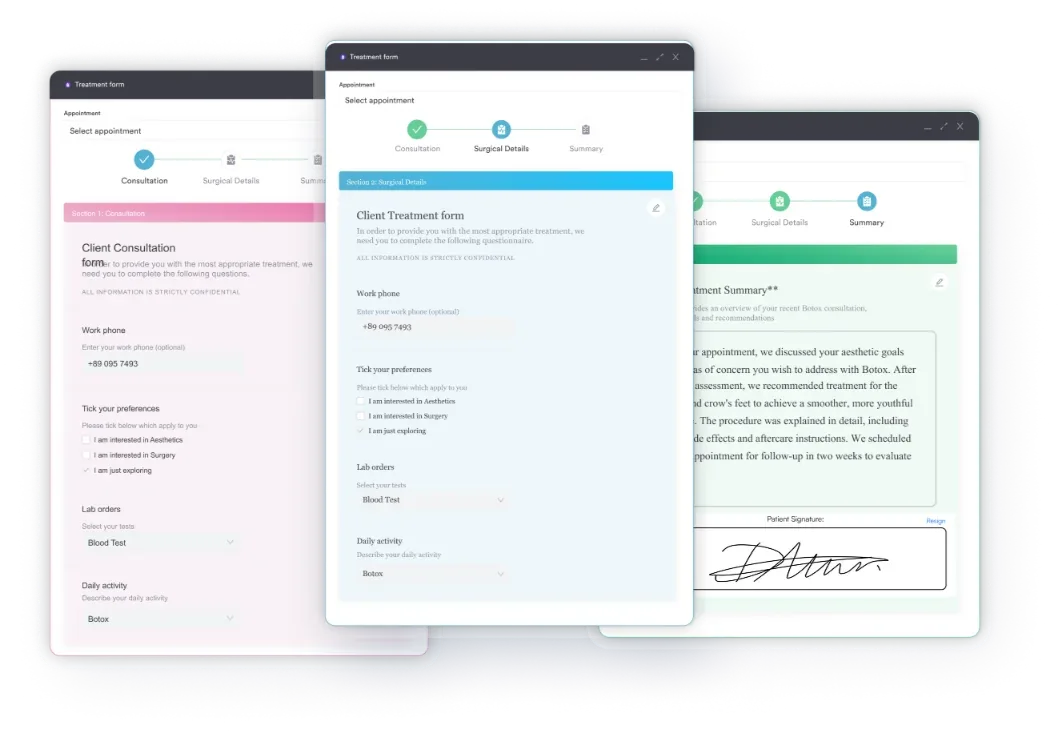
Using digital intake forms pre-loaded with testing session fields reduces documentation time at point of service and creates an audit-ready record automatically. Similarly.
Medicare does not routinely require prior authorization for 96136, but commercial payers frequently do. Policies vary significantly. Some payers require authorization for the full testing battery before any administration begins, while others require it only above a certain number of hours. Practices should verify authorization requirements for each individual payer before scheduling a comprehensive testing session, particularly for evaluations likely to exceed three hours of administration time.
Medicare reimbursement for CPT Code 96136 is set annually through the Medicare Physician Fee Schedule (MPFS). Rates vary by geographic locality, so the national rate is an approximation only. For current rates specific to a practice’s service area, practitioners should use the CMS MPFS lookup tool with their MAC jurisdiction and locality.
As a general reference point, the non-facility (office-based) national rate for 96136 in recent fee schedules has ranged from approximately $44 to $56 for the first 30-minute block. This figure should be verified against the current year’s MPFS using the FastRVU 2026 RVU lookup for precise Work RVU, Practice Expense RVU, and locality-adjusted totals. Geographic modifiers (the GPCI) mean that a practice in San Francisco will receive a materially different payment than one in rural Mississippi for the same code.
Commercial payers set their own fee schedules independent of Medicare. Some payers reimburse at a percentage of Medicare, for example 110% or 120% of MPFS, while others use internally derived fee schedules that may be higher or lower. Practices with automated billing workflows can compare expected reimbursement against actual payment on the Explanation of Benefits (EOB) or Electronic Remittance Advice (ERA) after each claim adjudicates, which surfaces underpayment patterns by payer.
Run a quarterly ERA analysis across all payers for 96136 and 96137 claims. If a specific payer consistently reimburses at significantly less than your contracted rate, that is a billing contract compliance issue, not a coding error. Flag those claims for contract review before re-credentialing.
Neuropsychology and psychology practices see predictable denial patterns for 96136. Each has a distinct appeal strategy.
For practices managing multiple providers and complex testing batteries, claims management software that flags these common errors at charge entry (rather than after denial) reduces the administrative burden of retroactive corrections. Tracking denial reasons by code over time also surfaces systemic documentation problems before they become an audit risk. Practices that see patterns in 96136 denials related to anxiety diagnosis codes should also verify that their ICD-10 diagnosis codes align with payer medical necessity policies for psychological testing. Claim accuracy is cheaper to build at entry than to repair in an appeal.
CPT Code 96136 is a time-based, administrator-specific code with a two-test minimum. The most common billing failures are selecting the wrong code from the 96136-96139 family, missing time documentation, and triggering the NCCI edit by billing QHP and technician codes together without a modifier.
Pabau’s claims management software helps psychology and neuropsychology practices build billing workflows that catch these errors at charge entry, not after denial. To see how Pabau handles time-based psychological testing billing, book a demo.

Running a psychology or neuropsychology practice? Psychology practice software covers scheduling, documentation, and billing workflows built for assessment-heavy practices.
Billing for a preventive counseling session? Preventive counseling billing covers CPT code 99401, roughly 15 minutes of individual counseling focused on health promotion and risk reduction.
Need the next tier of counseling coding? Longer preventive counseling coding explains CPT code 99402 and the midpoint rule that separates it from the shorter 99401 counseling code.
CPT code 96136 bills the first 30 minutes of psychological or neuropsychological test administration and scoring performed by a physician or qualified healthcare professional, when two or more tests are administered in the session. It applies to assessments covering intellectual ability, executive function, personality, and cognitive performance, administered by any method including computer-based platforms.
CPT Code 96136 is the base code covering the first 30 minutes of QHP-administered psychological or neuropsychological test administration. CPT 96137 is the add-on code reported for each additional 30-minute block in the same session. A two-hour session performed by the QHP would bill as 96136 plus 96137 reported three times.
CPT code 96136 bills the QHP’s time personally administering and scoring the tests. CPT code 96130 bills a separate evaluation service – interpreting results, integrating history, and producing the report. CMS Article A57481 confirms the two can be billed on the same date only when both services are genuinely and separately performed, not for overlapping clinician time.
The difference is who administers the test, not the tests themselves. 96136 and its add-on 96137 apply when a physician or QHP personally administers and scores the tests. 96138 and its add-on 96139 apply when a trained technician administers the same tests under the QHP’s supervision.
CPT code 96136 does not need a modifier when billed on its own. A modifier is only required when 96136/96137 (QHP-administered) and 96138/96139 (technician-administered) are billed for the same patient on the same date, since an NCCI edit otherwise blocks that combination.
The Medicare non-facility national rate for 96136 has recently ranged from about $44 to $56 for the first 30-minute block, though the exact 96136 CPT code reimbursement figure depends on locality and the current year’s Medicare Physician Fee Schedule. Commercial payers set their own rates, often as a percentage of Medicare.
Yes, but only with an appropriate modifier. An NCCI edit applies to same-day billing of 96136/96137 (QHP-administered) and 96138/96139 (technician-administered) for the same patient. Billing both pairs without a modifier triggers automatic denial. The clinical record must document which portions of the session each administrator performed.
Only one unit of CPT Code 96136 can be billed per session, because it represents the first 30-minute block. Additional time is billed using the add-on code 96137, which can be reported for each additional 30 minutes. A three-hour QHP-administered testing session would bill as one unit of 96136 plus five units of 96137.
Any standardized psychological or neuropsychological test qualifies, including assessments of intellectual ability (e.g. WAIS, WISC), executive function, attention, memory, personality (e.g. MMPI, PAI), and adaptive behavior. Computer-administered tests on validated platforms also qualify. The two-test minimum must be met regardless of test format. Single-test sessions cannot be billed under CPT Code 96136.
Physicians, licensed psychologists, and neuropsychologists whose state licensure covers psychological or neuropsychological assessment qualify to bill CPT Code 96136. Trainees, students, and unlicensed staff do not qualify regardless of supervision level. Whether other licensed mental health professionals (e.g. licensed clinical social workers) qualify depends on individual state scope-of-practice rules and payer credentialing policies.



