








CPT Codes
CPT code 96161: Caregiver health risk assessment billing guide
CPT code 96161 has the following official descriptor as defined by the American ...

June 25, 2026


CCSD code 0520B is a B-suffix code in the UK private healthcare billing schedule. The suffix letter alone does not reliably indicate whether a code is a procedure, a diagnostic test, or a consultation, so always confirm the exact classification and narrative for 0520B through the CCSD schedule before billing.
Major UK PMI insurers including Bupa, AXA Health, Aviva, Allianz Care, and The Exeter all use the CCSD schedule, so this code may be submitted to any of them if the procedure is covered under the patient’s policy.
Pre-authorization requirements vary by insurer and are updated quarterly; using the wrong code or skipping pre-authorization is one of the most common causes of claim rejection for procedural codes.
Pabau’s claims management software lets UK private clinics attach CCSD codes directly to patient invoices and submit claims electronically via Healthcode, reducing manual rework and tracking approval status from one dashboard.
CCSD code 0520B is a code within the UK private healthcare billing schedule. CCSD codes are grouped into chapters and carry an alphabetic suffix, but the suffix alone does not reliably tell you whether a code is a procedure, a diagnostic test, or a consultation; that depends on the schedule and chapter the code sits in. To confirm the exact classification and procedure narrative for 0520B, you must log into the CCSD schedule at CCSD or use the Bupa code search portal, which allows recognized Bupa providers to look up procedure descriptions and associated billing rules.
The CCSD Technical Guide (October 2025) outlines the coding principles and business rules that apply to all procedural codes, including the 0520 series. Providers who are new to CCSD billing should review the CCSD code documentation requirements and confirm their registration before attempting to submit any claims. CCSD registration is required to access the schedule and validate procedure descriptions.
The CCSD schedule is the UK standard for private healthcare procedure coding. All five major UK PMI providers use it as the basis for their fee schedules.
While all five insurers use the CCSD schedule, each maintains its own contracted fee rates and may apply insurer-specific billing rules on top of the standard CCSD definitions. The Bupa CCSD billing guide covers Bupa-specific rules in detail. For AXA Health, the AXA Health specialist procedure codes portal lists the contracted fees and chapter assignments that apply to recognized AXA providers.
Contracted fee amounts vary between insurers and between individual provider agreements. Never state a specific fee amount on a patient invoice without first confirming the contracted rate with the relevant insurer. Rates are subject to annual review and may differ from published schedule figures.
Pre-authorization for procedural codes is standard practice across UK PMI. Whether CCSD code 0520B specifically requires pre-authorization depends on the insurer and the patient’s policy. Insurer pre-authorization lists are updated quarterly, so a code that did not require prior approval last quarter may now require it.
Check pre-authorization requirements before each procedure, not just when you first add a code to your billing system. A rejected claim costs significantly more in admin time to reprocess than a pre-authorization call costs to make. For broader guidance on how pre-authorization works across CCSD-coded procedures, the 0523G CCSD billing reference covers pre-authorization patterns in the same code series.
Run a pre-authorization check at the start of every new treatment course, not just new code types. Insurers update their pre-auth requirements quarterly, and billing a procedural code without the required authorization reference is one of the most preventable causes of claim rejection on CCSD codes.
UK private healthcare insurers expect specific documentation to support any CCSD procedural code claim. Missing or incomplete documentation is the second most common reason for rejection after incorrect code selection.
Good documentation habits reduce audit risk as well as claim risk. The Care Quality Commission (CQC) expects UK private providers to maintain complete clinical records for every episode of care, and insurers conducting post-payment audits will request clinical notes to validate CCSD code 0520B claims. For a summary of current data protection obligations that apply to these records, the UK GDPR checklist for clinics covers the core requirements for private healthcare providers.

Pabau's claims management software lets UK private clinics attach CCSD procedure codes to patient invoices, submit electronically via Healthcode, and track claim approval status in one dashboard. Less manual rework, fewer coding errors.

Healthcode is the industry-standard electronic data interchange (EDI) clearinghouse used by UK private healthcare insurers. Most UK PMI claims, including CCSD code 0520B submissions, are processed electronically via Healthcode rather than by paper invoice.
For practices new to Healthcode EDI, the CCSD code 0010B billing reference includes a walkthrough of the Healthcode submission workflow that applies consistently across all CCSD procedural codes.
Audit your CCSD code 0520B claims monthly. Filter rejected claims by rejection reason code and group them by pattern. If more than one claim in a month is rejected for the same reason, that signals a systemic billing process issue rather than a one-off error. Fix the process, not just the individual claim.
Rejection patterns for B-suffix procedural codes are fairly consistent across UK PMI insurers. Knowing the most common reasons in advance lets your billing team build checks into the process before submission rather than fixing errors after rejection.
Insurers also reject claims where the CCSD code does not match the diagnosis code recorded on the patient file. Bupa and AXA Health in particular cross-reference the ICD-10 diagnosis code against the procedure code to verify clinical necessity. For guidance on CCSD code documentation patterns across similar procedure codes in the 0300 to 0500 series, the 0359B reference guide covers the same documentation principles.
Understanding how CCSD code 0520B sits within the broader CCSD schedule helps prevent the most common coding error for this code type: selecting an adjacent code from the same procedure chapter when the intended procedure maps to a different code entirely.
Within any CCSD chapter, codes are grouped by procedure type and complexity. B-suffix codes in the 0500 to 0529 range typically describe procedural interventions within the same anatomical or clinical domain. Before billing CCSD code 0520B, verify that the procedure performed does not map more precisely to a neighboring code in the same chapter. The CCSD schedule login allows you to view code groupings by chapter, which makes this comparison straightforward.
For procedures where guidance assistance is involved, note that the G-suffix codes in the same numeric range represent a distinct classification. CCSD G-suffix codes are used for guidance-assisted procedures and carry different documentation and pre-authorization rules from B-suffix procedural codes. Submitting a G-suffix procedure on a B-suffix code, or vice versa, results in rejection based on code-to-documentation mismatch. Refer to the Bupa procedure codes and fee schedule guide for how Bupa categorizes B-suffix and G-suffix codes within its contracted schedule.
UK private clinics submitting CCSD code 0520B through Healthcode need a billing workflow that catches errors before transmission, not after rejection. UK private clinics, including those running on skin clinic software, increasingly rely on integrated platforms to handle the volume and complexity of CCSD-coded claims across multiple insurers.
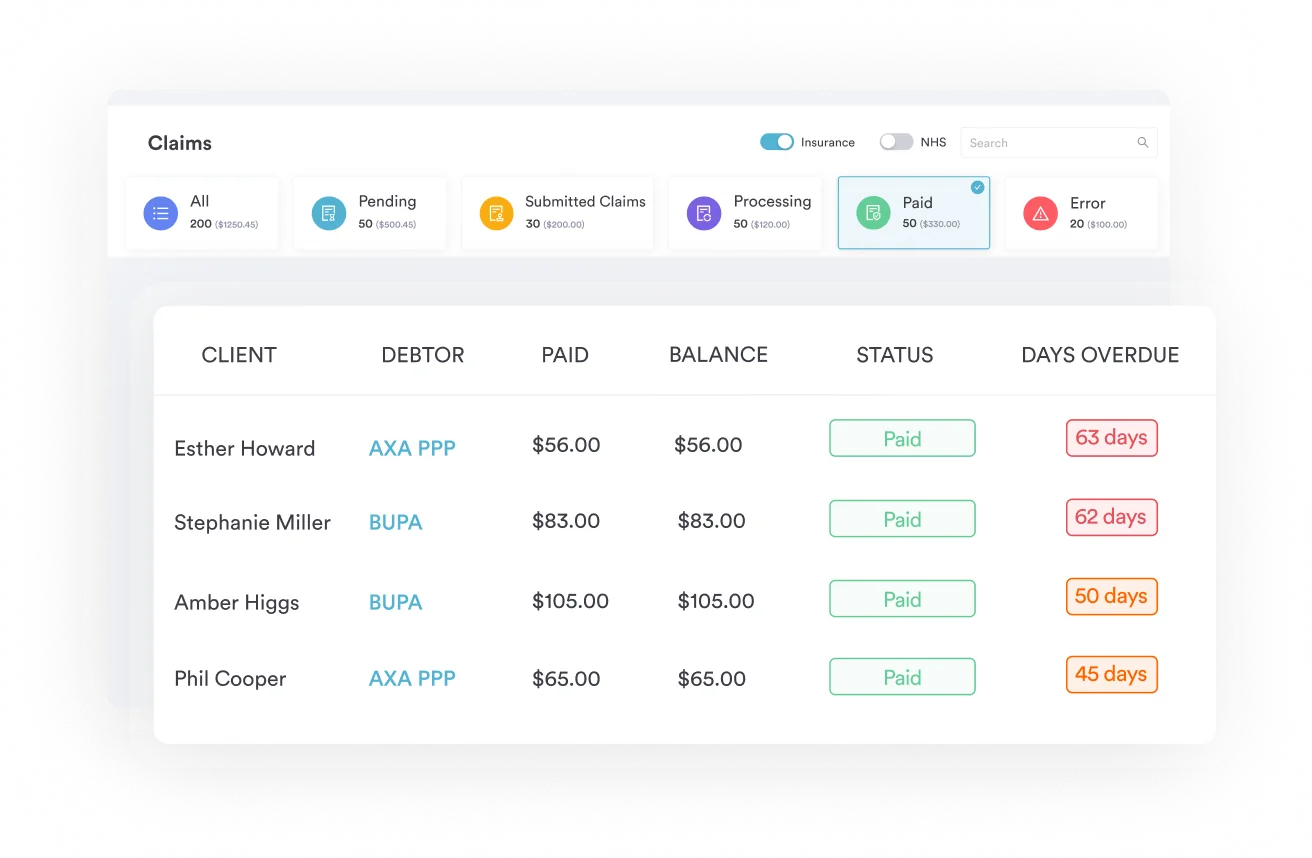
Pabau’s claims management software allows UK private clinics to attach CCSD procedure codes to patient invoices, submit claims electronically via Healthcode, and track approval status from one dashboard. Clinics using Pabau for CCSD billing report fewer manual entry errors and less time spent on claim resubmission. The benefits of running a private practice compound when the administrative burden of billing is handled by the practice management system rather than by manual processes.
Successful CCSD code 0520B billing comes down to three things: The right procedure narrative, confirmed pre-authorization, and a clean Healthcode submission. Miss any one of them and the claim comes back rejected.
Pabau’s claims management tools let UK private clinics map CCSD codes like 0520B to patient records, attach the procedure narrative and pre-authorization reference, and submit through Healthcode with fewer rejections and less manual rework. To see how Pabau handles 0520B coding, pre-authorization tracking, and Healthcode submission from invoice to approval, book a demo with the team.

Need to understand how Bupa CCSD billing works end to end? Bupa CCSD codes guide covers the full Bupa billing process, code lookup, and insurer-specific rules for UK private providers.
Submitting a related code in the 0500 series? CCSD code 0508B billing reference explains the B-suffix billing workflow including Healthcode EDI submission and documentation requirements.
Looking for Bupa’s contracted fee schedule? Bupa procedure codes and fee schedule guide walks through how to find contracted rates and avoid underpayment on CCSD-coded claims.
CCSD code 0520B is a B-suffix code in the UK private healthcare billing schedule. Its exact classification and procedure narrative must be confirmed via the CCSD schedule login at ccsd.org.uk or through the Bupa Code Search portal for recognized Bupa providers, which are the definitive sources for each code’s definition.
All major UK PMI insurers use the CCSD schedule, including Bupa, AXA Health, Aviva, Allianz Care, and The Exeter. Whether a specific patient’s policy covers the procedure billed under 0520B depends on that policy’s terms; always verify coverage before treatment.
Pre-authorization requirements for CCSD code 0520B vary by insurer and by the patient’s policy and are updated quarterly. Check directly with the relevant insurer before each procedure; B-suffix procedural codes commonly require prior approval from Bupa and AXA Health.
Build the invoice in your billing system with CCSD code 0520B, the matching procedure narrative, clinical indication, and pre-authorization reference number. Then submit the claim file through your Healthcode EDI connection. Healthcode validates the format and forwards it to the insurer; you will receive an acknowledgement confirming receipt.
Using the wrong CCSD code typically results in claim rejection or underpayment. Insurers cross-reference the code against the procedure narrative and the patient’s diagnosis; a mismatch triggers a rejection with a reason code. Correct the specific error identified in the rejection notice and resubmit; do not resubmit the original claim unchanged.