ICD-10 Code Z74.8: Other problems related to care provider dependency
ICD-10 Code Z74.8: Definition and code details ICD-10 Code Z74.8 is the billable...

Last Updated: Oct 19, 2026
Billable Code Specific Code
S62.232S is the billable ICD-10-CM code for other displaced fracture of base of first metacarpal bone, left hand, sequela.
Let Pabau's smart automation suggest the right codes, reduce claim denials, and keep your practice compliant—effortlessly.
Automate repetitive tasks and focus on what matters most—your patients.
Reduce coding errors and ensure compliance with the latest regulations.
Clean claims, fewer denials, and faster reimbursements.
Powerful insights and reporting to help your practice thrive.
HIPAA compliant SOC 2 certified GDPR-compliant Trusted by 4,000+ clinics worldwide

S62.232S is the valid ICD-10-CM code for the sequela of an other displaced fracture of the base of the first metacarpal bone, left hand
The 7th character S (sequela) applies only after fracture healing is complete, when a residual condition directly traces back to the original injury
Sequela coding requires two codes: S62.232S plus a separate code for the specific residual condition (stiffness, pain, grip weakness)
Pabau’s claims management software helps orthopedic and hand surgery practices submit sequela encounter claims with accurate code pairing
S62.232S is the ICD-10-CM code for the sequela of an other displaced fracture of the base of the first metacarpal bone, left hand. It applies once the fracture has fully healed and the patient presents with a residual condition, such as stiffness, pain, or grip weakness, that traces directly back to the original injury. The most common mistake is reaching for S62.232D (subsequent encounter) instead, which only applies while the fracture is still healing.
This reference covers the full definition of ICD-10-CM Chapter 19 injury codes as they apply to S62.232S, the complete 7th character breakdown for S62.232, the two-code sequela rule, documentation requirements, related sibling codes, and a CPT crosswalk for common sequela-phase encounters.
S62.232S describes the sequela of an other displaced fracture of the base of the first metacarpal bone of the left hand. The first metacarpal is the thumb’s metacarpal, and its base articulates with the trapezium at the carpometacarpal (CMC) joint. Fractures at this site are clinically significant because displacement at the CMC joint can disrupt thumb mechanics.
The qualifier “other displaced” distinguishes this code from Bennett fractures (S62.21-) and Rolando fractures (S62.22-). Bennett and Rolando fractures are intra-articular fracture-dislocations of the first metacarpal base with their own code series. S62.232 applies when the fracture is displaced but does not meet the specific pattern of those two named entities.
| Code element | Value |
|---|---|
| Code | S62.232S |
| Full description | Other displaced fracture of base of first metacarpal bone, left hand, sequela |
| Code system | ICD-10-CM |
| Chapter | Chapter 19 (S00-T88): Injury, Poisoning and Certain Other Consequences of External Causes |
| Category | S62: Fracture at wrist and hand level |
| Subcategory | S62.2: Fracture of first metacarpal bone |
| Valid for 2025/2026 | Yes |
| Billable | Yes |
According to the Centers for Medicare and Medicaid Services (CMS) ICD-10-CM codes page, S62.232S is a billable code valid for FY 2025 and FY 2026 encounters. It sits within the broader ICD-10-CM sequela coding framework that governs all late-effects claims under Chapter 19.
The parent code S62.232 requires a 7th character to be billable. Each character defines the encounter type, and selecting the wrong one is the primary source of sequela claim denials. The full set for S62.232 is as follows.
| Full code | 7th character | Encounter type |
|---|---|---|
| S62.232A | A | Initial encounter for closed fracture |
| S62.232B | B | Initial encounter for open fracture |
| S62.232D | D | Subsequent encounter for fracture with routine healing |
| S62.232G | G | Subsequent encounter for fracture with delayed healing |
| S62.232K | K | Subsequent encounter for fracture with nonunion |
| S62.232P | P | Subsequent encounter for fracture with malunion |
| S62.232S | S | Sequela |
The ICD-10-CM Official Guidelines for Coding and Reporting, as searchable through the CDC/NCHS ICD-10-CM tool, clarify that 7th character S is reserved for complications or conditions arising as a direct result of a prior injury, used only after the healing phase is complete. This is distinct from subsequent encounter codes (D, G, K, P), which apply while the fracture itself is still under active treatment or monitoring.
S62.232K (nonunion) and S62.232P (malunion) are subsequent encounter codes, not sequela codes. They describe ongoing fracture complications that are still being treated. S62.232S applies only when the fracture has resolved but a residual condition persists. Mixing these up is an audit risk.
The single most important distinction in this code family is between sequela (S) and subsequent encounter (D). Both appear on follow-up visits, but they describe fundamentally different clinical situations.
Per the ICD-10-CM Official Guidelines Section I.C.19, sequela coding requires that the provider documentation clearly links the current condition to the prior injury. A note saying “post-fracture stiffness” or “residual grip weakness following left thumb metacarpal fracture” satisfies this requirement. A note that only mentions the current symptom without connecting it to the prior fracture does not.
Common residual conditions following first metacarpal base fractures that may justify S62.232S include post-traumatic CMC joint stiffness, grip weakness, malunion-related pain at the thumb base, and reduced range of motion affecting pinch function. These are the sequelae that coders working in sports medicine and orthopedic practices most frequently need to document and code accurately.
A failed plate or screw from the original fracture repair is neither a sequela nor a routine subsequent encounter. Those cases move to the T84.1- complication series, where T84.115D covers a fixation device breakdown in the left femur.
Per ICD-10-CM Official Guidelines Section I.C.19, sequela encounters require two codes in most cases. S62.232S alone does not fully describe the clinical picture. The correct coding sequence is:
The sequela code (S62.232S) is always sequenced after the code describing the manifestation. This ordering rule is specified in the WHO ICD-10 classification framework and is mirrored in the ICD-10-CM US adaptation maintained by the National Center for Health Statistics (NCHS).
Submitting S62.232S as a standalone code without a sequela manifestation code will typically result in a payer rejection or edit flag. Some payers may accept S62.232S alone on encounters where the visit purpose is clearly documented as follow-up for a prior injury, but consistent two-code sequencing reduces audit exposure. Accurate code pairing is where claims management software with built-in coding workflow support reduces errors at the point of submission.
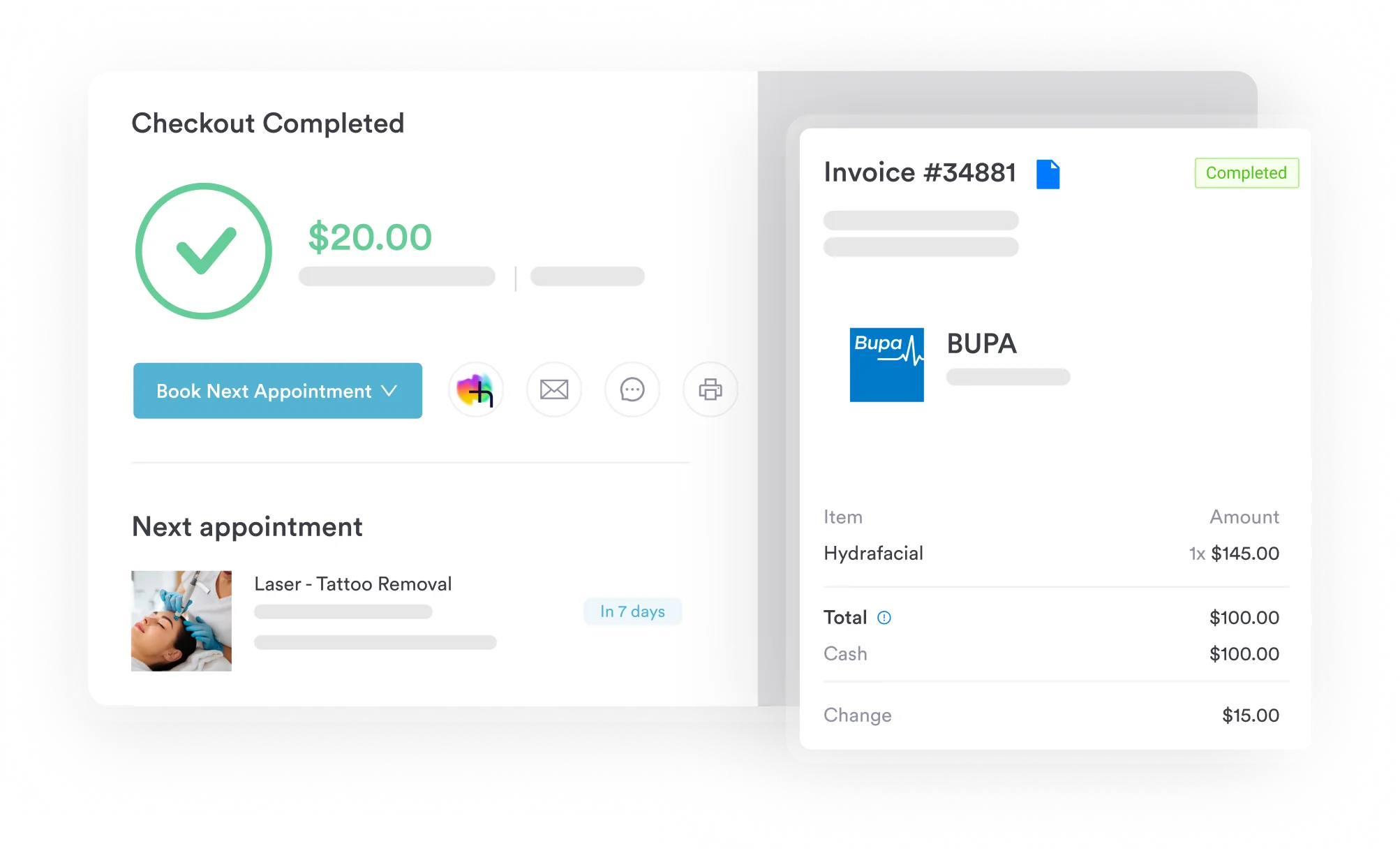

Pabau’s claims management tools help orthopedic and hand surgery practices pair diagnosis codes accurately, reducing denials and rework on late-phase fracture encounters.

S62.232S belongs to a family of sibling codes under S62.23 (other displaced fracture of base of first metacarpal bone). Choosing the correct laterality is essential, as payers treat left, right, and unspecified codes as distinct claims.
| Code | Description | Laterality |
|---|---|---|
| S62.231S | Other displaced fracture of base of first metacarpal bone, right hand, sequela | Right |
| S62.232S | Other displaced fracture of base of first metacarpal bone, left hand, sequela | Left |
| S62.233S | Other displaced fracture of base of first metacarpal bone, unspecified hand, sequela | Unspecified |
Use S62.233S (unspecified) only when documentation genuinely does not specify laterality. Most payers require laterality specificity for fracture sequela codes, and unspecified codes may be returned for additional documentation. Verify the operative or original injury records to confirm left-hand involvement before assigning S62.232S.
Within the broader S62.2 parent category, the related named fracture sequela codes are S62.211S (Bennett fracture, right) and S62.212S (Bennett fracture, left). Rolando fracture sequela codes fall under S62.221S and S62.222S. When the patient history includes a Bennett or Rolando fracture specifically, those codes take priority over S62.232S. Use an ICD-10-CM code lookup via AAPC Codify to verify parent-subcategory hierarchy before finalizing code selection.
Sequela coding carries a higher documentation burden than subsequent encounter coding. Payers and auditors expect the medical record to establish three things before S62.232S can be assigned.
Establishing robust clinical documentation workflows for late-phase fracture encounters reduces audit risk and supports sequela code assignment at the point of care. Practices using digital intake forms can capture prior injury history during the intake process, which feeds directly into the provider’s encounter note and satisfies the first documentation requirement above.
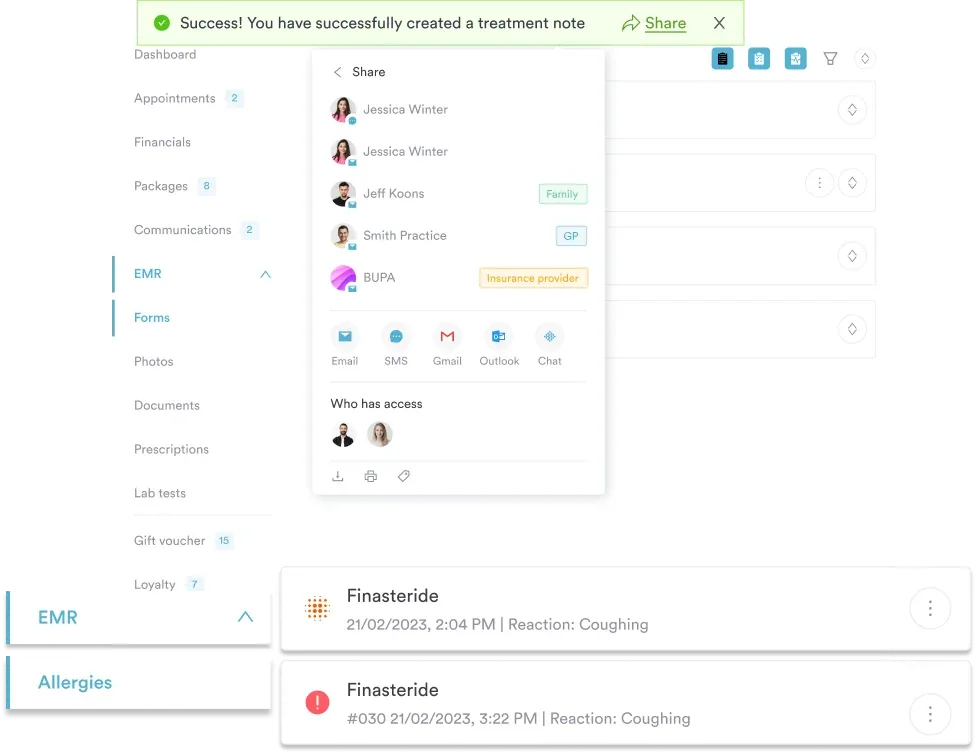
For physical therapy documentation involving sequela of hand fractures, the same three-element standard applies. Physical therapists treating post-fracture stiffness or grip deficits must ensure the referring provider’s documentation includes the causal link, as PTs themselves may not independently assign an ICD-10 sequela code without physician documentation support in many payer contracts. For further reading on compliance requirements for musculoskeletal clinics, including documentation standards, see the linked Pabau resource. Co-claiming restrictions in the Australian schedule decide which items can appear on the same day. Front-desk data entry and back-office coding both feed cash collection, so errors compound downstream. Co-claiming restrictions in the Australian schedule decide which items can appear on the same day. Front-desk data entry and back-office coding both feed cash collection, so errors compound downstream.
Review the original fracture encounter note before assigning S62.232S. If the original provider used an unspecified laterality code (S62.233A) but the patient’s actual injury was to the left hand, document the correct laterality in your current note based on the physical examination findings. Do not rely solely on the original code assignment.
Sequela-phase encounters for first metacarpal base fractures involve a range of clinical services, from evaluation and management visits to surgical intervention for residual deformity. The associated CPT procedure codes depend on what service is rendered during the sequela encounter.
| CPT code | Description | When applicable with S62.232S |
|---|---|---|
| 99213 | Office/outpatient visit, established patient, moderate complexity | Standard follow-up for residual stiffness or pain assessment |
| 99214 | Office/outpatient visit, established patient, high complexity | Complex sequela encounter requiring decision-making about surgical intervention |
| 26565 | Osteotomy, metacarpal, each | Surgical correction of malunion-related deformity at the first metacarpal base |
| 26615 | Open treatment of metacarpal fracture, single, with internal fixation | Revision surgery for persistent post-fracture instability |
| 97110 | Therapeutic exercises | PT-directed strengthening for grip weakness sequela |
| 97530 | Therapeutic activities | Functional hand activities to restore pinch and grip mechanics |
CPT code pairings must reflect the actual service rendered. E/M codes (99213, 99214) are the most common codes billed alongside S62.232S at orthopedic or hand surgery follow-up visits. Surgical CPT codes (26565, 26615) apply only when a procedure is performed during the encounter. Verify payer-specific LCD policies via ICD List’s diagnosis code lookup before finalizing claim submissions, as some commercial payers require prior authorization for metacarpal osteotomy procedures.
For the broader ICD-10-CM code context and how S62.232S fits within injury and fracture coding hierarchies.
Applying ICD-10 code S62.232S correctly involves a short decision sequence that coders should run through at each sequela encounter.
Practices handling volume orthopedic and hand surgery billing benefit most from structured claim-submission workflows. Pabau’s claims management software supports code-pairing validation at submission, which catches sequela encounters where the manifestation code is missing before the claim reaches the payer.
Sequela encounters for first metacarpal fractures are a routine part of hand surgery and orthopedic follow-up, but they carry a distinct documentation and coding standard that subsequent encounter claims do not. S62.232S applies only after fracture healing is confirmed, requires a two-code sequence with the manifestation first, and demands explicit provider language linking the residual condition to the original injury.
Getting this right reduces claim rejections, supports audit readiness, and ensures that the clinical work done in sequela-phase encounters is accurately reflected in the billing record. If your practice needs help structuring practice management software that keeps documentation, coding, and claim submission aligned, book a demo with Pabau to see how the platform supports late-phase fracture care workflows.

Billing an add-on code for spine surgery? CPT Code 20939 covers the add-on code for bone marrow aspiration taken through a separate incision during spine surgery.
Looking for another ICD-10-CM coding reference? Intraparenchymal Hemorrhage ICD-10-CM codes covers the I61.x code series and documentation tips for practices.
Coding a common mental health comorbidity? Situational Anxiety ICD-10 code explains why clinicians must choose a code since no single dedicated situational anxiety code exists.
S62.232S is the ICD-10-CM code for the sequela of an other displaced fracture of the base of the first metacarpal bone of the left hand. It applies when the fracture has fully healed but a residual condition directly caused by the original injury — such as stiffness, pain, or grip weakness — is being treated.
S62.232D is used while the fracture is still actively healing; S62.232S is used only after healing is complete and the patient presents with a residual condition. Using D when the fracture has healed is a common coding error that increases audit risk.
Use 7th character S when the fracture is confirmed healed and the patient’s complaint is a residual condition from that injury. Use D, G, K, or P while the fracture is still under active management.
99213 and 99214 cover evaluation and management visits; 97110 and 97530 cover therapy services; 26565 and 26615 apply when surgical correction of residual deformity is performed.
Common sequelae include CMC joint stiffness, reduced thumb range of motion, grip and pinch weakness, and post-traumatic arthritis. Each requires its own manifestation code sequenced before S62.232S.
The provider note must confirm the fracture has healed, identify the specific residual condition, and explicitly link that condition to the prior fracture.