ICD-10 code T43.604S: Psychostimulant poisoning sequela
What does ICD-10 code T43.604S cover? ICD-10 code T43.604S covers the late effec...

Last Updated: Oct 22, 2026
Billable Code Specific Code
S72.435M is the billable ICD-10-CM code for nondisplaced fracture of medial condyle of left femur, subsequent encounter for open fracture type I or II with nonunion.
The open fracture grade is where this code goes wrong most often. Coders reach for M whenever a note says nonunion, but closed fracture nonunion belongs to character K instead.
Let Pabau's smart automation suggest the right codes, reduce claim denials, and keep your practice compliant—effortlessly.
Automate repetitive tasks and focus on what matters most—your patients.
Reduce coding errors and ensure compliance with the latest regulations.
Clean claims, fewer denials, and faster reimbursements.
Powerful insights and reporting to help your practice thrive.
HIPAA compliant SOC 2 certified GDPR-compliant Trusted by 4,000+ clinics worldwide

S72.435M covers a nondisplaced fracture of the medial condyle of the left femur, coded at a subsequent encounter with nonunion.
The 7th character M means open fracture type I or II with nonunion, so it never applies to a closed fracture.
Closed fracture nonunion at the same site takes K, and open type IIIA, IIIB, or IIIC nonunion takes N.
The 6th character carries displacement and laterality together, so 4 through 6 are the nondisplaced medial condyle codes.
Delayed healing takes H instead, so M needs a documented failure to unite rather than slow progress.
Pabau, our practice management platform, attaches diagnosis codes inside the patient record, so the claim matches the note.
S72.435M is a billable and specific ICD-10-CM diagnosis code. The CDC/NCHS ICD-10-CM web tool confirms it is valid for the FY2026 code set, effective October 1, 2025. It maps to one well-defined clinical scenario, so payers accept it directly on a claim.
The CMS ICD-10-CM code files hold the tabular list and coding rules for this family. Additions and revisions land with each October update, so confirm the code is still valid before you apply it to a claim.
S72.435M sits at the bottom of a four-level hierarchy inside the fracture of lower end of femur classification. The parent chain decides your specificity, and it tells you which sibling code to pick when laterality or fracture grade differs.
The S72 category covers every femur fracture, from femoral neck injuries at the proximal end to the distal condylar fractures in S72.4. That subcategory groups the medial condyle, the lateral condyle, and the supracondylar region. S72.43 narrows it to the medial condyle alone.
The 6th character then carries displacement and laterality together. Characters 1, 2, and 3 are displaced right, left, and unspecified femur. Characters 4, 5, and 6 are the nondisplaced versions of the same three.
Sibling codes Sibling codes S72.451K and S72.442C and S72.442C show the same pattern in the supracondylar and lower epiphysis groups.
One rule trips coders up. S72.435 is not billable on its own, because the tabular list marks the whole S72.43 subcategory as requiring a 7th character. A five- or six-character stem submitted without that character rejects as an invalid code. Confirming a 7th-character rule against a medical coding cheat sheet takes less time than researching the tabular list from scratch.
The 7th character is where most S72 coding errors start. It carries three facts at once: the encounter type, whether the fracture was open or closed, and how it healed. All three have to be in the record before you use S72.435M.
Nonunion vs. delayed healing: nonunion means the fracture has stopped progressing toward union altogether. Delayed healing means it is still knitting, just slower than expected. On an open type I or II injury, delayed healing takes character H instead. Only the treating physician can draw that line, and radiographs usually anchor the call.
Nonunion vs. malunion: malunion means the bone united in the wrong position, bent, rotated, or shortened. Nonunion means it never united. Sibling code S72.431R shows the malunion end of the same family. For an open type I or II injury, nonunion takes M and malunion takes Q.
ICD-10-CM does simplify one thing. It collapses all three type III grades into a single character, so you never need to separate IIIA from IIIB or IIIC. The only grading question that changes the code is type I or II versus type III.
The Gustilo grade that drives this code is recorded at the initial encounter, not at the visit you are coding. Before you choose between characters M and N, pull the operative or ER note from the acute episode. A follow-up note that says only “open fracture, nonunion” cannot settle it.
The medial condyle is the rounded bony prominence on the inner side of the distal femur, and it forms part of the knee joint. It carries most of the axial load through the knee. Orthopedic surgeons and sports medicine clinicians see these fractures after high-energy trauma, such as a motor vehicle collision or a fall from height.
S72.435M applies to open fracture type I or II only. Those types come from the Gustilo-Anderson classification, the accepted standard for grading open fracture wound severity. The grade must be documented by the treating surgeon. Reading it off a wound description is not acceptable coding practice.
If the operative or emergency record grades the injury IIIA, IIIB, or IIIC, S72.435M is the wrong code and S72.435N is right. Payers read the open fracture grade as a proxy for expected resource use. A grade that disagrees with the surgical record raises audit risk on the whole episode.
A patient moves through several sibling codes across one episode of care, as the encounter type and healing status change. The table below lists the codes most often confused with S72.435M. The same episode usually starts at S72.435B, the initial encounter code.
Use S72.436M for an unspecified femur only when the record genuinely does not state a side. Coding unspecified where the provider documented left is a specificity error, and it can trigger a claim edit even though the code is billable.
This code needs the medical record to support six clinical facts. If any one of them is absent, either a different code applies or the provider needs a query. A structured patient record system with encounter-type and fracture-status fields keeps all six in one place.
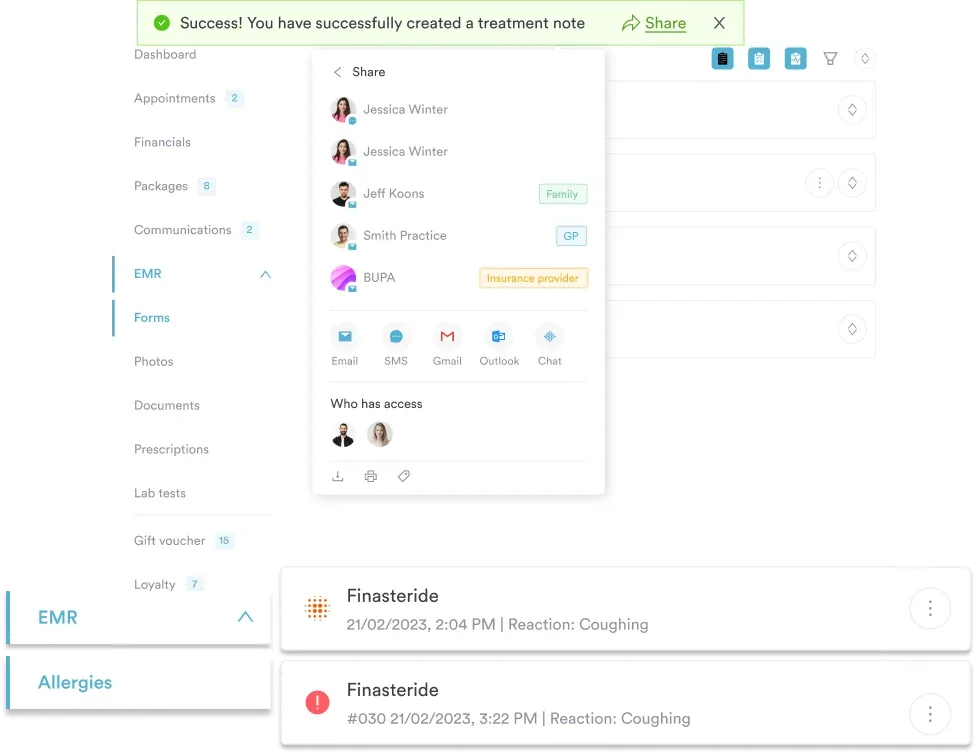
Nonunion cases often run across many visits, and the same code repeats on claim after claim. Each of those claims needs its own healing-status statement in that visit’s note. A single nonunion entry from six months ago will not support the current one.
Audit your S72 subsequent encounter codes each quarter. Pull every claim where a routine-healing character was billed more than six months after the initial encounter date. By that point the record should describe the fracture as healed, malunited, or nonunited, so routine-healing claims past that window are a common audit trigger.
S72.435M is valid for both inpatient and outpatient claims. MS-DRG 533 or 534 covers inpatient distal femur fractures in the S72.4 range, and CMS titles the pair Fractures of femur with and without MCC. The split depends on the patient’s documented complications and comorbidities.
On the outpatient side, the code supports medical necessity for follow-up radiographs, physical therapy authorization, and surgical consultation for nonunion.
Payers often want the matching procedure code on the same claim, such as bone grafting or revision internal fixation. Coverage for nonunion surgery can also require prior authorization, so check the current local coverage determination first.
Claims management software links the diagnosis code to the procedure code while the claim is being built. That check catches mismatched pairings before submission, which protects your clean claim rate.
Practices that submit to US payers can send those claims through the Claim.MD integration straight from the patient record. Anything that comes back rejected still needs working, so a defined denial management process keeps the rework contained.
Practices holding legacy billing data will find the closest ICD-9-CM match for S72.435M is 733.82, nonunion of fracture. The mapping is approximate in both directions. The AAPC ICD-10-CM code lookup and the General Equivalence Mappings from CMS and NCHS are the references to trust here.
ICD-9-CM needed two codes to say what S72.435M says on its own. Coders paired the site code with 733.82 to record the failed union. The old site codes were split by fracture type rather than by side. Code 821.31 covered an open femoral condyle fracture, and 821.21 covered a closed one. Neither code carried laterality, so the side had to come from the chart notes. A clearinghouse submission report arrives before the payer remittance, and it is the first place a format problem shows.
733.82 was a broad nonunion code that maps forward to hundreds of ICD-10-CM codes. That one-to-many relationship means legacy data does not convert cleanly. Translating an old claim needs the original clinical record, not just the forward-mapping file. Site, side, and open fracture grade all have to come from somewhere.
Never push GEM crosswalk output straight into active billing. The mappings exist for research and legacy analysis. For a live encounter, code from the current medical record against the FY2026 ICD-10-CM tabular list.
Per ICD-10-CM Official Guidelines Section I.C.19 and CMS claim edits, the errors below surface most often in orthopedic coding audits.
Most of these errors are made when the note is written, well before the claim goes out. An EHR that carries the code from the record into the claim removes the step where the character changes.
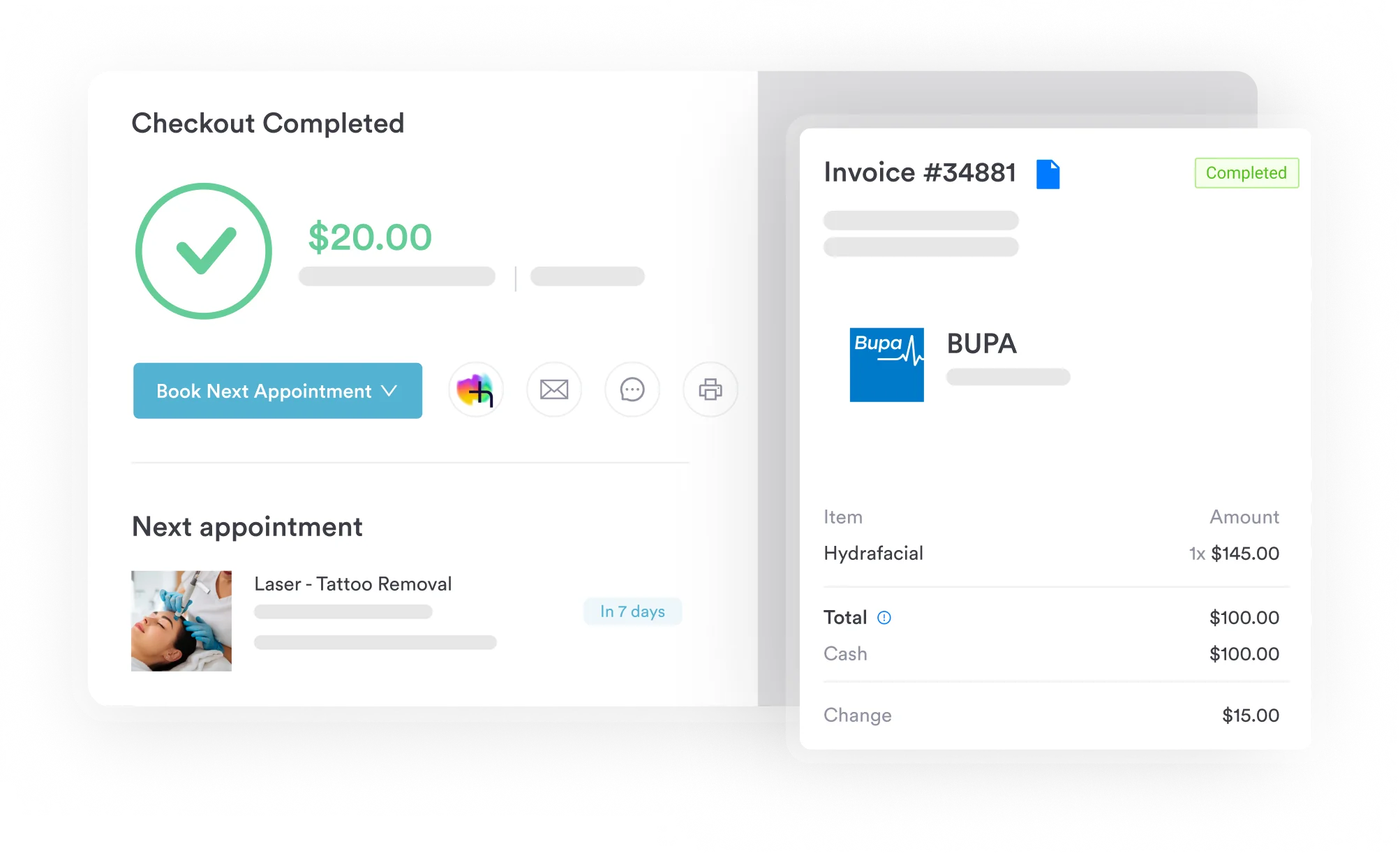
Today a coder looks S72.435M up on a reference site, then retypes it into a separate billing system. That handoff is where a 7th character quietly becomes the wrong one, and where the claim stops matching the note behind it.
Practice management software like Pabau removes the retyping step. Staff search for the diagnosis code and attach it inside the patient record at the point of care. The code then flows into the claim unchanged, so laterality and 7th character errors have nowhere to enter.
Orthopedic, sports medicine, and rehabilitation teams often follow one fracture across a dozen encounters. Physical therapy EMR software keeps that episode record consistent from the initial encounter through discharge.
Pabau’s claims tools then show the attached code next to the clinical note, so you can confirm it matches what the provider documented.
For a nonunion case, that matters at every visit. The healing status can change between appointments, and the code has to change with it. Seeing both on one screen means you notice when the note says nonunion but the claim still says routine healing.

Pabau attaches diagnosis codes inside the patient record and carries them through to claim submission without re-keying. That keeps encounter type, laterality, and healing status consistent across every visit in a fracture episode.

S72.435M rewards one habit above all others. Read the 7th character definition in full before you assign it. M looks like a generic nonunion marker, but it commits the claim to an open type I or II injury. The original operative record has to support that grade.
Practices that capture the Gustilo grade, the side, and the healing status at the point of care rarely revisit this code. Those that treat coding as a step after documentation end up choosing between K, M, and N from an incomplete note. The correction costs far more than the original query would have.
An integrated practice management platform keeps that decision inside the clinical record instead of a separate lookup. Book a demo to see how Pabau keeps fracture coding accurate across every encounter in an episode.

Coding a femur shaft nonunion instead? S72.309N walks through the same nonunion logic for an unspecified femur shaft fracture.
Working the initial encounter for the same condyle? S72.431C covers the acute treatment phase of a medial condyle fracture.
Coding the sequela phase after a distal femur fracture? S72.455S explains when the 7th character S replaces a subsequent encounter code.
Billing the graft that treats a nonunion? CPT 20900 covers a minor bone graft taken from any donor area.
Coding a nondisplaced patella fracture? ICD-10 code S82.026P covers the nondisplaced longitudinal patella fracture with malunion, billable for HIPAA-covered claims.
ICD-10 Code S72.435M is a billable ICD-10-CM code for a nondisplaced fracture of the medial condyle of the left femur. It applies at a subsequent encounter, after an open type I or II fracture has failed to unite. Every element has to be in the record before you assign it.
Yes. S72.435M is a billable, specific ICD-10-CM code for the FY2026 code set, effective October 1, 2025. Payers accept it as-is on both inpatient and outpatient claims. The five-character stem S72.435 is not billable without a 7th character.
No. The 7th character M covers open fractures graded Gustilo-Anderson type I or II only. Using M on a closed fracture is the most common error on this code. A closed fracture with nonunion takes K instead, and an open type IIIA, IIIB, or IIIC fracture with nonunion takes N.
Both describe the same nondisplaced open type I or II fracture of the left medial condyle at a subsequent encounter. Only the healing status differs. H means healing is delayed but still progressing, while M means union has failed altogether. A coder cannot read one as the other, so the provider has to state which applies.
Nonunion means the bone never united. Malunion means it united in the wrong position, bent, rotated, or shortened. For this code family, nonunion takes K, M, or N depending on the fracture grade. Malunion takes P, Q, or R across the same three grades.
The record must show a nondisplaced fracture at the medial condyle of the left femur, graded as an open type I or II injury. It also needs a subsequent encounter and a provider statement of nonunion, ideally with supporting imaging. Query the provider if any of those facts is missing.