ICD-10 code S61.201A: Open wound of left index finger without nail damage
ICD-10 code S61.201A covers a left index finger wound of unstated type ICD-10 co...

Last Updated: Oct 16, 2026
Billable Code Specific Code
S31.653A is the billable ICD-10-CM code for open bite of abdominal wall, right lower quadrant with penetration into peritoneal cavity, initial encounter.
Getting this code right on the first submission reduces rework and protects reimbursement. That means pairing S31.653A with the correct 7th character and backing it with documentation that explicitly records peritoneal penetration.
Let Pabau's smart automation suggest the right codes, reduce claim denials, and keep your practice compliant—effortlessly.
Automate repetitive tasks and focus on what matters most—your patients.
Reduce coding errors and ensure compliance with the latest regulations.
Clean claims, fewer denials, and faster reimbursements.
Powerful insights and reporting to help your practice thrive.
HIPAA compliant SOC 2 certified GDPR-compliant Trusted by 4,000+ clinics worldwide

S31.653A is the billable ICD-10-CM code for open bite of abdominal wall, right lower quadrant with penetration into peritoneal cavity, initial encounter
The 7th character ‘A’ signals initial encounter; use ‘D’ for subsequent encounter and ‘S’ for sequela – selecting the wrong character is a common claim denial trigger
Peritoneal cavity penetration must be explicitly documented by the treating provider – coders cannot infer it from a wound description alone
Pabau’s claims management software helps practices apply correct episode-of-care characters and flag incomplete documentation before claims are submitted
ICD-10 code S31.653A describes an open bite injury to the abdominal wall in the right lower quadrant (RLQ) that penetrates into the peritoneal cavity, coded at the initial encounter. In ICD-10-CM, an open bite wound is distinguished from a laceration or puncture by its mechanism: the wound is caused by teeth, either human or animal, rather than a sharp object or blunt force tearing. Specifically, per the CDC/NCHS ICD-10-CM classification tool, the full code description reads: “Open bite of abdominal wall, right lower quadrant with penetration into peritoneal cavity, initial encounter.”
The right lower quadrant anatomically covers the cecum, appendix, and the terminal ileum, as well as overlying musculature and fascial layers. Consequently, a bite wound penetrating this region carries significant risk of intraperitoneal contamination. As a result, that clinical severity is reflected in the specificity of the S31.653A code within the broader S31 category.
| Code level | Code | Description |
|---|---|---|
| Chapter | S00-T88 | Injury, poisoning and certain other consequences of external causes |
| Block | S30-S39 | Injuries to the abdomen, lower back, lumbar spine, pelvis and external genitals |
| Category | S31 | Open wound of abdomen, lower back, pelvis and external genitals |
| Subcategory | S31.6 | Open wound of abdominal wall with penetration into peritoneal cavity |
| Code | S31.653 | Open bite of abdominal wall, right lower quadrant with penetration into peritoneal cavity |
| Billable code | S31.653A | Initial encounter |
S31.653A is a billable, specific code valid for FY 2026 ICD-10-CM. It cannot, therefore, be replaced with the parent code S31.653 (which lacks the required 7th character) or the category code S31 (non-billable). In both cases, payers require the fully specified code to process the claim.
Every code in the S31 block requires a 7th character to indicate the episode of care. Selecting the wrong character is one of the most common reasons abdominal wound claims are denied or returned for correction. Furthermore.
A frequent coding error is continuing to use the “A” character beyond the initial treatment phase. Once the wound has been surgically managed and the patient returns for a post-operative check, the encounter is subsequent (D), not initial. Therefore, the treating provider’s notes should make the stage of care explicit to support the coder’s character selection.
Document the stage of care in every encounter note. A single phrase, such as ‘patient returning for routine wound check following primary surgical closure,’ removes ambiguity and supports the transition from character A to character D without a query to the provider.
S31.653A belongs to a structured family of codes covering abdominal wall open bites with peritoneal penetration. In turn, knowing the adjacent codes prevents incorrect site assignment and supports accurate ICD-10-CM diagnosis code selection when the bite location is in a different quadrant or the wound type differs – an open wound of the abdominal wall in the right flank, for example.
In addition, the wound type drives code selection within the S31.6 block. Open bite codes (S31.65x) are distinct from lacerations without foreign body (S31.61x), lacerations with foreign body (S31.62x), puncture wounds without foreign body (S31.63x), and puncture wounds with foreign body (S31.64x). Consequently, confusing a bite wound with a puncture wound at the coding stage changes the code entirely. For reference, the CMS ICD-10 codes page provides the complete tabular list for the S31 category with all applicable notes and instructions.
Peritoneal penetration separates S31.653A from S31.053A (open bite of the right lower quadrant without peritoneal penetration). Coders cannot assume penetration from a wound description alone. The provider must explicitly state in the operative or ED note that the wound penetrates into the peritoneal cavity. As a result.
Specifically, required documentation elements for S31.653A include the following:
Practices using digital intake and clinical forms that capture structured wound descriptions at triage reduce the risk of missing these elements later. Structured documentation prompts physicians to specify quadrant, wound type, and exploration findings. This avoids free-text summaries that coders must later query. Furthermore.


Pabau helps clinical teams capture structured wound and encounter documentation so coders always have the specificity they need to assign the right ICD-10-CM code on the first submission.

Clinics tracking fracture and sprain recovery in Jane often start comparing Jane App alternatives as caseloads grow.
The S31.6 block is internally differentiated by wound type, and each type occupies a distinct code range. Selecting the wrong wound type is a common audit flag, particularly when emergency department notes use imprecise language. In many cases, providers document “wound” without specifying the mechanism. Therefore, the table below clarifies the coding distinction for right lower quadrant abdominal wall injuries with peritoneal penetration, all at initial encounter.
| Wound type | Code (RLQ, peritoneal penetration, initial) | Mechanism |
|---|---|---|
| Unspecified open wound | S31.603A | Mechanism not documented or unclassifiable |
| Laceration without foreign body | S31.613A | Tearing or cutting force, no retained object |
| Laceration with foreign body | S31.623A | Tearing or cutting with retained object in wound |
| Puncture without foreign body | S31.633A | Penetrating point object (knife, needle), no retention |
| Puncture with foreign body | S31.643A | Penetrating point object with retained object |
| Open bite | S31.653A | Bite wound, human or animal |
When a provider documents “stab wound,” the correct code is a puncture (S31.633A or S31.643A depending on foreign body retention), not an open bite. By contrast, when a dog bite or human bite is documented, S31.653A applies regardless of the depth description used. In either case, however, coders should query the provider when documentation says only “wound” without a mechanism, rather than defaulting to the unspecified open wound code.
S31.653A is a high-specificity injury code that pairs with surgical procedure codes (CPT) for wound exploration, debridement, and repair. Open abdominal bite wounds with peritoneal penetration usually require operative management. This shifts the encounter from an ED-level E/M code to a surgical procedure. Therefore.
From a claims perspective, therefore, the specificity of S31.653A matters for several reasons:
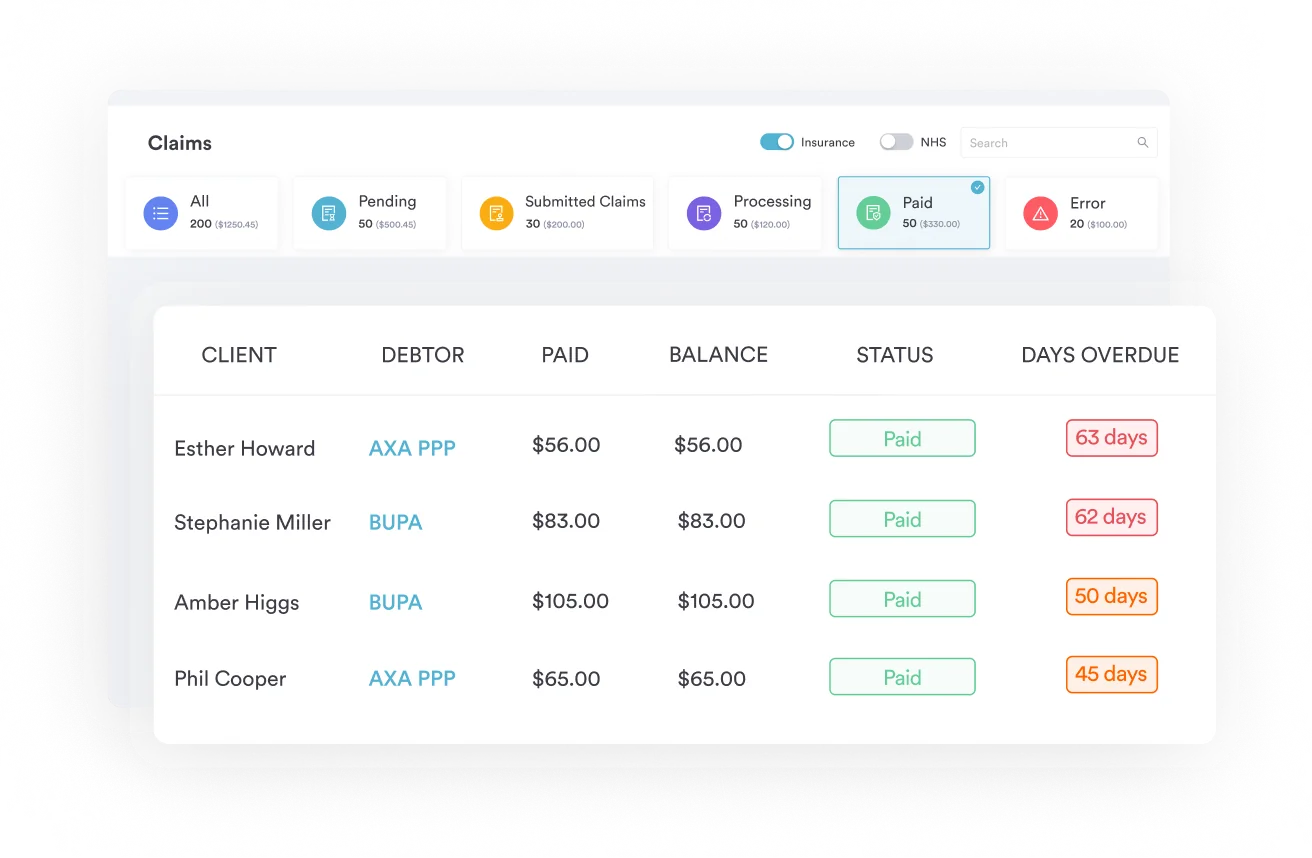
Practices managing high volumes of trauma or emergency cases benefit from claims management software that flags ICD-10-CM codes requiring supporting documentation before a claim is submitted. When S31.653A is assigned, the system can prompt the billing team to confirm that peritoneal penetration is explicitly documented in the operative or ED notes, reducing denials at the source.
When coding S31.653A for inpatient cases, verify the DRG assignment before final bill submission. A penetrating abdominal wound will typically group to a higher-weight DRG than a superficial wound. If the DRG appears inconsistent with the clinical acuity, query the coding logic before submission rather than after a denial.
The transition to ICD-11 is ongoing in the US, though ICD-10-CM remains the operative system for US billing. For practices tracking international coding equivalencies or preparing for future migration, the WHO ICD-11 classification handles traumatic open wounds through a different structural approach than ICD-10-CM’s site-and-mechanism specificity. Nevertheless, practitioners and coders who need to navigate both systems can explore the WHO ICD-10 browser to locate the S31.653A parent codes and their ICD-11 mappings. In addition, for traumatic injury ICD-10 coding more broadly, the underlying documentation principles remain consistent across code systems: specificity of site, mechanism, and laterality drives accurate code assignment in both versions. Loop and segment rules in the EDI 837 format decide where a code and its modifiers are carried. A quick reference sheet cuts lookup time on codes a practice bills every week.
In ICD-11, open wound injuries of the abdominal wall are classified under Chapter 22 (Injury, poisoning or certain other consequences of external causes). Notably, the post-coordinated structure of ICD-11 allows coders to specify the anatomical site, wound type, and episode of care as separate attributes rather than through a combined alphanumeric code. For current US billing, therefore, S31.653A remains the correct and complete designation for the condition it describes.
Open bite injuries with peritoneal penetration represent a clinically significant wound category that requires precise documentation to support accurate ICD-10-CM coding. S31.653A is a fully billable, FY 2026-valid code. It depends on three documented elements: bite mechanism, right lower quadrant site, and explicit peritoneal cavity penetration. Selecting the wrong 7th character, defaulting to an unspecified wound code, or missing the penetration notation all lead to avoidable claim denials and potential underpayment for operative care.
Pabau’s claims management software supports practices in building documentation workflows that capture the specificity ICD-10-CM injury codes require. To see how Pabau helps clinical teams reduce coding errors and streamline the billing cycle, book a demo.

Need guidance on another type of hemorrhage? Intraparenchymal hemorrhage ICD-10 codes Covers the I61.x code series, documentation tips, and coding best practices for traumatic intracranial hemorrhage.
Billing anesthesia for a vaginal endoscopy? CPT code 00950 guide Covers the base units and reimbursement formula for vaginal endoscopy and culdoscopy anesthesia.
Need the anesthesia code for a bone marrow biopsy? CPT code 01112 covers anesthesia billing for bone marrow aspiration and biopsy at the iliac crest.
S31.653A is the billable ICD-10-CM code for an open bite of the abdominal wall, right lower quadrant, with penetration into the peritoneal cavity, at the initial encounter. It belongs to the S31.6 code block within Chapter 19 of ICD-10-CM.
All three codes describe the same injury. The 7th character distinguishes the episode of care: A is the initial encounter (active treatment), D is a subsequent encounter (follow-up), and S is a sequela (late effect or complication).
No. The treating provider must explicitly document penetration into the peritoneal cavity in the operative report or ED note. Assigning S31.653A without this documentation creates audit exposure and claim denial risk.
S31.654A describes an open bite of the abdominal wall, left lower quadrant, with peritoneal penetration, initial encounter. The same 7th character rules (A, D, S) apply.
Yes. S31.653A is a billable, valid ICD-10-CM code for fiscal year 2026. Always verify against the current CMS ICD-10-CM tabular list for any mid-year updates before submission.
Yes. S31.653A sits in the S31.6 block for open wounds of the abdominal wall with penetration into the peritoneal cavity, so it records a penetrating abdominal injury caused by a bite. A stab wound to the same region is coded as a puncture (S31.633A or S31.643A) rather than an open bite, but both fall under penetrating abdominal trauma.