

ICD-10 code S61.201A: Open wound of left index finger without nail damage
ICD-10 code S61.201A covers a left index finger wound of unstated type ICD-10 co...

Last Updated: Oct 16, 2026
Billable Code Specific Code
L93.0 is the billable ICD-10-CM code for discoid lupus erythematosus.
Discoid lupus erythematosus is a chronic autoimmune condition in which the immune system attacks skin cells, producing coin-shaped (discoid) plaques typically on the face, scalp, and ears. It is the most common form of cutaneous lupus erythematosus, and unlike systemic lupus erythematosus (SLE), it stays confined to the skin. The discoid lupus ICD-10 code, L93.0, has to be documented precisely to protect both insurance reimbursement and longitudinal patient record integrity.
Let Pabau's smart automation suggest the right codes, reduce claim denials, and keep your practice compliant—effortlessly.
Automate repetitive tasks and focus on what matters most—your patients.
Reduce coding errors and ensure compliance with the latest regulations.
Clean claims, fewer denials, and faster reimbursements.
Powerful insights and reporting to help your practice thrive.
HIPAA compliant SOC 2 certified GDPR-compliant Trusted by 4,000+ clinics worldwide

ICD-10 Code L93.0 is the billable diagnosis code for discoid lupus erythematosus (DLE), a chronic cutaneous autoimmune condition affecting the skin.
L93.0 is valid for FY 2026 billing; the parent code L93 is non-billable and requires specificity at L93.0, L93.1, or L93.2.
Drug-induced DLE requires an additional code from the T36-T50 range to identify the causative agent; incorrect sequencing is a leading cause of claim denials.
Pabau’s claims management software and patient records tools help dermatology and rheumatology practices document and submit L93.0 claims accurately.
ICD-10 Code L93.0 is a valid, billable ICD-10-CM diagnosis code for FY 2026. It sits within the following hierarchy:
The parent code L93 is non-billable. Submitting L93 on a claim without the required specificity will result in rejection. You must code to the highest level of specificity, using L93.0, L93.1, or L93.2 depending on the documented diagnosis.
Billable status answers one question. Device category codes answer another: an implantable bone anchor reported as C1713 sits on the hospital outpatient claim, not the physician’s.
The ICD-10-CM tabular list includes several approximate synonyms that map to ICD-10 Code L93.0. Coders and clinicians may encounter these terms in physician notes and should recognize them as pointing to the same billable code.
Chilblain lupus erythematosus is a distinct variant characterized by bluish-red nodules on cold-exposed skin, but it codes to L93.0 under ICD-10-CM. Coders reviewing physician documentation for any of these terms should apply ICD-10 Code L93.0 unless the record specifies subacute cutaneous lupus (L93.1) or another local form (L93.2).
Loose synonyms are tolerated on the diagnosis side because they all resolve to one code. HCPCS supply descriptors allow no such latitude, since B4161 bills pediatric enteral formula in units of 100 calories.
Check physician notes carefully for the phrase ‘chronic discoid’ versus ‘subacute cutaneous’. Subacute cutaneous lupus maps to L93.1, not L93.0. Applying the wrong subcode is one of the top reasons dermatology claims for lupus-related skin conditions are down-coded or denied.
The L93 category covers three distinct conditions. Each has its own billable subcode, and payers treat them as separate diagnoses. Refer to the CDC/NCHS ICD-10-CM web tool for the official current-year tabular definitions.
Selecting the wrong subcode is a documentation error, not just a coding one. The physician’s notes must specifically identify the type of lupus present. Coders cannot infer L93.0 from a note that simply reads “lupus” without further clinical description.
Two conditions are frequently mis-mapped to L93.0. Lupus erythematosus tumidus, which presents as non-scarring, edematous plaques on sun-exposed skin, belongs under L93.2 (other local lupus erythematosus), not L93.0. A malar or butterfly rash is not a discoid lesion at all. It is a feature of acute cutaneous lupus tied to systemic disease, so it points toward the M32 systemic lupus erythematosus range rather than any L93 subcode.
Mismatch works the same way on device claims. A payer reviewing the ocular implant code C1783 expects an eye diagnosis, and a skin code like L93.0 fails that screen immediately.

Pabau’s claims management tools help skin clinics document L93.0 diagnoses accurately, reduce denials, and keep patient records audit-ready. See how it works for your practice.

Dermatology practices work in this chapter daily, and a dermatology EMR pairs each L-code with photos and treatment history.
Payers require physician-documented evidence to support ICD-10 Code L93.0. Coders cannot assign this code based on clinical inference or prior history alone. The documentation must include:
Maintaining thorough patient records and clinical documentation is the foundation of a defensible claim. If a claim is audited and the record shows only “lupus” without subtype specification, L93.0 cannot be supported. Build documentation templates that prompt for the specific lupus variant at the point of care.
Evidence standards scale with what the claim buys. Supplier claims for the enteral pump code B9000 carry their own written-order and medical-necessity requirements, separate from anything a dermatology note supports.
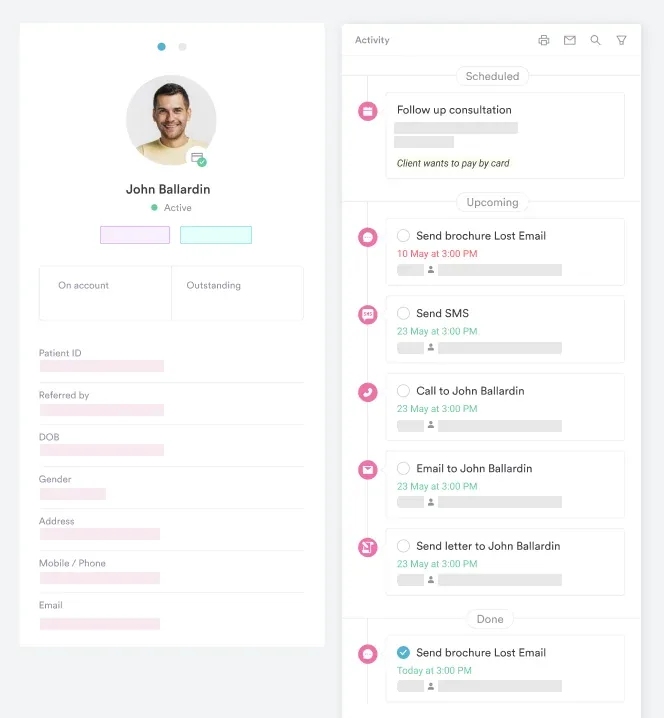
Structured digital intake and consent forms that capture presenting symptoms, lesion morphology, and prior diagnoses help clinicians document the details coders need. This reduces query cycles between clinical and billing teams, a common bottleneck in dermatology practices. Good clinical documentation best practices close this loop before claims are submitted.

When DLE is drug-induced, the ICD-10-CM tabular list instructs coders to use an additional code from the T36-T50 range to identify the causative drug. The sequence is:
Reversing this sequence or omitting the T-code entirely leads to claim rejection from most commercial payers. The physician’s record must name the drug and state it is the cause of the DLE for this sequencing to apply.
Identifying a drug as a cause is separate from billing a drug as a supply. The HCPCS code A9150 reports non-prescription drugs dispensed to a patient, and Medicare generally treats it as non-covered.
When reviewing records for drug-induced DLE, ask whether the prescribing note or pharmacy reconciliation record names the causative agent. If the drug is identified, the T-code is mandatory. Missing it is the fastest route to a medical necessity denial for outpatient dermatology claims.
Practices transitioning legacy records or handling retrospective billing should understand how ICD-10 Code L93.0 maps to its ICD-9-CM predecessor. The commonly cited crosswalk is ICD-9-CM code 695.4 (Lupus erythematosus, discoid). This mapping is referenced across major coding databases and is consistent with the AAPC Codify ICD-10-CM lookup crosswalk tools.
The WHO’s ICD-10 browser provides the international reference for L93.0 as a cutaneous lupus erythematosus code. Note that the US ICD-10-CM system includes clinical modifications not present in the WHO base edition; always use CMS/NCHS sources for US billing purposes.
The transition from ICD-9-CM to ICD-10-CM in the United States occurred on October 1, 2015. All claims for dates of service on or after that date must use ICD-10-CM codes. Claims using ICD-9-CM codes for post-2015 dates of service are automatically rejected. For practices managing historical data.
Dermatology and rheumatology practices coding DLE encounters benefit from a consistent workflow to prevent the most common error patterns. The dermatology documentation workflows used for other chronic skin conditions apply equally here. A repeatable process matters more than individual coder skill when volume is high.
Consistent application of this five-step process significantly reduces rework from payer queries. Dermatology-specific skin condition assessment and documentation templates further support this by prompting clinicians to record the exact morphology and distribution of lesions at the point of care.
The billing entity decides which form carries the charge. Material for vocal cord medialization is reported as C1878 on a hospital outpatient claim, while dermatology practices send L93.0 encounters on a CMS-1500.
The ICD-10-CM tabular list includes critical Excludes notes for the L93 category. Coders must review these before finalizing any claim using ICD-10 Code L93.0.
An Excludes1 note means the two conditions cannot coexist in the same patient at the same encounter from a coding standpoint. If a patient has a documented DLE diagnosis, do not also code M32 on the same claim. The physician may need to clarify whether the patient has cutaneous-only disease (L93.0) or systemic disease (M32 range) before the claim is submitted. Skin clinic practices can benefit from skin clinic software that flags conflicting codes at the point of documentation entry. A quick reference sheet cuts lookup time on codes a practice bills every week.
Incorrect subcode selection within the L93 family is one of the most preventable causes of claim rejection in dermatology billing. ICD-10 Code L93.0 covers discoid lupus erythematosus specifically, and it requires physician-documented diagnosis, correct drug-code sequencing when applicable, and awareness of Excludes1 restrictions that bar simultaneous coding with SLE.
Pabau’s claims management software helps dermatology and rheumatology teams build pre-submission review steps directly into their workflows, reducing rework and strengthening audit defense. To see how Pabau supports accurate diagnostic coding workflows, book a demo.
ICD-10 Code L93.0 is the billable diagnosis code for discoid lupus erythematosus (DLE), a chronic autoimmune skin condition characterized by coin-shaped plaques on the face, scalp, and ears. It falls under the L93 Lupus erythematosus category within the L80-L99 block of the ICD-10-CM classification.
Yes, L93.0 is a fully billable ICD-10-CM diagnosis code for FY 2026. The parent code L93 is not billable and will result in claim rejection; you must code to the specific subcode L93.0, L93.1, or L93.2.
L93.0 covers discoid lupus erythematosus (chronic, scarring plaques). L93.1 covers subacute cutaneous lupus erythematosus (photosensitive, non-scarring annular lesions, often anti-Ro positive). L93.2 covers other local forms including lupus panniculitis and tumidus. The physician must specify the variant in the clinical record before a coder can select the correct subcode.
The physician’s record must explicitly document discoid lupus erythematosus or a recognized synonym. Clinical findings (discoid plaques, follicular plugging, scarring) and, where available, histopathological confirmation strengthen the claim. For drug-induced DLE, the causative agent must be identified to support mandatory T36-T50 adverse effect code sequencing.
L93.0 covers cutaneous/discoid lupus only. Systemic lupus erythematosus (SLE) is coded in the M32 range. An Excludes1 note in the ICD-10-CM tabular list means these codes cannot be reported together on the same claim, reflecting the clinical distinction between cutaneous-only and systemic disease.
The commonly cited ICD-9-CM crosswalk for L93.0 is code 695.4 (lupus erythematosus, discoid). The US transition from ICD-9-CM to ICD-10-CM occurred on October 1, 2015; ICD-9-CM codes are not valid for claims with dates of service on or after that date.
No. Tumidus is classified under L93.2 (other local lupus erythematosus), not L93.0. Reserve L93.0 for discoid lesions that scar, and use L93.2 for the non-scarring, edematous plaques that define the tumidus variant. Coding tumidus as discoid is a common subcode error that triggers denials.
Chilblain lupus maps to L93.0, the same billable code as discoid disease, even though it presents as bluish-red nodules on cold-exposed skin. The ICD-10-CM tabular list treats it as an approximate synonym of the discoid form, so no separate subcode applies unless the record specifies another variant.
There is no unspecified subcode within the L93 category, so a note reading only “lupus” cannot be assigned to L93.0. Query the physician to specify the variant before coding. For unspecified systemic disease, the code is M32.9 (systemic lupus erythematosus, unspecified), which sits outside the L93 skin-only range.
A malar or butterfly rash across the nose and cheeks signals acute cutaneous lupus tied to systemic disease, so it points to the M32 systemic lupus erythematosus range rather than L93.0. Discoid lesions scar and stay skin-limited, while the butterfly pattern does not, which is why the two map to different code families.



