ICD-10 Code Z74.8: Other problems related to care provider dependency
ICD-10 Code Z74.8: Definition and code details ICD-10 Code Z74.8 is the billable...

Last Updated: Oct 19, 2026
Billable Code Specific Code
H51.0 is the billable ICD-10-CM code for palsy (spasm) of conjugate gaze.
Conjugate gaze palsy is typically encountered across ophthalmology, neurology, and optometry practices. The correct code matters for both reimbursement and accurate clinical record-keeping, particularly when the underlying etiology (stroke, multiple sclerosis, brainstem lesion) also needs to be documented and sequenced.
Let Pabau's smart automation suggest the right codes, reduce claim denials, and keep your practice compliant—effortlessly.
Automate repetitive tasks and focus on what matters most—your patients.
Reduce coding errors and ensure compliance with the latest regulations.
Clean claims, fewer denials, and faster reimbursements.
Powerful insights and reporting to help your practice thrive.
HIPAA compliant SOC 2 certified GDPR-compliant Trusted by 4,000+ clinics worldwide

ICD-10 Code H51.0 is a billable diagnosis code describing palsy (spasm) of conjugate gaze, a binocular movement disorder affecting coordinated eye movement
H51.0 belongs to category H51 within the H49-H52 block; the parent code H51 is not billable and requires a subcode for claim submission
ICD-9-CM crosswalk is approximate: H51.0 maps to 378.81 (palsy) or 378.82 (spasm) via General Equivalence Mapping, not a direct 1:1 equivalent
Pabau’s claims management software supports accurate ICD-10 code assignment and structured documentation workflows for ophthalmology and neurology practices
ICD-10 Code H51.0 describes Palsy (Spasm) of Conjugate Gaze, a condition in which both eyes fail to move together in the same direction due to disruption of the neural pathways controlling coordinated horizontal or vertical gaze.
The code sits within the ICD-10-CM classification maintained by CMS and the National Center for Health Statistics (NCHS), under the broader category of binocular movement disorders.
Billable status: H51.0 is a billable, specific ICD-10-CM code valid for the 2026 fiscal year. It can be submitted on claims for reimbursement purposes. The parent code H51 (Other disorders of binocular movement) is not billable and must never appear on a claim as a standalone code.
Understanding where ICD-10 Code H51.0 sits in the hierarchy is essential for accurate claim submission. Many EHR systems auto-populate the parent category H51, which triggers an automatic rejection because H51 lacks the specificity required for billing. The full hierarchy is:
The CDC/NCHS ICD-10-CM web tool confirms H51.0 as a valid, specific subcode under the H51 category. Practices managing EHR integration for clinical documentation should verify that their system is configured to flag H51 as a non-billable parent and prompt coders to select H51.0 or another specific subcode.
Before submitting any claim with an H51 code, confirm the code ends in a decimal subcode (H51.0, H51.11, H51.20, or H51.9). Submitting the bare parent code H51 will result in an automatic claim rejection. Configure your EHR to suppress parent-only codes from billing queues.
Legacy billing systems and payer audits sometimes require knowledge of the ICD-9-CM equivalent for historical claim review. The crosswalk for ICD-10 Code H51.0 is an approximate mapping via General Equivalence Mapping (GEM), not a direct one-to-one equivalent.
The GEM conversion is approximate because ICD-9-CM separated palsy (378.81) and spasm (378.82) into two distinct codes, while ICD-10-CM combines both presentations under a single code, H51.0. When reviewing historical claims or conducting payer audits, note this distinction carefully. The AAPC Codify ICD-10-CM lookup provides full crosswalk and GEM detail for this code.
ICD-10 Code H51.0 is one of several billable codes within the H51 category. Knowing the full H51 code family helps coders avoid miscoding a convergence disorder or internuclear ophthalmoplegia as a conjugate gaze palsy, which are clinically and anatomically distinct conditions.
H51.0 is clinically distinct from internuclear ophthalmoplegia (H51.20), which involves a lesion in the medial longitudinal fasciculus producing disconjugate gaze rather than conjugate gaze failure. Misassigning one for the other risks claim scrutiny and inaccurately reflects the patient’s clinical picture.
Strabismus codes such as H49.9 and H50.9 sit in neighboring categories and are easy to confuse with H51.0 when documentation doesn’t specify whether the eyes move together. A curated code library for common ophthalmology and neurology presentations reduces this risk.
When a binocular movement disorder such as skew deviation or divergence insufficiency doesn’t match a more specific subcode, coders assign H51.8 (other specified disorders of binocular movement). It sits in the same H51 category as H51.0 and is billable, but it captures the atypical presentations that fall outside the named subcodes.
Conjugate gaze palsy arises when the neural circuits controlling simultaneous eye movement in the same direction are disrupted. The pontine paramedian reticular formation (PPRF) drives horizontal conjugate gaze. Vertical gaze is controlled by the rostral interstitial nucleus of the medial longitudinal fasciculus (riMLF) in the midbrain, and lesions at either site produce clinically recognizable patterns.
Central vertigo.
Common underlying causes that should be documented and, depending on sequencing rules, coded alongside H51.0 include:
When an underlying neurological condition is responsible for the conjugate gaze palsy, CDC/NCHS ICD-10-CM coding guidelines generally require that the underlying condition be sequenced as the principal diagnosis, with H51.0 assigned as an additional code. Cranial nerve involvement. Review the WHO ICD-10 browser hierarchy for guidance on manifestation versus etiology pairs.

Pabau helps practices document diagnoses accurately, manage claims, and reduce denials with structured patient records and integrated billing workflows.

Payers require clinical documentation that substantiates the diagnosis before reimbursement for H51.0. Insufficient documentation is the most common reason for post-payment audits on this code family. The clinical record should include:
When a psychological or behavioral factor is complicating a patient’s recovery, F54 may need separate consideration in the treatment plan and documentation.
Using digital clinical forms built around standard neurological and ophthalmological examination templates helps practices capture these data points consistently. Structured templates reduce the chance of submitting a claim where the diagnosis code is present, but the supporting clinical narrative is absent from the encounter note.

Practices using structured patient records in their EHR can flag H51.0 as a code that requires underlying-cause documentation before the claim is finalized. This is particularly useful in multi-provider practices where the ordering clinician and the billing team operate in separate workflows.
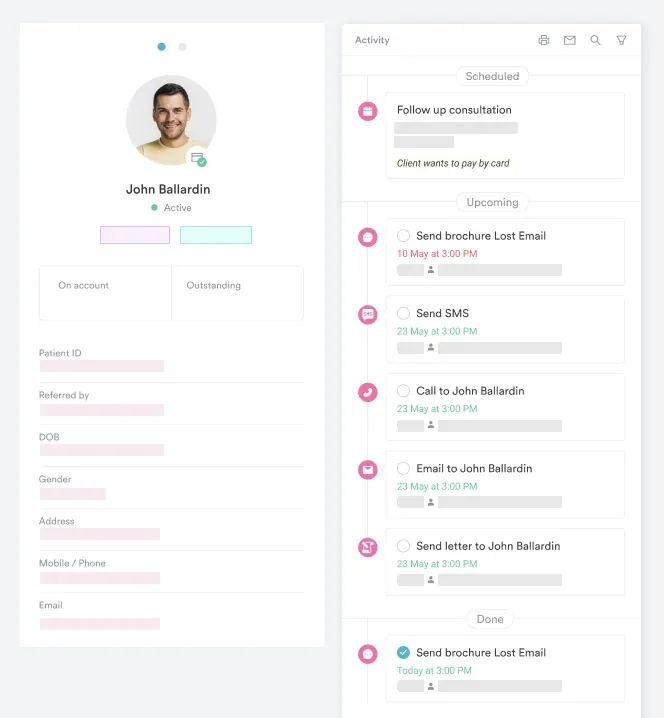
Document the direction and degree of gaze restriction in every encounter note where H51.0 is assigned. Auditors look for clinical findings that match the code description. A note that says only ‘conjugate gaze palsy’ with no examination detail is a red flag for medical necessity review.
Assigning ICD-10 Code H51.0 accurately is one step. Getting it through medical billing without errors is another. Ophthalmology and neurology practices face a particular challenge because conjugate gaze palsy frequently appears as a secondary diagnosis on claims where a neurological primary diagnosis, such as stroke or MS, is the principal code. Claim scrubbing catches the mismatches that would otherwise come back as a denial two weeks later.
This reduces the back-and-forth with payers that adds weeks to revenue cycle timelines.

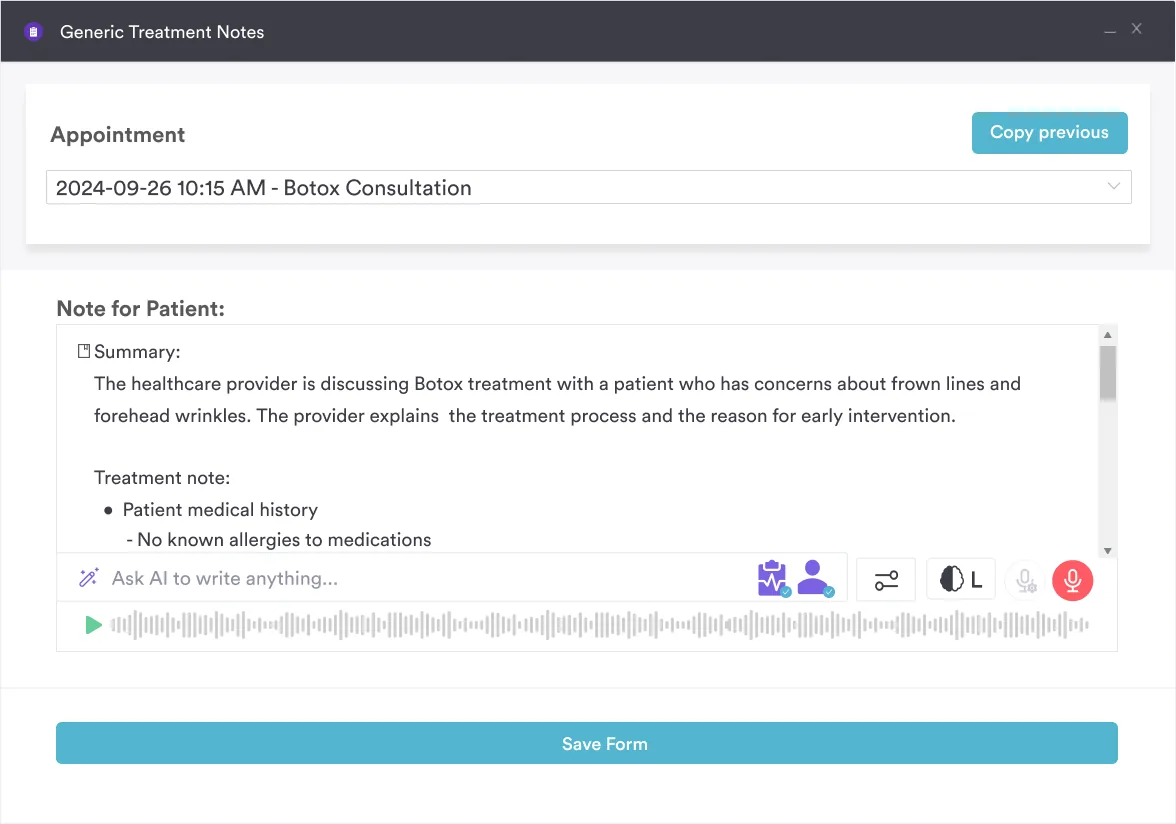
Codes like E58 often overlap with neurological comorbidities. Practices benefit from having a consistent approach to sequencing that is built into their documentation template rather than left to individual clinician discretion. A comprehensive exam billed as CPT 92002 should be reflected in that same documentation.
The time-saving features that hold up best are those that remove the manual steps from coding workflows.
Practices operating across ophthalmology and dermatology can explore dermatology EMR workflows in Pabau to understand how specialty-specific documentation and billing are configured.
ICD-10 Code H51.0 is a straightforward billable code, but it is frequently mishandled because of parent-code confusion and inadequate documentation of the underlying neurological cause. Getting it right means confirming billable specificity, applying correct sequencing when a primary neurological diagnosis is present, and ensuring clinical notes contain the examination findings payers expect to see.
Pabau’s structured documentation tools and revenue cycle management support help ophthalmology and neurology practices build these checks into every encounter. To see how Pabau handles coding workflows for complex diagnostic presentations, book a demo.

Need a reference for other ophthalmology ICD-10 codes? H02.79 covers coding for a common eyelid condition often documented alongside binocular movement disorders.
Documenting combined type ADHD claims? ADHD combined type coding guide explains why F90.2 requires documenting both inattentive and hyperactive-impulsive symptom clusters together.
Defaulting to unspecified ADHD too often? Unspecified ADHD coding guide warns against defaulting to F90.9 when documentation supports a more specific ADHD subtype.
ICD-10 Code H51.0 is a billable diagnosis code for Palsy (Spasm) of Conjugate Gaze, a binocular movement disorder in which the eyes fail to move together in the same direction due to disruption of the neural pathways controlling coordinated gaze. It belongs to category H51 within the H49-H52 block of the ICD-10-CM classification system.
Yes, H51.0 is a valid, billable ICD-10-CM code for fiscal year 2026. The parent code H51 is not billable; only H51.0 and other H51 subcodes (H51.11, H51.12, H51.20, H51.9) can be submitted on claims for reimbursement.
H51.0 crosswalks approximately to ICD-9-CM 378.81 (Palsy of Conjugate Gaze) and 378.82 (Spasm of Conjugate Gaze) via General Equivalence Mapping. This is an approximate conversion, not a direct 1:1 equivalent, because ICD-9-CM used two separate codes where ICD-10-CM uses one.
No. When an underlying neurological condition such as stroke or multiple sclerosis is responsible for the conjugate gaze palsy, CDC/NCHS coding guidelines generally require the underlying condition to be sequenced as the principal diagnosis, with H51.0 assigned as an additional code. The clinical record should document both the underlying cause and the gaze disorder.
H51.0 describes failure of both eyes to move together in the same direction (conjugate gaze palsy), typically caused by a lesion at the pontine paramedian reticular formation or midbrain gaze centers. H51.20 describes internuclear ophthalmoplegia, caused by a lesion in the medial longitudinal fasciculus and characterized by impaired adduction in one eye with nystagmus in the other during horizontal gaze, a disconjugate pattern. These are clinically and anatomically distinct conditions requiring separate codes.
Conjugate gaze palsy, where both eyes fail to move together in the same direction, is coded H51.0 in ICD-10-CM, covering both horizontal and vertical conjugate gaze palsy. The parent code H51 is not billable, so H51.0 or another specific H51 subcode must appear on the claim.
Skew deviation is reported under H51.8 (other specified disorders of binocular movement), the H51 subcode for binocular movement disorders that lack their own specific code. Like H51.0, H51.8 is billable, while the bare parent code H51 is not.