ICD-10 code S61.201A: Open wound of left index finger without nail damage
ICD-10 code S61.201A covers a left index finger wound of unstated type ICD-10 co...

Last Updated: Oct 16, 2026
Billable Code Specific Code
E59 is the billable ICD-10-CM code for dietary selenium deficiency.
Let Pabau's smart automation suggest the right codes, reduce claim denials, and keep your practice compliant—effortlessly.
Automate repetitive tasks and focus on what matters most—your patients.
Reduce coding errors and ensure compliance with the latest regulations.
Clean claims, fewer denials, and faster reimbursements.
Powerful insights and reporting to help your practice thrive.
HIPAA compliant SOC 2 certified GDPR-compliant Trusted by 4,000+ clinics worldwide

ICD-10 Code E59 is a fully billable ICD-10-CM diagnosis code for dietary selenium deficiency, valid for claims with dates of service on or after October 1, 2015.
Keshan disease is an Applicable To inclusion term under E59, meaning it maps to this code in the official tabular list.
E59 carries a Type 1 Excludes note for sequelae of selenium deficiency (E64), which cannot be coded at the same time as E59.
Pabau’s structured patient records and claims management tools help clinicians document selenium deficiency accurately and reduce coding errors at submission.
The ICD-10-CM tabular list includes Keshan disease as an Applicable To term under E59. That means if a clinician documents a diagnosis of Keshan disease, the correct code to assign is E59, not a separate code.
Keshan disease is an endemic cardiomyopathy first identified in the Keshan region of northeastern China, where soil selenium levels are notably low. It causes dilated cardiomyopathy and has historically affected populations with inadequate dietary selenium intake. Outside of selenium-poor geographic regions, the condition is rare in clinical practice in the United States. However, it remains clinically relevant for patients with prolonged total parenteral nutrition (TPN), malabsorption conditions such as Crohn’s disease, or those living in or originating from selenium-deficient areas.
Clinical implication: When a provider’s note references Keshan disease specifically, coders should assign E59 without adding a separate cardiomyopathy code unless the cardiomyopathy is documented as a distinct, separately managed condition. Coding the cardiomyopathy separately requires physician documentation that supports it as an independent diagnosis beyond the selenium deficiency itself. Cardiac conditions from other chapters keep their own codes, so a post-transplant patient’s cardiac complication falls to ICD-10 code T86.298. When in doubt, query the provider before adding a secondary code.
E59 carries a single Type 1 Excludes note. Understanding what that means operationally prevents sequencing errors that lead to payer rejections.
A Type 1 Excludes note is a “not coded here” instruction. It means the excluded condition is coded elsewhere in the ICD-10-CM system, and the two codes represent mutually exclusive clinical scenarios. They cannot be assigned together on the same claim. For a review of how sequencing rules apply across different sequencing rules for ICD-10-CM codes, that reference covers the principal versus secondary diagnosis distinction in detail.
E64 vs. E59: E59 describes active, current dietary selenium deficiency. E64 describes the late effects or sequelae after the deficiency has been resolved or the acute phase has passed. If the patient is currently selenium-deficient and being treated for it, E59 is correct. If the patient had selenium deficiency in the past and now presents with a residual condition caused by that deficiency, E64 is the appropriate code. The two scenarios are clinically and temporally distinct. Injury codes draw that line with a seventh character instead, where S52.002F marks routine healing.
Query the provider when documentation reads ‘history of selenium deficiency with current cardiac findings.’ If the cardiomyopathy is an active residual effect of a resolved deficiency, E64 may be more accurate than E59. A provider query at the time of coding prevents downstream denials and audit exposure.
Claim denials for nutritional deficiency codes often trace back to incomplete documentation rather than incorrect code selection. These are the documentation elements that support E59 assignment and withstand payer medical necessity review.
For high-risk populations including TPN-dependent patients and those with inflammatory bowel disease, many practices use digital intake forms to capture nutritional history systematically before the clinical encounter. That intake data becomes part of the legal medical record and supports the diagnosis code at billing. Consistent ICD-10-CM coding documentation requirements apply across all nutritional deficiency codes in the E50-E64 range.
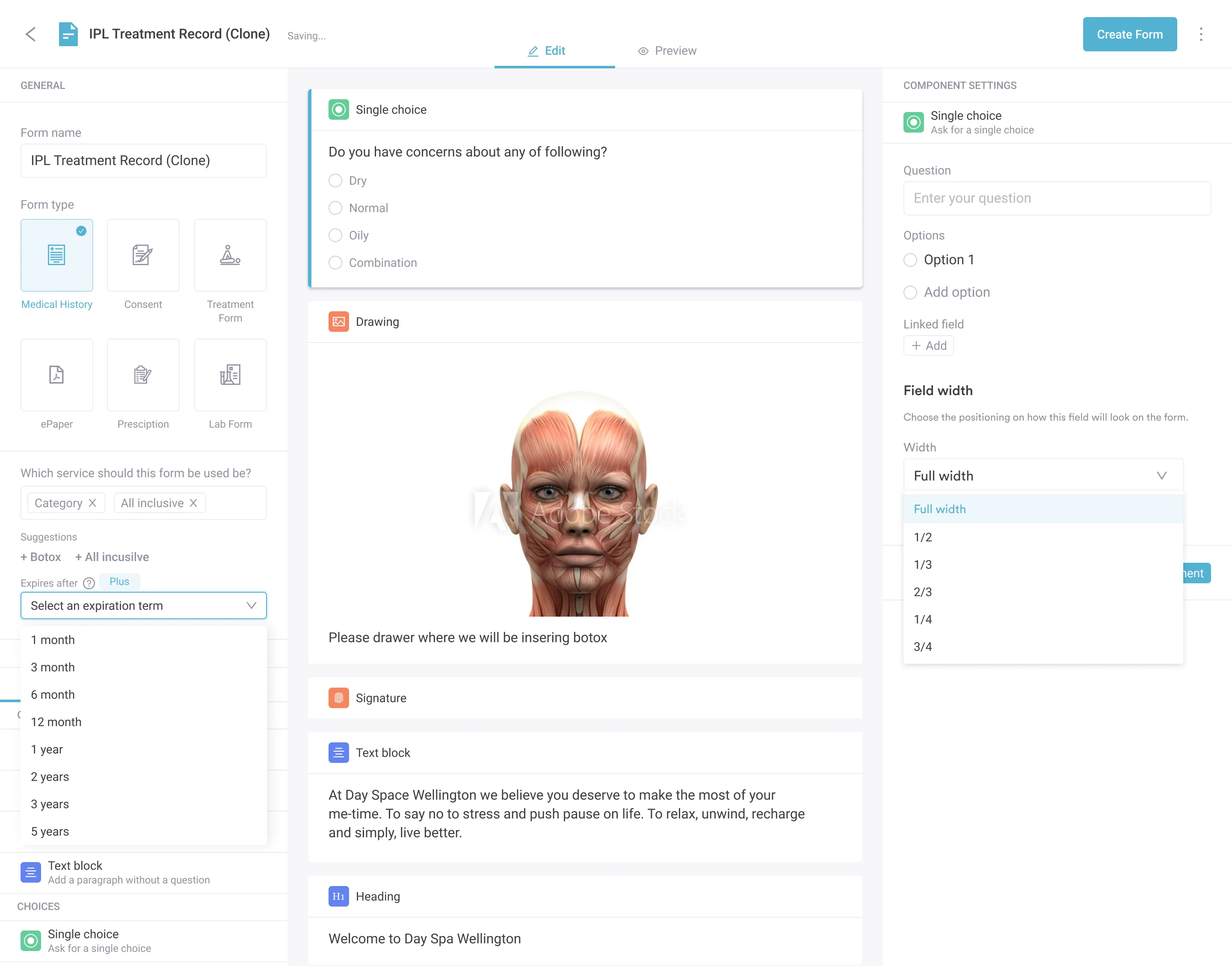

Pabau’s claims management workflows and digital intake forms help integrative, functional medicine, and IV therapy clinics document nutritional deficiencies accurately from the first encounter through billing submission.

Long-term diabetes and thyroid management is easier in an EHR suited to primary care that trends labs over time.
Several practical coding rules affect how E59 interacts with other diagnosis codes on the same claim. Getting these right at first submission reduces rework and protects against audit risk.
When a patient presents specifically for the evaluation and treatment of selenium deficiency, E59 can be sequenced as the principal (or first-listed) diagnosis. When selenium deficiency is an incidental finding or a complication of another primary condition (such as malnutrition or Crohn’s disease), sequence the primary condition first and list E59 as a secondary code. On a fracture admission the order reverses, with S52.121R leading and the deficiency behind it.
For integrative medicine practices that routinely assess micronutrient panels, selenium deficiency may be identified as one of several concurrent deficiencies. In those cases, assign separate codes for each confirmed deficiency. E59 and E60 (dietary zinc deficiency), for example, can be coded together if both are confirmed and separately documented.
Selenium deficiency frequently co-occurs with broader malnutrition. If the provider documents both conditions as active, code both. The ICD-10-CM guidelines do not prohibit concurrent coding of E59 with malnutrition codes (E40-E46) unless a specific excludes note applies. The same freedom holds alongside an injury code such as S52.202H, where both conditions are active. There is no such note between E59 and the malnutrition range, so dual coding is permitted when clinical documentation supports it.
Common pitfall: Coders sometimes assume that a malnutrition code “covers” all underlying micronutrient deficiencies. It does not. Each confirmed deficiency with clinical significance should be coded separately for complete diagnostic capture and accurate risk adjustment. Healing status deserves the same care, since S52.221N asserts a nonunion the record has to show.
The CDC/NCHS ICD-10-CM web tool provides the official tabular list and index for FY2026. Coders should verify E59 remains unchanged for the current fiscal year before submitting, as CMS updates the ICD-10-CM annually each October 1. Seventh characters shift less often, though S49.091P still has to match the encounter in front of you. For functional medicine clinics that frequently bill micronutrient deficiency codes, checking payer-specific local coverage determinations (LCDs) for selenium testing is recommended before ordering laboratory work.
Check your MAC’s (Medicare Administrative Contractor) LCD for selenium serum testing before ordering. Some contractors require documentation of a high-risk clinical condition such as TPN dependence or confirmed malabsorption syndrome to establish medical necessity for the test. Submitting without this documentation is the most common reason selenium-related claims are downcoded or denied on first pass.
A home-TPN patient returns with fatigue and a serum selenium level below the laboratory reference range, and the provider documents confirmed dietary selenium deficiency. Because the encounter is specifically to evaluate and treat that deficiency, E59 is reported as the first-listed diagnosis, supported by the abnormal lab value and a documented supplementation plan. If instead the selenium deficiency is a manifestation of active Crohn\’s disease, sequence the Crohn\’s disease code (K50.-, coded to the required level of specificity such as K50.90) first and list E59 as the secondary diagnosis. Link E59 to the appropriate laboratory CPT for the selenium assay that was ordered, and never report E59 together with E64 on the same claim, per the Type 1 Excludes note. Practices treating medical billing as a back-office task find errors at the front desk instead.
Understanding the codes surrounding E59 helps coders identify the right level of specificity and avoid misassignment when multiple deficiencies are present. Trace-element codes sit right beside it: the zinc deficiency ICD-10 code (E60) and the calcium deficiency code (E58) are its immediate neighbors, so micronutrient deficiency ICD-10 coding often means assigning several codes from this range at once. The WHO’s ICD-10 classification browser at icd.who.int provides the international hierarchy, and the US ICD-10-CM version expands on it for American clinical practice.
For IV therapy clinics treating micronutrient deficiencies, accurate concurrent coding across E55-E64 ensures complete clinical capture and supports the complexity level documented at the encounter. Running practice management software with integrated billing reduces the manual effort of tracking multiple concurrent deficiency codes across a patient’s care timeline.
Before the October 1, 2015 ICD-10-CM transition mandated under HIPAA for all covered entities, selenium deficiency was classified under ICD-9-CM. The crosswalk below shows the mapping for practices maintaining historical records or working with older claims data.
The ICD-10-CM version provides significantly more specificity. ICD-9-CM code 269.3 covered a broad range of mineral deficiencies under a single code, so anyone searching for a single mineral deficiency ICD-10 code today has to pick the specific trace element instead. ICD-10-CM separates selenium (E59), zinc (E60), and other trace elements (E61.0-E61.9) into distinct billable codes. The injury chapter went further still, giving S52.092Q its own entry for an open fracture with malunion. The CMS ICD-10 codes and resources page maintains the General Equivalence Mappings (GEMs) for historical crosswalk reference.
Selenium deficiency is uncommon in patients with unrestricted dietary access in selenium-replete regions. E59 is most frequently encountered in specific clinical populations where intake or absorption is structurally compromised. Practices using structured patient records can flag these risk factors at intake to prompt appropriate laboratory workup before the diagnosis code is needed.
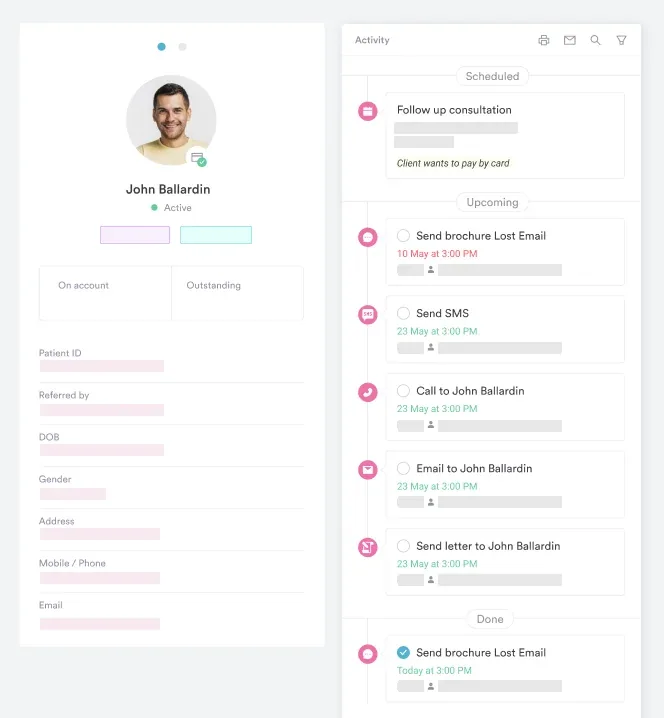
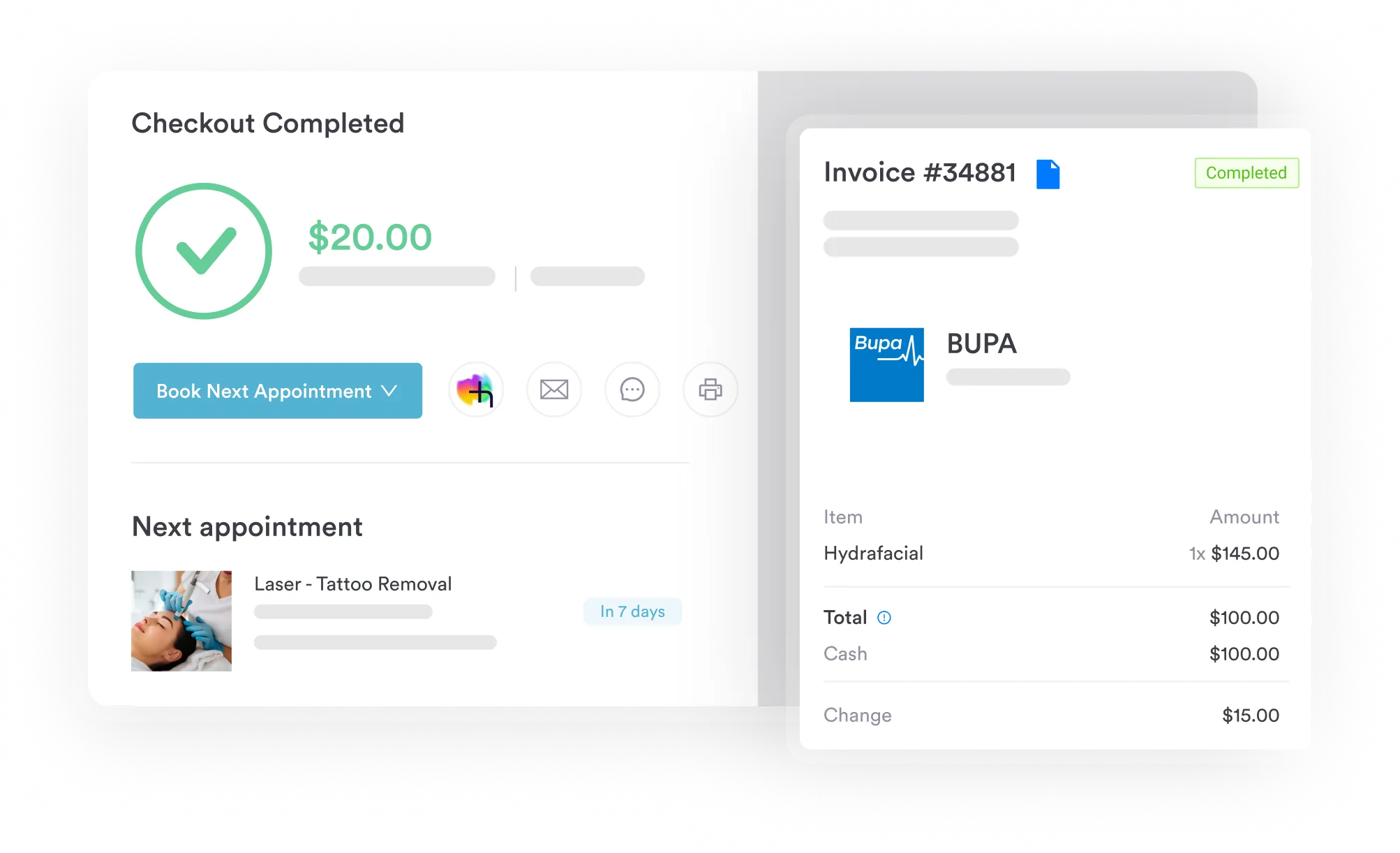
Selenium deficiency claims fail most often not because of wrong code selection but because the documentation doesn’t support the code assigned. E59 is a billable code with clear criteria: confirmed dietary or absorption-related deficiency, supported by laboratory findings and clinical documentation.
Pabau’s digital forms and HIPAA-compliant clinical documentation tools help integrative, functional medicine, and IV therapy clinics build the documentation trail that supports nutritional deficiency codes from intake through billing. To see how Pabau handles concurrent nutritional deficiency coding workflows, book a demo.

Billing an unlisted dialysis procedure? unlisted dialysis procedure code CPT code 90999 is the unlisted dialysis procedure code, used only when no other code in the range fits.
ICD-10 Code E59 is the billable ICD-10-CM diagnosis code for dietary selenium deficiency. It belongs to Chapter 4: Endocrine, nutritional and metabolic diseases, within the subcategory E50-E64: Other nutritional deficiencies. The code includes Keshan disease as an Applicable To inclusion term and is valid for all claims with a date of service on or after October 1, 2015.
Keshan disease is an endemic dilated cardiomyopathy caused by severe dietary selenium deficiency, historically documented in selenium-poor regions of northeastern China. In ICD-10-CM, it is listed as an Applicable To inclusion term under E59, meaning any documented diagnosis of Keshan disease is assigned code E59.
E59 has one Type 1 Excludes note: E64 (sequelae of malnutrition and other nutritional deficiencies). These two codes cannot be assigned together on the same claim. E59 applies to active current deficiency; E64 applies to late effects after the deficiency has resolved.
Documentation should include a confirmed diagnosis of dietary selenium deficiency (not “suspected”), the clinical mechanism (dietary inadequacy, malabsorption, or TPN dependence), a supporting laboratory value with an abnormal serum or plasma selenium level, and a documented treatment plan. Payer LCDs for selenium testing may require documentation of a high-risk condition to establish medical necessity.
The codes immediately adjacent to E59 in the E50-E64 subcategory include E55.9 (vitamin D deficiency, unspecified), E56.9 (vitamin deficiency, unspecified), E60 (dietary zinc deficiency), E61 (deficiency of other nutrient elements), E63 (other nutritional deficiencies), and E64 (sequelae of malnutrition and other nutritional deficiencies). All except E64 can be coded concurrently with E59 when clinically supported.
Yes. There is no excludes note between E59 and the malnutrition range (E40-E46). When both conditions are confirmed and separately documented by the provider, both codes can be assigned. Each confirmed nutritional deficiency should be coded individually to ensure complete diagnostic capture and accurate risk adjustment.
Yes. E59 is a billable, specific ICD-10-CM code, so it can stand on its own on a reimbursement claim without a further character. The ICD-10 code for selenium deficiency has been valid for all dates of service on or after October 1, 2015, and remains current for FY2026.
Dietary zinc deficiency maps to E60, the adjacent trace-element code. There is no excludes note between E59 and E60, so when a patient has both a confirmed selenium and zinc deficiency documented, you can code them together on the same claim.