ICD-10 code S61.201A: Open wound of left index finger without nail damage
ICD-10 code S61.201A covers a left index finger wound of unstated type ICD-10 co...

Last Updated: Oct 16, 2026
Billable Code Specific Code
E30.8 is the billable ICD-10-CM code for other disorders of puberty.
ICD-10 Code E30.8 sits within the following classification hierarchy:
The AAPC Codify ICD-10-CM lookup and the WHO ICD-10 browser both classify E30.8 as a billable, specific code, meaning it can be submitted directly on a claim without requiring a more granular subcategory. Per the CMS ICD-10 codes page, codes at this level of specificity are valid for FY2026 (October 1, 2025 through September 30, 2026).
The category E30 itself covers puberty disorders that do not map to a more specific code elsewhere in the ICD-10-CM tabular list. E30.8 captures the "other specified" conditions within that category. Practice management software like Pabau adds claims management workflows with built-in ICD-10-CM validation, so you can flag whether a submitted diagnosis code meets specificity requirements before the claim leaves the practice.
Let Pabau's smart automation suggest the right codes, reduce claim denials, and keep your practice compliant—effortlessly.
Automate repetitive tasks and focus on what matters most—your patients.
Reduce coding errors and ensure compliance with the latest regulations.
Clean claims, fewer denials, and faster reimbursements.
Powerful insights and reporting to help your practice thrive.
HIPAA compliant SOC 2 certified GDPR-compliant Trusted by 4,000+ clinics worldwide

ICD-10-CM Code E30.8 describes Other disorders of puberty, a billable, pediatric-only diagnosis code valid through September 30, 2026 (FY2026).
E30.8 applies strictly to patients aged 0-17; submitting it against an adult patient triggers an age-restriction edit and likely denial.
Four Type 1 Excludes conditions (including central precocious puberty E22.8 and congenital adrenal hyperplasia E25.0) must be ruled out before assigning E30.8.
Pabau’s claims management workflows flag age-restriction edits and excluded codes at the point of charge entry, reducing denials before submission.
| Level | Code / Range | Description |
|---|---|---|
| Chapter | E00-E89 | Endocrine, nutritional, and metabolic diseases |
| Block | E20-E35 | Disorders of other endocrine glands |
| Category | E30 | Disorders of puberty, not elsewhere classified |
| Code | E30.8 | Other disorders of puberty |
E30.8 carries a formal pediatric age restriction. The code is applicable only for patients aged 0-17 years. Submitting E30.8 against an adult patient (18 or older) triggers an age-restriction edit in most clearinghouse and payer systems, resulting in claim denial.
E30.8 is complete as written and takes no seventh character. Injury codes work differently, so ICD-10 code S66.299D needs that character to flag a follow-up visit.
The pediatric restriction aligns with the clinical reality of the code: puberty disorders are, by definition, conditions of childhood and adolescence. The CDC/NCHS ICD-10-CM web tool confirms the age flag. Coders should verify patient date of birth against the date of service before assignment, particularly in practices that see both adolescent and adult patients (for example, a general endocrinology practice that transitions patients out of pediatric care).
For practices coding other pediatric ICD-10-CM codes across different organ systems, such as those working with pediatric neurodevelopmental conditions, the same age-restriction logic applies: validate age at the point of charge capture, not during billing review. Catching age mismatches at entry eliminates a correctable denial before it costs time on appeal.
E30.8 captures specified puberty disorders that fall outside delayed puberty and precocious puberty. The official inclusion term is premature thelarche. Coders also reach for it when documentation describes premature breast development or an isolated pubertal variant that no more specific code captures.
The dividing line is central activation. If the workup shows the hypothalamic-pituitary-gonadal axis has switched on early, the encounter is precocious puberty (E30.1) or central precocious puberty (E22.8), not E30.8.
The most consequential part of coding E30.8 correctly is understanding its Type 1 Excludes list. Type 1 Excludes means the excluded condition cannot be coded at the same time as E30.8 because it is included elsewhere in the classification. These are not coding conventions where dual coding is optional. They are hard exclusions.
| Excluded condition | Correct code | Why excluded |
|---|---|---|
| Albright-McCune-Sternberg syndrome | Q78.1 | Classified under congenital malformations of musculoskeletal system |
| Central precocious puberty | E22.8 | Classified under disorders of pituitary gland (other specified) |
| Congenital adrenal hyperplasia | E25.0 | Classified under adrenogenital disorders |
| Female heterosexual precocious pseudopuberty | E25.- | Classified under adrenogenital disorders |
| Male isosexual precocious pseudopuberty | E25.- | Classified under adrenogenital disorders |
Central precocious puberty (CPP) driven by hypothalamic-pituitary-gonadal axis activation is coded to E22.8, not E30.8. This distinction matters clinically and for billing: CPP managed with GnRH agonists has specific prior authorization pathways that differ from those attached to E30.8 diagnoses. Presenting the wrong code risks misrouted authorization and denial.
Congenital adrenal hyperplasia (CAH) with virilization causing premature pubertal changes also falls outside E30.8 because the underlying adrenal condition drives the classification. Document the adrenal etiology and code to E25.0 accordingly.
Practices working with complex ICD-10-CM diagnostic coding across specialties, including those familiar with neurological codes like ICD-10-CM diagnostic coding for hemorrhagic conditions, will recognize this pattern: the root cause determines the classification, not the presenting symptom.
A weight loss clinic platform turns an obesity or metabolic diagnosis into a structured, monitored program.
Understanding where E30.8 sits among its sibling codes prevents misassignment. The E30 category contains four billable codes, each serving a distinct clinical scenario. In plain terms, the ICD-10 code for delayed puberty is E30.0, the ICD-10 code for precocious puberty is E30.1, E30.8 covers other specified disorders, and E30.9 is the unspecified fallback.
| Code | Description | When to use |
|---|---|---|
| E30.0 | Delayed puberty | Constitutional delay, hypothyroidism-related delay, or other documented causes of puberty onset after age-appropriate norms |
| E30.1 | Precocious puberty | Early onset puberty documented as precocious and not attributable to an excluded condition (e.g. CPP, CAH, or Albright syndrome) |
| E30.8 | Other disorders of puberty | Specified puberty disorder that does not fit E30.0 or E30.1, and is not captured by a Type 1 Excluded code |
| E30.9 | Disorder of puberty, unspecified | Use only when documentation is insufficient to support a more specific code; not preferred when specificity is available |
The key differentiator between E30.8 and E30.9 is documentation. E30.9 is the unspecified fallback. If the clinician’s notes identify a specific type of puberty disorder that doesn’t fit delayed (E30.0) or precocious (E30.1), the coder should assign E30.8 and query the provider if the nature of the condition is ambiguous rather than defaulting to E30.9. Queries drive specificity; specificity supports medical necessity; medical necessity supports reimbursement.
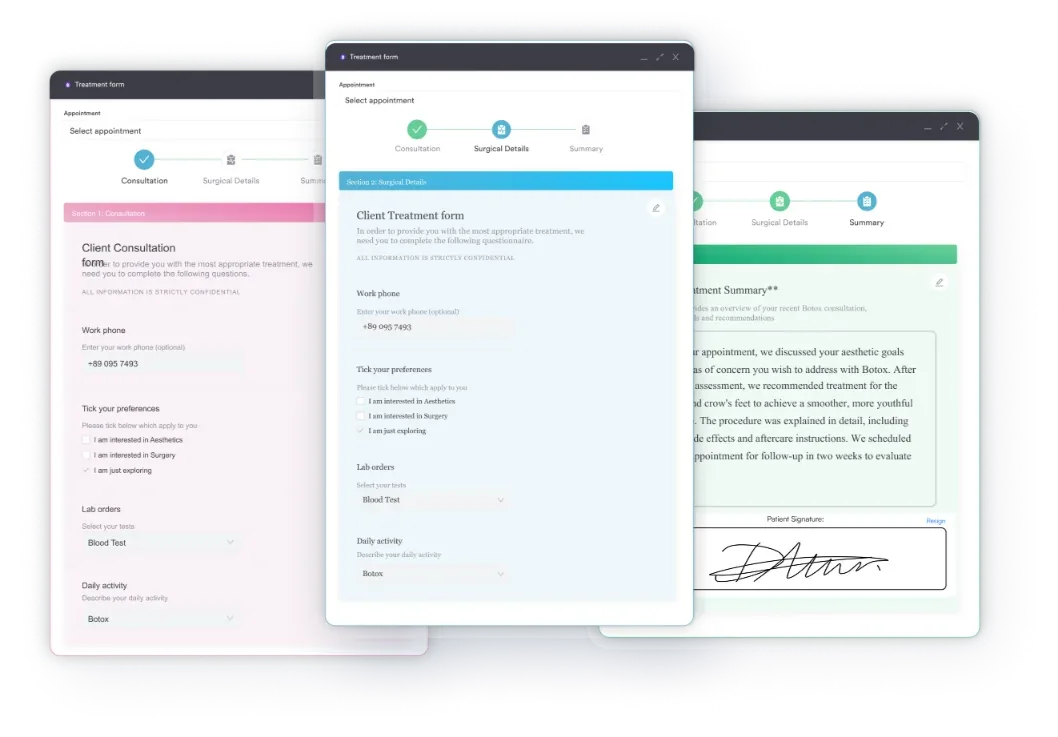
Practices serving pediatric and adolescent populations, including those using digital intake forms to capture structured clinical history at first presentation, can build diagnosis-specific intake pathways that prompt for the clinical detail needed to distinguish E30.8 from E30.0, E30.1, and E30.9.
Query the provider before assigning E30.9. If the clinical notes describe a specific condition affecting puberty timing or development that doesn’t match delayed or precocious puberty, E30.8 is the correct assignment. Document the query and response in the patient record to support the code selection at audit.
Legacy data analysis, comparative outcomes research, and certain payer audits still reference ICD-9-CM codes. The approximate forward map from ICD-10-CM to ICD-9-CM for E30.8 is:
This is an approximate crosswalk, not an exact equivalence. The ICD-9-CM category 259.1 was broader and captured conditions now split across E30.0, E30.1, and E30.8 in ICD-10-CM. When reviewing historical claims data or comparing pre-2015 coding against current submissions, treat 259.1 as a directional match for E30.8 rather than a one-to-one substitute.
HIPAA-covered transactions have required ICD-10-CM codes since October 1, 2015. ICD-9-CM codes are no longer valid for current claim submission. Crosswalk references are useful for retrospective analysis and insurance audit responses, but any active billing must use the current ICD-10-CM code set. The CDC/NCHS ICD-10-CM tool allows coders to search both current codes and review historical transitions.
For practices that maintain longitudinal patient records, tracking which historical encounter used 259.1 and mapping those encounters forward when generating outcome reports is a function that EHR-integrated tools handle more reliably than manual spreadsheet crosswalks.
Practices familiar with endocrine-related ICD-10 diagnosis codes across organ systems, including conditions documented in pediatric and adolescent care, can apply the same crosswalk logic to related endocrine-related ICD-10 diagnosis codes when reviewing legacy data.

Pabau’s claims management tools validate ICD-10-CM codes at charge entry, flag age-restriction mismatches, and track E30.8 and related pediatric endocrine diagnoses across patient records, so your billing team spends time on care, not corrections.

Assigning ICD-10 Code E30.8 requires clinical documentation that establishes medical necessity. Payers expect the medical record to substantiate why the encounter was coded to a specific puberty disorder rather than the unspecified alternative.
Pediatric endocrinologists and general pediatricians should align their note templates to capture these data points as a matter of workflow. Structured clinical documentation, supported by EHR tools that prompt for diagnosis-specific fields, reduces the back-and-forth between coders and clinicians.
Patient compliance documentation, including the patient’s or guardian’s acknowledgment of the condition and monitoring plan, also supports the broader clinical record when payers conduct retrospective reviews. Practices focused on patient compliance documentation will find that structured note templates reduce both coder queries and audit risk simultaneously.
Clinical documentation is the foundation of E30.8 coding accuracy. No billing system can correct a note that lacks specificity, but it can prompt the right questions at the right moment in the workflow.
Build a structured note template for puberty disorder visits that includes checkboxes for excluded diagnoses (central precocious puberty, CAH, Albright syndrome) and fields for hormonal assay results and bone age. When every provider uses the same template, coders can assign E30.8 with confidence and without a query 90% of the time.
E30.8 is a diagnosis code, not a procedure code. It identifies the condition being treated; the CPT or HCPCS codes on the same claim capture what was done. Understanding how E30.8 interacts with common procedure codes helps avoid claim mismatches.
Common CPT codes paired with E30.8 in pediatric endocrinology encounters include:
Payer coverage for E30.8 varies. Most commercial payers and Medicaid managed care organizations recognize the code for pediatric evaluation and management encounters. Prior authorization is rarely required for E&M services but may be required for specialist referrals, imaging, or hormonal assays depending on the plan.
Fertility and pediatric endocrinology practices, including those managing transitions between pediatric and adult care pathways, benefit from practice software built for fertility and pediatric endocrinology practices that tracks authorization status alongside the diagnosis code in the patient record.
No blanket reimbursement guarantee applies to E30.8. Coverage and rates vary by payer, plan type, and state Medicaid program. Always verify authorization requirements with the patient’s specific plan before ordering workup investigations.
Most puberty disorder coding errors stem from two avoidable mistakes: defaulting to E30.9 when E30.8 is supported, and overlooking the Type 1 Excludes list before assigning the code. ICD-10 Code E30.8 is specific, pediatric-only, and valid for FY2026, but it earns its place on a claim only when the clinical record demonstrates that the condition has been assessed, that excluded diagnoses have been ruled out, and that the encounter warrants the level of service billed alongside it.
Pabau’s compliance management tools support pediatric practices by embedding diagnosis validation, age-restriction checks, and documentation prompts directly into the clinical workflow, so E30.8 is coded correctly from the start. To see how Pabau handles pediatric endocrine documentation and billing workflows, book a demo.

Coding a back or flank tumor excision? Back or flank tumor billing guide covers the 3 cm size threshold that separates this code from 21930.
Billing a multi-level spinal procedure? CPT code 22103 CPT code 22103 is the add-on code for each extra vertebral segment excised, billed with 22100, 22101, or 22102.
Coding a posterior vertebral fracture repair? CPT code 22328 CPT code 22328 is the add-on code for each additional vertebra treated in a posterior fracture repair.
ICD-10 Code E30.8 is a billable ICD-10-CM diagnosis code for Other disorders of puberty, classified under category E30 (Disorders of puberty, not elsewhere classified) within the endocrine disease range E00-E89. It is valid for FY2026 and applies only to patients aged 0-17 years.
E30.8 is the “other specified” code used when the clinical record identifies a specific puberty disorder that doesn’t fit delayed puberty (E30.0) or precocious puberty (E30.1). E30.9 is the unspecified code used only when documentation is insufficient to support a more specific diagnosis. When documentation supports specificity, E30.8 is preferred over E30.9.
No. E30.8 carries a formal pediatric age restriction and is valid only for patients aged 0-17 years. Submitting E30.8 for an adult patient will trigger an age-restriction edit at the clearinghouse or payer level, resulting in claim denial. Verify patient date of birth against date of service before assigning this code.
ICD-10-CM E30.8 converts approximately to ICD-9-CM 259.1 (Precocious sexual development and puberty, not elsewhere classified). This is an approximate crosswalk, not an exact equivalence, because ICD-9-CM 259.1 was broader in scope. ICD-9-CM codes are no longer valid for active HIPAA-covered claim submissions; the crosswalk is used for historical data analysis only.
E30.8 has five Type 1 Excludes conditions: Albright-McCune-Sternberg syndrome (Q78.1), central precocious puberty (E22.8), congenital adrenal hyperplasia (E25.0), female heterosexual precocious pseudopuberty (E25.-), and male isosexual precocious pseudopuberty (E25.-). These conditions must be coded to their specific codes; they cannot be submitted alongside E30.8.
The ICD-10 code for delayed puberty is E30.0. It applies when puberty begins later than age-appropriate norms, whether from constitutional delay, hypothyroidism, or another documented cause. E30.0 sits in the same E30 category as E30.8 but describes late onset rather than an other specified pubertal disorder.
Precocious puberty is coded E30.1 when the cause is peripheral. Central precocious puberty, driven by early activation of the hypothalamic-pituitary-gonadal axis, is coded E22.8 instead. Neither is coded to E30.8, so the clinical workup determines which code applies.
Premature thelarche, the isolated early development of breast tissue in a child, is coded E30.8 and is the listed inclusion term for that code. Document the absence of other pubertal signs and rule out central precocious puberty to support E30.8 over a precocious puberty code.