Nursing narrative note template
A nursing narrative note template is a structured PDF that guides you through re...

2
Last Updated: Oct 21, 2026

The internal family systems model organises the psyche into distinct parts – Exiles, Managers, and Firefighters – each with protective or wounded roles.
Self-leadership is the therapeutic goal: accessing the 8 Cs (Curiosity, Calm, Clarity, Connectedness, Confidence, Courage, Creativity, Compassion) to heal injured parts.
IFS therapy has a growing evidence base, with recognised research for depression, PTSD, and eating disorders – though the field is still expanding.
IFS integrates with EMDR, somatic therapies, and CBT, making it a flexible addition to a multi-modal clinical practice.
Clinic owners supporting IFS-trained therapists benefit from telehealth infrastructure, session documentation tools, and structured intake workflows.
Therapists routinely meet clients who feel internally divided – the part that wants to recover and the part that quietly sabotages progress, the part craving connection and the part that flinches from it. Most diagnostic frameworks struggle to give that experience clean clinical language.
An estimated 23.1% of U.S. adults (about 59.3 million people) lived with any mental illness in 2022, and a growing share of those presentations carry the kind of layered, parts-aware suffering that single-modality protocols rarely reach. The internal family systems model, developed by Dr. Richard C. Schwartz in the 1980s, is built for that complexity.
IFS reframes inner conflict as a coherent system of sub-personalities, called parts, working from the premise that the mind is naturally multiple rather than dysfunctional. For clinicians in mental health practice, this offers a structured, non-pathologizing lens that applies across anxiety, depression, complex trauma, and eating disorders.
Understanding IFS begins with its parts framework. Schwartz identified three functional categories of parts, each defined by the role it plays in the psyche’s protective system.
Exiles are parts that carry the pain. They typically hold memories, emotions, and beliefs formed during experiences of shame, abandonment, abuse, or loss. Because their emotional weight feels overwhelming, the system pushes them out of conscious awareness – exiling them to protect the rest of the psyche from being flooded.
Clinically, Exiles are often behind presentations of grief, deep sadness, or the pervasive sense of unworthiness that shows up in conditions such as depression and complex PTSD (C-PTSD). They want to be seen and heard; the system’s job, however, is to keep them contained.
Managers are the proactive protectors. They organise daily life in ways designed to keep Exiles hidden – through perfectionism, people-pleasing, intellectualisation, hyper-vigilance, or rigid control. A client presenting with obsessive thinking or chronic overwork is often running a Manager-dominated system. These parts are well-intentioned: their goal is to prevent the emotional pain of Exiles from destabilising the person’s functioning.
The challenge is that Manager strategies, though adaptive early in life, frequently create suffering in adulthood. An IFS practitioner would not challenge these behaviours directly but would instead approach the Manager with curiosity, asking what it fears would happen if it relaxed its control.
Firefighters activate reactively – when an Exile breaks through despite the Manager’s best efforts. Their job is damage control, and they pursue it without regard for consequences. Substance use, binge eating, self-harm, dissociation, and rage are common Firefighter strategies. They are not malicious; they are crisis responders doing whatever works fastest to suppress the pain.
Recognising Firefighter activity is a significant clinical moment. It signals that an Exile is activated and that Managers have been overwhelmed. For therapists working with psychology and counselling practices, understanding which type of part is driving a client’s behaviour shapes the entire direction of treatment planning.
The Self is the cornerstone of IFS – and the feature that most distinguishes it from other therapeutic frameworks. Unlike parts, the Self is not a sub-personality. It is the inherent, undamaged core that every person carries regardless of their history. Schwartz described it through eight qualities, known as the 8 Cs: Curiosity, Calm, Clarity, Connectedness, Confidence, Courage, Creativity, and Compassion.
When a client is in Self, they can engage with their parts without being overwhelmed by them. They can approach an Exile’s pain with Compassion rather than fear, question a Manager’s strategy with Curiosity rather than shame, and negotiate with a Firefighter with Confidence rather than frustration. Self-leadership – the state in which the Self guides the internal system – is both the therapeutic mechanism and the treatment goal.
This has practical implications for session structure. A therapist using IFS does not aim to analyse or educate the client into change. The work involves helping the client access their own Self, then facilitating direct communication between Self and parts. The therapist’s role is less that of an expert and more that of a guide helping the client navigate their own internal landscape. According to the IFS Institute, this approach reflects the model’s foundational conviction that everyone has a Self capable of healing their system – not just those without significant trauma histories.

Pabau gives mental health practitioners the clinical documentation, telehealth tools, and scheduling infrastructure to focus on delivering IFS therapy – not managing paperwork. See how it fits your practice.

IFS sessions follow a recognisable pattern, though the pace and depth vary considerably based on the client’s readiness and the clinical presentation. The process broadly moves through four stages: finding a part, focusing on it, fleshing it out, and then checking whether the system is ready to proceed toward unburdening.
A trailhead is any internal experience – an emotion, a body sensation, a recurring thought pattern, a somatic tension – that acts as an entry point into the internal system. The therapist invites the client to focus on the trailhead and begin developing a relationship with the part connected to it. This is not interpretation; it is direct inquiry. “What do you notice about that feeling? Does it have a shape, a colour, a location in your body?”
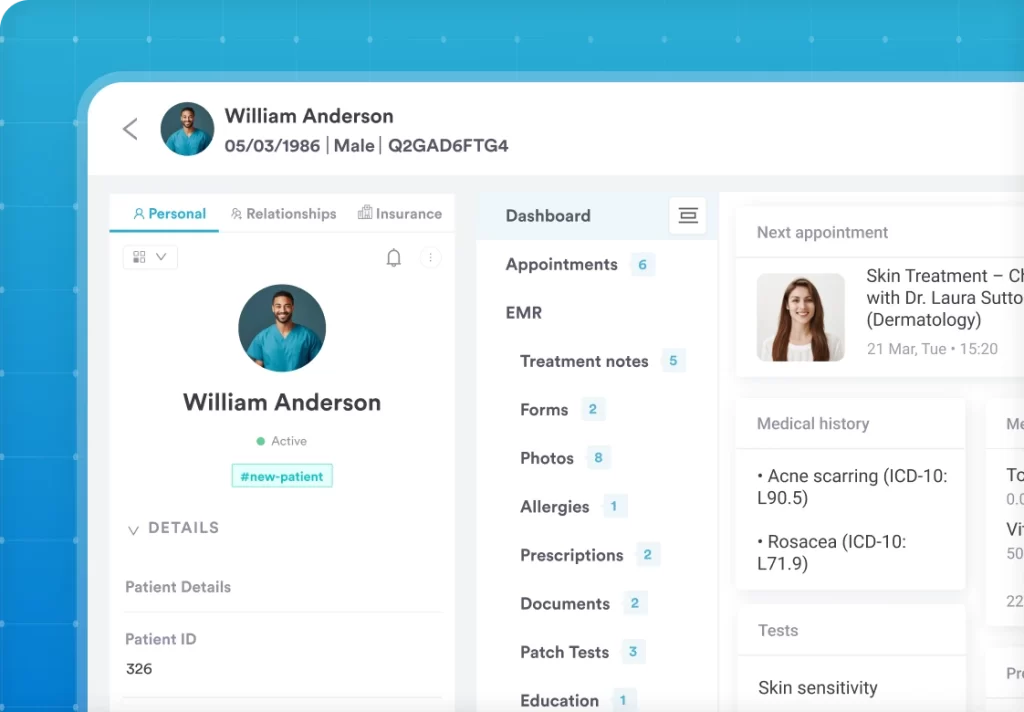
Mapping the system – building a picture of which parts are present, how they relate to each other, and what they are protecting – helps both therapist and client understand the internal landscape before moving toward more vulnerable work with Exiles. For practitioners managing complex caseloads, structured client records that capture part-mapping notes across sessions support continuity of care in ways that generic note templates rarely do.
Unburdening is the transformative stage of IFS therapy. Once the client has developed sufficient Self-energy and a trusting relationship with an Exile, the Exile can release the beliefs and emotions it has carried – often since childhood. This release is not a cognitive reframe. It is an experiential shift: the part no longer needs to hold the weight of the original wound because the Self has witnessed, validated, and comforted it.
What follows unburdening is equally significant. A part freed from its burden is no longer constrained to its protective role. A Manager who ran perfectionism to prevent shame can now contribute its organisational energy without the fear that drove it. A Firefighter that used alcohol to numb an Exile’s pain is no longer needed in that capacity once the Exile is healed. The parts don’t disappear – they transform.
When introducing IFS concepts to a new client, start with the Manager system rather than Exiles. Managers are more accessible, less overwhelming, and often willing to engage once they understand you are not trying to eliminate them. Building trust with protective parts first makes the deeper Exile work significantly safer and more sustainable.
The evidence base for IFS has grown considerably since the early 2000s. In November 2015, IFS was listed on SAMHSA’s National Registry of Evidence-Based Programs and Practices (NREPP), where it was rated ‘effective’ for improving general functioning and well-being and ‘promising’ for depression symptoms, anxiety symptoms, and physical health conditions.
The NREPP itself was suspended in January 2018, so the listing reflects IFS’s status at that time rather than current SAMHSA endorsement. That rating drew principally on a single randomized controlled trial (Shadick et al., 2013, Journal of Rheumatology) of women with rheumatoid arthritis, in which the depression and anxiety improvements were secondary outcomes classified as ‘promising’ rather than primary RCT endpoints.
Research suggests IFS may also produce meaningful outcomes for PTSD, eating disorders, and broader anxiety presentations, though that evidence base is still emerging and should be qualified accordingly in clinical contexts.
The American Psychological Association (APA) acknowledges parts-based approaches within its broader psychotherapy literature, and IFS Institute certification is widely accepted by U.S. state licensing boards for continuing education hours toward LCSW, LMFT, and LPC renewals. Insurance reimbursement typically routes through standard psychotherapy CPT codes (such as 90834 or 90837), since IFS is not yet a separately recognized specialty modality with payers.
In private practice, the picture is more flexible. IFS is widely used for trauma, complex PTSD, anxiety, depression, addiction recovery, relationship difficulties, and body image concerns. Its non-pathologising framework makes it particularly well-suited to clients who have found traditional diagnostic models alienating. Clinics offering therapy practice management software benefit from documentation tools that can capture the nuanced, narrative-rich notes that IFS sessions generate – standard SOAP note formats often feel reductive for parts-based work.
IFS is inherently trauma-informed. Its foundational premise – that all parts developed for good reasons, that behaviour makes sense in context, and that the person is never broken – aligns precisely with the principles of trauma-sensitive practice. This makes it a natural fit for clinicians working with survivors of adverse childhood experiences, complex attachment difficulties, and intergenerational trauma.
Somatic IFS, which integrates body-based awareness into the parts work, has gained particular traction in trauma-focused clinics. Rather than tracking parts exclusively through cognitive awareness, somatic IFS uses physical sensations as trailheads – a tightening in the chest, a held breath, a sense of hollowness in the stomach. This approach aligns with emerging evidence from neuroscience on trauma’s impact on the body, and it complements modalities such as EMDR and somatic experiencing and somatic experiencing. For psychiatry practices integrating multiple evidence-based modalities, having a single platform that handles session notes, consent forms, and appointment scheduling prevents administrative fragmentation.
No therapeutic model exists in isolation, and IFS is best understood in relation to the approaches it complements – or differs from.
Cognitive Behavioural Therapy (CBT) targets maladaptive thought patterns through structured cognitive restructuring and behavioural experiments. IFS does not dispute the value of this but argues that thoughts are not the source of the problem – they are expressions of parts. Changing a thought without addressing the part generating it produces limited or temporary change. IFS and CBT can be integrated: IFS accesses the emotional and relational origins of a belief, CBT provides structured tools for the client to apply between sessions.
Dialectical Behaviour Therapy (DBT) shares IFS’s appreciation for emotional complexity and its non-judgemental stance. DBT’s distress tolerance and emotion regulation skills can support clients whose Firefighter activity is high-risk, providing stabilisation while deeper IFS work proceeds at a sustainable pace. The Yerkes-Dodson law offers a useful frame here: clients process best at moderate arousal, not peak distress. Acceptance and Commitment Therapy (ACT) similarly resonates with IFS in its emphasis on psychological flexibility and values-based living, though ACT does not use a parts framework explicitly.
EMDR is probably the most clinically compatible modality. Body-based approaches sit alongside it too, as our brainspotting therapy guide lays out for clinicians combining modalities. Both IFS and EMDR target traumatic memory directly and both emphasise the client’s internal experience over the therapist’s interpretation. Many practitioners use IFS parts work to prepare clients for EMDR processing – particularly working with Manager parts that block trauma exposure – and EMDR bilateral stimulation to support the unburdening process once an Exile is accessed. For mental health EMR platforms, supporting clinicians who use multiple modalities means building documentation that accommodates the varied ways these sessions unfold rather than forcing a single note format.
Attachment theory and IFS speak a closely related language. Both are concerned with the relational origins of psychological difficulty, both see symptom behaviour as adaptive rather than pathological, and both aim toward earned security. Ego state therapy, developed separately by John and Helen Watkins, shares IFS’s multiplicity premise, though its theoretical foundations and techniques differ. Clinicians trained in both traditions often find significant conceptual overlap.
Adopting IFS in a clinic setting involves more than training one or two therapists. Clinic owners and practice managers need to think about how the model shapes everything from session length to documentation standards, supervision requirements, and client communication.
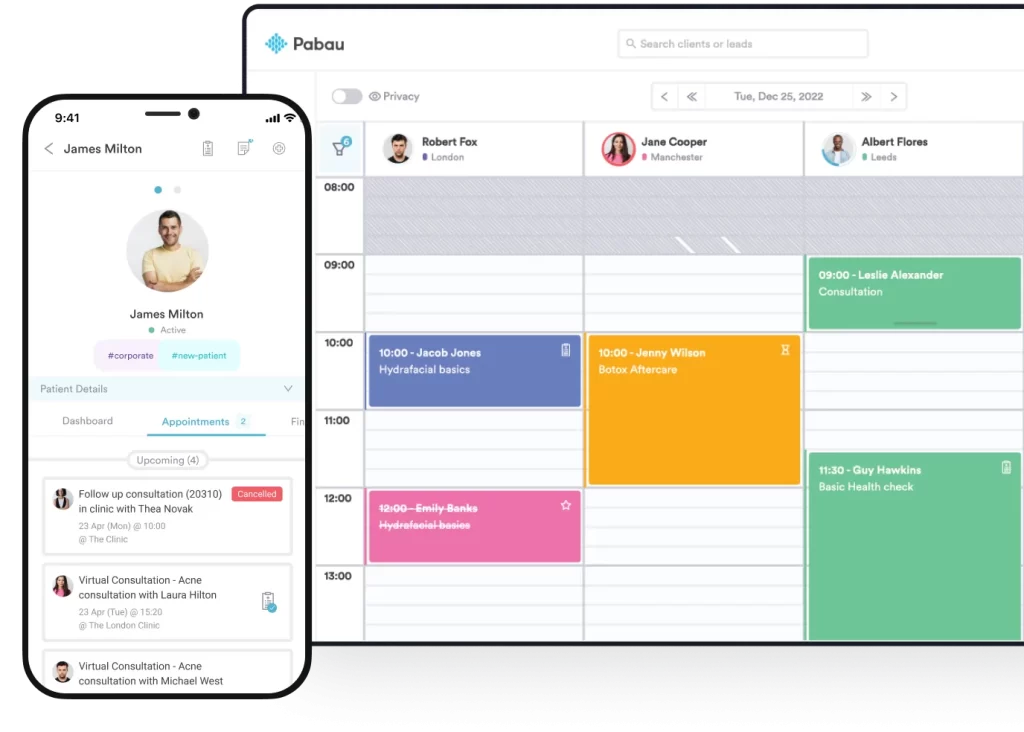
IFS sessions typically run 50 to 90 minutes. The deeper work – particularly Exile access and unburdening – rarely fits within a standard 50-minute window, and many experienced practitioners build 90-minute slots into their scheduling for trauma-focused clients. Clinic scheduling software that accommodates variable session lengths and flags back-to-back booking conflicts reduces the administrative friction this creates. Appointment calendar tools with customisable session durations are particularly useful for practices where IFS practitioners work alongside colleagues offering shorter-format CBT or coaching sessions.
Supervision is a professional requirement for IFS practitioners, particularly those working with complex trauma. The IFS Institute structures its training and supervision pathway across three levels (Level 1, Level 2, and Level 3), each requiring observed clinical hours under a certified supervisor.
U.S. state licensing boards for LCSWs, LMFTs, and LPCs require ongoing clinical supervision and continuing education regardless of experience level, and most payer credentialing bodies expect documented modality-specific training when claims reference specialty work. Clinic owners building an IFS-trained team should budget supervision time into their service model from the outset rather than treating it as optional overhead.
Client communication presents its own considerations. The parts framework can be unfamiliar and initially confusing for clients who are accustomed to diagnostic language. Psychoeducation materials that explain the model in accessible terms – distributed through a client portal or sent ahead of the first session – significantly reduce the time spent on conceptual orientation at the expense of clinical work. Client portal software that allows pre-session document sharing supports this without adding to the therapist’s manual administrative workload.
Group IFS therapy is a growing delivery format, particularly in trauma recovery programmes and intensive outpatient settings. Scheduling, consent management, and documentation for group formats require different operational logic than individual therapy – separate consent forms, group-specific session notes, and booking systems that handle cohort enrolment. For clinics exploring group IFS delivery, this is worth planning before the first group launches rather than retrofitting systems afterward. Group session scheduling tools designed for cohort-based programmes can reduce this operational complexity considerably.
Bringing IFS into a clinic shapes more than the therapy hour. Session lengths stretch toward 90 minutes for deeper Exile work, parts-mapping notes outgrow generic SOAP templates, and supervision moves from optional overhead to core operating cost.
Group IFS programs add their own consent and cohort-tracking demands, and clinicians integrating IFS with EMDR or somatic work need documentation that can hold both modalities cleanly. The infrastructure either keeps up with the model, or the model’s depth gets compressed back into a 50-minute, single-note format that doesn’t serve clients well.
Book a demo with Pabau to see how flexible scheduling, structured clinical notes, telehealth, and group session tools support IFS-trained therapists from intake through long-term parts work.

Need clinical documentation tools designed for therapy practice? Therapy Practice Management covers the operational features mental health practitioners need, from session notes to client portals.
Working with complex trauma and looking for telehealth infrastructure? Telehealth Software explains how to deliver IFS sessions remotely with the same clinical rigour as in-person work.
Helping a client see the impact of a decision? choices and consequences worksheet walks a client through one decision, its consequences, who was affected, and what they learned.
Want a clinical guide on burnout recognition among therapists? therapist burnout signs and prevention covers boundaries, self-care, support, and workload fixes for preventing and recovering from burnout.
The internal family systems model is a psychotherapy framework developed by Dr. Richard C. Schwartz in the 1980s that treats the mind as a system of distinct sub-personalities, called parts – Exiles, Managers, and Firefighters – each with its own perspective, history, and protective role. The model’s central goal is to help clients access Self-energy and use it to heal burdened parts rather than managing or suppressing them.
IFS identifies three categories of parts. Exiles carry the pain from wounding experiences and are kept out of awareness by the system. Managers are proactive protectors that organise behaviour to prevent Exiles from surfacing – through perfectionism, control, or people-pleasing. Firefighters activate reactively when Exiles break through, using urgent strategies such as substance use, dissociation, or rage to suppress the pain.
Yes, with a qualified evidence base: IFS was rated ‘effective’ for general functioning and well-being and ‘promising’ for depression, anxiety, and physical health symptoms on SAMHSA’s NREPP in 2015, and a 2013 randomized controlled trial in the Journal of Rheumatology found improvements in pain, depression, and self-compassion among women with rheumatoid arthritis. The NREPP itself was suspended in 2018, so that listing reflects status at the time rather than current SAMHSA endorsement, and subsequent research on PTSD and eating disorders is still developing – practitioners should qualify outcome claims accordingly.
Unlike CBT, which targets thought patterns directly, IFS works with the parts that generate those patterns. Unlike DBT, which primarily builds coping skills, IFS aims to heal the underlying wounds driving dysregulation. Its most distinctive feature is the concept of Self – an inherent, undamaged core in every person – which distinguishes it from models that position the therapist as the primary agent of change.
Most clients engage in IFS for roughly 12 to 20 weekly sessions for circumscribed concerns and 12 to 24 months of regular sessions for complex trauma, C-PTSD, or longstanding attachment difficulties. IFS is not designed as a brief therapy, though elements of the model can be introduced in shorter formats as part of an integrative approach.
Yes – IFS is widely integrated with EMDR, somatic therapies, CBT, and DBT. Many practitioners use IFS parts work to prepare clients for EMDR trauma processing, or combine IFS with somatic awareness techniques to deepen access to Exiles. The model’s flexibility makes it compatible with most evidence-based modalities, provided the clinician has adequate training in all approaches being combined.