How to Start Private Practice in California as a LCSW (Step-by-Step)
Pabau helps new LCSW practices stay organized and compliant with integrated clie...

April 6, 2026


Buy now, pay later is now available in Pabau

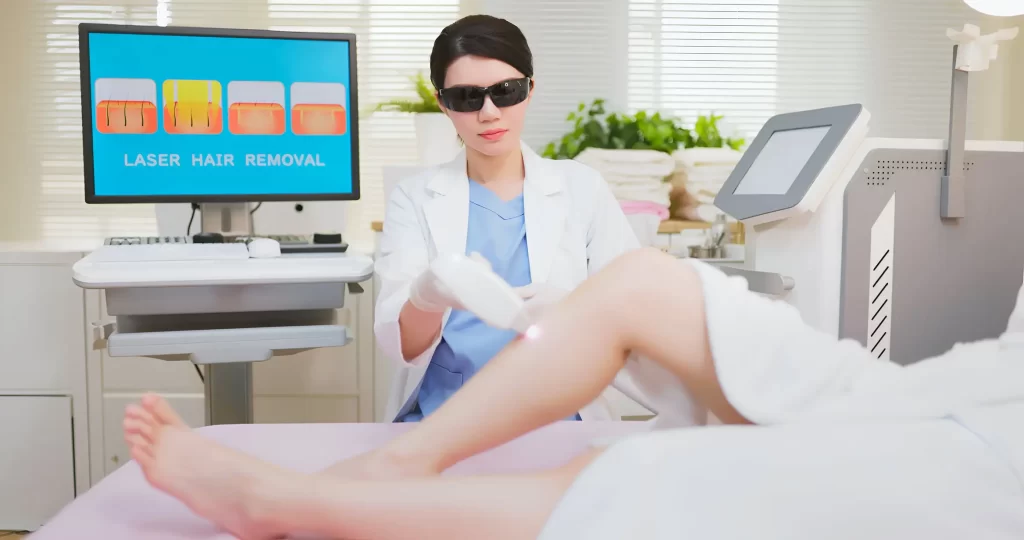
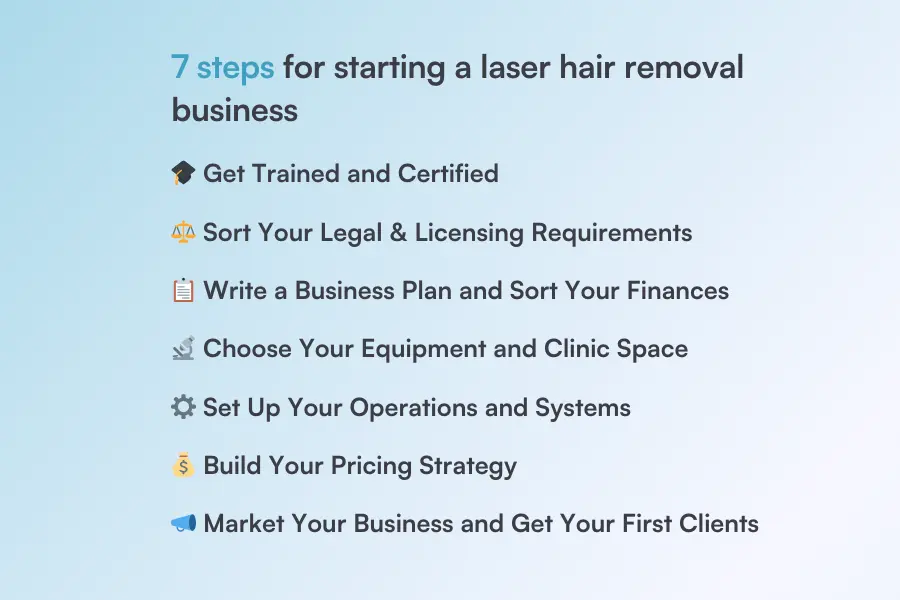
Starting a laser hair removal business requires 6 core foundations: training and certification, legal compliance, equipment, a business plan, operational systems, and a marketing strategy.
Startup costs typically range from $140,700 to $347,500 — your laser device will be your biggest single expense.
US regulations vary by state — some require physician supervision, others allow licensed estheticians or laser technicians to operate independently. Always verify your state’s rules before investing.
The clinics that grow fastest run the tightest operations — the right tools for booking, client records, payments, and automations are just as important as the treatment itself.
Starting a laser hair removal business can feel like a lot: the licensing, the equipment, the costs, the compliance. It’s easy to get lost before you’ve even started.
Over 60% of consumers now prefer laser treatments over traditional methods like waxing or shaving. The demand is already there.
You just need to take the right first steps, and that’s exactly what this guide gives you. A clear, no-fluff roadmap to starting a laser hair removal business in 2026.
Before diving into the details, here’s a bird’s-eye view of everything you’ll need to get off the ground.
Pro tip: Don’t try to perfect everything before launching. Get the foundations right, then refine as you grow. Get more info on how to start an aesthetics business the smart way.
Here’s your step-by-step roadmap on how to start a laser hair removal business, from getting qualified to getting fully booked. Follow these in order and you’ll avoid the most common (and costly) mistakes.
This is your foundation. Without the right qualifications, nothing else matters.
Requirements vary by country and state, but you’ll typically need:
Laser classification matters, too. Understanding laser class and laser radiation basics is often part of accredited laser safety training programmes and helps you stay compliant with OSHA standards.
Not every state has a specific laser hair removal license. U.S. regulations generally follow three models:
Because rules vary widely, it’s important to check your state regulations for laser hair removal before starting training or offering treatments.
Before you spend a penny on equipment, get your legal ducks in a row.
What you’ll likely need:
Operating without the right licenses can lead to heavy fines or even being shut down. Always check your state’s regulations before starting.
The most reliable place to verify requirements is your state medical board, state board of cosmetology, or state licensing agency, which regulates who can legally perform laser hair removal and what training or supervision is required.
You can also consult nationwide guides from organizations like the Laser Institute of America (LIA) or state-by-state medical spa law directories to understand the rules in your area.
Rules vary significantly by state. In Texas, for example, the Texas Medical Board and the Texas Department of Licensing & Regulation jointly oversee who can legally operate a laser or pulsed light device. You may need a facility certificate of registration, which requires:
In Canada, practitioners must comply with the Radiation Emitting Devices Act and Radiation Protection Regulations, which govern the safe use of medical laser and cosmetic laser equipment.
A laser safety program — including hazard evaluation and defined safety procedures — is required in most regulated states and should be documented in your standard operating procedures.
A solid business plan keeps you focused and investor-ready.
Your plan should cover:
💡 Startup costs can vary widely. Large-scale clinic rollouts with multiple locations and premium equipment can reach $16,600,000 or more, depending on equipment choices, location, and whether you’re renting a treatment room or building out your own space. See a full breakdown of aesthetics business startup costs here.
Your laser device is your biggest investment, so choose wisely.
The main laser types to consider:
| Laser Type | Best For | Price Range |
|---|---|---|
| Diode | All skin types, high efficiency | $15,000–$60,000 |
| Nd:YAG | Darker skin tones | $18,000–$100,000+ |
| Alexandrite | Lighter skin tones, fast treatment | $30,000–$100,000+ |
| IPL | Budget entry point (less precise) | $5,000–$30,000 |
These price ranges are based on publicly listed prices from aesthetic equipment suppliers and medical device marketplaces. Examples include diode and IPL machine listings from PrettyLasers equipment listings, clinic device marketplaces such as Alexandrite laser listings on Bimedis Alexandrite laser marketplace, Nd:YAG laser listings on Bimedis YAG laser marketplace, and refurbished Candela laser devices from The Laser Source equipment listings.
When evaluating aesthetic lasers, look for Food and Drug Administration (FDA)-cleared laser hair removal devices. Popular choices include diode systems like the MeDioStar® diode laser, which uses a coherent beam to target hair follicles precisely across a range of skin types. Understanding laser technology and electromagnetic radiation basics — including infra-red radiation outputs — helps you compare devices confidently.
This is where a lot of new clinic owners drop the ball. Clients notice everything, not just the results, but how seamless the whole experience feels.
You’ll need systems for:
This is where Pabau comes in. It’s an all-in-one clinic management platform built for aesthetic businesses, handling everything from appointment scheduling and digital intake forms to client records and automated follow-ups.
Set your systems up before your first client walks through the door. Retrofitting processes later is a headache you don’t need.
Try Pabau free and see how it works for your clinic →
Price too low and you devalue your service. Price too high before you’ve built a reputation and you’ll struggle to fill your diary.
A good starting point:
Example laser hair removal pricing by treatment area
| Treatment Area | Average Price Per Session |
|---|---|
| Underarms | ~$130 |
| Brazilian | ~$241 |
| Full legs | ~$397 |
| Full body | ~$739 |
Source: Pricing studies referenced by SEV Laser and industry reports.
Price with confidence. Undercharging is one of the most common mistakes new clinic owners make.
A great clinic with no clients is just an empty room. Marketing isn’t optional.
Start with the basics:
Claim your Google Maps listing — it’s one of the most powerful free tools for local discovery. Pair this with a SEO-enhanced website and active social media profiles to build your presence from day one.
For a deeper dive, here’s a full guide to marketing your laser hair removal clinic. And when you’re ready to scale, this guide on how to grow a medical practice is worth a read.
Let’s talk money, because knowing your numbers upfront can save you a world of pain later.
Starting a laser hair removal clinic isn’t cheap. Your laser device will likely be your biggest single expense, followed by your space, staffing, and marketing. And costs can vary a lot depending on whether you’re launching a solo treatment room or a full-service medspa.
Most clinics need somewhere between $140,700 and $347,500 to get off the ground, and more if you’re going full-scale, less if you’re starting lean.
Not sure how you’ll fund it? Here’s how to get a business loan.
Here’s what to expect.
Typical startup cost breakdown
| Cost Category | Estimated Cost Range |
|---|---|
| Professional laser hair removal equipment | $85,700 – $170,500 |
| Clinic lease and build-out | $20,000 – $75,000 |
| Licensing and certification expenses | $2,000 – $10,000 |
| Initial marketing and branding | $10,000 – $30,000 |
| Initial inventory and supplies | $5,000 – $15,000 |
| Staffing and training before opening | $15,000 – $40,000 |
| Business software and technology systems | $3,000 – $7,000 |
Source: Industry startup cost estimates for laser hair removal clinics from Startup Financial Projection.
Once you’re up and running, your pricing strategy will make or break your margins. Here’s how to price smartly and how to choose the right medspa pricing strategy for your business model.
Having the right tools is what separates a clinic that runs smoothly from one that’s constantly putting out fires. Here’s what you actually need.
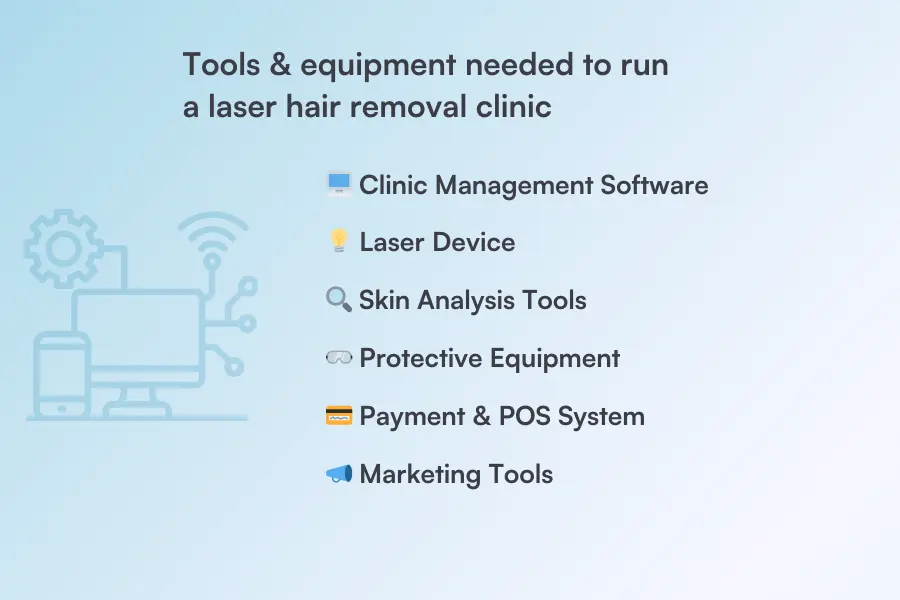
This is your operational backbone. Without it, you’re juggling bookings, client records, consent forms, and payments manually — and that gets messy fast.
Pabau is built specifically for aesthetic and medical clinics, and handles everything in one place:
For laser hair removal practitioners managing growing client lists, Pabau’s digital consultation forms and automated workflows reduce admin and improve client satisfaction across every touchpoint.
See how Pabau compares to other patient management software
Your laser is your moneymaker — so choose carefully. The most common options for hair removal are:
—each suited to different skin types. Look for FDA-cleared devices from reputable manufacturers like Candela, Cynosure, or Lumenis. Leasing is worth considering if you’re starting out.
A skin tone assessment tool (like a Fitzpatrick scale guide or digital skin analyser) helps you tailor treatments safely to each client. It reduces risk, improves outcomes, and shows clients you take their safety seriously.
Laser safety goggles are non-negotiable for you and your clients. You’ll also need appropriate PPE, laser warning signs, and a controlled treatment environment that meets OSHA and state safety standards.
You’ll need a reliable way to take payments, issue invoices, and manage packages or deposits. If you’re using Pabau, this is built in. If not, tools like Square or Stripe integrate well with most booking systems.
At minimum, you’ll need a Google Business Profile, a simple website, and one or two social media accounts. As you grow, email marketing tools like Mailchimp or Klaviyo can help you stay in touch with clients and drive rebookings.
If you’re using Pabau, built-in marketing features like automated email and SMS campaigns, review requests, and rebooking nudges mean you won’t need as many separate tools. See how Pabau’s medical spa EMR software keeps everything under one roof.
You’ve got the roadmap. Now it’s time to take action.
The fanciest equipment won’t save a clinic that’s disorganized. What separates the ones that thrive is efficiency, happy clients, and airtight operations.
That’s exactly what Pabau helps you do. From your very first booking to your hundredth repeat client, Pabau keeps everything running smoothly behind the scenes.
See how Pabau works for laser clinics
Yes. With relatively low consumable costs and high demand, laser hair removal businesses can generate strong margins, especially when clients book treatment packages.
Some clients aren’t suitable, including those who are pregnant, on certain medications like Accutane, or have active skin infections or very light/grey hair.
Typically 3–6 months. Knowing how to start a laser hair removal business helps, but licensing, training, and equipment sourcing are the biggest time factors when figuring out how to open a laser hair removal business.