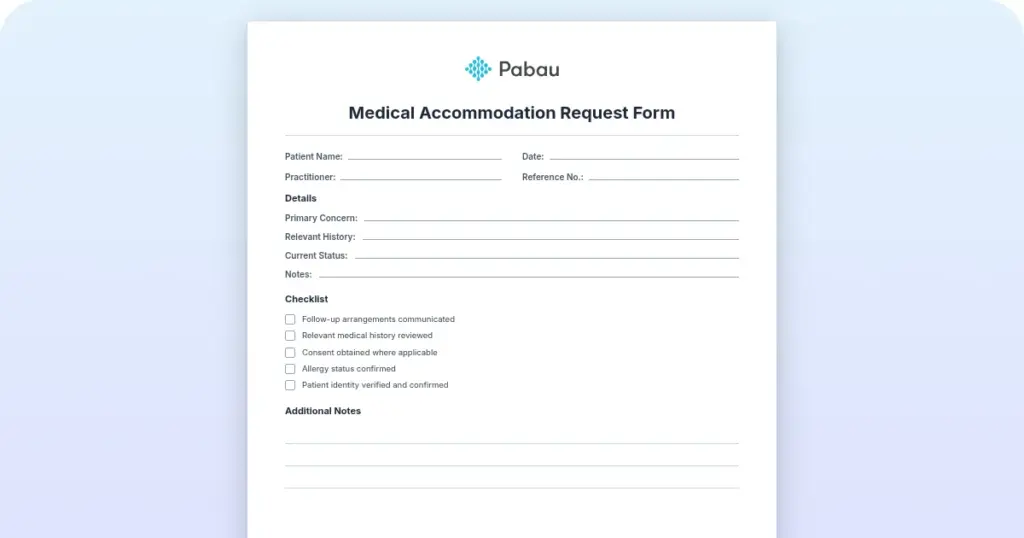
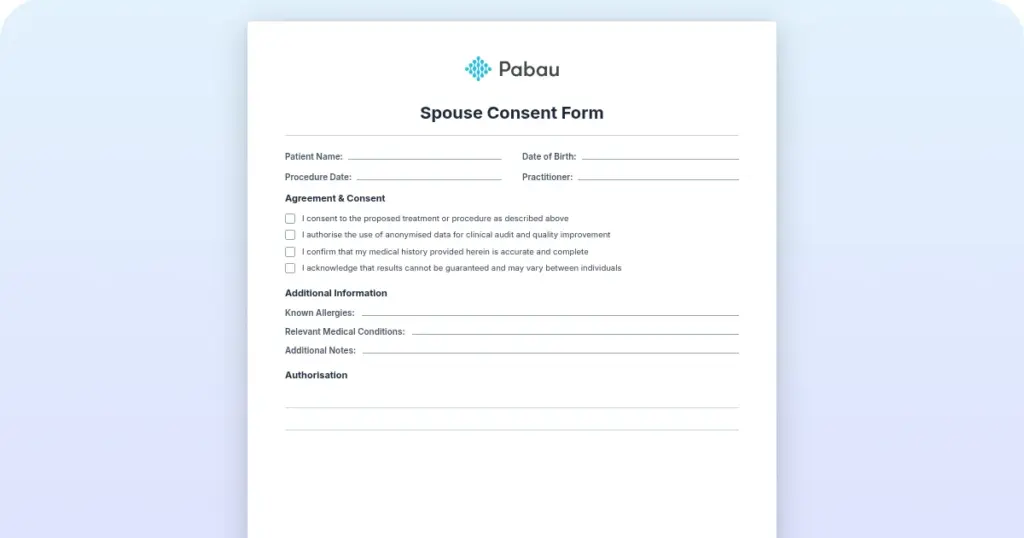
Professional development record
A professional development record is a structured log of a healthcare practition...

8
Last Updated: Oct 8, 2026

Only a physician-controlled Professional Corporation, not an LLC, can own the medical side of a California med spa under the corporate practice of medicine doctrine.
Every med spa needs a licensed medical director who oversees treatments and signs off on the practice’s standardized procedures.
AB-890’s 104 NP pathway is new and unsettled. Nurse practitioners can gain independent clinical authority from 2026, but full ownership of the medical entity is still disputed among healthcare attorneys.
Every staff member needs a license that matches their role, since NPs, PAs, RNs, and estheticians each work within a different scope of practice.
HIPAA compliance and medical malpractice or liability insurance are required before you treat your first patient.
The med spa industry is booming in California, and with good reason. More people than ever want minimally invasive treatments that help them look and feel their best without surgery. Eight platforms for practices serving that demand are ranked in our medical spa software comparison. The cosmetic procedure statistics put that demand at 28.2 million minimally invasive treatments a year across the US.
That growth comes with a thick rulebook. California’s med spa licensing laws decide who can own a practice, who can perform each treatment, and what licensing you need before you open the doors.
Get them right and you protect your license, your patients, and your reputation. Get them wrong and you risk fines or losing the ability to operate.
This guide breaks down the medical spa requirements in California in plain English, so you can open and run your practice with confidence and sidestep the common pitfalls.
A medical spa (or med spa) blends the relaxed feel of a day spa with treatments that are genuinely medical: injectables like Botox and dermal fillers, laser treatments, IV therapy, and medical-grade skin care.
That medical element is the whole reason the licensing laws are so strict. Because a med spa delivers medical care, California treats it as a medical practice, not a beauty salon. The same rules that govern a doctor’s office apply to your med spa too, including who can own it, who can treat patients, and how they’re supervised.
There isn’t a single “med spa license” you can apply for in California. Opening a medical spa means stacking several approvals, because you’re licensing both a business and a medical practice at the same time.
At a minimum, you’ll need to:
So while people often search for “spa licenses” or a single medical spa license, med spa licensing in California is really a checklist of licenses, permits, and credentials that all have to line up before you treat a single patient.
LLCs (Limited Liability Companies) are a popular business structure because they protect the owners’ personal assets and offer flexibility in how the company is run and taxed.
But in California, a med spa that offers medical services can’t operate as an LLC. State law bars LLCs and general corporations from providing medical services.
Instead, you have to set the practice up as a Professional Corporation (PC). This is where California’s corporate practice of medicine (CPOM) doctrine comes in: it requires a licensed physician, not a lay business owner, to control the medical practice.
These strict entity rules aren’t unique to med spas. You’ll see similar hurdles in our guide on how to start an LCSW practice in California.
Under the corporate practice of medicine doctrine, the medical side of a California med spa has to be owned and controlled by a licensed clinician, not by an investor or a lay company. In practice, ownership usually looks like one of these:
A physician owner has to hold at least 51% of the Professional Corporation, which keeps medical control in clinical hands. If you’re not a clinician, you can still build and run the business through an MSO. You just can’t own the medical practice or direct patient care. That’s the practical answer to how to own a med spa in California without a medical license.
These ownership rules aren’t unique to California — our guide on state ownership rules covers how other states handle med spa ownership.
For years the answer was no. That changed with Assembly Bill 890 (AB-890), which created two new nurse practitioner categories in California.
The first nurse practitioners can reach 104 status on January 1, 2026 at the earliest, after three years of practice as a 103 NP.
What’s still unsettled is whether that clinical independence extends to ownership. California’s corporate practice of medicine rules (Corp. Code §13401.5) traditionally require a physician to hold the majority stake in the Professional Corporation that owns the medical practice — usually 51%, with a non-physician partner capped at 49%. Whether a 104 NP can instead hold 100% of that PC and serve as its sole medical director is disputed among healthcare attorneys, and neither the courts nor the Medical Board have settled it. Confirm the board’s current guidance and talk to a California healthcare attorney before you structure ownership this way.
This pathway is limited to nurse practitioners. RNs, LVNs, and other nursing credentials still can’t own a med spa on their own. An NP without 104 status takes the same route as any non-physician owner: a PC controlled by a qualifying physician, paired with an MSO for the business side.
Now that we’ve covered ownership, let’s walk through the specific medical spa requirements in California you’ll need to meet once you start operating. These are the med spa regulations that keep your practice compliant day to day.
Every California med spa needs a licensed physician serving as its medical director.
This is non-negotiable. The medical director oversees all medical procedures performed at the spa, from injectables and laser treatments to IV vitamin infusions.
Their job is to make sure treatments are carried out safely, ethically, and in compliance with state law. They also write and update the practice’s standardized procedures (the written protocols staff follow), supervise providers, and confirm that a qualified provider completes a good faith exam of each patient before treatment.
Finding the right person for this role matters as much as the paperwork. Our guide on how to hire a medical director covers what to look for and how to structure the arrangement.
There’s no standalone “med spa registration” filed with the California Medical Board. Professional medical corporations are exempt from the Moscone-Knox certificate-of-registration requirement that applies to some other types of businesses.
What the board does require is that the physician who owns or supervises the practice holds an active California medical license in good standing.
If your practice operates under a business name rather than the physician’s own name, you’ll also need a Fictitious Name Permit from the Medical Board (Business and Professions Code §2415). Operating under an unpermitted name can lead to penalties, including fines or a suspended ability to practice.
As we’ve covered, the medical side of your med spa is tightly regulated. But non-medical services such as facials, waxing, and basic skincare treatments have to meet their own standards too.
They may not need a medical professional to administer them, but they fall under the Barbering and Cosmetology Board. Estheticians, cosmetologists, and electrologists all have to hold the appropriate license to perform these services legally. For a deeper walkthrough, see our guide on California cosmetology laws.
Some treatments have separate rules again. Permanent makeup and microblading are regulated as body art, so check the specific California permanent makeup license and local registration requirements before you offer them. Either way, make sure every team member holds the right license for their role. Spa software can store each provider’s licenses alongside their staff record, so credentials stay easy to verify.
All staff members performing medical procedures in a med spa must hold the proper licenses and certifications, including:
Each role has its own scope of practice, and staff must have the specific qualifications and training to perform treatments safely. If you’re offering Botox injectables, for example, the person administering the treatment has to be licensed and trained to do so, and document the visit with a proper anti-wrinkle treatment note.
NPs and PAs must be licensed by the Board of Registered Nursing (BRN) or the Physician Assistant Board, with the right certifications for aesthetic procedures. RNs must also be licensed by the BRN and, depending on their duties, may need extra training in treatments like laser therapy or injectables.
Licensed vocational nurses (LVNs) and medical assistants can support the team but face tighter limits on the medical treatments they can perform.
Med spas also have to meet HIPAA (Health Insurance Portability and Accountability Act) standards to protect patient privacy. A documented HIPAA privacy policy is the starting point, and our HIPAA compliance checklist covers the rest.
Your practice needs strict policies for handling patient medical records, keeping them confidential, and safeguarding protected health information (PHI). If you share patient data with outside vendors, you’ll also need a Business Associate Agreement (BAA) in place with each one, along with a signed release of information form from the patient.
A HIPAA violation investigation can lead to significant fines and legal consequences, not to mention reputational damage. Establish compliant procedures early, including secure storage of records and regular staff training on patient privacy.
Running a med spa means being exposed to risks, including potential medical malpractice claims or accidents during a procedure.
That’s why the right insurance matters. At a minimum, you’ll need medical malpractice insurance to protect your medical director and staff in the event of an error or dispute over treatment. It’s also worth carrying general liability insurance for non-medical incidents like slip-and-falls or property damage.
The right coverage protects your business and your team, so you can focus on providing excellent care for your clients.
California also regulates how med spas market themselves. Advertising has to be truthful, and it can’t overstate results or lean on bait-and-switch pricing.
Promotional material generally has to name the supervising physician (or the practice’s fictitious name permit), so patients know who’s medically responsible. Federal Trade Commission (FTC) rules on honest testimonials and endorsements apply as well, so the way you collect patient feedback and turn it into reviews must stay truthful and clearly disclosed.
It’s important to understand your staff’s different roles and qualifications, because not every team member can administer every treatment, even with plenty of experience. Each role has a defined scope of practice.
Nurse practitioners are licensed healthcare professionals who can perform many medical procedures in a med spa, especially injectables, laser treatments, and other aesthetic services.
In California, NPs can work under a physician’s supervision or, depending on their category and scope of practice, independently. They’re trained to assess patients, diagnose conditions, and perform treatments, which makes them a key part of your med spa team.
Even with a lot of autonomy, NPs may still need a supervising physician for certain high-risk or complex procedures, depending on their qualification.
Physician assistants are another essential part of your med spa team. PAs can perform many of the same procedures as NPs, like injectables and laser treatments, but they always work under the direction and supervision of a licensed physician.
Think of them as your right-hand healthcare professionals, helping with consultations, treatments, and follow-up care. They’re highly trained, but they can’t make independent medical decisions. Everything they do aligns with the physician’s guidance.
Registered nurses are often the backbone of med spa operations, performing procedures such as injectable treatments, chemical peels, and laser therapy.
RNs work under the supervision of a licensed physician or an advanced practitioner like a nurse practitioner. They’re fully licensed and capable of a wide range of treatments, but their level of independence depends on that oversight. Like NPs and PAs, RNs must be trained in the specific procedures they perform to keep patients safe and the practice compliant.
Aestheticians and cosmetologists add real value to a med spa and let you broaden the range of services you offer.
Their role is limited to non-medical procedures, though, such as facials, waxing, body scrubs, and skincare treatments. They’re highly trained in beauty and skincare, but they can’t perform medical procedures like Botox, laser hair removal, or medical-grade body contouring.
One of the most important things to get right is supervision. In many cases, the physician has to be either physically present or immediately available during treatments.
Physicians can delegate certain tasks to NPs, PAs, and RNs, but they remain responsible for setting the treatment protocols, providing oversight, and making sure staff are properly trained and following every safety standard.
Not on their own. Under California’s corporate practice of medicine doctrine, a registered nurse can hold up to 49% of the Professional Corporation that owns the medical side, but a licensed physician must own at least 51%. So while a nurse can be a co-owner, whether a nurse can open a med spa in California outright depends on partnering with a physician who controls the medical entity.
Yes. Every California med spa offering medical treatments needs a designated medical director for the med spa: a licensed physician who oversees clinical care and signs off on the practice’s standardized procedures. The corporate practice of medicine doctrine bars non-physicians from directing medical care, which is why the medical director role is not optional.
No. Estheticians and cosmetologists are licensed for non-medical services like facials and waxing, so they cannot inject Botox or dermal fillers. In California, injectables must be administered by a physician, nurse practitioner, physician assistant, or registered nurse working under a prescriber’s authority and physician supervision.
Yes. The supervising physician must set written standardized procedures, sometimes called treatment protocols, that spell out which treatments delegated staff can perform and under what oversight. These protocols, along with HIPAA safeguards and infection-control standards, are core med spa rules and regulations a California practice has to document before treating patients.
No. Med spa laws vary by state, and California is among the strictest because of its physician-ownership rules. Ownership structures, supervision ratios, and who can inject differ elsewhere, so med spa laws by state should always be checked against the rules where you plan to operate.
Running a med spa is no small feat. As we’ve covered, there are a LOT of moving parts, from licensing to staff training to supervision and patient privacy. For the full playbook on getting there, see our guide on how to start a med spa.
With the right systems, you can streamline operations, stay compliant, and grow recurring revenue through a profitable med spa membership program, all while focusing on what matters most: delivering high-quality care to your clients.
That’s where practice management software like Pabau comes in. Pabau is an all-in-one practice management platform purpose-built for med spas, helping practices like yours simplify admin and save hours on manual tasks.
…and more. Book a demo today to see how Pabau can work for and with you.