StyleSeat Reviews 2026: Fees, Complaints, and Pabau Compared
StyleSeat Reviews: What Professionals Are Really Saying in 2026 StyleSeat review...

April 14, 2026


Buy now, pay later is now available in Pabau

StyleSeat reviews consistently flag unpredictable fees as the #1 complaint from professionals on the platform.
StyleSeat operates as a marketplace, not a full practice management system – limiting its value for multi-staff clinics.
Professionals who leave StyleSeat typically lose their accumulated reviews and client visibility.
Pabau offers flat-fee subscription pricing with no per-transaction commissions, suited to growing clinic teams.
StyleSeat reviews tell a consistent story. Professionals praise the platform for client discovery and ease of setup, then hit a wall when the fees compound. Membership charges, transaction fees, new client fees, and service commissions layer on top of each other, turning what looks like a simple booking tool into an unpredictable cost center. This article breaks down what users report, where StyleSeat’s model creates friction for growing clinics, and how Pabau compares as an alternative for beauty and wellness professionals who have outgrown a marketplace approach.
We cover the fee structure in detail, the feature gaps that surface as businesses scale, and a direct comparison across scheduling, client management, reporting, and support. If you’re evaluating booking platforms for your beauty or wellness clinic, this breakdown gives you the operational picture most comparison articles skip.
StyleSeat and Pabau serve fundamentally different market positions, even though both handle appointment booking for beauty and wellness professionals. Understanding that difference is the starting point for any honest comparison.
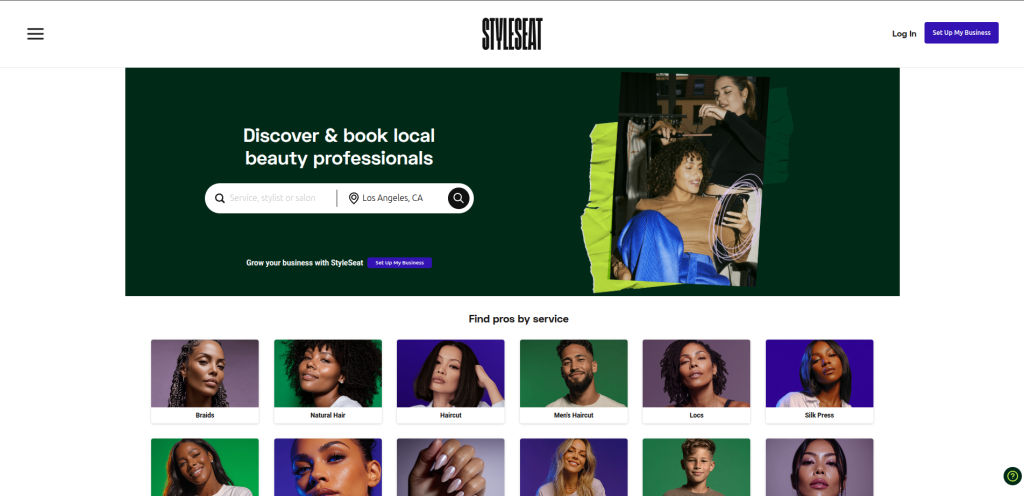
StyleSeat is a consumer marketplace. Stylists and beauty professionals create profiles within StyleSeat’s ecosystem, and clients discover them through search on the platform. That discovery model is StyleSeat’s core value proposition, particularly for solo practitioners building a clientele from scratch. The trade-off is structural: because StyleSeat owns the marketplace, it also controls the fee levers and the relationship between professional and client.
Pabau is a practice management platform. It provides clinics and beauty businesses with a fully owned booking and operations system, covering scheduling, CRM, digital forms, automated communications, reporting, and payments, without routing clients through a third-party marketplace. Businesses using Pabau own their client data and booking flow outright. For multi-practitioner teams or clinics that have moved past the new-client-acquisition phase, that ownership distinction matters.
Pricing is where styleseat reviews diverge most sharply. Professionals who stay on the platform often cite the fee model as their primary frustration, while those who leave almost universally mention it as the reason.
According to consistent user reports on Trustpilot and the Better Business Bureau complaint records for StyleSeat, the fee structure combines multiple layers: membership fees charged to the professional, transaction fees on each booking, new client fees for marketplace-sourced appointments, and service commissions. The compounding effect means actual platform costs vary significantly and often exceed what professionals expected at signup.
One Trustpilot reviewer summarised it plainly: “StyleSeat is a great tool for attracting new clients, but the fees are absolutely outrageous. There’s membership fees, transaction fees, and new client fees.” This pattern appears consistently across independent review platforms.
A separate concern reported by users involves plan changes. One reviewer noted being moved from a basic to a premium plan without consent, and being told by customer service the change was irreversible. This claim comes from a single user report and should be verified against StyleSeat’s current help documentation before treating it as policy, but the pattern of billing disputes is broadly documented in BBB complaints.
Pabau’s pricing follows a flat-fee subscription model. Clinic owners pay a predictable monthly cost that covers the full platform, including online booking, CRM, automated workflows, and reporting. There are no per-transaction commissions eating into service revenue. For a clinic processing 200 or 300 bookings per month, that distinction compounds quickly. See current Pabau pricing for details.
Track your total platform costs across all fee types, not just the headline subscription rate. For each booking category (returning client, new client, marketplace-sourced), calculate what you actually paid the platform last month. For many StyleSeat users, that figure is significantly higher than the membership fee alone.
Scheduling architecture is where the platform gap becomes operationally concrete for clinic owners.

StyleSeat’s calendar is built around a single professional’s availability. It handles one stylist’s appointment slots cleanly, supports client-facing booking, and integrates with the marketplace discovery flow. For a solo practitioner, that coverage is sufficient. Adding a second team member requires a separate StyleSeat profile, with its own fee obligations.
Pabau’s multi-staff calendar lets clinic owners manage all practitioners, treatment rooms, and equipment from a single view. Appointment conflicts resolve automatically. Staff can see their individual schedules on the app while managers see the full clinic picture. That architecture scales from a 2-person aesthetic clinic to a multi-location operation without requiring a separate account per practitioner.
For clinics offering multiple services across multiple practitioners, StyleSeat’s scheduling model creates friction that grows with headcount. Pabau’s multi-location management extends this further, giving clinic groups a single operational hub across sites.

Pabau gives clinic owners a complete scheduling and practice management system with no per-transaction fees. Book a demo to see how it works for your team.

Client management depth separates transactional booking tools from practice management platforms. StyleSeat stores basic appointment history and contact details. For a hairstylist tracking which client prefers a specific cut, that’s workable. For an aesthetics clinic tracking treatment history, contraindications, consultation forms, and before-and-after records, it’s not enough.
Pabau’s client management system functions as a full CRM for healthcare and beauty businesses. Each client record holds consultation notes, treatment history, digital consent forms, contraindication flags, and communication logs. Automated follow-up sequences trigger based on treatment type or time since last visit. That infrastructure supports the clinical and compliance requirements of aesthetics, medical beauty, and wellness clinics in ways a marketplace booking tool isn’t designed to handle.
The client record in Pabau also solves a structural risk that StyleSeat users face: data ownership. Professionals on StyleSeat accumulate client reviews and booking history within StyleSeat’s ecosystem. Community forums and review platforms report that leaving the platform means losing that review history, though this should be verified against StyleSeat’s current terms before treating it as definitive policy. Pabau users own their client data and can export it at any time.
A booking tool that can’t tell you which services drive revenue, which practitioners are performing, or which marketing channel acquired your best clients is useful for operations but limited for growth decisions.

StyleSeat provides basic earnings summaries and appointment reports. For a solo professional tracking monthly income, that’s sufficient. For a clinic owner comparing revenue per treatment category, staff utilisation rates, or campaign attribution, the reporting depth falls short.
Pabau’s reporting suite covers revenue by service, staff performance metrics, treatment analytics, and marketing attribution through its reporting and analytics tools. Clinic owners can identify their highest-margin services, track client retention by cohort, and measure the return on promotional campaigns. That intelligence supports the kind of operational decisions that separate growing clinics from stagnant ones.
Review your client retention rate by treatment category quarterly. Clinics that track which services generate repeat visits within 90 days can identify their strongest retention drivers and double down on those offerings. Pabau’s analytics surface this without manual spreadsheet work.
This is the comparison that matters most for professionals evaluating long-term platform risk.
StyleSeat’s marketplace model delivers real value early on. New professionals benefit from organic discovery within the platform’s consumer search traffic. Clients find stylists without the professional needing to invest heavily in marketing. That dynamic is genuinely useful when building a practice from zero.
The dependency cost emerges over time. Reviews accumulate within StyleSeat’s system, not on a professional’s own page. Clients book through StyleSeat’s interface, giving the platform visibility into booking patterns and client relationships. Community reports, while not confirmed by platform documentation, consistently describe difficulty leaving the platform without losing that accumulated social proof. Reddit discussions in communities like r/Hairstylists describe professionals feeling “trapped” specifically because of review dependency.
Pabau’s online booking system creates a fully owned booking experience via the clinic’s own branded booking page. Clients book directly. The clinic owns every data point. If a clinic switches platforms, it takes its client database, communication history, and booking records with it. The reviews feature in Pabau also collects and manages client feedback through channels the clinic controls.
StyleSeat reviews on independent platforms reveal a split picture. On Capterra, StyleSeat holds a 3.9 out of 5 rating based on 56 verified reviews, with praise for its client discovery features offset by complaints about pricing transparency and customer support. Consumer-side reviews (from clients booking appointments) tend to be positive, reflecting smooth booking experiences and useful discovery features. Professional-side reviews, from stylists and practitioners using the platform to run their businesses, are where the complaints cluster.
On Trustpilot, reviewers highlight unexpected charges and poor customer service responsiveness as the dominant themes. The BBB complaint records for StyleSeat document a substantial volume of billing dispute cases, with complaint narratives frequently citing unauthorised charges and difficulty reaching support for resolution. StyleSeat’s BBB response in at least one published case referenced a full refund and noted the platform “takes reports of fraudulent or unethical behavior on our platform very seriously,” indicating awareness of the issues.
On Capterra, a recurring theme in user comments involves the shift from free or low-cost access to a paid model. One reviewer noted: “I stopped using it when StyleSeat started charging stylists to use the software.” Positive reviews tend to focus on client-side usability and initial ease of setup.
Pabau’s reviews on Capterra reflect a different user profile. With 4.5 out of 5 stars based on over 370 verified reviews, positive themes cluster around comprehensive clinic management features, good onboarding support, and automated communications. The most cited drawbacks involve the learning curve for new users and feature depth that can feel complex for solo practitioners who need only basic booking. That last point is honest context: Pabau is designed for clinic teams, not individual stylists seeking a simple profile page.
Choose StyleSeat if you’re a solo stylist or beauty professional in the early stages of building a clientele, you have no existing client base and need marketplace discovery to get started, and you’re comfortable with variable platform fees in exchange for that initial traffic.
Choose Pabau if you run a clinic or multi-practitioner team, you need full practice management beyond booking (CRM, digital forms, automated workflows, reporting), cost predictability matters to your business model, and you want to own your client relationships rather than hold them within a third-party marketplace. Pabau serves medical spas, aesthetic clinics, skin clinics, wellness practices, and multi-specialty teams that have grown beyond what a solo booking profile can support.
The honest answer is that these platforms serve different growth stages. StyleSeat works for the solo professional starting out. Pabau is built for the business that has moved past discovery and needs operational infrastructure to scale.

Looking for how Pabau compares to other booking platforms? Pabau comparison hub covers head-to-head breakdowns across multiple booking and practice management tools.
Want to understand what full clinic management looks like? Best booking software for clinics evaluates options across scheduling depth, CRM, and fee structures.
Ready to see what Pabau can do for your team? Pabau features overview covers the full platform including scheduling, client management, automations, and reporting.
Running a medical spa or aesthetics clinic? Medical spa software explains the specific workflows Pabau supports for aesthetic and wellness clinic teams.
The core problem StyleSeat reviews surface is a fee structure that grows unpredictably as a business scales, combined with a marketplace model that creates platform dependency rather than business ownership. For solo stylists building a clientele, StyleSeat’s discovery engine has genuine value. For clinic owners who have moved past that stage, the compounding fees and limited operational depth create a ceiling.
Pabau’s automated workflows, multi-staff scheduling, and flat-fee pricing are purpose-built for clinic teams that need more than a booking page. If you’re evaluating whether it fits your operation, book a demo to see the platform working against your specific team size and service mix.
StyleSeat can be worth it for solo stylists in the new-client-acquisition phase who benefit from marketplace discovery. For established professionals or those with existing client bases, the layered fee structure (membership, transaction, new client, and commission fees) often makes the total platform cost higher than flat-fee alternatives, according to widespread user reports on Trustpilot and the BBB.
Based on user reports across review platforms, StyleSeat’s fee structure includes a membership fee charged to the professional, transaction fees on bookings, fees for new clients sourced through the marketplace, and service commissions. The total cost varies by booking volume and client source. Verify current fee amounts directly at styleseat.com before making a platform decision.
Stylists set their own service prices on StyleSeat. However, the platform charges fees on top of those prices at the transaction level, meaning the amount the professional receives per booking is lower than the listed service price. Clients may also see platform-added booking fees depending on the service and plan tier.
StyleSeat differentiates through its consumer marketplace, giving professionals organic discovery exposure. Compared to flat-fee platforms like Pabau, the primary trade-off is cost predictability: StyleSeat’s variable fee model can cost more as booking volume grows, while subscription platforms charge a fixed rate regardless of transaction volume.
Customer service responsiveness is one of the most commonly cited complaints in StyleSeat reviews on Trustpilot and the BBB. Professionals report difficulty resolving billing disputes and receiving timely responses to support requests. StyleSeat’s BBB profile includes a significant volume of complaint records, many related to billing and payment issues.