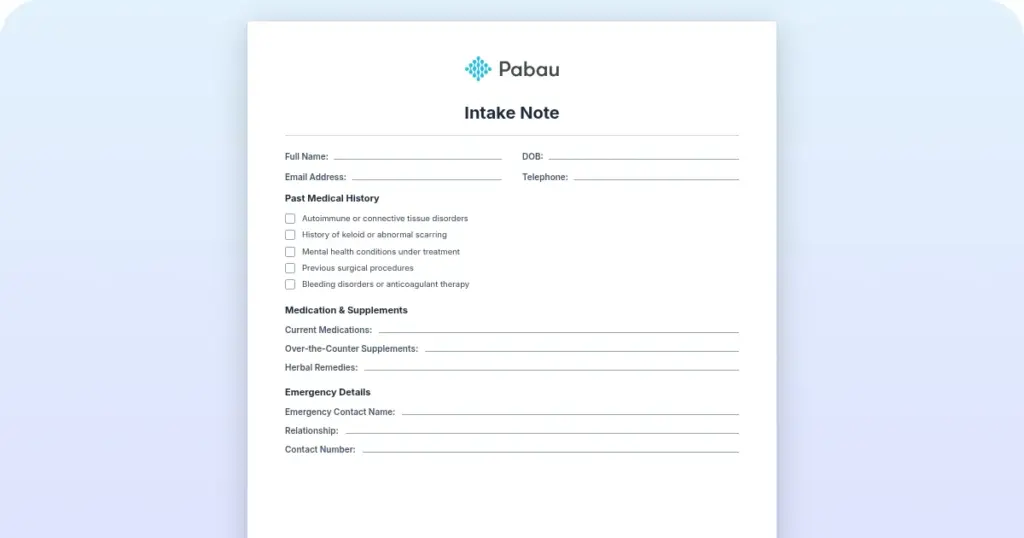
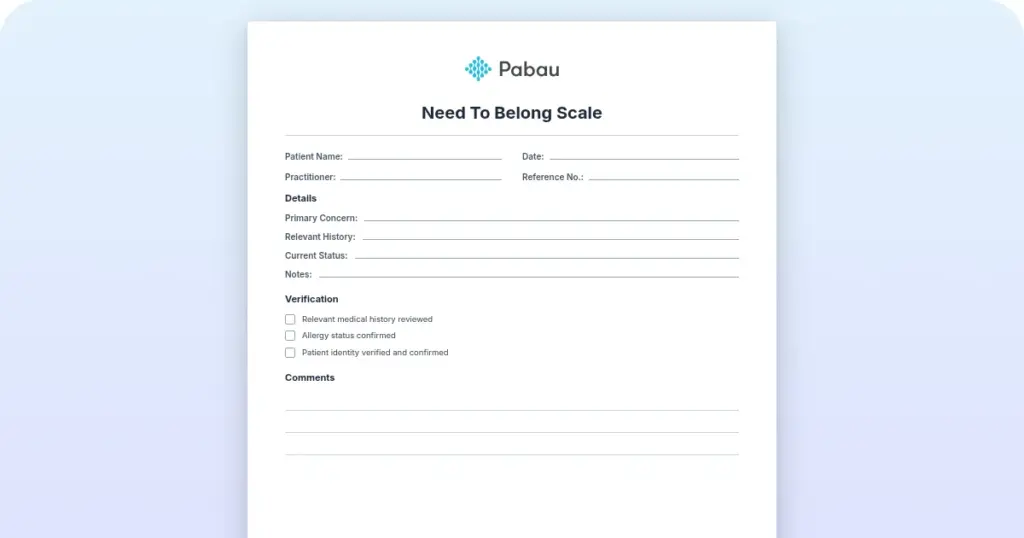
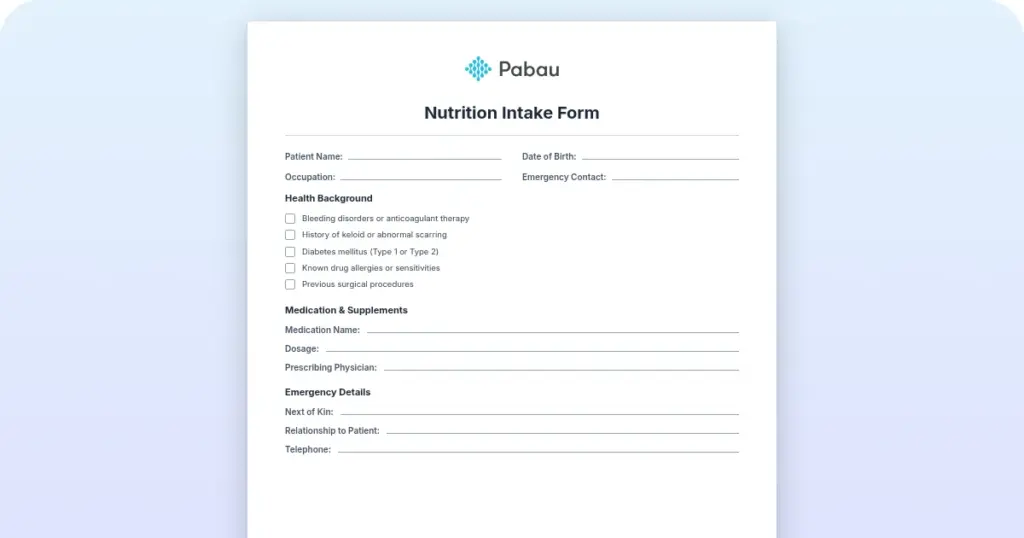
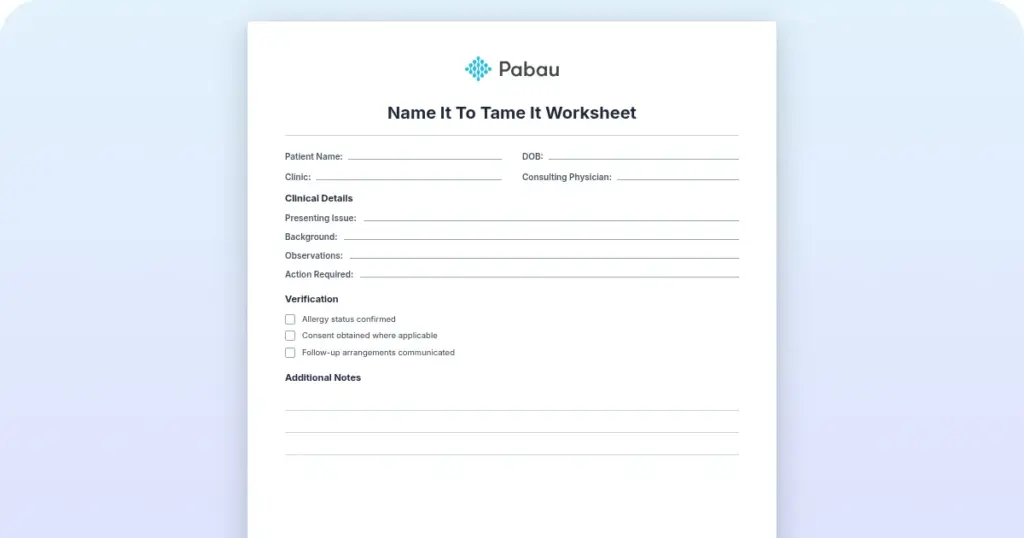
Intake note template
An intake note is the clinical record a therapist or counselor writes at the sta...

3
Last Updated: Oct 22, 2026

Fresha is no longer free. Since 2025 it runs on paid subscriptions: a reported $19.95/month Individual plan and a $14.95 per team member/month Team plan, with a 7-day trial and no free-forever option.
The subscription is only the starting point. Fresha layers a 20% new client fee (minimum $6) on marketplace bookings, plus card processing fees of roughly 2.19%–3.30% + $0.20 per transaction in the US.
Because those fees move with your booking and payment volume, your real monthly cost with Fresha is variable, not the headline subscription price.
Flat-subscription practice management platforms like Pabau price by location and users with no marketplace commission, which makes the monthly cost easier to predict as a practice grows.
Here’s the short answer. Fresha’s subscription starts at a reported $19.95 per month for a solo user (the Individual plan) or $14.95 per bookable team member per month (the Team plan). On top of that, Fresha charges a 20% fee on new clients who find you through its marketplace, plus card processing fees on every payment you take. So the price you actually pay each month depends on how busy you are, not just which plan you pick.
That’s a big shift from the tool Fresha used to be. It built its name as the salon software that cost nothing, then removed its free-forever plan in early 2025, a change that salon owners flagged on Reddit. This guide breaks down every layer of Fresha’s current pricing so you can work out your real monthly cost before you commit.
Fresha now sells three subscription tiers. The plans set your baseline monthly fee, while the variable fees further down apply no matter which tier you’re on.
The Individual plan is reported at roughly $19.95 per month and is aimed at solo practitioners who work alone and don’t need team management. It covers the core of what a one-person business needs: a single calendar, online booking, a client list, and payments, along with a small monthly allowance of free messages and marketing emails.
The Team plan scales with your staff at a reported $14.95 per bookable team member per month. It adds multiple calendars, marketing tools, and deeper reporting. Because it’s priced per person, the subscription grows with your team: a five-person team pays about $74.75 per month, and a ten-person team about $149.50 per month, before any marketplace or processing fees are added.
For larger businesses, usually those with more than 20 team members, Fresha offers a custom-priced Enterprise tier. There’s no public rate; you contact Fresha’s sales team for a quote based on your size and needs.
This is the part that catches people out. Fresha’s subscription is only one line on the bill. Two more charges, and a handful of smaller ones, sit on top of it, and they scale with how much business you do.
Fresha lists businesses in a consumer-facing marketplace where clients can discover and book them. When a brand-new client books you through that marketplace, Fresha charges a 20% fee on that first booking, with a $6 minimum. It’s a one-time charge per new client, not a recurring cut, and it doesn’t apply to returning clients or to bookings that come through your own website, Google, or social channels.
For a business leaning on the marketplace to fill its calendar, that fee is really a client-acquisition cost. Bring in ten new marketplace clients in a month at an average first booking of $100, and that’s $200 in fees on top of your subscription. Lean on the marketplace heavily and it stacks up fast; rely on your own booking channels and you can largely avoid it.
If you take card payments through Fresha, you pay a processing fee on each transaction. Fresha’s published US rates are 2.19% + $0.20 for in-person payments (plus $0.10 per tap-to-pay authorization), 2.79% + $0.20 for online payments, and 3.30% + $0.20 for manually keyed cards. Rates differ by country, so check your local figure. On $30,000 of online card payments in a month, a 2.79% rate works out to roughly $837 in processing fees alone.
A few smaller costs round out the picture. Fresha’s card terminals carry a one-time hardware cost. Optional add-ons like advanced Insights reporting carry their own per-user monthly fees. And beyond a small free monthly allowance, text messages, WhatsApp notifications, and marketing texts and emails are billed per message. None of these are dealbreakers on their own, but they belong in your total before you compare Fresha to anything else.
If messaging is what drives your bill, a bundled subscription may be worth pricing up. Podium’s messaging plans fold SMS and review requests into one monthly fee with a built-in message allowance.
Add the layers together and the headline rate starts to look very different. Take a five-person team that gets a steady flow of new clients through the marketplace and processes a healthy card volume:
That’s roughly $1,215 in a month against a $74.75 headline subscription. The exact figure will swing with your marketplace reliance and card volume, and a business that fills its own calendar and processes less on card will pay far less. The takeaway is that the subscription price alone won’t tell you what you’ll actually pay, not that Fresha is expensive by default.
Work out your real Fresha cost before you sign up by estimating three numbers: monthly subscription (team size x per-member rate), projected marketplace fees (new marketplace clients x average booking value x 20%), and card processing fees (monthly card volume x processing rate). Add all three, then compare that total against any flat-subscription alternative, not just the headline price.
Cost is only half the decision. The other half is what you get for it, and whether that matches how your business runs.
Fresha is built for beauty and wellness businesses: salons, spas, barbershops, nail studios, and similar personal-care services. Within that world it’s a strong product. Appointment scheduling, point of sale, a client list, and marketplace visibility are all well executed, and the interface is widely praised for being fast to learn without training.
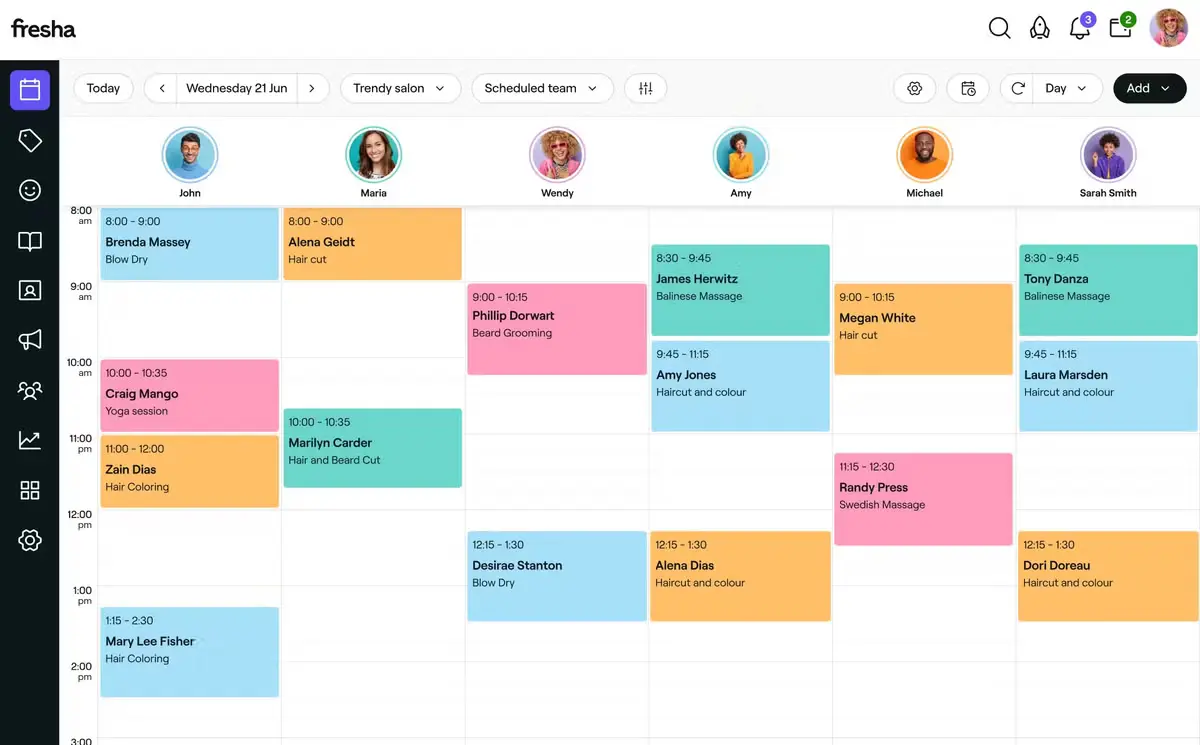
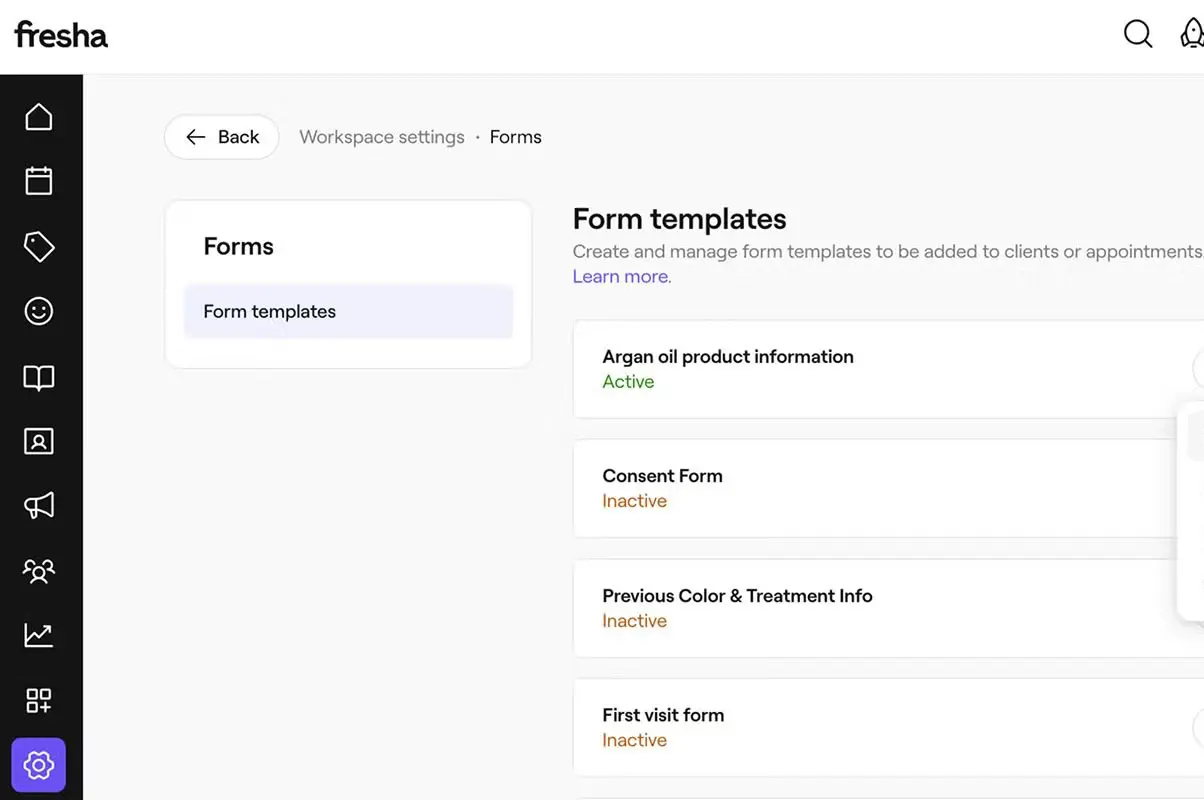
What Fresha’s pricing doesn’t include, based on its published feature list, is medical-grade clinical tooling. There are no customizable treatment notes built to healthcare standards, no consent form workflows, no prescription management, and no before-and-after photo storage tied to a patient record. That reflects Fresha’s scope, not a shortcoming: it markets to beauty businesses, not regulated healthcare. But if you run a medical or aesthetic practice, those are exactly the tools you’re paying a platform to provide, and it’s worth knowing they sit outside what a Fresha subscription buys.
It depends entirely on the kind of business you run.
For a solo stylist or a small salon that wants marketplace discovery to help fill the calendar, Fresha’s model can work out well. The subscription is modest, the marketplace genuinely brings in new clients, and the 20% new client fee is a fair trade if those clients would have been hard to reach otherwise. Weighed against the cost of other advertising, it can pay for itself. Salon-focused platforms vary widely here, so it helps to scan the leading Phorest alternatives before settling.
Where it gets harder to justify is a higher-volume or regulated practice. Once you’re processing serious card volume and booking a lot of appointments, the percentage-based fees mean a slice of revenue leaves with every transaction, and that’s difficult to budget around. The old promise of “free” is long gone, and the honest way to read Fresha now is that free was never really free once you ran the numbers; today the numbers are just more visible on the invoice. Specialty practices comparing flat-rate options can see how Nextech pricing stacks up for regulated settings.
Fresha reviews skew positive overall — it carries a high rating on Capterra from more than 1,400 reviews — but the feedback on cost specifically runs more mixed. Most of the praise is about how easy the software is to use and how well the marketplace fills a newer business’s calendar, which tracks with what Fresha is built for.
The cost complaints cluster around exactly the fees above: the 20% new client charge, card processing rates, and the 2025 removal of the free plan. On Reddit and in salon Facebook groups, owners doing real volume describe monthly bills climbing well past the headline subscription once commissions and processing are added. When you read Fresha reviews for pricing signal, weight the ones written by businesses at your size and booking volume. A solo stylist and a busy five-chair salon experience Fresha’s cost very differently.
If cost predictability matters to you, it’s worth seeing how a flat-subscription model stacks up. Pabau is all-in-one practice management software built for medical, aesthetic, and multi-specialty practices, and it prices very differently from Fresha.
Pabau’s pricing is based on your number of locations and users, and that’s it. There’s no marketplace commission on your bookings and no percentage skimmed off client acquisition, so the fee you agree to is the fee you pay whether you book 50 appointments a month or 500. That makes the monthly cost easy to project as a practice grows, rather than moving with booking and card volume the way Fresha’s does. You can see current rates on the Pabau pricing page.
The other difference is what the price includes. Every Pabau subscription comes with every feature, so there’s no starter tier that locks you out of the tools a regulated practice actually needs.
Clinical patient records, digital consent forms, before-and-after photos, prescription management, marketing, reporting, and automated workflows are all part of the core platform, not paid extras.
For a med spa, skin clinic, or other regulated setting, those are the tools that sit outside Fresha’s scope entirely.

Pabau brings patient records, consent forms, appointments, marketing, and billing together under one subscription that prices by locations and users. No marketplace commissions. No per-transaction surprises. Book a personalized demo to see how the numbers work for a practice your size.

Fresha is no longer the zero-cost tool it was known for. The 2025 move to paid subscriptions, the 20% marketplace new client fee (minimum $6), and per-transaction processing fees mean your real monthly cost scales with how busy you are, in a way the headline subscription rate never shows.
For a beauty business that leans on marketplace discovery to grow, that trade can be well worth it. For a higher-volume or regulated practice, it’s worth doing the full-cost math and deciding whether a flat, all-inclusive subscription would be easier to live with.

Evaluating other Fresha alternatives? Fresha Alternatives covers the key options for businesses moving away from Fresha’s pricing model.
Comparing Fresha with other tools? Fresha vs Vagaro and our Fresha and Booksy comparison cover other popular matchups.
Comparing scheduling tools side by side? Vagaro vs SimplyBook.me vs Pabau reviews the key differences between Vagaro and SimplyBook.me, and brings Pabau into the comparison.
Comparing EHRs for specialty practices? ModMed vs DrChrono comparison weighs ModMed’s built-in surgical workflows against DrChrono’s iPad-native flexibility for specialty practices.
Fresha’s subscription is reported at approximately $19.95 per month for the Individual plan (one user) and $14.95 per bookable team member per month for the Team plan. Enterprise pricing is custom. On top of the subscription, Fresha charges a 20% new client fee on marketplace bookings and per-transaction card processing fees, so total monthly cost depends on your booking and payment volume. Verify current rates at fresha.com/pricing.
No. Fresha removed its free-forever plan in 2025. It now offers a 7-day free trial, after which businesses must move onto one of three paid plans (Individual, Team, or Enterprise), plus marketplace commissions and card processing fees. There is no ongoing free option.
Fresha charges a 20% fee (minimum $6) on the first booking of any brand-new client who discovers your business through the Fresha marketplace. It is a one-time charge per new client, applied to the value of that initial booking. It does not apply to returning clients or to bookings made through your own website, Google, or social channels.
Fresha’s published US card processing rates are 2.19% plus $0.20 for in-person payments (plus $0.10 per tap-to-pay authorization), 2.79% plus $0.20 for online payments, and 3.30% plus $0.20 for manually keyed cards. Rates vary by country and can change, so confirm the current figure for your region at fresha.com/pricing.
Fresha uses a hybrid model: a subscription plus a 20% marketplace new client fee plus card processing fees, so cost rises with booking and payment volume. Pabau uses a flat subscription priced by locations and users, with no marketplace commission, which makes monthly cost easier to predict. Pabau also includes clinical tools like consent forms, treatment notes, and prescription management in every subscription, which sit outside Fresha’s beauty-focused feature scope.