Fresha Pricing vs Pabau: Plans, Fees & Hidden Costs
Fresha Pricing Plans: What Clinics Actually Pay in 2026 Fresha pricing looks sim...

April 10, 2026


Buy now, pay later is now available in Pabau

Fresha pricing shifted in 2025: the fully free plan ended for most users, replaced by paid tiers starting around $14.95 per bookable team member per month.
Fresha charges a verified 20% marketplace new client commission (minimum $6 per client) on top of monthly subscription fees, significantly raising total cost for high-volume bookings.
Pabau uses a flat subscription model with no marketplace commissions, making it more predictable for growing medical and aesthetic clinics.
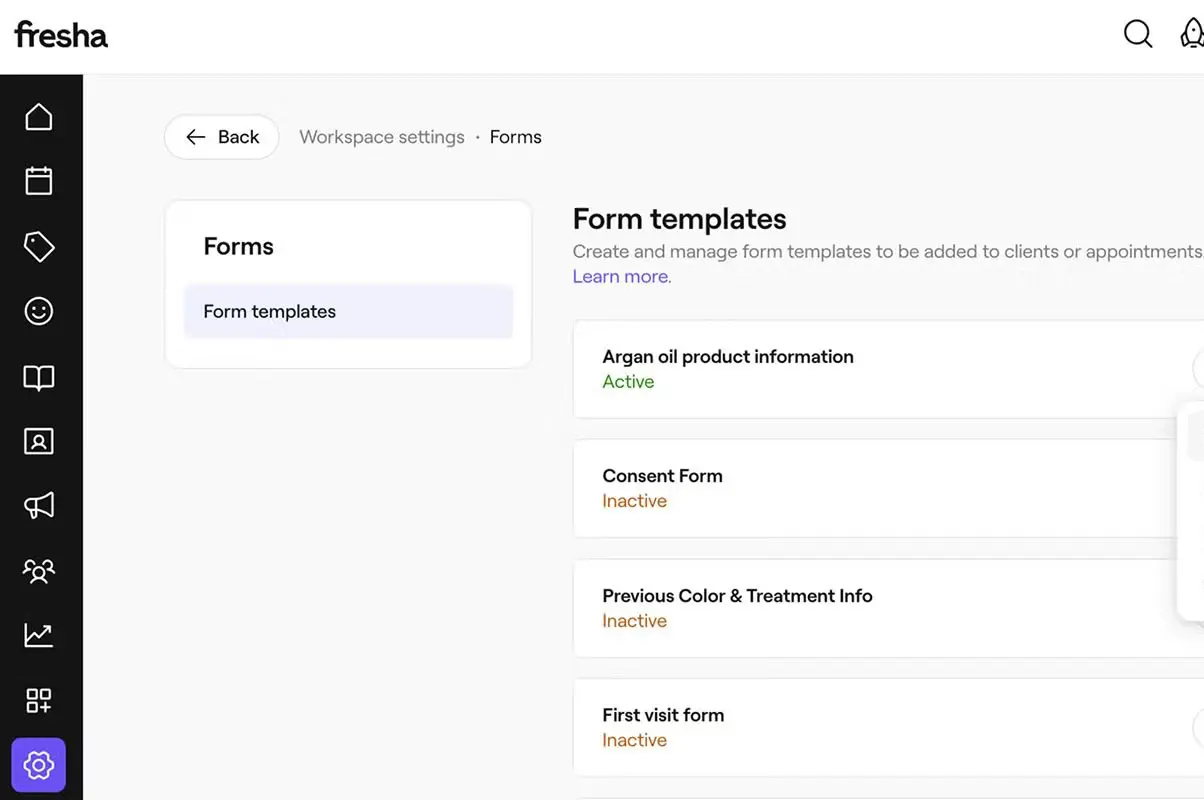
Fresha lacks medical-grade clinical documentation features such as consent forms, treatment notes, and prescription management, which are core to Pabau’s platform.
Fresha pricing looks simple on the surface. Dig into the fee structure and a different picture emerges, one that catches many clinic and salon owners off guard once their business starts growing. This guide breaks down every cost layer in Fresha’s model and compares it directly against Pabau’s transparent subscription pricing, so you can calculate the real cost before committing to either platform.
Fresha built its reputation as the salon software that cost nothing. That changed in early 2025, when the platform eliminated its free tier entirely, including Canadian salons who reported the change on Reddit’s r/BehindTheChair. What remains is a hybrid pricing model: paid subscription plans, a marketplace commission structure, and per-transaction processing fees that stack on top of each other. Understanding those layers is the starting point for any honest fresha pricing comparison.
The table below summarises where each platform sits on core pricing dimensions before we examine the detail.
Pricing last verified: April 10, 2026 against fresha.com/pricing. Rates may have changed since publication.
Fresha’s current pricing sits across two main subscription tiers, layered with variable fees that apply regardless of which plan you choose. Understanding fresha pricing means understanding that the subscription cost is only the starting point.
Third-party review sources report a Fresha Individual plan at approximately $19.95 per month, positioned for solo practitioners who do not require team management or advanced marketing tools. Verify the current rate directly at fresha.com/pricing before committing, as Fresha updated its model in 2025 and rates may have changed since publication.
The Team plan scales by team size. Third-party sources report a starting rate of approximately $14.95 per bookable team member per month, unlocking advanced features including marketing tools and detailed reporting. A five-person team would therefore pay roughly $49.75 per month on subscription alone before any transaction or marketplace fees apply.
This is where fresha pricing diverges significantly from flat-subscription competitors. According to Fresha’s own Help Center, the platform charges a 20% new client fee on every booking made through the Fresha marketplace. This is a one-time charge per new client, not a recurring commission. Even so, for a business acquiring ten new clients per month at an average service value of $100, that amounts to $200 in marketplace commissions on top of the subscription.
Fresha also charges per-transaction processing fees for online and in-person card payments. Third-party sources and user reports indicate rates of 2.29% plus $0.20 for in-person payments, 2.79% plus $0.20 for online payments, and 3.30% plus $0.20 for manual card entry in the US (per fresha.com/pricing), and approximately 1.2% plus 20p per transaction in the UK, though these figures have not been independently confirmed and may vary by region or volume. Check current rates on the Fresha pricing page before projecting costs. Clinics processing $50,000 per month in card payments at a 2.79% online rate would pay approximately $1,395 in processing fees per month, a figure that compounds quickly for higher-volume practices.
The fundamental structural difference between fresha pricing and Pabau pricing is predictability. Fresha’s model layers variable costs on top of the subscription. Pabau uses a flat subscription model where the monthly fee reflects team size and feature tier, with no marketplace commission applied to bookings.
For a medical or aesthetic clinic, this matters significantly. Practices running high appointment volumes, whether for Botox, IV therapy, or physiotherapy, cannot easily budget when a portion of revenue disappears into percentage-based fees. Pabau’s transparent pricing allows clinic owners to project monthly costs with certainty regardless of how many patients book or how those bookings arrive.
Fresha’s marketplace is genuinely useful for client acquisition in the beauty sector. New clients discover the business through the platform, book directly, and pay the one-time 20% commission. For a hair salon building its client base, this can be cost-effective early on. For a regulated aesthetic clinic running repeat patient cycles, it adds a recurring acquisition tax on a channel the clinic may not even rely on.
Pricing tells one half of the story. The feature set tells the other. A platform that costs less but cannot support your clinical workflow is not actually cheaper once you factor in the time and risk of operating without appropriate tools.
Fresha is designed for beauty and wellness businesses: salons, spas, barbershops, and similar personal care services. Its feature set reflects that focus. Appointment scheduling, point of sale, client CRM, and marketplace visibility are genuinely well-executed. What Fresha does not offer, based on its published feature list, is medical-grade clinical documentation. There are no customisable treatment notes, no consent form workflows built to healthcare standards, no prescription management, and no before-and-after photo storage linked to patient records. For a regulated clinic environment, these are not optional extras.
Pabau is built around exactly those requirements. The platform includes digital consent forms, before-and-after photo documentation, prescription management, and a full clinical client record system. These features are not add-ons charged separately. They are part of the core platform that serves medical spas, skin clinics, aesthetic practices, and a range of private healthcare settings.
The compliance dimension matters here too. Practices operating under Care Quality Commission oversight or GDPR obligations in the UK, or clinics navigating HIPAA requirements in the US, need software built with those frameworks in mind. Fresha markets to beauty businesses, not regulated healthcare environments. That is not a criticism of Fresha’s product quality within its intended market. It is a scope difference that directly affects whether the platform is appropriate for a given practice type.

Pabau brings together patient records, consent forms, appointments, and billing under a single subscription. No marketplace commissions. No per-transaction surprises. Book a personalised demo to see the full workflow in action.

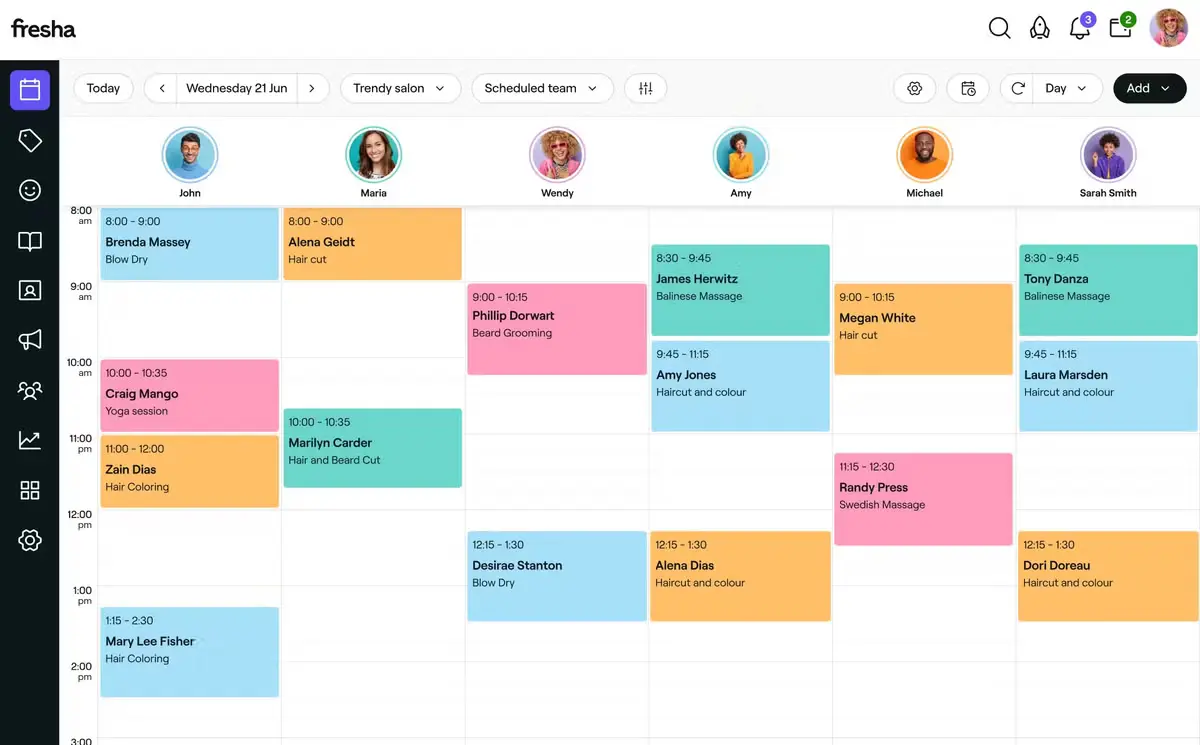
Both platforms handle appointment scheduling well within their respective domains. Fresha’s calendar is clean, fast, and optimised for the booking patterns of beauty businesses: back-to-back service appointments, staff rota management, and client self-booking through the marketplace. The online booking experience is strong, and the interface is broadly praised for being easy to pick up without training.
Pabau’s scheduling is built for clinical workflows. Appointments link directly to patient records, pre-appointment intake forms trigger automatically, and post-appointment care instructions can be sent without manual intervention. The automated workflow system handles recall sequences, follow-up messaging, and review requests as part of the same booking cycle. For a clinic managing 200 appointments per week across multiple practitioners, that level of automation is operationally significant.
On integrations, Fresha connects with payment processors and operates its own marketplace. Its third-party integration ecosystem is limited compared to broader practice management platforms. Pabau integrates with a range of tools spanning payment processing, marketing platforms, and operational workflows. The platform also supports multi-location management natively, which matters for aesthetic groups or clinic chains that Fresha’s architecture was not originally designed to serve at scale.
Support quality is a recurring concern in user feedback for Fresha, particularly following the 2025 pricing model transition. Community discussions on Reddit note frustration with the change to paid plans and perceptions of support gaps during that period. Pabau provides dedicated onboarding and customer success support for new practices, which reduces the operational risk of switching platforms or launching on new software.
The table below covers the features most relevant to clinic owners evaluating these two platforms side by side.
The tables below present each platform’s pricing structure. Note that Fresha’s total cost depends on usage variables: how many team members need access, how many new clients arrive via marketplace, and transaction volumes processed through Fresha Pay.
For current Pabau pricing, visit pabau.com/pricing or book a demo to discuss team size and requirements.
Calculate total Fresha cost before signing up by estimating three numbers: monthly subscription (team size x per-member rate), projected marketplace commissions (new client volume x average service value x 20%), and payment processing fees (monthly card volume x processing rate). Add all three before comparing to any flat-subscription alternative.
User review data tells a clear story about where each platform earns its rating and where concerns concentrate.
According to Capterra reviewers, Pabau holds a 4.5 out of 5 rating based on over 370 verified reviews. Positive themes centre on the comprehensiveness of clinical features for aesthetics and medical practices, strong appointment and patient management, and responsive onboarding support. Recurring criticisms note a learning curve for new users and occasional UI complexity for smaller single-practitioner practices.
According to Capterra reviewers, Fresha holds a 4.9 out of 5 rating based on over 1,400 reviews. Praise consistently highlights the intuitive interface, the free entry point that attracted early users, and the marketplace’s effectiveness for building a client base. Negative reviews raise concerns about hidden cost complexity, frustration with the 2025 pricing changes, and the perception that marketplace commissions become expensive as booking volume scales. Several reviewers also note that Fresha is not appropriate for regulated clinical settings.
The right platform depends on the type of business you operate and the trajectory you are on.
Choose Fresha if you run a solo or small-team beauty business (salon, spa, barbershop, nail studio) where marketplace-driven client discovery is a priority, your feature requirements are primarily scheduling, POS, and client communication, and you have calculated that the 20% new client fee is cost-effective relative to other acquisition channels you would otherwise use.
Choose Pabau if you operate a medical, aesthetic, or multi-specialty clinic where clinical documentation, consent forms, treatment records, and compliance workflows are non-negotiable. Pabau’s flat subscription model suits practices that want cost predictability as patient volume grows, and its feature set serves environments ranging from laser clinics and plastic surgery practices to physiotherapy clinics and wellness centres. If you are also evaluating other alternatives, Pabau’s Fresha vs Pabau comparison page covers additional feature detail.

Evaluating other Fresha alternatives? Fresha Alternatives covers the key options for clinics moving away from Fresha’s pricing model.
Need to compare against Phorest or Timely? Fresha vs Phorest and Fresha vs Timely provide detailed breakdowns of those matchups.
Running a medical spa? Best Medical Spa Software ranks platforms specifically for med spa environments where clinical compliance matters.
Want to understand clinic software pricing more broadly? Clinic Management Software explains what to look for when comparing platforms for healthcare settings.
Fresha pricing is no longer the zero-cost proposition it once was. The 2025 shift to paid plans, combined with a 20% marketplace new client commission (minimum $6 per client) and per-transaction processing fees, means total cost scales with business growth in ways a headline subscription rate does not communicate. For beauty businesses where marketplace discovery is central to growth, that cost may be justified. For medical and aesthetic clinics where patient volume is high and clinical compliance is non-negotiable, it raises serious questions about both fit and cost predictability.
Pabau’s digital consent forms, clinical documentation, and flat-subscription model are purpose-built for exactly those environments. Book a demo to see how Pabau supports clinic operations without the variable fee complexity of marketplace-based platforms.
Fresha does not offer a free tier. As of 2026, Fresha offers only a 7-day free trial, after which businesses must subscribe to one of three paid plans (Independent, Team, or Enterprise) plus marketplace commissions and payment processing fees. There is no ongoing free option for any business size.
Third-party sources report 2.29% plus $0.20 for in-person payments, 2.79% plus $0.20 for online payments, and 3.30% plus $0.20 for manual card entry in the US (per fresha.com/pricing) and approximately 1.2% plus 20p in the UK, though these figures are unverified. Rates may vary by region and payment volume, so confirm current rates directly at fresha.com/pricing before projecting costs.
Fresha charges a verified 20% commission on bookings made by first-time clients through the Fresha marketplace. This is a one-time fee per new client, applied to the value of the initial booking. It is separate from the monthly subscription and payment processing fees.
Yes. As of 2025, Fresha operates paid subscription plans. Third-party sources report an Individual plan at approximately $19.95 per month and a Team plan at approximately $14.95 per bookable team member per month. Verify current rates at fresha.com/pricing as the model has evolved.
Fresha’s hybrid model (subscription plus marketplace commission plus transaction fees) adds variable costs that grow with booking volume. Pabau uses a flat subscription with no marketplace commissions, making it more predictable for clinics. Fresha also lacks medical-grade clinical documentation features that aesthetic and regulated clinics require, including consent forms, treatment notes, and prescription management.