








Sexual Compulsivity Scale: All 10 items, scoring, and a free template
Download your free Sexual Compulsivity Scale template A ready-to-use copy of all...

Last Updated: August 21, 2026


An addiction treatment plan is a structured clinical document that guides recovery from substance use disorder through personalized goals, measurable objectives, and evidence-based interventions.
Effective plans integrate DSM-5 severity classification (mild, moderate, severe), address co-occurring mental health conditions, and include relapse prevention strategies.
Documentation must meet HIPAA, CARF, and Joint Commission compliance standards, with regular review cycles to adjust treatment as client needs evolve.
Practice management software like Pabau helps clinicians document treatment plans, track intervention progress, and keep audit trails for regulatory compliance.
A ready-to-use clinical document covering presenting problem assessment, DSM-5 severity classification, treatment goals, measurable objectives, evidence-based interventions, medication-assisted treatment fields, relapse prevention planning, and progress monitoring strategies for substance use disorder clients.
Download templateA substance abuse treatment plan is a structured clinical document and a core part of patient care management. It maps where a client is in their recovery from a substance use disorder (SUD), where they need to be, and how to get there. Also called an addiction treatment plan, it turns assessment findings into measurable goals, so treatment stays strategic rather than reactive and progress is easy to track.
This guide explains what an addiction treatment plan includes, how to structure one, and how to customize the downloadable template for your practice, with worked goal-and-objective examples. Whether you’re treating opioid use disorder, alcohol dependence, or polysubstance use, a well-designed plan improves outcomes and demonstrates clinical accountability.
An addiction treatment plan is a personalized clinical document that outlines the therapeutic approach for an individual struggling with substance use disorder. It integrates assessment findings, SAMHSA treatment principles, and evidence-based interventions into a measurable roadmap for recovery.
The plan serves multiple purposes: it guides clinical decision-making, communicates treatment rationale to the client and their support system, satisfies regulatory requirements (HIPAA, CARF International, Joint Commission), and provides documentation for insurance authorization and peer review.
Unlike general care plans, addiction treatment plans specifically address the neurobiological, psychological, and social dimensions of substance use. They incorporate DSM-5 diagnostic criteria, account for co-occurring mental health conditions (dual diagnosis), and include strategies for relapse prevention and long-term recovery support.
Most evidence-based addiction treatment plans follow a consistent structure. Clinicians adapt this framework based on client presentation and clinical judgment.
Completing an addiction treatment plan requires collaboration between clinician and client.
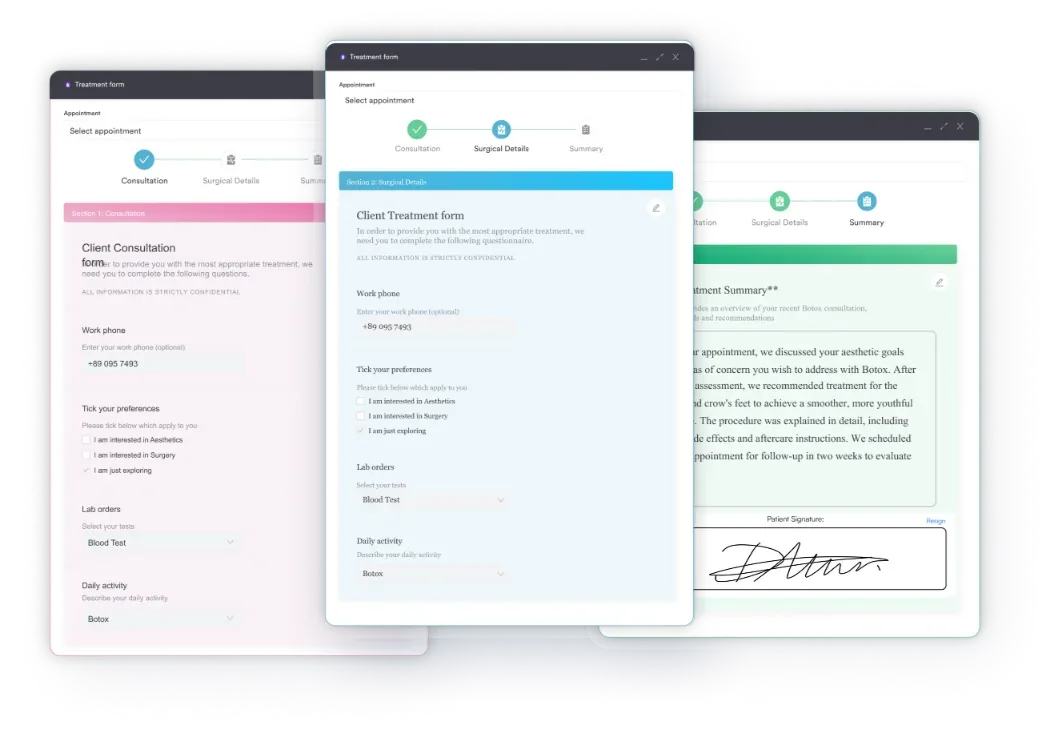
Step 1: Conduct a comprehensive intake assessment. Document substance use history (onset, progression, quantities, routes), medical and psychiatric history, social support, legal involvement, occupational stability. Use validated screening tools (UNCOPE, ASSIST) to assess severity.
Step 2: Assign DSM-5 severity classification. Count criteria met across 11 categories (tolerance, withdrawal, larger amounts, unsuccessful cut-down, time spent, reduced activities, continued use despite harm, etc.). This classification directly informs treatment setting and intensity.
Step 3: Define treatment goals collaboratively. Engage the client in goal-setting. Goals might be abstinence, harm reduction, family reunification, employment, or mental health stabilization. Document the client’s values and preferences, not clinician assumptions.
Step 4: Develop SMART objectives and interventions. For each goal, write 2-3 measurable objectives with specific interventions, frequency, and duration. Example: Goal (reduce substance use) → Objective (achieve 30-day abstinence) → Intervention (individual CBT twice weekly, group therapy weekly, urine drug screens biweekly).
Step 5: Document MAT protocols if applicable. If the client is prescribed buprenorphine, naltrexone, or methadone, include medication name, dosing schedule, DEA prescriber information, and monitoring parameters. Align documentation with NIDA medication-assisted treatment guidelines.
Step 6: Integrate relapse prevention. Identify personal triggers (emotional states, social situations, environmental cues), teach coping strategies (distress tolerance, urge surfing, peer support activation), and establish crisis contacts and aftercare plans.
Step 7: Set review schedule and establish progress metrics. Plan monthly or more frequent reviews if the client is in intensive outpatient or inpatient treatment. Define how progress will be measured (abstinence, objective markers like urine drug screens, client-reported satisfaction, functional improvements).
Platforms differ widely in how they handle clinical worksheets; comparing Carepatron competitors shows the gaps quickly.
Treatment goals anchor the entire plan. They reflect what the client wants to achieve and what evidence supports. Objectives operationalize those goals into measurable, time-limited actions.
Sample goal 1: achieve and maintain abstinence from all substances. Objectives:
Interventions: individual CBT, group therapy, contingency management (incentives for verified abstinence), and peer support (AA, NA, SMART Recovery).
Sample goal 2: reduce psychiatric symptoms and improve functional capacity. Objectives:
Interventions: concurrent psychiatric treatment (medications, individual therapy), sleep hygiene education, and vocational counseling.
Sample goal 3: improve family and social relationships. Objectives:
Interventions: family therapy, group therapy, peer mentoring, and social skills training.
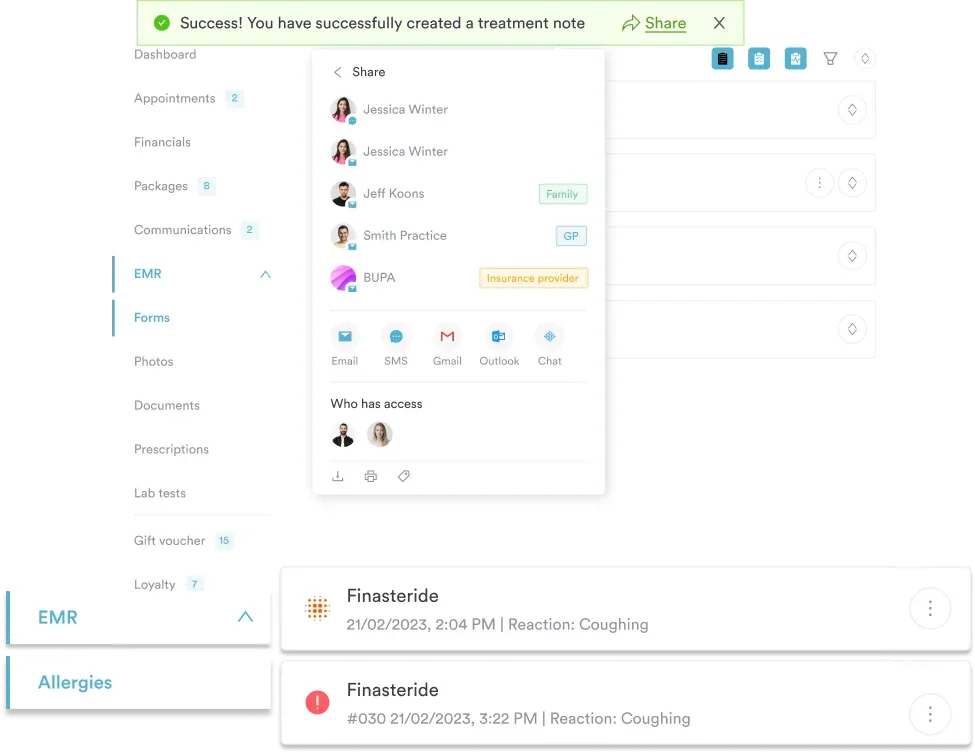
Addiction treatment plans are regulatory documents. Pabau stores them in a client record system with audit trails, so you can prove compliance and track every amendment.
Best practice:
Relapse risk does not end when formal treatment concludes. Effective plans include concrete relapse prevention strategies and detailed aftercare coordination.
Relapse prevention components: Identify high-risk situations (interpersonal conflict, emotional distress, social pressure, environmental cues). Teach coping skills (urge surfing, opposite action, self-soothing, peer contact). Establish early warning signs of relapse (mood changes, isolating, skipping support meetings) and action plans (contact sponsor, increase therapy frequency, consider medication adjustment).
Aftercare coordination: Before discharge or end of intensive treatment, schedule ongoing support. This might include weekly outpatient counseling, group therapy, peer support meetings, primary care or psychiatry appointments, and case management for housing, employment, or legal issues. Document specific referrals with provider names, contact information, and expected start dates.
A static plan is ineffective.
Progress monitoring: At each session, document whether objectives are being met, what interventions are working, and what barriers exist. Use objective measures (urine drug screens, symptom rating scales, attendance records) alongside subjective observation.
Plan updates: Review and update plans at least monthly, and more frequently (weekly) during intensive outpatient or inpatient treatment. Updates should reflect client progress, adjust objectives or interventions as needed, and address emerging issues (new substance use, psychiatric decompensation, legal crises, homelessness).
When to revise substantially: If objectives are not being met despite consistent intervention, consider whether the plan is realistic, whether the client’s motivation has changed, or whether treatment setting/modality needs adjustment. A major revision might shift from abstinence to harm reduction, add psychiatric medication, or increase treatment intensity.
Dual diagnosis (substance use disorder + mental illness) is the rule, not the exception.
Treatment plans must address both conditions in parallel. This means coordinating between addiction and mental health providers, using medication (if appropriate) for both conditions, and teaching the client how substance use and psychiatric symptoms interact. A client with depression and alcohol use disorder, for instance, needs antidepressant medication, therapy for both conditions, and relapse prevention tailored to mood-driven drinking.
Documentation should specify whether psychiatric symptoms are primary (pre-dating substance use or persisting during abstinence) or secondary (triggered by substance use or withdrawal). This distinction informs treatment emphasis and medication selection.
If prescribing buprenorphine, naltrexone, or methadone for opioid use disorder, the treatment plan must document specific MAT fields for regulatory and clinical clarity.
Download the addiction treatment plan template and customize it for your setting. Whether you operate an inpatient rehabilitation facility, intensive outpatient program, office-based prescribing practice, or peer-support recovery house, this framework adapts to your modality and client population.
Key customizations: (1) Integrate your facility’s specific interventions and staff roles. (2) Align review frequency with your accreditation standards (CARF, The Joint Commission). (3) Coordinate with therapy practice workflows for documentation and progress tracking. (4) Store completed plans in a HIPAA-compliant system with role-based access and audit trails.
A structured addiction treatment plan transforms recovery from a vague wish into a measurable clinical process. It protects your practice, serves your clients, and demonstrates the science-based approach that funders, families, and clients themselves are seeking.
A well-constructed substance abuse treatment plan integrates assessment, DSM-5 severity classification, evidence-based interventions, and measurable progress tracking into one document that guides recovery, satisfies regulatory standards, and demonstrates clinical accountability. Download the template to streamline your planning, and book a demo to see how Pabau’s clinical documentation tools support compliant, efficient treatment planning.
A treatment plan is clinical and therapeutic; it specifies what interventions will be used, how progress will be measured, and what outcomes are expected. A care plan is broader and may include housing, employment, medical, or social services coordination. Many practices use both documents in tandem.
Minimum monthly for standard outpatient care; weekly or more frequently for intensive outpatient or inpatient programs. Updates should occur whenever clinical status changes significantly (new substance use, psychiatric decompensation, major life events, or completion of treatment milestones).
Ethically and legally, informed consent is required. If a client refuses to participate in planning, document that refusal and the reasons. You may still complete a plan based on clinical assessment, but note the lack of collaboration. Motivational interviewing can help explore ambivalence and build buy-in.
Reassess whether objectives are realistic, whether the client’s commitment has changed, or whether treatment modality or setting is appropriate. Common responses include increasing treatment intensity, adjusting medication, addressing barriers (housing, transport, childcare), or referring to higher level of care.
Yes. The client should receive a copy, review the plan with the clinician, and sign it to document agreement and understanding. Shared ownership improves engagement and accountability.
A common goal is to achieve and maintain abstinence, with objectives such as completing detox within 7 days, sustaining 30, 60, and 90 days of abstinence verified by urine drug screens, and attending three support-group meetings a week. Each goal pairs with SMART objectives and evidence-based interventions like CBT, group therapy, and contingency management.
DSM-5 rates substance use disorder as mild (2-3 criteria), moderate (4-5 criteria), or severe (6+ criteria) based on symptoms present. Severity drives treatment recommendations: mild may respond to outpatient counseling, moderate to intensive outpatient, severe to inpatient or residential care. It also informs insurance authorization and legal documentation.