CPT code 48152: Whipple procedure without pancreatojejunostomy
CPT code 48152: Official description and procedure overview CPT code 48152 descr...

Last Updated: Nov 13, 2026
M1380 is the CCSD code for percutaneous tru-cut needle biopsy of lesion of kidney. A cutting needle is passed through the skin to take a core of tissue from a lesion in a native kidney. It sits in the CCSD kidney section, 12.1.0.
A fine-needle biopsy of the same kind of lesion is M1310, and a biopsy of a transplanted kidney is M0813. UK private insurers set their own fee for M1380, and claims typically go through Healthcode.
Let Pabau's smart automation suggest the right codes, reduce claim denials, and keep your practice compliant—effortlessly.
Automate repetitive tasks and focus on what matters most—your patients.
Reduce coding errors and ensure compliance with the latest regulations.
Clean claims, fewer denials, and faster reimbursements.
Powerful insights and reporting to help your practice thrive.
HIPAA compliant SOC 2 certified GDPR-compliant Trusted by 4,000+ clinics worldwide

CCSD code M1380 is percutaneous tru-cut needle biopsy of lesion of kidney, in the UK CCSD schedule’s kidney section, 12.1.0.
The descriptor is narrow: a cutting-needle core, taken through the skin, from a lesion in a native kidney.
A fine-needle biopsy of the same kidney lesion is M1310. A transplanted kidney is M0813, open biopsy is M0814 and endoscopic biopsy is M1110.
Record the diagnosis in WHO ICD-10, not US ICD-10-CM, and match it to the indication on the pre-authorisation.
There is no fixed CCSD fee, since each UK insurer sets its own benefit in pounds sterling.
CCSD code M1380 is the UK private-practice code for percutaneous tru-cut needle biopsy of lesion of kidney. The clinician passes a cutting needle through the skin into a lesion in the kidney. The needle takes a core of tissue for histology, and no incision exposes the kidney.
CCSD stands for Clinical Coding and Schedule Development. UK private medical insurers, including Bupa, AXA Health, Aviva and Vitality, use its procedure schedule to authorise and pay for treatment. The full descriptors sit behind a login at ccsd.org.uk, and our guide to CCSD codes explains how the schedule works.
Because CCSD sets no fee, check the member’s insurer before you quote a figure. Benefit maximums differ between insurers and change over time, so a quote from last year’s schedule can leave a shortfall nobody agreed to.
M1380 covers the biopsy itself, billed by the clinician who performs it. That means placing a cutting needle through the skin into the kidney lesion and taking one or more cores of tissue.
The descriptor is narrow in three ways. The approach is percutaneous, the technique is a tru-cut core, and the target is a lesion in the kidney. Change any one of those, and a different code usually applies.
Other clinicians on the case invoice for their own work. The laboratory that reports the core sends its own invoice, and an attending anaesthetist bills their own fee.
The M1380 descriptor does not mention imaging guidance. Before you add a separate radiology charge for ultrasound or CT guidance, check how the member’s insurer treats guidance for this code.
Four codes sit close to M1380 in the kidney section. Each one turns on a single fact the procedure note should already record.
Read the kidney, the access route and the needle type from the note, in that order, before you pick a code. Coding from the theatre list, rather than the note, is how a fine-needle biopsy ends up billed as M1380.
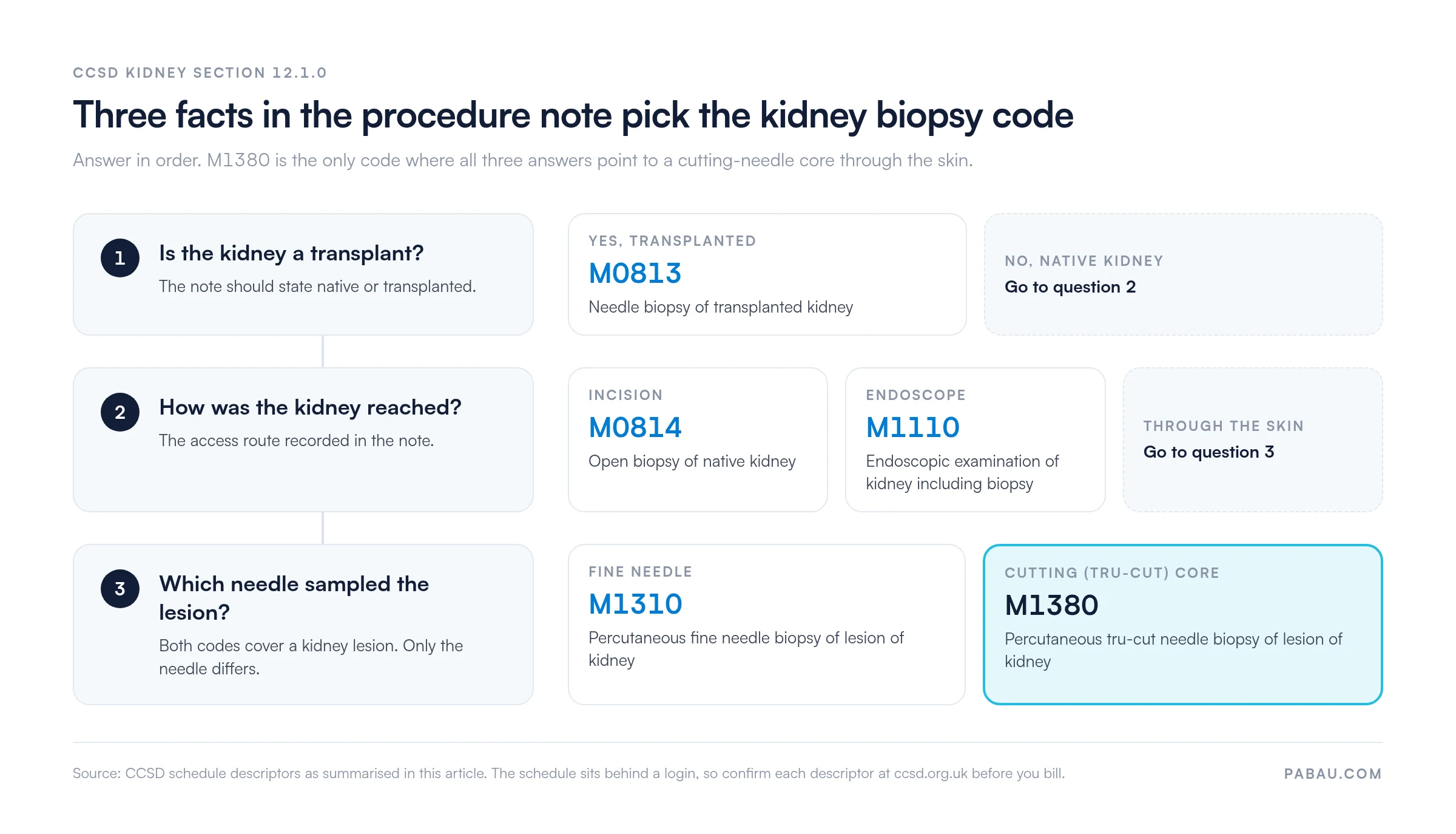
Check the procedure note for three words before you bill M1380: percutaneous, tru-cut and lesion. If the note describes a fine needle, a transplanted kidney or an incision, one of the neighbouring codes fits better.
UK insurers check a claim against the diagnosis given at pre-authorisation. Record it in WHO ICD-10, the version used in UK coding, and look codes up in the WHO ICD-10 browser. US ICD-10-CM codes add characters that WHO ICD-10 doesn’t have, so they don’t belong on a UK claim.
These are examples, not a fixed list. Use the most specific code the clinical record supports, and update it once histology is back if the insurer asks.
Two cases need extra care. A biopsy of a transplanted kidney for suspected rejection usually carries T86.1, kidney transplant failure and rejection, but its procedure code is M0813. A biopsy for diffuse kidney disease, such as nephrotic syndrome (N04), may not involve a lesion at all, so check that M1380’s descriptor fits first.
UK private insurers expect pre-authorisation before most planned procedures. The member contacts the insurer, gets an authorisation number, and the claim is later checked against what was approved.
Have these details ready when the member or your team calls:
The authorisation is for a specific code. If the plan changes on the day, for example to a fine-needle biopsy, tell the insurer before you send the invoice.
An insurer that queries an M1380 claim will compare the note with the descriptor. The note should make every part of the code easy to find.
A structured note template in your medical records software makes each of these a required field. A missing detail is then caught before the patient leaves, while the clinician can still add it.
Bleeding is the main risk after a kidney biopsy. Most bleeding settles with observation and needs no further procedure, but the note should still record it.
If a complication needs treatment, such as embolisation of a bleeding vessel, that treatment is a separate procedure with its own CCSD code. It usually needs its own authorisation. T81.0, haemorrhage and haematoma complicating a procedure, is the WHO ICD-10 code that describes the bleed.
Insurers query or short-pay M1380 claims for six recurring reasons:
Most of these are fixed by resubmitting with the right code, an addendum to the note, or proof of authorisation. The shortfall is the exception, which is why the fee conversation belongs before the biopsy.
A kidney biopsy claim usually stalls on paperwork. The authorisation number sits in an email, the note sits in the hospital system, and the invoice is typed up days later.
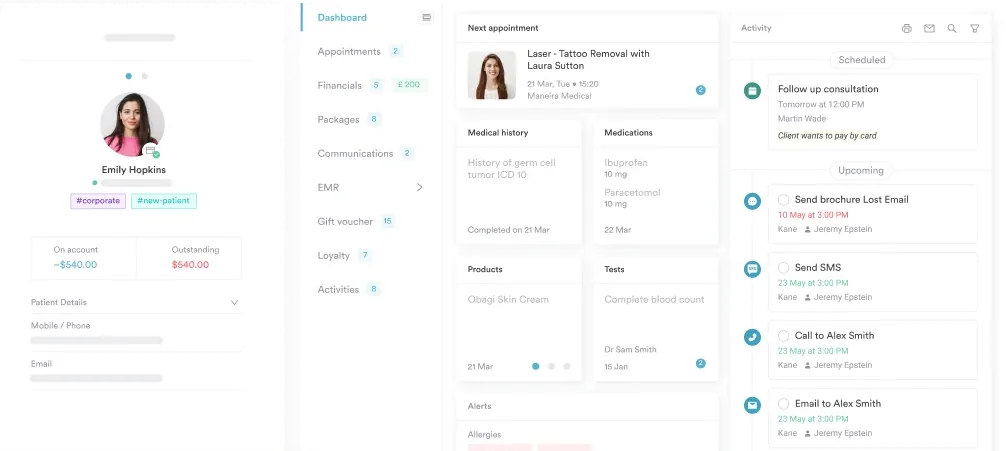
Pabau brings those pieces together on one patient record. The authorisation number is recorded on the patient’s case, and Pabau warns your team when one is missing. The invoice is raised from that record, and claims management sends it to the insurer through Healthcode.
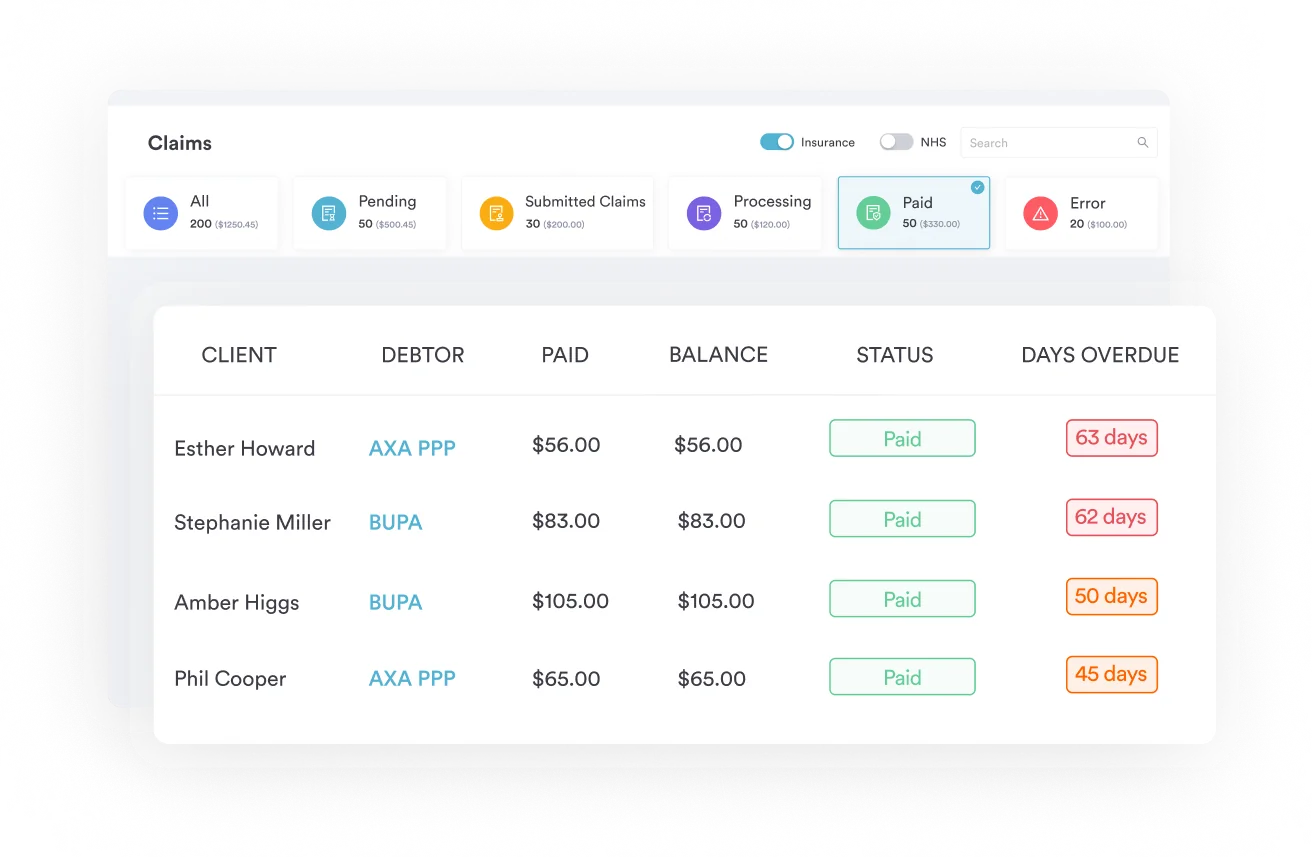
Pabau doesn’t choose the code for you. It sends what your team records, so the code and the note still need to agree.

Pabau keeps the authorisation number, procedure note and histology on one patient record, then sends the insurer invoice through Healthcode.

M1380 is a narrow code. Bill it when a cutting-needle core came through the skin from a lesion in a native kidney. When any of those facts changes, pick a neighbouring code.
Get the authorisation for the code you will invoice, and record the diagnosis in WHO ICD-10. Agree any shortfall with the patient before the biopsy, and the insurer has little left to query.
Book a demo to see how Pabau keeps each procedure claim and its evidence on one patient record.

Need the full Bupa coding picture? Bupa CCSD codes explains how the CCSD schedule works with Bupa claims, recognition and fees.
Was the biopsy taken from a transplanted kidney? CCSD code M0813 covers needle biopsy of a transplanted kidney.
Was the kidney exposed through an incision? CCSD code M0814 covers open biopsy of a native kidney.
CCSD code M1380 is percutaneous tru-cut needle biopsy of lesion of kidney. A cutting needle is passed through the skin to take a core of tissue from a kidney lesion. UK private insurers use it to authorise and pay for the procedure.
The Clinical Coding and Schedule Development group, which UK private medical insurers and hospital groups support. Its schedule is used by insurers such as Bupa, AXA Health, Aviva and Vitality. The full code list sits behind a login at ccsd.org.uk.
Both codes cover a needle biopsy of a kidney lesion taken through the skin. M1380 uses a tru-cut cutting needle to take a solid core, while M1310 uses a fine needle. The needle type recorded in the procedure note decides which code you bill.
M0813, needle biopsy of transplanted kidney. M1380 is for a lesion in a native kidney, so a transplant biopsy for suspected rejection should not be billed under it.
The CCSD schedule sets no fee. Each insurer publishes its own benefit maximum in pounds sterling and reviews it from time to time. Check the member’s insurer before you quote, so any shortfall is agreed with the patient in advance.
Usually, yes. UK private insurers expect the member to get an authorisation number before a planned procedure. Make sure the authorisation names M1380, because a claim for a different code than the one approved is likely to be queried.