HCPCS code V2600: Ophthalmic lens billing guide
HCPCS code V2600: Official descriptor and scope HCPCS code V2600 is the Level II...

Last Updated: Nov 13, 2026
C8200 is the CCSD code for laser photocoagulation/cryotherapy of lesion of retina. It covers treatment that seals or ablates a retinal lesion with laser burns or a freezing probe. Both methods sit under the one code.
Practices use it for retinal breaks without detachment, peripheral lesions at risk of detachment and diabetic retinopathy. The procedure note records the method, the eye treated and the number of burns or freeze spots. When the treatment is part of a wider retinal operation, that operation's code usually covers it.
Let Pabau's smart automation suggest the right codes, reduce claim denials, and keep your practice compliant—effortlessly.
Automate repetitive tasks and focus on what matters most—your patients.
Reduce coding errors and ensure compliance with the latest regulations.
Clean claims, fewer denials, and faster reimbursements.
Powerful insights and reporting to help your practice thrive.
HIPAA compliant SOC 2 certified GDPR-compliant Trusted by 4,000+ clinics worldwide

CCSD Code C8200 covers laser photocoagulation and cryotherapy of retinal lesions under one descriptor in the UK CCSD Schedule.
Typical indications are retinal breaks without detachment, peripheral lesions at risk of detachment, proliferative diabetic retinopathy and diabetic macular edema.
Pre-authorization rules differ by insurer and policy, so check the rules of Bupa, AXA Health, Aviva or Vitality Health before each session.
Each claim needs a matching ICD-10 code and a procedure note stating the modality, laterality and number of burns or freeze spots.
Laser or cryotherapy performed within a wider retinal operation, such as C5432 or C7920, usually sits inside that operation’s code.
CCSD Code C8200 is the code for laser photocoagulation/cryotherapy of lesion of retina in the CCSD Schedule.
That schedule holds the standard procedure codes for UK private healthcare. It is maintained by the Clinical Coding and Schedule Development Group, whose members include Bupa, AXA Health, Aviva and Vitality Health.
One code covers two treatment methods. Both create controlled scarring that seals a retinal lesion or ablates ischemic retina. The procedure note records which method was used, but the choice does not change the code.
The two procedures grouped under C8200 work as follows.
C8200 is billed when laser photocoagulation or cryopexy treats a documented retinal lesion. A claim without a supporting clinical indication invites an insurer query or a rejection.
Each C8200 claim carries an ICD-10 diagnosis code that explains why the treatment was needed. UK private insurers use the WHO version of ICD-10, which you can check in the WHO ICD-10 browser.
Use the most specific code that matches the documented finding. For diabetic retinopathy or diabetic macular edema, pair H36.0 with the diabetes code, such as E11.3 for type 2 diabetes. H33.0 describes a retina that has already detached, so it does not fit prophylactic treatment of a break.
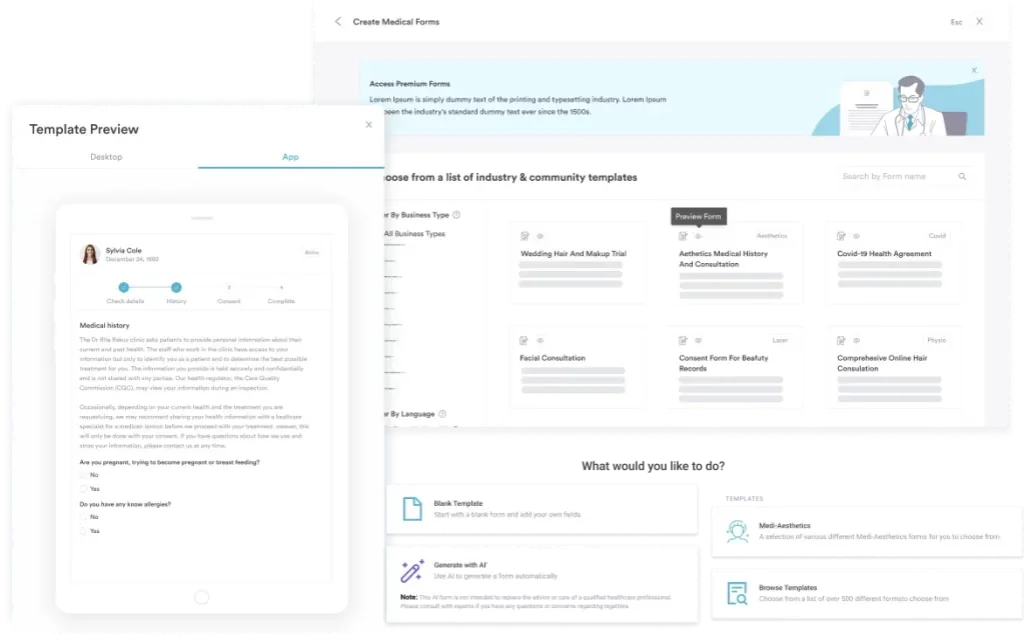
Thin procedure notes are a common reason C8200 claims are queried or rejected. Digital clinical forms that prompt for each field at the time of treatment cut the risk of reconstructing notes later.
Each claim should be supported by a procedure note that records:
Insurers reviewing retinal laser claims may ask for the fundus images and OCT reports behind the note. When fluorescein angiography mapped the lesion first, that test bills under its own code, C8650. Structured patient records that link imaging to the procedure note make those requests quick to answer.
Build a standard C8200 procedure note template with each required field as a prompt. Notes completed during treatment hold up better at review than notes rebuilt from memory afterward.
Check each insurer’s pre-authorization rules before C8200 is performed. Requirements differ between Bupa, AXA Health, Aviva and Vitality Health, and between policies from the same insurer. The current rules sit in each insurer’s provider portal or provider handbook.
Where an insurer asks for authorization, the request usually includes:
An acute symptomatic retinal tear often needs same-day laser. Insurers handle urgent treatment in different ways, and some accept notification after the event. Confirm the insurer’s emergency route rather than assuming a retrospective authorization will be granted.
Retinal laser and cryotherapy are usually done one eye at a time, but same-day treatment of both eyes does happen. Insurers set their own rules for how a second eye is billed and paid.
Check the insurer’s bilateral rules in its provider handbook before you submit. Billing C8200 twice without authorization for both eyes is a common reason for a rejected or reduced claim.
The CCSD Schedule defines codes and descriptors, not fees. Each insurer sets its own benefit level for C8200 and publishes it to recognized consultants through its provider portal.
Fee levels differ between insurers and can change during the year. Check the current figure in each insurer’s portal before you quote a patient. If the consultant’s fee is above the insurer’s benefit, the patient may pay the difference, depending on their policy.
C8200 rejections follow predictable patterns, and most can be prevented before submission. Practices with a high volume of retinal laser sessions benefit from claims software for ophthalmology that flags missing fields before a claim goes out.
PRP for proliferative diabetic retinopathy is often split across several sessions. Staging limits discomfort and lowers the risk of worsening macular edema. Each session is a separate treatment event.
These points help staged PRP claims go through, but confirm the details with each insurer.
Send a short treatment plan with the first authorization request, stating the planned number of PRP sessions and the reason for staging. A plan on file makes later C8200 claims in the same course easier to explain.
Several CCSD codes cover retinal surgery that can include retinopexy, the laser or freezing treatment C8200 describes. Choose the code that matches the whole procedure performed. Our CCSD billing guides cover other procedures in the schedule the same way.
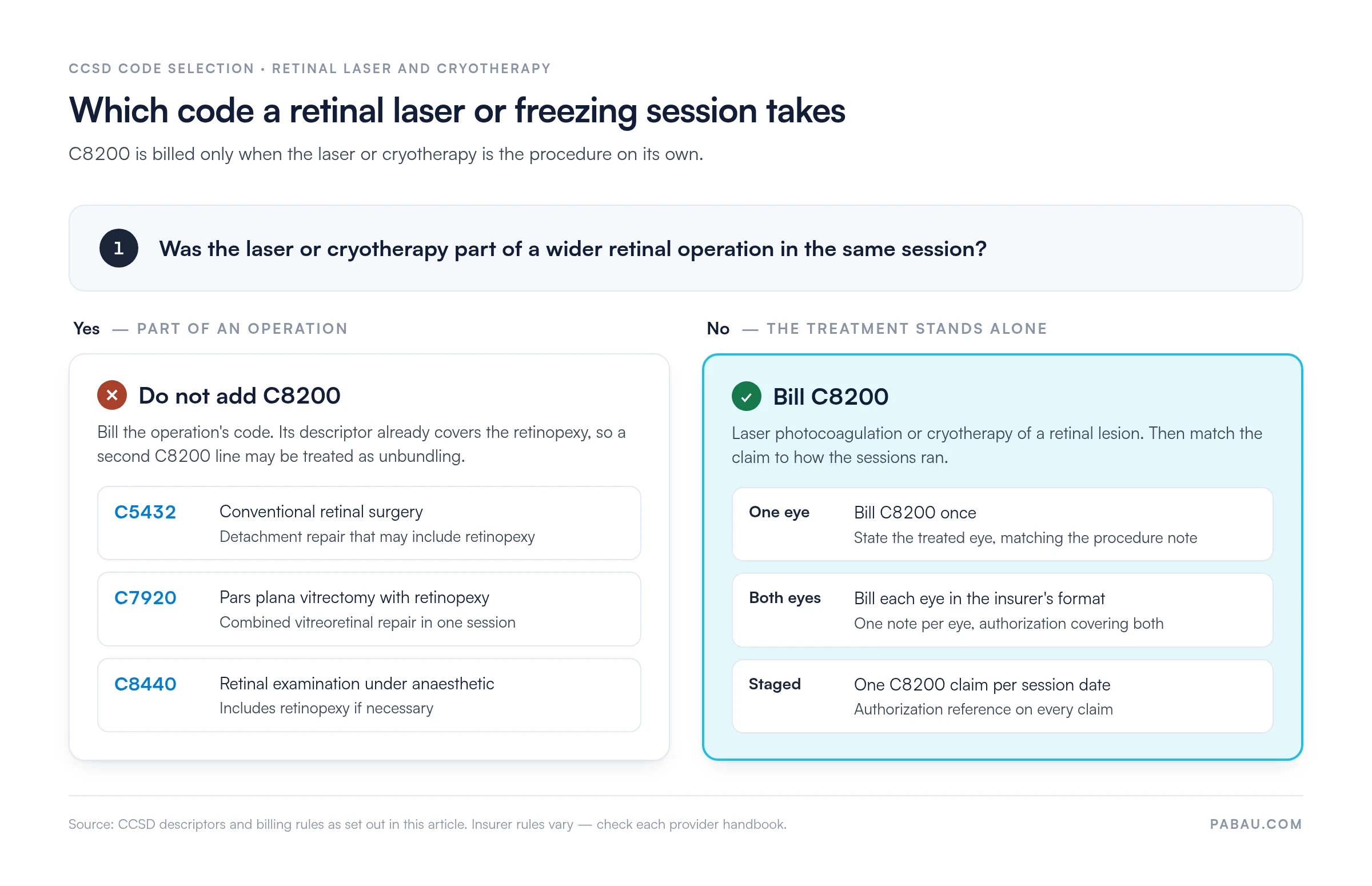
When laser or cryotherapy is part of an operation coded C5432 or C7920, the descriptor already covers it. Adding C8200 for the same session may be treated as unbundling.
The same applies to an examination under anesthesia coded C8440, whose descriptor includes retinopexy if necessary. CCSD revises descriptors over time, so check each code against the current schedule. The decision below shows when C8200 stands on its own.
Many UK private ophthalmology practices still keep procedure notes, imaging and insurer paperwork in separate places. Each C8200 claim then depends on someone copying the code, diagnosis and authorization reference across by hand.
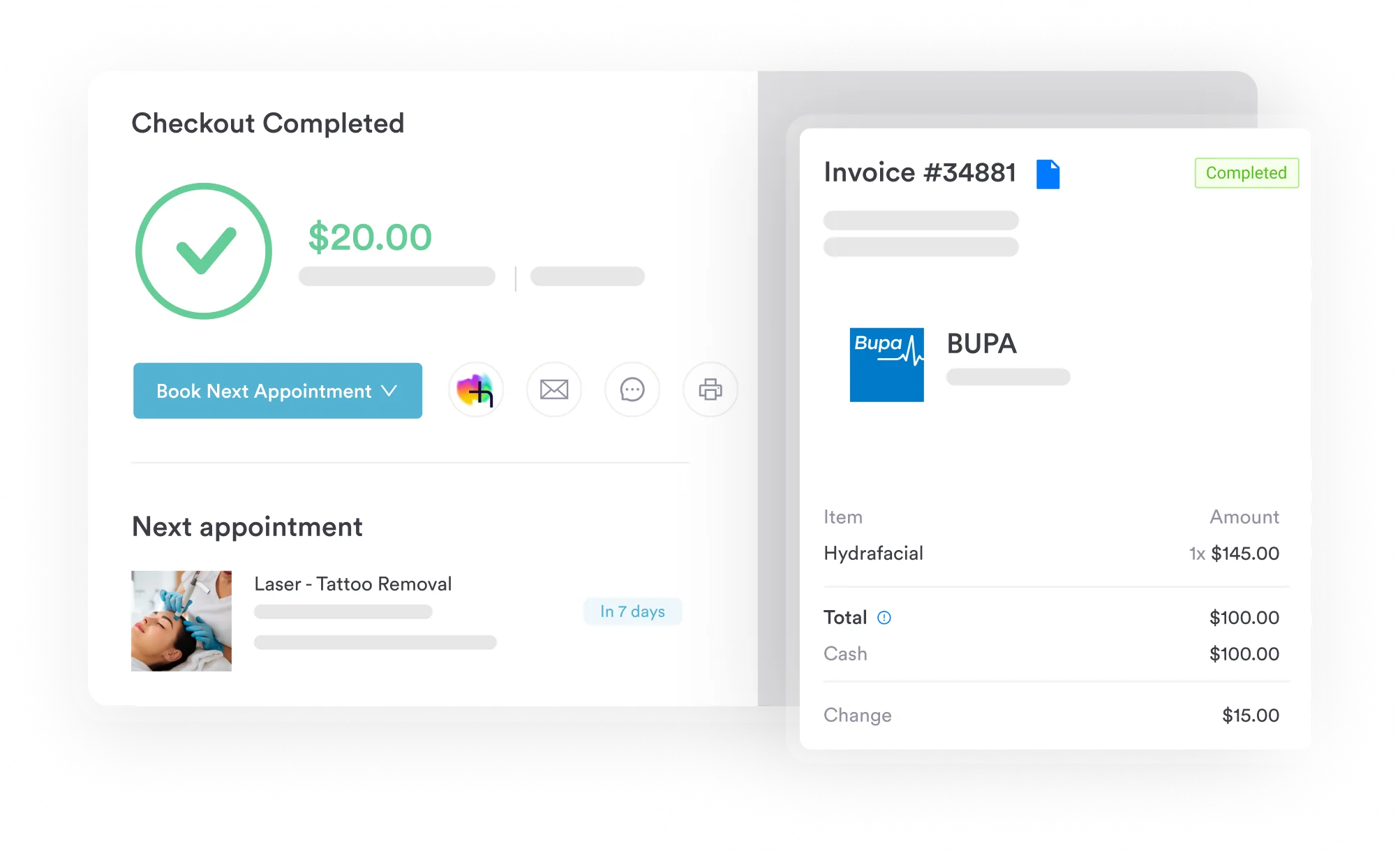
Pabau, the practice management platform we build, supports UK insurance billing through Healthcode and Bupa. Each case records the authorization code, its dates and its sessions, with a warning when one is missing. Digital forms capture the procedure note, and patient records hold the imaging beside it.
The result is a C8200 claim that leaves the practice with its code, diagnosis and evidence aligned. That means fewer queries from Bupa, AXA Health, Aviva or Vitality Health, and faster payment for staged treatment.

Pabau sends UK insurance claims through Healthcode and Bupa and tracks authorization codes on each case. Your procedure notes, imaging and claims stay together for every retinal laser session.

C8200 is simple to select but easy to get wrong in the details. Most rejections trace back to three steps: checking the insurer’s authorization rules, pairing the right ICD-10 code and writing a complete procedure note.
Practices that fix those steps at the point of treatment spend less time on resubmissions. Staged PRP and bilateral sessions need the most care, because each one adds another claim to check.
Book a demo to see how Pabau keeps C8200 notes, authorizations and Healthcode claims together for UK private ophthalmology practices.

Looking for a broader CCSD billing reference? Pabau’s CCSD billing guide explains how CCSD procedure codes are structured and how to submit claims to UK private insurers.
Billing a combined vitreoretinal repair? CCSD Code C7920 covers pars plana vitrectomy with tamponade, scleral buckling and retinopexy in one session.
Coding retinal detachment surgery? CCSD code C5432 explains conventional retinal surgery and when its descriptor already includes retinopexy.
Treating the retina under general anesthesia? CCSD Code C8440 covers retinal examination under anaesthetic, including retinopexy where needed.
CCSD Code C8200 covers laser photocoagulation and cryotherapy of lesions of the retina. Both methods sit under one descriptor in the UK CCSD Schedule. The procedure note records which method was used, but the code stays the same.
CCSD codes are the standard procedure codes for UK private healthcare. Consultants and hospitals use them to bill private medical insurers such as Bupa, AXA Health, Aviva and Vitality Health.
It depends on the insurer and the policy. Check each insurer’s pre-authorization rules in its provider portal before treatment, and confirm its route for urgent cases such as an acute retinal tear.
Yes, both eyes can be treated and billed on the same day. Follow the insurer’s bilateral rules, write a separate procedure note for each eye and make sure any authorization covers both.
Bill each PRP session as a separate C8200 claim on the date it took place. Give each session its own procedure note, with the burns applied, cumulative progress and the reason for staging.
Common pairings are H33.3 for retinal breaks without detachment, H35.4 for peripheral retinal degenerations and H35.0 for background retinopathy. For diabetic retinopathy, pair H36.0 with the diabetes code, such as E11.3.
Common causes are missing authorization, a mismatched ICD-10 code, an incomplete procedure note and bilateral billing errors. A claim can also fail when C8200 is billed beside a retinal surgery code that already includes retinopexy.