CCSD code 20210: Pure tone audiogram billing guide
CCSD code 20210 is the UK private billing code for a pure tone audiogram by air ...

Last Updated: Nov 16, 2026
C1540 is the CCSD procedure code for surgical correction of trichiasis/upper lid entropion, including graft/flap. UK private insurers use it when an oculoplastic surgeon turns inward-growing lashes or an inward-turned upper lid margin away from the eye. Any graft or flap used in the repair is part of the code and is not billed separately.
C1540 covers the upper lid only. Lower lid entropion is coded C1522, and CCSD does not allow C1540 on the same claim as C1523, C1522, C1420 or C1532.
Let Pabau's smart automation suggest the right codes, reduce claim denials, and keep your practice compliant—effortlessly.
Automate repetitive tasks and focus on what matters most—your patients.
Reduce coding errors and ensure compliance with the latest regulations.
Clean claims, fewer denials, and faster reimbursements.
Powerful insights and reporting to help your practice thrive.
HIPAA compliant SOC 2 certified GDPR-compliant Trusted by 4,000+ clinics worldwide

CCSD Code C1540 covers surgical correction of trichiasis and upper lid entropion, including graft or flap, for UK private insurance billing.
The graft or flap is bundled into C1540, so itemizing it on a separate line is unbundling and a common denial trigger.
CCSD lists C1540 as an unacceptable combination with C1523, C1522, C1420 and C1532, so none of them goes on the same claim.
Most UK private insurers expect pre-authorization, so check each insurer’s current rules and document why the surgery is functional.
In Pabau, the practice software we build, the practice records the insurer’s authorization code against the case, and Pabau warns when one is missing.
CCSD Code C1540 is the Clinical Coding and Schedule Development (CCSD) code for surgical correction of trichiasis and upper lid entropion, including graft or flap. It sits in the eye chapter of the schedule published by the CCSD Group, which holds the standard procedure codes for UK private healthcare. UK private insurers, including Bupa, AXA Health, Aviva, Vitality, WPA and Cigna, bill against that schedule.
The official descriptor reads: Surgical correction of trichiasis/upper lid entropion, including graft/flap. The CCSD Group, the body whose representatives come from Bupa, Vitality, AXA Health and Aviva, develops and licenses the schedule. Every claim submitted under C1540 must reflect that exact clinical activity.
The descriptor fixes two coding boundaries. It covers the upper lid only, and it names both trichiasis and upper lid entropion. CCSD keeps separate codes for the neighboring procedures. C1523 covers upper lid entropion correction and C1522 covers lower lid entropion. C1532 covers trichiasis treated by electrolysis, diathermy, cryotherapy or laser. If the descriptor does not match what was done, a different code applies.
Trichiasis is a condition in which eyelashes grow inward toward the cornea rather than outward. It causes chronic corneal abrasion and irritation, and in severe cases, visual impairment. Upper lid entropion is the inward rotation of the upper eyelid margin, which also directs lashes against the eye’s surface. Both conditions can coexist, and surgery follows when epilation or lubricants have not given lasting relief.
Surgical correction targets the structural cause. The oculoplastic surgeon corrects the lid margin position through one or more of these established techniques:
The procedure is performed under local or general anesthesia, depending on patient factors and surgeon preference. It requires an appropriately qualified specialist, typically a consultant oculoplastic surgeon or an ophthalmologist with oculoplastic training. The surgery takes place in a licensed independent hospital or day-case facility.
The phrase “including graft/flap” in the C1540 descriptor follows standard CCSD bundling convention. Any reconstructive element named in the code text is absorbed into the base fee and cannot be claimed as a separate line item. An extra charge for the graft harvest or flap design alongside C1540 is unbundling, a common denial reason and a potential compliance issue.
CCSD also lists C1540 as an unacceptable combination with C1523, C1522, C1420 and C1532, so none of those codes belongs on the same claim. Billing an eyelid skin graft under C1420 alongside C1540 is the clearest example, because the graft is already part of C1540.
Bilateral coding requires care. Some insurers pay two units of C1540 at full rate when both upper lids are corrected in the same session. Others apply a bilateral reduction, set by the insurer, to the second side. CCSD does not set fees or reimbursement rules, so check each insurer’s current fee schedule before submitting.
Several adjacent CCSD codes cover eyelid margin and lash conditions, and four of them can never share a claim with C1540. The chart below matches each eyelid procedure to its code and shows which ones CCSD bars from a C1540 claim.
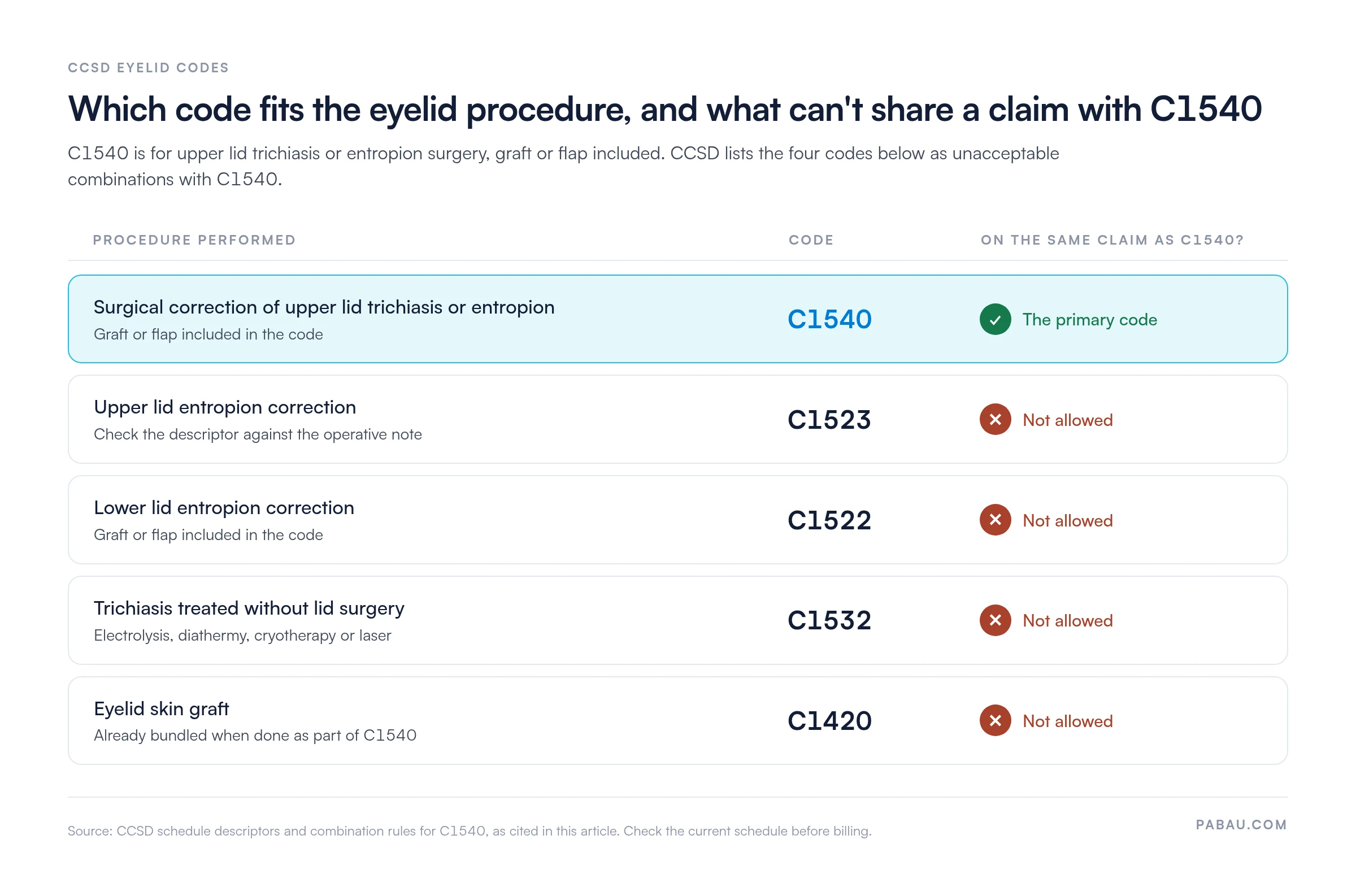
Selecting the wrong code, even one with a similar descriptor, is likely to trigger a query or a denial. Use the table below to match the clinical situation to the correct code.
When the code is in doubt, the Bupa code search portal lets providers check procedure codes before submission. Bupa practices can also cross-check fee references in the Bupa CCSD codes list. For the rest of chapter 4, browse other CCSD procedure codes by section.
UK private insurers that accept CCSD billing codes also require a supporting ICD-10 diagnosis code. The diagnosis must accurately reflect the clinical condition documented in the patient record. Most payers require laterality (right, left or bilateral), and it must match the operative note.
The fifth- and sixth-character laterality splits in the table come from ICD-10-CM. UK payers use WHO ICD-10, where H02.0 has no fifth character, so confirm which version each insurer accepts.
Never code “unspecified” where the clinical record specifies laterality and lid. A claim for an upper lid procedure is likely to be rejected if its ICD-10 code names the lower lid or is entirely unspecified. Code to the highest level of specificity the documented diagnosis supports.
Always confirm laterality in the operative note before coding. If the surgeon operated on the right upper lid only, the ICD-10 code must reflect the right upper lid. The C1540 claim should state the right eye too. A mismatch between the operative note and the submitted diagnosis code is likely to prompt a query from the insurer.
A complete clinical record is the foundation of a payable C1540 claim. Missing or vague documentation is a frequent reason insurers query or refuse payment, even when the procedure was clinically appropriate. Capture this information at every patient encounter, so the billing file is complete before the claim goes out.
The record must include all of the following:
Most UK private insurers expect pre-authorization for C1540, so check each insurer’s current rules before booking surgery. A claim submitted without a valid authorization reference is likely to be refused at adjudication. Authorization is also where the insurer weighs functional against cosmetic need, which makes it a common source of refusal.
Authorization timelines vary. Routine authorizations for well-documented functional cases are typically processed within two to five working days. Cases where the cosmetic versus functional distinction is contested may need more clinical correspondence and can take longer. Obtain authorization before booking the operating room, not on the day of the procedure.
Insurer policies are updated periodically. The requirements above reflect general practice across major UK providers, so consult each insurer’s current provider resources for the latest authorization criteria before submitting.
C1540 claims are refused more often than the clinical simplicity of the procedure would suggest. The denials below recur, and each one can be prevented with the right documentation and billing process.
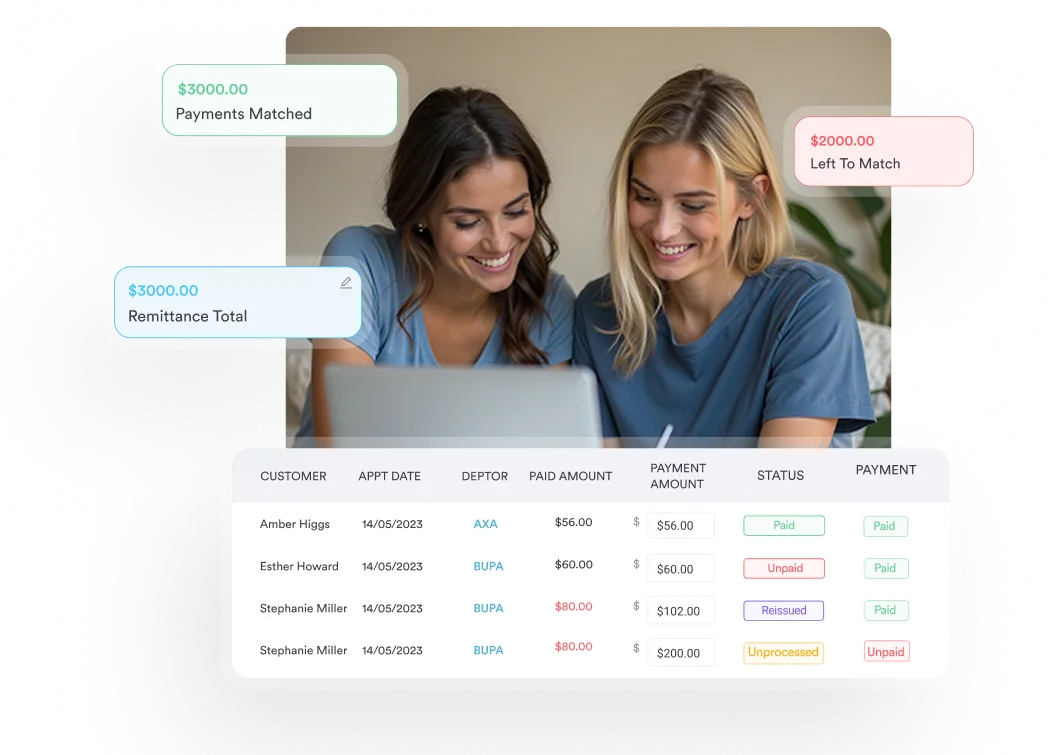
Pabau supports UK insurance billing through Healthcode and Bupa as part of its insurance claims management. Oculoplastic practices keep the C1540 claim, the diagnosis and the authorization on the same patient case. The workflow runs as follows:
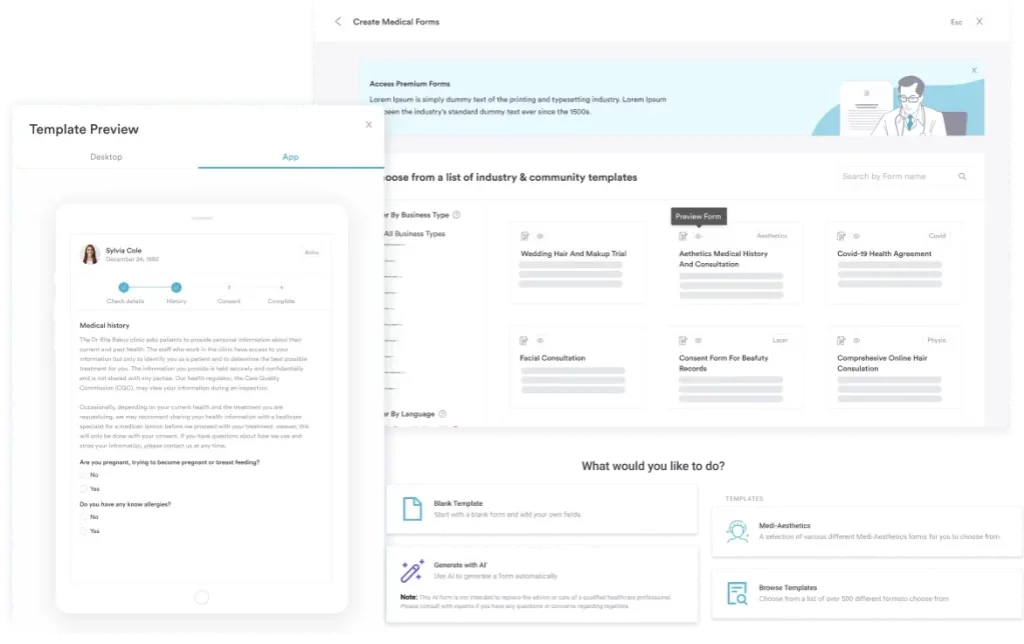
Practices with a high oculoplastic caseload can keep a standard C1540 documentation checklist as a digital form in Pabau. Each case then records the same evidence in the same order.
Build a C1540 billing checklist into your practice workflow. Before submitting any claim under CCSD Code C1540, check five items. Confirm the authorization reference and the ICD-10 laterality, and attach the operative note. Then make sure the graft or flap is not itemized and the billing practitioner is recognized by the insurer. These five checks cover the denial reasons that recur most on C1540 claims.

Record authorization codes, diagnosis links and operative notes on the case in Pabau, then send UK claims through Healthcode or Bupa. Pabau warns you when an authorization code is missing.

A C1540 claim is more likely to fail on paperwork than on clinical grounds. The insurer pays when the record proves what the descriptor says. That means an upper lid, a functional problem, a bundled graft and an authorization obtained in advance.
Settle the code before surgery, not after. Rule out C1523, C1522 and C1532 against the planned technique. Then pair the operative note with an ICD-10 code that names the same lid and side. That order prevents the two refusals that cost the most rework: the wrong code and the mismatched diagnosis.
Pabau keeps the case, the diagnosis and the authorization code in one record, so the authorization reference and diagnosis link stay with the claim. Book a demo to see how Pabau handles UK private insurance claims for oculoplastic practices.

Need a full reference for Bupa CCSD codes? Bupa CCSD codes and fee schedule covers the CCSD schedule as Bupa uses it, with fee references and submission guidance.
Billing a separate eyelid graft? CCSD code C1420: Eyelid skin graft explains when a graft is billed on its own and why it cannot sit beside C1540.
Reconstructing the whole lid instead? CCSD Code C1700: Total eyelid reconstruction covers the code for a total eyelid reconstruction.
Looking for insurance billing support in Pabau? Claims management software shows how UK practices send claims through Healthcode or Bupa and track authorization codes in Pabau.
CCSD Code C1540 is the UK private healthcare procedure code for surgical correction of trichiasis and upper lid entropion, including graft or flap. Any graft or flap used in the repair is bundled within the code. Lower lid entropion (C1522) and trichiasis treated by electrolysis, diathermy, cryotherapy or laser (C1532) have their own codes.
No. The descriptor states “including graft/flap,” so the graft harvest and flap design are bundled within C1540. A separate billing line for the graft or flap is unbundling, and the claim is likely to be refused.
Most UK private insurers expect pre-authorization before a C1540 procedure, so check each insurer’s current rules before booking. A claim submitted without a valid authorization reference is likely to be refused, whatever its clinical merit.
UK payers use WHO ICD-10, where H02.0 (entropion and trichiasis of eyelid) is the code to pair with C1540. ICD-10-CM splits it further by type, side and lid, such as H02.05x for trichiasis without entropion. Confirm which version each insurer accepts. For trachoma-related cases, A71.9 may be added as a secondary code.
The most common reasons are cosmetic classification, missing prior authorization, unbundling the graft or flap, and incorrect or unspecified ICD-10 coding. Billing C1540 alongside C1523, C1522, C1420 or C1532, or submitting under a non-recognized specialist, also leads to refusals. A thorough documentation review before submission prevents each of these.
Bilateral billing rules vary by insurer. Some payers reimburse two units of C1540 at full rate, while others apply a bilateral reduction, set by the insurer, to the second eye. CCSD does not set fees, so confirm the rule with each insurer before submitting a bilateral claim.