

CCSD code G5100: Bypass of duodenum billing guide
CCSD code G5100 bills a bypass that leaves the duodenum in place CCSD code G5100...

Last Updated: Oct 16, 2026
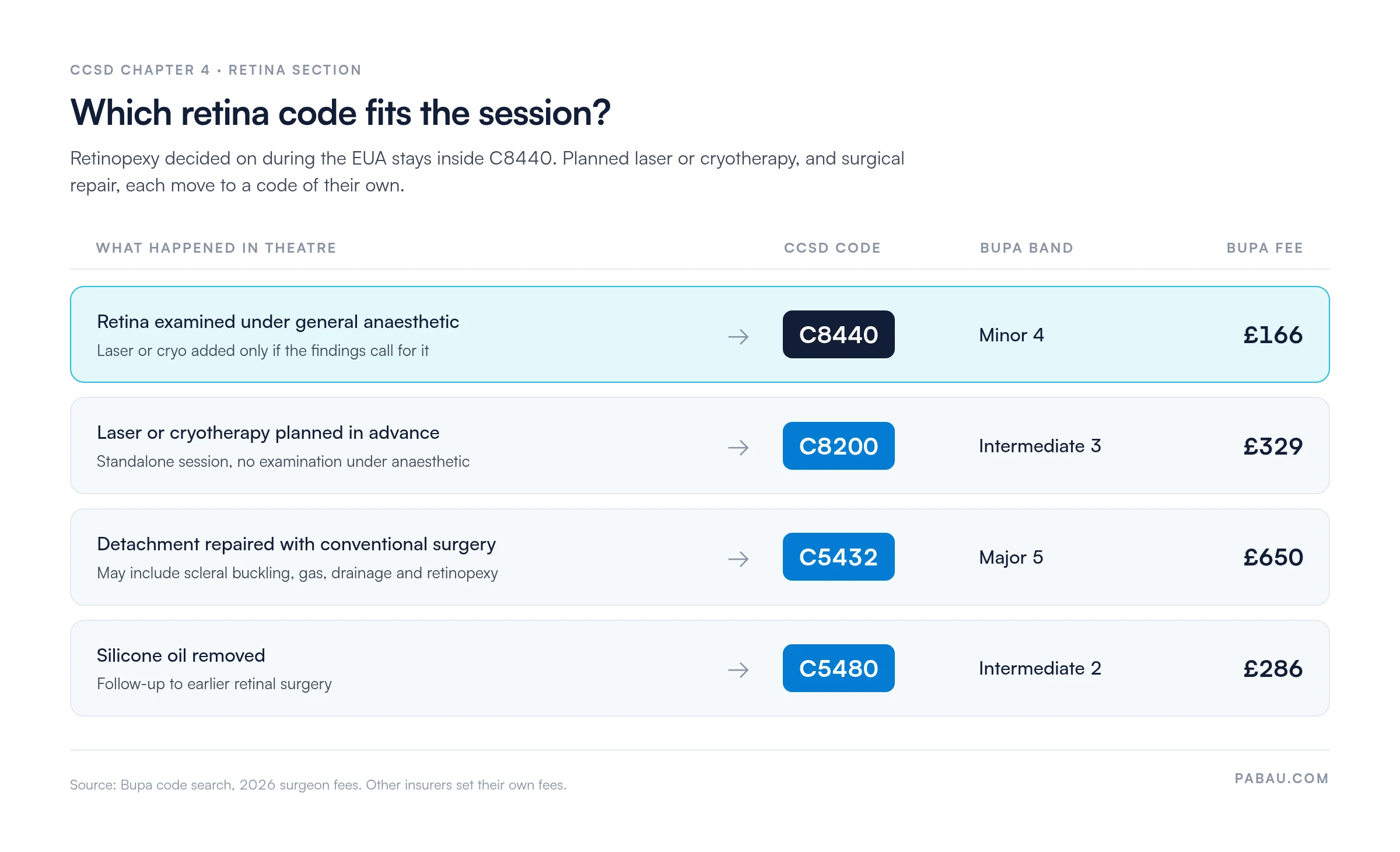
C8440 is the CCSD code for retinal examination under anaesthetic including retinopexy if necessary. It covers an ophthalmologist examining the peripheral retina under general anaesthetic, plus any laser or cryotherapy retinopexy chosen from findings during that session.
The code sits in the Retina section of CCSD Chapter 4, Eye and orbital contents, and Bupa bands it Minor 4 with a £166 fee. Planned standalone retinopexy bills under C8200 instead. Most UK private insurers want pre-authorisation first.
Let Pabau's smart automation suggest the right codes, reduce claim denials, and keep your practice compliant—effortlessly.
Automate repetitive tasks and focus on what matters most—your patients.
Reduce coding errors and ensure compliance with the latest regulations.
Clean claims, fewer denials, and faster reimbursements.
Powerful insights and reporting to help your practice thrive.
HIPAA compliant SOC 2 certified GDPR-compliant Trusted by 4,000+ clinics worldwide

CCSD code C8440 covers retinal examination under general anaesthetic, including retinopexy at the same session if clinically necessary.
Retinopexy done during the EUA is not billed separately, and coding both is a common reason claims are queried.
Most UK private insurers require pre-authorisation for planned hospital procedures, including C8440, so check each insurer’s rules.
Planned standalone laser or cryotherapy bills under C8200, and conventional retinal detachment surgery bills under C5432.
UK claims use 4-character WHO ICD-10 codes such as H33.0, with laterality stated in the operative note and on the claim.
CCSD code C8440 is the procedure code for retinal examination under anaesthetic (EUA) including retinopexy if necessary. The CCSD schedule, maintained by the Clinical Coding and Schedule Development Group, defines it. It is a surgeon’s code covering the ophthalmologist’s work only. The anaesthetist submits a separate claim for the anaesthetic.
C8440 bundles two clinical components into a single billable unit:
C8440 is a private healthcare code. It does not appear in NHS tariffs or US CPT code sets. Claims go to UK private medical insurers (PMI) through Healthcode eClaims or practice management systems connected to the Healthcode network.
Retinal EUA is performed when a thorough retinal assessment cannot be achieved under topical or local anaesthesia alone. General anaesthesia removes the blink reflex and patient movement that would otherwise prevent an adequate peripheral examination.
The procedure follows a standard clinical sequence:
C8440 is used in two patient groups. Children who cannot cooperate with an awake examination form one, typically for a suspected tear, familial exudative vitreoretinopathy (FEVR), uveitis or trauma. Adults whose retina cannot be examined adequately awake form the other, usually because of suspected detachment, significant ocular trauma or poorly dilating pupils.
The phrase “if necessary” in the C8440 descriptor is the most important element for accurate billing. Retinopexy is included within C8440 only when all three of these conditions are met:
When all three conditions are met, retinopexy is bundled. Coding it separately alongside C8440 is unbundling and leads to claim denial or a request for repayment. A planned, standalone laser or cryotherapy session without the EUA bills under C8200 instead.
Laser photocoagulation and cryotherapy are both covered within the C8440 bundle when performed intraoperatively. Choosing between them is a clinical decision based on the location and type of lesion. The billing outcome is the same, and neither needs a separate code. The chart below maps each retina scenario to its code and Bupa fee.
A valid C8440 claim needs a supporting ICD-10 diagnosis code that justifies general anaesthesia for retinal assessment. UK claims use the WHO ICD-10 5th edition, which has no laterality characters. Verify each code in the current NHS Classifications Browser before submission. Common pairings are:
Missing or incorrect ICD-10 pairing is a common reason claims are queried. The diagnosis code must reflect the clinical reason for the EUA, not just the procedure outcome.
Paediatric EUA is used when a child cannot cooperate with an awake retinal examination. Typical indications include a suspected retinal tear, FEVR, uveitis and trauma. ROP treatment or assessment also qualifies where general anaesthesia is clinically required.
Routine ROP screening is different. Under RCOphth and BAPM guidance, infants born before 32 weeks or below 1,500g are screened awake on the neonatal unit. The ophthalmologist uses indirect ophthalmoscopy with topical anaesthetic drops, so no EUA takes place. ROP care is also mostly NHS-funded.
Paediatric EUAs raise three billing points:
For every paediatric indication, C8440 covers the EUA and any intraoperative retinopexy. The ICD-10 code reflects the specific diagnosis.
C8440 sits within the Retina section (Chapter 4, Eye and orbital contents) of the CCSD schedule. Bupa lists C8440 at £166 (Minor 4).
Knowing the neighbouring codes prevents miscoding, especially when a more definitive procedure follows the initial EUA. Pabau’s guide to Bupa CCSD codes explains how the schedule is structured. Our CCSD code guides cover other codes in the same chapter.
If the EUA confirms a detachment that needs surgical repair, that operation is billed under C5432. Silicone oil placed during retinal surgery is later removed under C5480. Planned standalone laser or cryotherapy bills under C8200, not C8440.
Fees above are Bupa’s 2026 surgeon fees, and other insurers set their own. Check each code and band in the insurer’s code search before submitting, as schedules are revised.
A valid C8440 claim rests on a complete operative note. Insurers review these claims closely because the procedure involves general anaesthesia and a conditional bundled treatment. The operative note must contain all of the following:
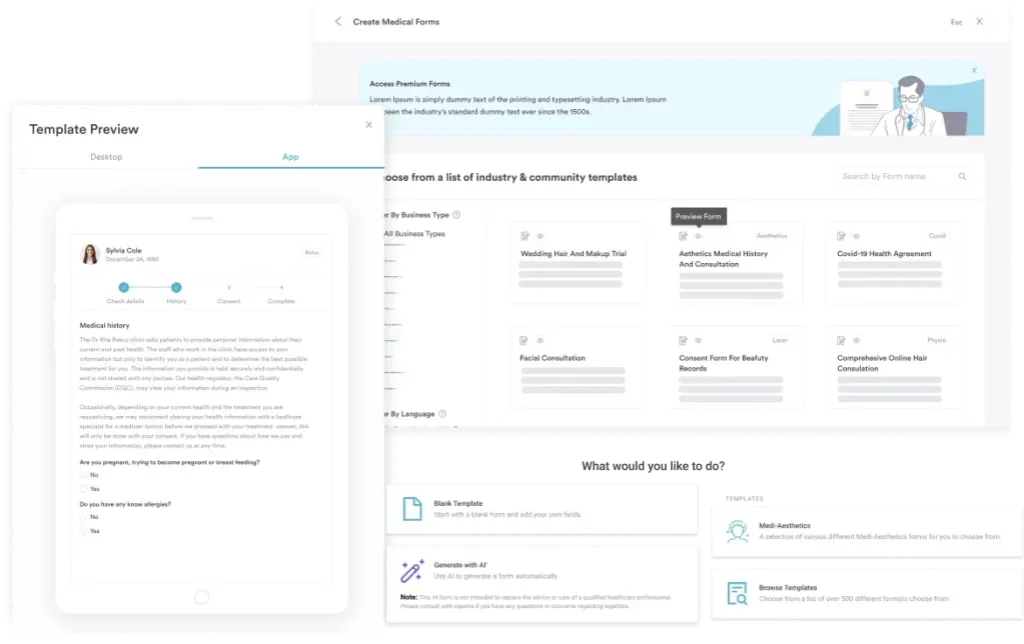
Practices using digital note templates can build a standard C8440 operative note that prompts for each of these elements. Incomplete notes are then caught before they reach the billing team.
Most UK private insurers require pre-authorisation for planned hospital procedures, including C8440. Check each insurer’s rules, as requirements vary by insurer and policy type. Approval comes before the procedure is booked, except in clinical emergencies.
The pre-authorisation process for C8440 typically involves:
If an emergency meant pre-authorisation was not obtained, document the clinical urgency clearly in the notes. Then contact the insurer’s provider team at the earliest opportunity, as each insurer handles retrospective authorisation differently.
C8440 is the surgeon’s code only, and the anaesthetist bills separately for the anaesthetic. Insurers expect two independent claims, one from the operating surgeon and one from the anaesthetist. Combining both in a single claim, or omitting the anaesthetist claim, delays reimbursement.
C8440 claims are denied or queried for predictable reasons. Billing staff who know these patterns can resolve issues before submission instead of after rejection.
Before submitting a C8440 claim, run a three-point check. Confirm no separate retinopexy code sits alongside C8440, and that the operative note states laterality. Then confirm the pre-authorisation number is on the claim form.
Healthcode eClaims is the main submission route for C8440 and most UK private medical insurance claims. A correct submission pairs the CCSD code with the right ICD-10 code. It also carries the pre-authorisation reference and the consultant’s GMC number.
The submission workflow for C8440 via Healthcode:
Practice management systems connected to Healthcode reduce manual entry errors by storing insurer details and pre-filling claim fields. For insurers outside Healthcode, paper or PDF claim forms are completed manually. The Aviva fee schedule sets out reimbursement levels by procedure for Aviva policyholders.
Many private eye practices still key each claim into Healthcode by hand. They copy patient, insurer and authorisation details across from separate systems, and each retyped field is another chance for a query.
Pabau, the practice management platform we build for private practices, connects to Healthcode through its private practice claims management tools. It pulls the patient, treatment and insurer details from the patient record into a pre-filled claim. Before sending, it checks that membership numbers and authorisation codes are in place.
Every claim then shows its status, from pending through submitted and processing to paid or error. Your team chases the exceptions instead of every claim, and records each payment against the right invoice.
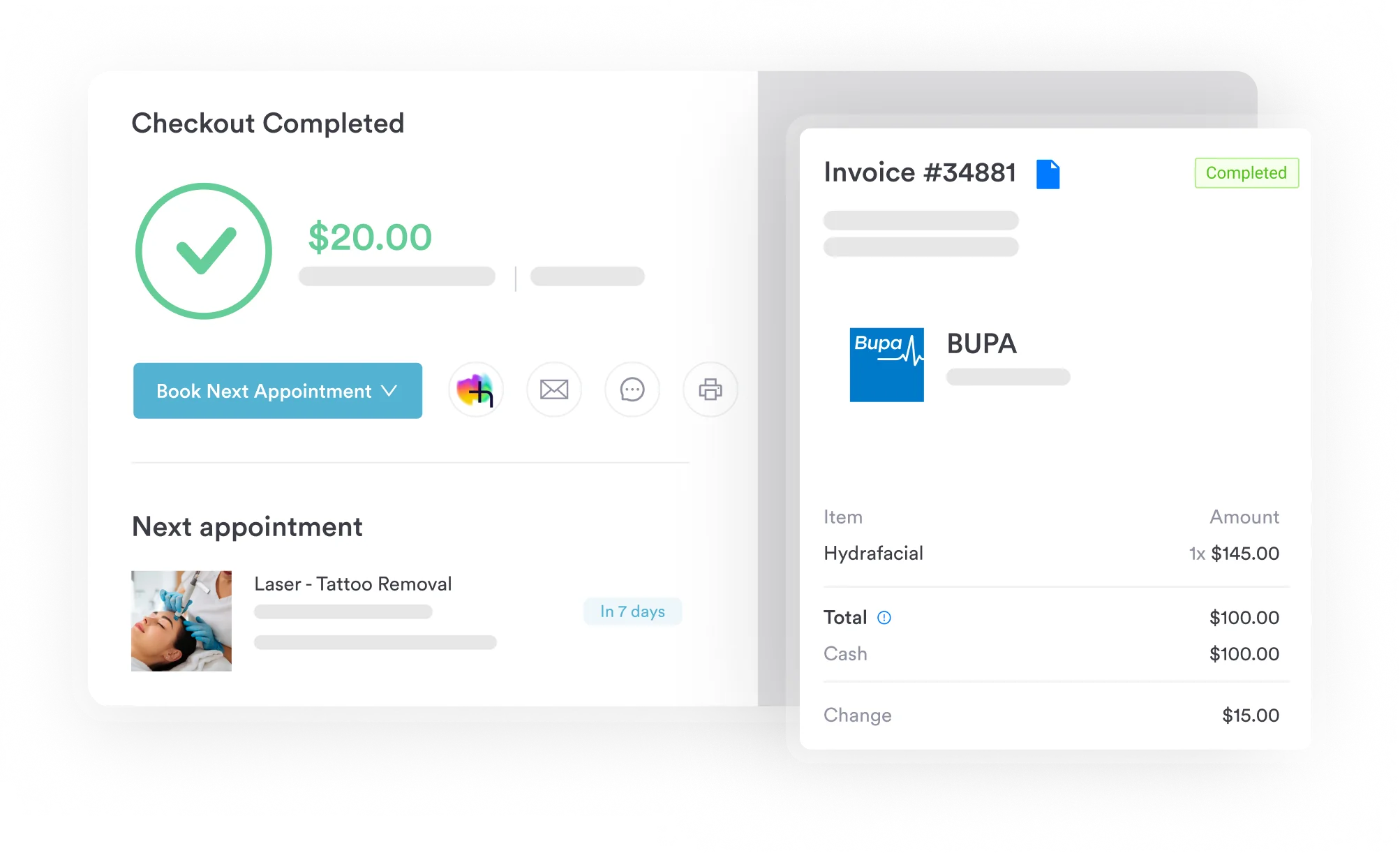

Pabau pre-fills each claim from the patient record and checks membership numbers and authorisation codes before it goes to Healthcode. Your team tracks every claim through to payment.

The billing decision on C8440 turns on when the retinopexy was decided. Treatment chosen from findings during the EUA stays inside C8440, while planned laser or cryotherapy goes under C8200.
Build that question into your operative note template, so the surgeon answers it before the claim reaches billing. Pair it with a 4-character WHO ICD-10 code and a pre-authorisation number, and most queries never start.
Book a demo to see how Pabau sends complete CCSD claims to Healthcode and tracks each one until it is paid.

Need a reference for the broader Bupa CCSD schedule? Bupa CCSD procedure codes covers how CCSD codes are structured, used, and submitted within Bupa’s private billing framework.
Did the EUA lead to detachment surgery? CCSD code C5432 explains how conventional retinal surgery is billed, including buckling, gas and retinopexy.
Removing oil after retinal surgery? CCSD code C5480 covers the code for silicone oil removal and what insurers expect on the claim.
Billing other ophthalmology anaesthetic work? CCSD code C7181 walks through cataract anaesthetic standby and how it is claimed.
CCSD code C8440 covers retinal examination under general anaesthetic, including laser or cryotherapy retinopexy if performed at the same session. It is a surgeon’s code only, and the anaesthetist bills separately. It applies to children who cannot cooperate with an awake examination and to adults whose retina cannot be examined adequately awake.
Retinopexy is included in C8440 when it is performed at the same operative session as the EUA and arises from intraoperative findings. A planned, standalone laser or cryotherapy session without the EUA bills under C8200 instead. Coding retinopexy separately alongside C8440 for the same session is unbundling and leads to claim denial.
Usually, yes. Most UK private insurers require pre-authorisation for planned hospital procedures, including C8440, so check each insurer’s rules. Record the authorisation number on the claim form. For emergencies, document the clinical urgency and contact the insurer’s provider team promptly about retrospective authorisation.
Common denial reasons include separately coding retinopexy alongside C8440, a missing or inadequate operative note, and no pre-authorisation reference. A missing or incorrect ICD-10 code and unstated laterality also cause queries. Billing C8440 for an examination done without general anaesthetic leads to rejection.



