ICD-10 code S61.201A: Open wound of left index finger without nail damage
ICD-10 code S61.201A covers a left index finger wound of unstated type ICD-10 co...

Last Updated: Oct 16, 2026
Billable Code Specific Code
E52 is the billable ICD-10-CM code for niacin deficiency [pellagra].
Let Pabau's smart automation suggest the right codes, reduce claim denials, and keep your practice compliant—effortlessly.
Automate repetitive tasks and focus on what matters most—your patients.
Reduce coding errors and ensure compliance with the latest regulations.
Clean claims, fewer denials, and faster reimbursements.
Powerful insights and reporting to help your practice thrive.
HIPAA compliant SOC 2 certified GDPR-compliant Trusted by 4,000+ clinics worldwide

ICD-10 Code E52 is a billable ICD-10-CM diagnosis code for niacin deficiency (pellagra), classified under E50-E64 (Other nutritional deficiencies).
E52 applies to three official synonyms: niacin (-tryptophan) deficiency, nicotinamide deficiency, and pellagra (alcoholic).
A Type 1 Excludes note means E52 cannot be coded alongside the excluded condition in the same encounter.
Pabau’s claims management software helps practices document and submit nutritional deficiency diagnoses accurately, reducing claim errors.
The bracket notation “[pellagra]” in the code title is the ICD-10-CM convention for indicating a synonym. It does not create a separate subcategory. Both “niacin deficiency” and “pellagra” route to the same single-code E52.
Review the ICD-10-CM classification system when documenting any nutritional deficiency: each subcategory (E50-E64) corresponds to a specific vitamin or mineral group. Selecting from E53 (other B group vitamins) when niacin deficiency is confirmed is a common miscoding error that triggers medical necessity denials.
The ICD-10-CM tabular list includes an “Applicable To” note under E52 that officially recognizes three synonym terms. Any of these diagnoses routes to E52 when documented in the medical record.
Isocitrate dehydrogenase deficiency also appears in some coding databases as a listed synonym. However, coders should note that isocitrate dehydrogenase (IDH) mutations are more commonly associated with oncologic contexts and may require separate clinical verification before applying E52 on that basis alone. When in doubt, query the treating clinician.
When the documented cause is alcohol-related niacin malabsorption, E52 is the correct diagnosis code. Coders should also evaluate whether an alcohol use disorder code from the F10.x category applies as a secondary or principal diagnosis, depending on the reason for the encounter. Pellagra (alcoholic) does not require a separate E52 subcode; the Applicable To note makes the routing explicit.
ICD-10 Code E52 carries a Type 1 Excludes note. Understanding the difference between Type 1 and Type 2 exclusions is essential before coding any nutritional deficiency encounter.
A Type 1 Excludes note is a pure exclusion. It means the excluded condition and E52 are mutually exclusive at that code level: if the excluded condition is present, E52 cannot be assigned in the same coding encounter for the same condition. This differs from Type 2 Excludes, which simply signals that a code is classified elsewhere but may still be reported together.
Under FY2026 ICD-10-CM, E52 carries a Type 1 Excludes note for sequelae of niacin deficiency (E64.8): active niacin deficiency (E52) and its documented late effects (E64.8) are not coded together for the same encounter. Because excludes notes are updated annually, confirm current exclusions against the CMS ICD-10-CM tabular list or a reference such as the ICD List lookup before finalizing.
When a patient presents with both alcohol use disorder and pellagra, code both conditions: E52 for the niacin deficiency and the appropriate F10.x code for alcohol use disorder. Type 1 Excludes under E52 does not exclude alcohol use disorder codes. Verify the specific exclusion list in the current tabular list before finalizing.
Comparing the best EHRs for primary care pays off when you track chronic conditions like these long term.
Selecting E52 correctly requires knowing what the surrounding codes cover. Confusion between E52 and its neighbors in the E50-E64 block is a frequent source of coding errors, particularly for B-vitamin deficiencies that share overlapping clinical presentations.
The most clinically important distinction is between E52 and E51.2 (Wernicke’s encephalopathy). Both can present with neurological symptoms in malnourished or alcohol-dependent patients, but they reflect entirely different deficiencies.
Wernicke’s encephalopathy is thiamine-specific; pellagra dementia is niacin-specific. Assign based on the documented deficiency, not on symptoms alone. Practices handling complex ICD-10 diagnostic code crosswalks for neurological and metabolic conditions understand how much precision this differentiation requires.
Use E53.x only when niacin (Vitamin B3) deficiency has not been confirmed and the deficient B vitamin is something other than niacin. If laboratory findings or clinical documentation confirm niacin deficiency specifically, E52 is the correct code.
E53.9 (Vitamin B deficiency, unspecified) should never be used when a specific B vitamin can be identified. Coders working with nutritional and mental health diagnostic codes regularly encounter this precision requirement across the E50-E64 block.

Pabau helps clinics capture structured clinical notes, manage patient records, and submit clean claims. See how our practice management platform supports nutritional deficiency coding workflows.

E52 is not a code assigned based on symptoms alone. Payers expect documentation that supports a confirmed deficiency diagnosis, not just the presence of dermatitis or diarrhea. The documentation requirements below reflect ICD-10-CM Official Guidelines for Coding and Reporting standards and standard payer medical necessity expectations.
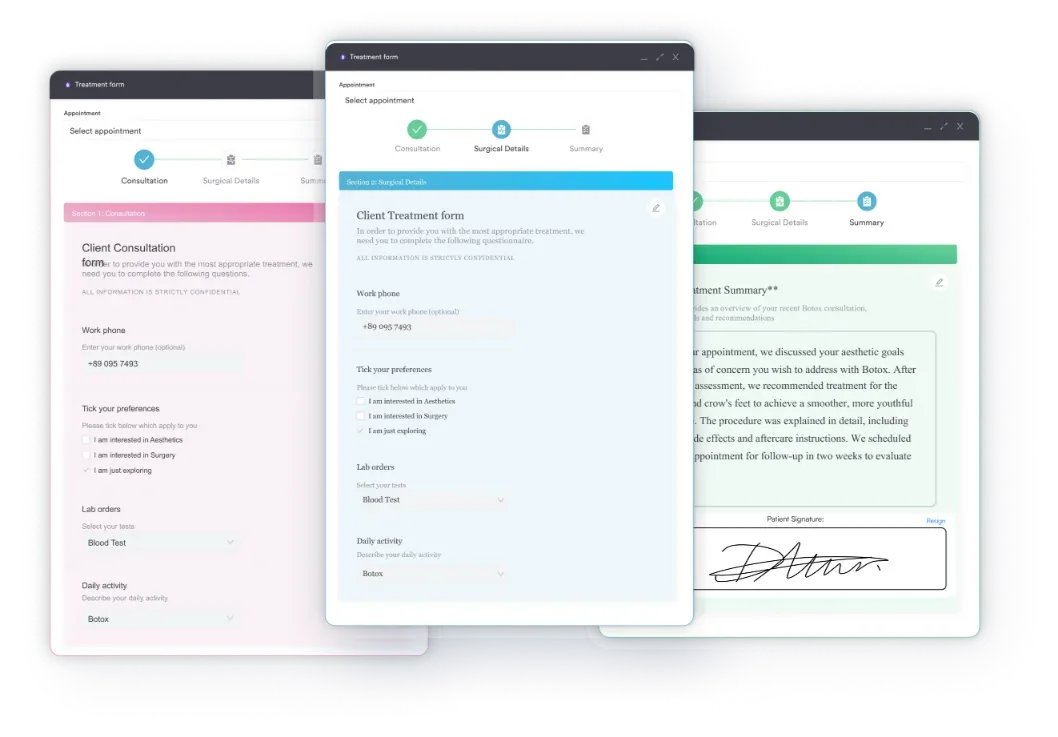
Practices using structured digital intake forms and templated clinical notes see fewer documentation gaps at the time of claim submission. When intake workflows capture dietary history, supplement use, and prior lab results systematically, coders have the specificity they need to assign E52 confidently. For nutritional and integrative medicine practices specifically.
While labs are not required for code assignment, the following findings commonly appear in records supporting an E52 diagnosis and may be requested by payers during audits.
Practices that manage IV therapy or nutritional infusion services benefit from thorough pre-treatment documentation. Reviewing IV therapy intake documentation frameworks shows how structured intake captures the nutritional baseline that later supports diagnostic coding accuracy. For IV therapy EMR software users, linking lab panels to clinical encounters within the same record reduces the manual documentation burden at coding time.
ICD-10 Code E52 groups to MS-DRG 640 and 641 (Miscellaneous disorders of nutrition, metabolism, fluids and electrolytes, with and without MCC respectively) under MS-DRG v43.0, per icd10data.com. Coders should still verify the current grouper assignment against CMS MS-DRG documentation for the applicable fiscal year. DRG grouping affects hospital reimbursement directly; outpatient and professional fee claims are not DRG-based but remain subject to medical necessity review under the assigned diagnosis. Out-of-network practices hand reimbursement to the patient, and the superbill format is what makes that possible.
E52 also appears as a secondary diagnosis on surgical and anesthesia claims, where nutritional status shapes perioperative risk. Anesthesia services carry their own code set, so a renal case billed under CPT code 00862 is reported separately from the diagnosis supporting it.
Nutritional deficiency codes in the E50-E64 block are low-frequency diagnoses for most practices, which means payers may flag unusual utilization patterns. A practice submitting multiple E52 claims across a short period without supporting documentation is at higher audit risk than practices where the diagnosis appears rarely and with complete documentation.
For alcohol-related pellagra specifically: F10.x (alcohol use disorder) codes may need to be sequenced alongside E52. The sequencing order depends on which condition is the focus of the encounter. Clinicians working in IV therapy clinic best practices that include nutritional repletion protocols encounter this dual-coding scenario frequently. Documenting both the deficiency and its underlying cause reduces audit vulnerability and supports comprehensive care records.
The WHO ICD-10 browser and CMS tabular resources are the authoritative references for verifying E52 classification, excludes notes, and any mid-year corrections. Coding references from commercial databases should be cross-checked against these primary sources annually, particularly after October 1 effective dates when new code sets take effect.
Every E52 encounter should produce a complete patient records documentation trail: the clinical note documenting the deficiency, any supporting labs ordered or reviewed, the treatment plan, and the coded claim. When those elements align, payer challenges are substantially easier to resolve. Practices that manage medical forms at their practice systematically report fewer documentation-to-claim discrepancies during audits.
ICD-10 Code E52 is a precise, billable code for a condition that carries real clinical consequences when underdocumented or miscoded. Using E53.9 when niacin deficiency is confirmed, or failing to sequence alcohol use disorder alongside alcoholic pellagra, are the two errors most likely to generate denials or audit flags on E52 claims.
Pabau’s practice management platform supports clean E52 documentation with structured clinical note templates, integrated lab result tracking, and streamlined claim submission. If your practice manages nutritional deficiency diagnoses regularly, see how Pabau handles the documentation-to-claim workflow: explore our claims management software or book a demo today.

Billing a laparoscopic gastrostomy procedure? laparoscopic gastrostomy billing guide CPT code 43653 describes a laparoscopic surgical gastrostomy performed without construction of a gastric tube, such as the Stamm procedure.
ICD-10 Code E52 is a billable ICD-10-CM diagnosis code for niacin deficiency, also known as pellagra. It is classified under Chapter 4 (Endocrine, nutritional and metabolic diseases), within the E50-E64 block (Other nutritional deficiencies), and applies to niacin (-tryptophan) deficiency, nicotinamide deficiency, and pellagra (alcoholic).
Yes. E52 is a fully billable ICD-10-CM diagnosis code valid for HIPAA-covered transactions and current through FY2026. It does not require additional subcodes and can be used as a principal or secondary diagnosis depending on the encounter context.
The three Ds of pellagra are dermatitis, diarrhea, and dementia. These are the classic clinical hallmarks of niacin deficiency documented under ICD-10 Code E52. A fourth D, death, can occur in severe untreated cases. Coding requires documentation of confirmed niacin deficiency, not just the presence of these symptoms.
The codes adjacent to E52 include E51 (thiamine deficiency / beriberi), E51.2 (Wernicke’s encephalopathy), E53.0 (riboflavin deficiency), E53.1 (pyridoxine deficiency), E53.8 (other specified B group vitamin deficiency), and E53.9 (Vitamin B deficiency, unspecified). Each reflects a distinct vitamin deficiency; E52 applies only when niacin deficiency is specifically confirmed.
When alcohol use disorder is the confirmed underlying cause of niacin malabsorption, both E52 and the appropriate F10.x code should be assigned. The principal diagnosis depends on which condition drives the encounter. E52 covers the deficiency itself; F10.x covers the alcohol use disorder. The Type 1 Excludes note under E52 does not exclude F10.x codes.