









Neuro checks nursing assessment: A complete bedside checklist
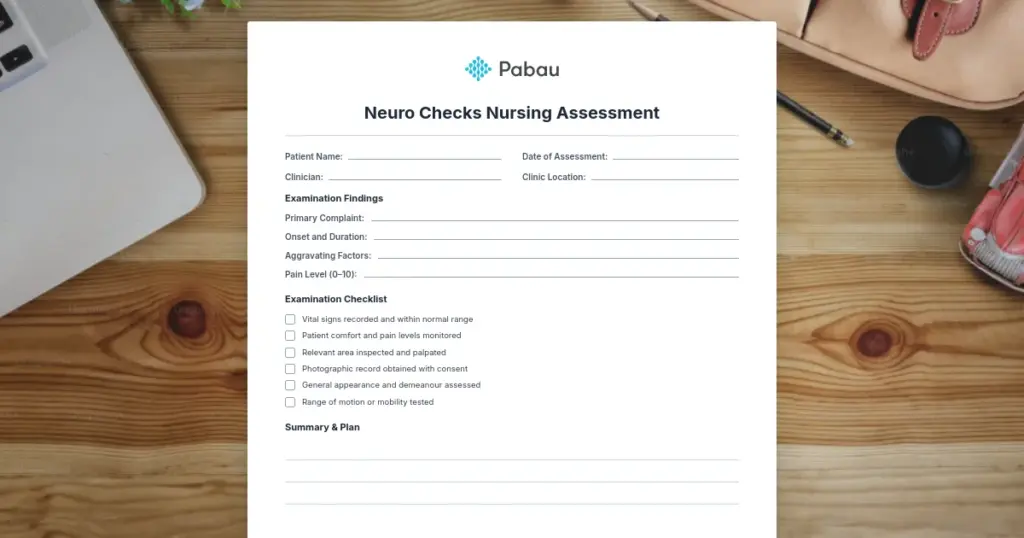
A neuro check covers consciousness, GCS, pupils, motor, sensory, cranial nerves, speech and gait. Each finding counts against the last.
Apgar Score Template
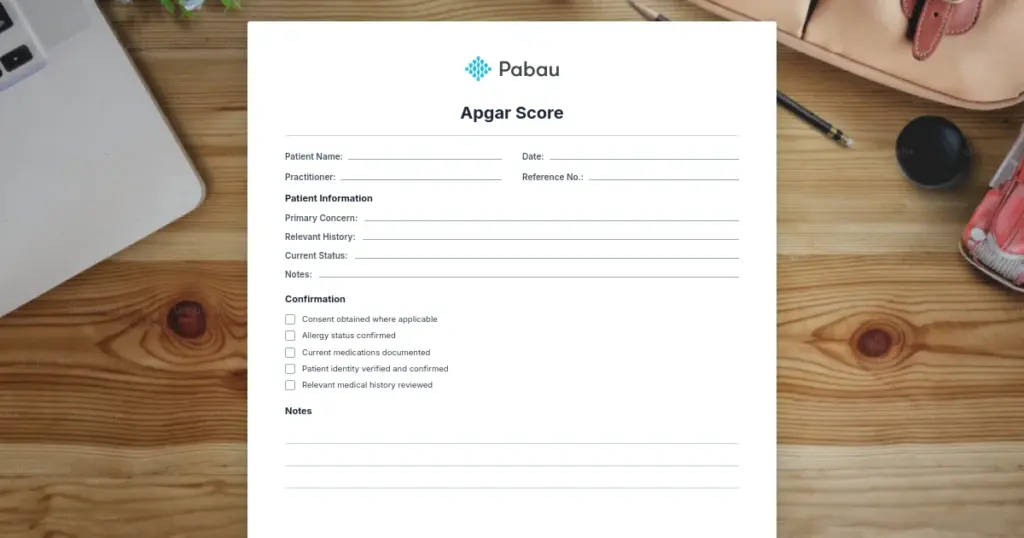
Download your free Apgar score template A one-page scoring chart covering all five Apgar signs. It has checkboxes for the 1-minute and 5-minute assessments, a total score line, and a short legend for reading the result. Download template The Apgar score is a five-part check on how a newborn is adapting in the first minutes […]
Human Body Organs Diagram
Download your free human body organs diagram notes template A one-page printable clinical form with a titled header and one open Additional Notes field, for recording what you cover in an organ review. The sheet carries no printed illustration, so pair it with the organ reference further down this page. Download template Clinicians reach for […]
Crossed straight leg raise test: Steps and what it means

A positive crossed straight leg raise points hard at lumbar disc herniation. Read more on technique, the 30 to 70 degree window, and how to document it.
Wright test for TOS: How to perform and interpret it

Symptom reproduction beats a fading pulse when you read a Wright test. Read more on passive technique, bilateral comparison, and what to record in the note.
List of nursing interventions: Free template & guide
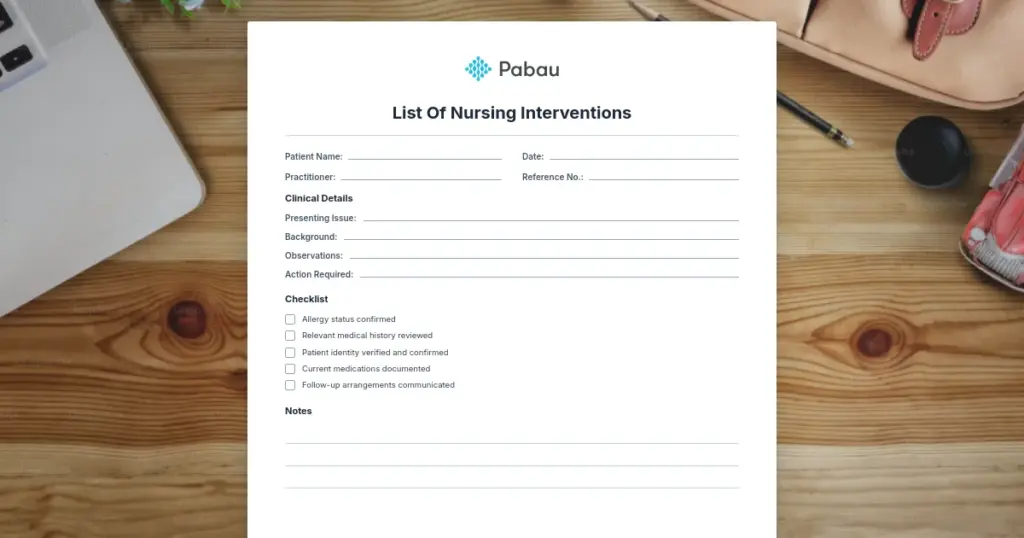
Nursing interventions grouped by type and clinical domain, each with a clinical rationale and a measurable outcome. Read on for the full list plus a free PDF.
High fibre diet meal plan: A 7-day template for clinicians
A 7-day high fibre diet meal plan landing 26 to 31g a day, with fibre counts per meal, targets by patient group, and a free PDF.
UTI diet chart: Foods to eat and avoid
Cranberry prevents UTIs but won’t treat one. See what to eat, what to avoid, how much of each, plus a free printable chart.
Free memory test for seniors: Validated tools and score cutoffs
SAGE, MoCA, and SLUMS are the free validated memory screens for seniors. Compare their score cutoffs and how to administer each.
Two-point discrimination test: Normal values and technique

A normal fingertip reads 2-5 mm, while the forearm needs 30-40 mm. Read more on test technique, normal values by body region, and how to grade a result.