GLP-1 diet plan
A GLP-1 diet plan is a structured eating framework for patients taking semagluti...

2
Last Updated: Oct 13, 2026

Nursing interventions are the specific actions you take to move a patient from a nursing diagnosis toward a measured outcome.
Independent interventions rest on your own judgment, dependent interventions need a prescriber’s order, and collaborative interventions involve another discipline.
Every intervention needs a frequency, a rationale, and a measurable outcome, or a reviewer cannot tell why you chose it.
Grouping the list by clinical domain lets you build a care plan from a shortlist instead of a blank page.
Practice management software like Pabau holds interventions, notes, and outcomes in one client record, so nothing gets typed twice.
Interventions grouped by type and clinical area, each with a definition, a clinical rationale, and an expected outcome. A structured care plan page is built in, so you can document straight from the list.
Download templateMost care plans fall down at the same step. The nursing diagnosis is sound, but the interventions underneath it read like a task list. They carry no frequency, no rationale, and no measured outcome.
That costs you twice over. The nurse on the next shift has to guess what you meant. A reviewer cannot see the reasoning behind your choice either.
A nursing intervention is any action you take to move a patient from a diagnosis toward a stated outcome. Writing one properly starts with knowing which of the three kinds you are dealing with.
Nursing interventions are the deliberate actions you perform to address a nursing diagnosis and support recovery. A physician prescribes the treatment. You monitor the response, teach the patient, manage side effects, and coordinate the rest of the team.
Each intervention bridges an assessment finding to an expected outcome. Take a patient carrying a diagnosis of acute pain related to a post-operative incision. Position changes, guided imagery, and timed analgesia all belong on that acute pain care plan. Each one carries its own reason.
One distinction catches new starters out. The chart may carry a medical diagnosis coded as S22049K, while your care plan carries impaired physical mobility. Both are correct, because they answer different questions.
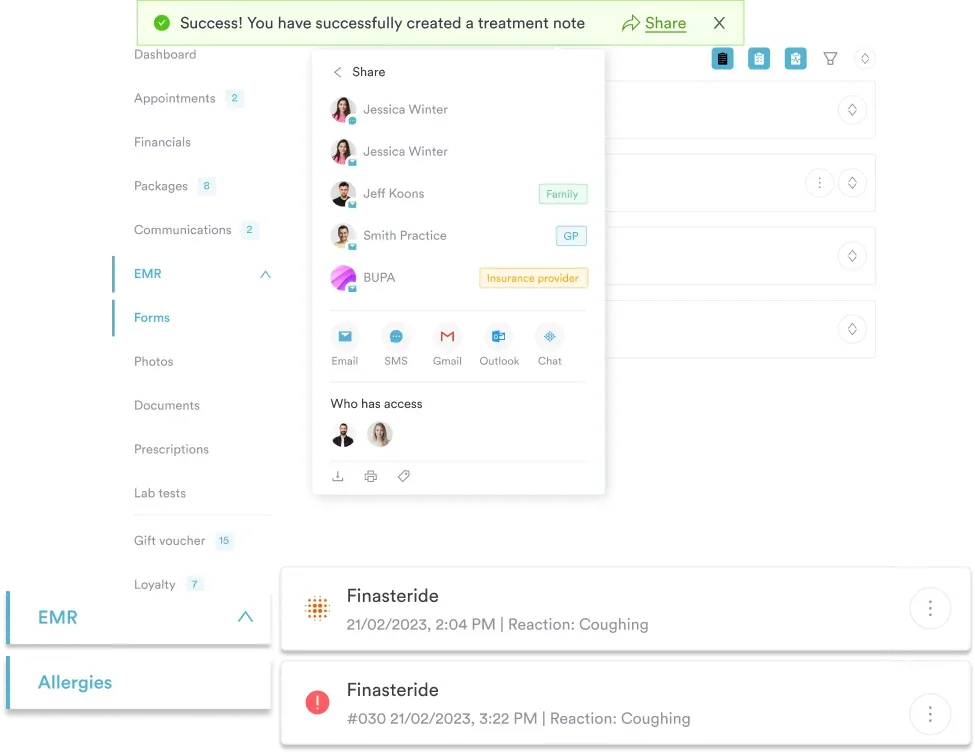
Every intervention, patient response, and outcome measure then lands in the same place. The client record holds all three beside the assessment, so nothing gets rebuilt from memory at handover.
Interventions split into three types, and the split decides who authorizes the action and how you document it.
The distinction matters for scope of practice and for liability. An independent intervention rests on your clinical reasoning. A dependent one needs a valid order before you go anywhere near the patient.
Collaborative interventions need the handoff recorded. A referral to physical therapy only works when both records show the same goal and the same limits.
Post-surgical cases show this clearly. After a repair coded CPT 27606, you agree weight-bearing status with the surgeon and the therapist. Then you write the mobility intervention around it.
You can delegate the task, but the intervention stays yours. A nursing assistant may reposition a patient or record a fluid balance. The assessment behind the action, and the judgment about what it means, stay with you.
Scope rules vary by state and by qualification, so check yours before delegating anything new. Then record who actually carried the task out. A chart that names only you is inaccurate.
A rationale is the reason this intervention belongs on this patient’s plan. It ties the action to evidence, to a guideline, or to a physiological principle. Without one, the entry reads as a completed task.
Reviewers look for that reasoning first. Safer clinical notes come from writing the reason down once, at the moment you choose the action. Reconstructing it a week later never works as well.
Timing carries the same weight as the reasoning behind it. Sepsis nursing interventions show that clearly, because the hour-1 bundle is judged on when each element was recorded.
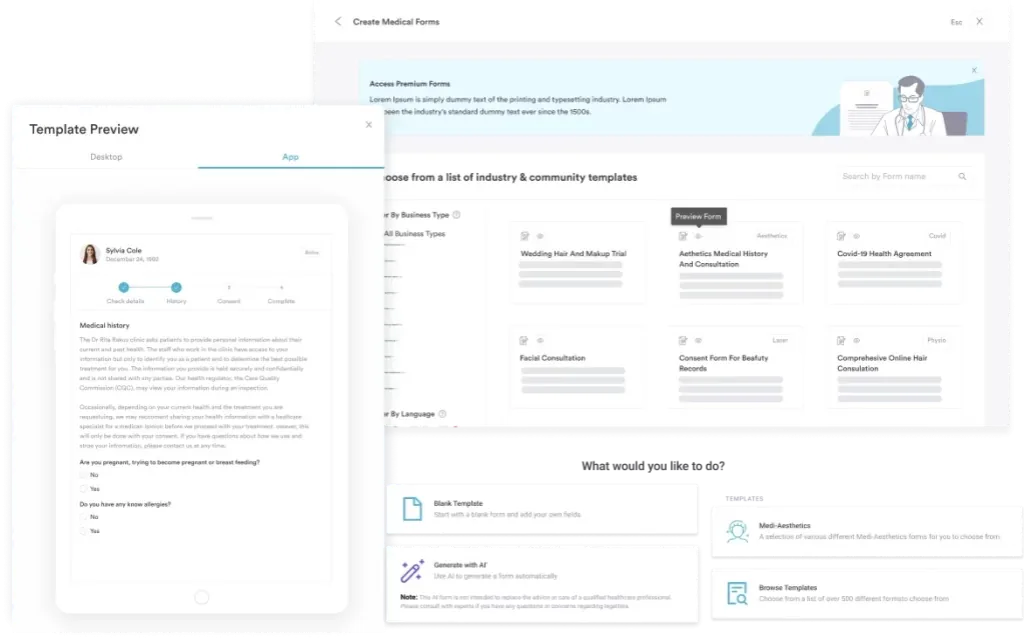
Structured fields make this repeatable. When assessment data arrives through digital forms, the rationale sits in the permanent record. A quality reviewer can then find it in seconds.
Write the action so a colleague could carry it out without asking you a single question. Five steps get you there.
Before the intervention goes in the chart, confirm all five of these.
Your patient comes back from the operating room after a full thickness graft to the trunk, coded CPT 15201. Two diagnoses drive the plan. The first is acute pain, and the second is risk of impaired skin integrity.
Under the first, you time analgesia 30 minutes ahead of every dressing change. For the second, you inspect both sites each shift, recording exudate, color, and odor.
Both entries name a frequency and say what you are looking for. Each closes with the outcome you expect by day three, and that is the whole test.
Grouping by clinical problem is how most nurses actually search. These eight domains cover the bulk of what you will write on a medical or surgical unit.
Kept in one place, a list like this means you pick from a shortlist instead of facing a blank page. Load the same sets into automated workflows and the selection step meaningfully reduces documentation time.
Two published taxonomies give your wording a shared vocabulary. The Nursing Interventions Classification, known as NIC, came out of the University of Iowa. It codes each intervention with a label and a definition.
NIC sorts its interventions into seven domains:
The Clinical Care Classification, known as CCC, takes a different cut. It groups nursing care into 21 care components, then tags each entry with one of four action types:
Both frameworks sit underneath the EHR forms you already fill in. They feed the SOAP note structure most units audit against. Coded wording also lets a manager compare interventions across two units without reading every chart.
One file, saved offline, does four jobs at once:
It also settles wording across a team. New starters can work from the same list during EHR training, so your charts read consistently from week one.
Most reference sites hand you a static list, and somebody still retypes it into every patient’s plan. That retyping is where wording drifts and outcomes quietly go missing.
Practice management software like Pabau closes the loop. Care plan templates hold your intervention sets by diagnosis. Each entry links back to the same assessment, medication list, and outcome measure.
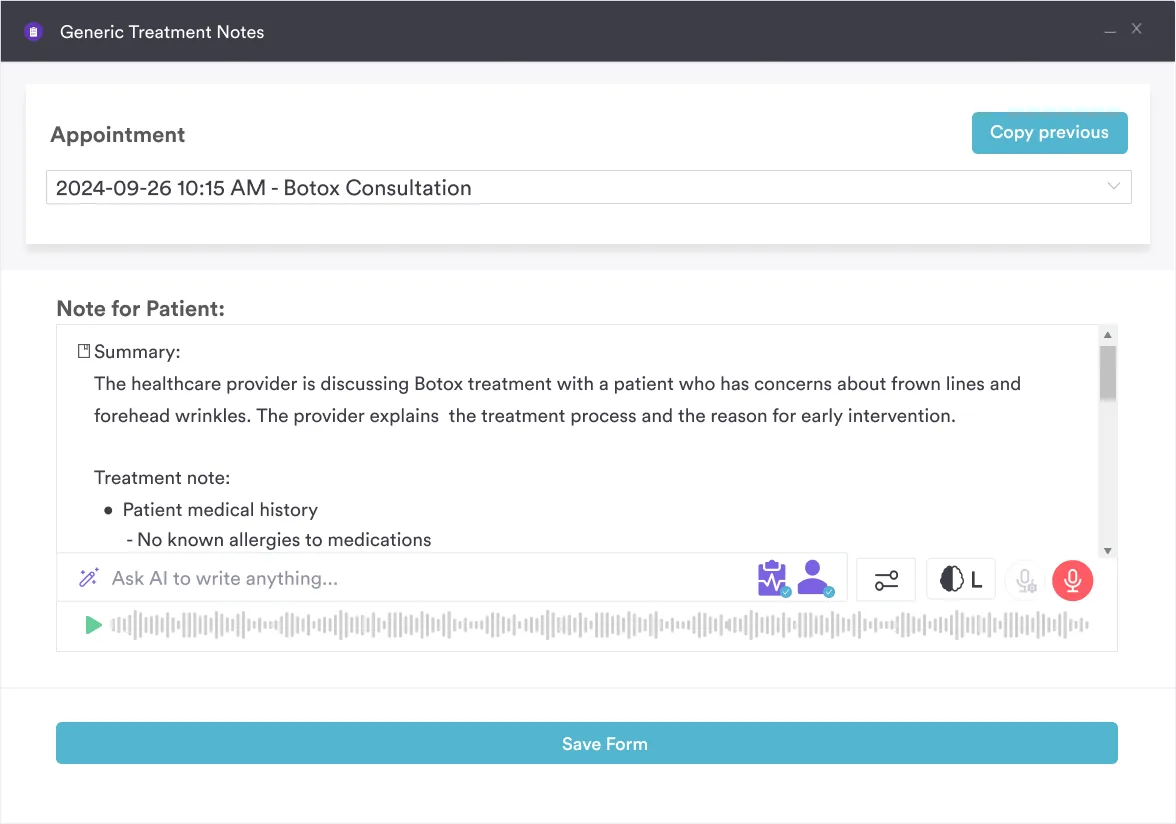
Pabau Scribe, our AI scribe, drafts the note from the consultation itself. You say what you did and why, then check the draft before saving. The rationale gets written while it is fresh.
The result is a record you can defend. Audit trails build themselves, and going paperless removes the file-hunting that eats the end of a shift.
Nurse-led services feel that most. In infusion centers and busy outpatient practices, one nurse may hold several charts at once. Every minute saved goes back to the patient.

Pabau holds your intervention sets, rationales, and outcome measures inside the client record. Nurses select what fits, chart it once, and every entry stays linked to the assessment behind it.

A list of interventions is only worth the reasoning attached to it. Name the action, name the frequency, and state the outcome you expect. Do that and the plan holds up under any review.
Download the reference, keep it where your team writes plans, and go back to it when a diagnosis stops responding. One trade-off is worth remembering. A shortlist saves time at the desk, and a blank page spends it.
Where the plan lives matters as much as how you word it. Book a demo to see how Pabau ties every intervention to its rationale, its outcome, and the right client record.

Treating a child whose parent isn’t present? medical release form for minors authorizes a caregiver to consent to treatment for a child when a parent is unavailable.
Tracking medications across daily and PRN doses? medication log template comes in daily, weekly, and PRN formats with the fields a practice log needs.
Not sure how to close the loop on a care plan? Evaluation nursing care plan shows how to judge whether an intervention actually worked.
Need a worked plan for an acute abdomen? Pancreatitis nursing care plan pairs each intervention with its rationale and its expected outcome.
Planning how to teach a patient self-care? nursing teaching plan template sets learning objectives and teaching methods, then evaluates patient understanding of self-care.
NANDA-I supplies the diagnosis, NIC supplies the intervention, and NOC supplies the outcome label. Used together, one care plan can carry coded terms end to end. That makes reporting across units possible without anyone rereading the charts.
Yes. Each entry needs the time it happened, the patient’s response, and your signature. An unsigned entry is hard to defend later, and a missing time makes the sequence of events impossible to reconstruct.
Three to five is usual. That is enough to cover assessment, action, and teaching, and few enough that the next shift can finish them. A padded list looks thorough and then gets skimmed.
Begin with active listening, a quiet environment, and a clear explanation of what happens next. Paced breathing and a named contact person help too. An anxiety nursing diagnosis lists the full set with rationales.
Every shift for acute patients, and at least weekly for longer stays. Any change in condition triggers a review on its own, so do not wait for the calendar.