GLP-1 diet plan
A GLP-1 diet plan is a structured eating framework for patients taking semagluti...

2
Last Updated: Oct 13, 2026

A high fibre diet meal plan sets a daily target of 25 to 38 grams and names the meals that reach it.
The sample 7 day high fibre diet plan on this page shows fibre grams for every meal and a daily total.
Soluble fibre from oats, beans, and apples steadies blood glucose, while insoluble fibre from bran and vegetables keeps bowels regular.
Adding 5g of fibre every three to five days, with 1.5 to 2 liters of water, prevents the bloating that ends adherence.
The free template adds NHS and USDA targets, categorized food lists, and space for your own clinical notes.
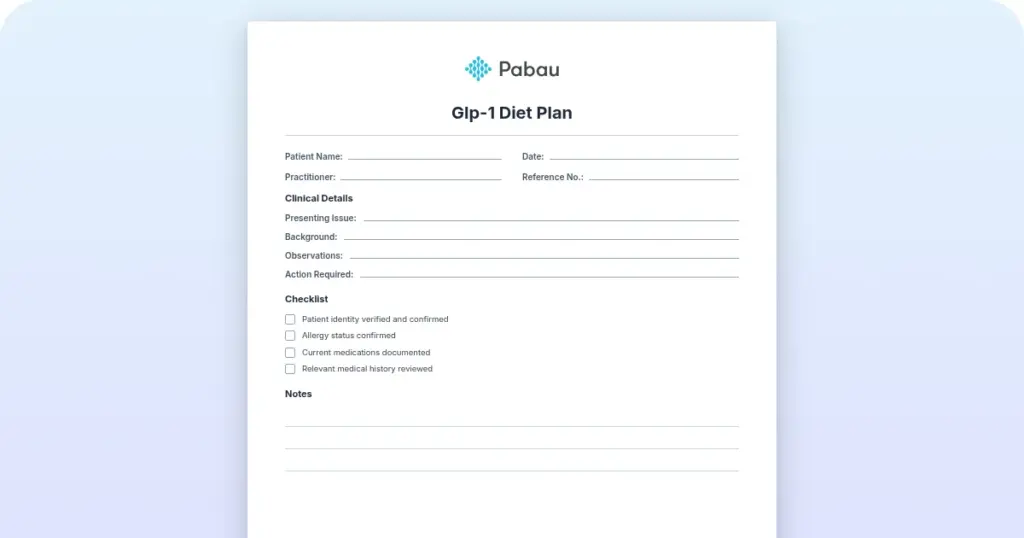
A patient-facing PDF with daily fibre targets, a seven-day meal plan showing fibre counts per meal, and soluble and insoluble food lists. It closes with a four-week build-up schedule and a notes page for portion adjustments.
Download templateA high fibre diet meal plan sets a daily fibre target, then names the meals that reach it. Adults need 25 to 38 grams a day. Most manage 15 to 20.
The sample week further down lists the fibre grams beside every meal, with a running daily total. Each figure comes from the food chart on this page, so you can swap an item and recalculate at the desk.
Below that you will find daily targets by patient group and adjustments for constipation, diabetes, pregnancy, and IBS. Wellness practices, weight loss programs, and digestive health services can all run the same structure.
A high fibre diet plan is a structured eating pattern that raises daily fibre intake to a therapeutic level. For adults that usually means 25 to 38 grams a day, depending on age, sex, and clinical indication.
Unlike a general healthy-eating handout, it specifies food choices, portion sizes, and a daily fibre number. That specificity is what makes the target reachable at the supermarket.
Dietary fibre is an indigestible carbohydrate found in plant foods. The two types, soluble and insoluble, act differently in the gut, and patients need both. Patient engagement with dietary guidance rises when you explain that distinction and hand over a meal plan at the same visit.
Knowing which type does what lets you tailor a plan to the outcome you want. Soluble fibre dissolves into a gel, slows gastric emptying, and promotes satiety. Insoluble fibre passes through largely intact and speeds bowel transit. Most plant foods carry both, in different ratios.
Targets vary by geography, age, and clinical condition. The NHS recommends 30g per day for UK adults, while the USDA Dietary Guidelines set 25 to 38g depending on age and sex.
In practice that means a 25 gram target for most US women and 38 grams for US men. UK guidance sets 30 grams for adults of either sex. Since typical intake sits at 15 to 20g, every one of those figures means roughly doubling what the patient eats now.
The benefits below are ranked by strength of evidence, which is a useful order to explain them in during a consultation:
Use this chart at the desk when you are building or adjusting a plan with a patient. Every gram value in the seven-day sample below comes from it:
Most of the time a fibre diet plan fails in week one because the increase was too fast. Bloating, gas, and cramping follow, and the patient reads that as proof the plan does not suit them. Set adherence expectations at the first appointment instead.
This 7 day high fibre diet plan lands between 26 and 31 grams a day, and every meal carries its own fibre count. Every day clears the USDA target of 25 grams for women, and the two highest days reach the NHS figure of 30. The totals use the gram values from the chart above, so a swapped meal can be recalculated in seconds.
Only the fibre-bearing items are counted. The chicken, salmon, turkey, tofu, and yogurt add protein rather than fibre, so they leave the daily totals unchanged.
Two adjustments cover most patients. Where body composition matters, pair the chickpea and lentil days with fish, eggs, or poultry to lift protein alongside the fibre. Where tolerance is still unknown, start at day 4, which carries the least fibre here.
A male patient on the USDA target of 38 grams needs roughly one extra portion a day. Adding 150g of cooked lentils or chickpeas closes most of that distance without disturbing the rest of the week.
Tailoring plans to patient needs takes condition-specific guidance that general resources skip. Four adjustments cover most of the caseload.
Patients with constipation: build the week around insoluble sources such as oat bran, wheat bran, vegetables, and whole grains. Pair every increase with water. Soluble-heavy plans built on oats, beans, and psyllium can worsen symptoms for a week before they help.
Type 2 diabetes: lean on soluble fibre from oats, barley, legumes, and apples to steady post-meal glucose. Where the patient is also cutting carbohydrates, a low-carb version leans on non-starchy vegetables, nuts, and berries instead of grains. Pair either version with digital intake forms to track glucose response.

Pregnant patients: aim for 25 to 30g a day rather than more, since higher intakes bring bloating on top of existing symptoms. The most useful foods here carry iron as well as fibre, so lead with legumes and leafy greens. Refer to a registered dietitian for personalization.
Irritable bowel syndrome (IBS): fibre type matters more than fibre quantity here. Many patients with diarrhea-dominant IBS tolerate soluble fibre better than insoluble. Constipation-dominant patients usually do better on insoluble-predominant plans. Tolerance is individual, so adjust from a symptom diary.
Verbal dietary advice fails because a patient cannot turn “eat more vegetables” into a shopping list. A template removes that step by naming meals, portions, fibre counts, and one daily number to hit.
Structured assessment forms give you the baseline to measure against. Record current intake, GI symptoms, weight, and glucose markers before the plan starts, not at the first review.
Metabolic health assessment tools then show the change over four to eight weeks. Tracking those outcomes pays off twice, because patients who watch bowel regularity or weight improve are the ones who stay on the plan.
Printing the plan is the easy part. Delivering it and then finding out whether the patient used it takes far more of the week. Practice management software like Pabau handles both jobs from the same patient record.
Send the plan through the patient portal before the patient leaves the room, so it is waiting when they get home. Print copies still work for in-practice handouts, and both versions log against the record.

Automated email and SMS reminders run weekly through the first four weeks, which is when adherence usually drops. A follow-up form attached to the reminder collects current intake, bowel frequency, and any bloating.
Those answers land on the same record as the plan you sent. At the four-week review you open one screen and see the target, the plan, and what happened. Adjusting portions costs no retyping.

Pabau’s digital forms, patient portal, and automated reminders deliver a high fibre diet meal plan, then collect the follow-up answers on the same patient record. You spend review time adjusting the plan instead of chasing paperwork.

Fibre is cheap to prescribe and hard to deliver. The evidence has been settled for decades, so the work sits entirely in getting a patient to 30 grams on an ordinary Wednesday.
Start patients on the sample week above, then swap meals against the food chart once tolerance is clear. Review at four weeks against a symptom or weight measure, because visible progress is what keeps people on a plan.
The trade-off worth remembering is pace. Pushing a patient from 15 to 30 grams in a few days buys bloating and a dropout. Book a demo to see how Pabau sends dietary plans, automates the follow-ups, and tracks results across your patient list.

Need a baseline before the diet plan starts? women’s BMI chart template records a patient’s height, weight, and BMI at each visit before treatment starts.
Need a baseline before the diet plan starts? Nursing nutrition assessment gives you a structured way to record current intake, weight, and GI symptoms before you set a fibre target.
Curious how GLP-1 use compares to diet plans? GLP-1 usage statistics pulls 65 sourced numbers on usage, results, cost, and coverage in 2026.
Adults should aim for 25 to 38g daily, depending on age and sex. The NHS recommends 30g for all UK adults. The USDA recommends 25g for women and 38g for men. Build up over two to four weeks to limit bloating.
Insoluble-fibre foods act fastest: prunes, pears with skin, wheat bran, ground flaxseed, and legumes. Water matters just as much, so pair them with 1.5 to 2 liters a day. Fibre without fluid can make constipation worse.
Yes. Soluble fibre slows gastric emptying and triggers satiety hormones, which lowers overall calorie intake. Higher fibre intake is associated with lower body weight, and the effect is strongest when it sits inside a structured meal plan.
Soluble fibre from oats, beans, and apples dissolves in water, slows digestion, and steadies blood glucose. Insoluble fibre from wheat bran, vegetables, and nuts adds bulk and speeds bowel transit. Patients need both, and most foods contain both.
No. Jumps of more than 10g a day trigger bloating, gas, and abdominal discomfort. Add 5g every three to five days so gut microbiota can adapt. Side effects usually settle within two weeks of a gradual build-up.
Whole foods come first, because they carry vitamins, minerals, and phytonutrients alongside the fibre. Psyllium and methylcellulose are useful when a patient cannot reach the target from food, and they belong under clinician supervision.
Timing decides it. During an acute flare, patients follow a low-residue or clear-liquid diet until symptoms settle, then reintroduce fibre gradually. Once recovered, a target of 25 to 30g a day from whole grains, legumes, fruit, and vegetables supports long-term prevention.
Rotating the seven-day table four times covers 28 days, so add two repeat days to reach a full month. Day 2 and Day 4 carry the least fibre, which makes them the safest days to repeat. Change one meal each week and recalculate every swap against the foods chart.