Physical Therapy EMR Software: How to Choose the Right Platform
Initial claim denial rates across healthcare averaged nearly 15% in 2024 accordi...

May 6, 2026


Buy now, pay later is now available in Pabau

Physical therapy EMR software manages documentation, scheduling, billing, and patient communication in one platform – purpose-built for PT workflows.
SOAP notes, standardized outcome measures, and Medicare-compliant therapy documentation (plan of care, progress notes, KX modifier tracking) are the documentation pillars for insurance-based PT practices.
Multi-specialty clinics offering PT alongside aesthetics or wellness need a flexible EMR rather than a single-discipline tool – Pabau is built for exactly that model.
Pabau’s AI-assisted documentation and customizable clinical templates support physiotherapy workflows without locking you into a PT-only platform.
Initial claim denial rates across healthcare averaged nearly 15% in 2024 according to Premier Inc., with rehab therapy denials often driven by documentation rather than coverage disputes. Physical therapists report that documentation and administrative work consume a substantial portion of clinical time, reducing patient-facing capacity. The right physical therapy EMR software directly addresses both problems by connecting clinical documentation, scheduling, and billing inside a single workflow rather than stitching together separate tools. This guide covers what to look for, how specialist PT platforms compare to flexible multi-specialty systems, and where Pabau fits for clinics that do more than pure rehab therapy.
Most clinicians define physical therapy EMR software as a digital record system. That definition understates what modern platforms actually handle. The core function is documentation, but the operational value comes from how documentation connects to everything else.
The distinction between EMR and EHR matters for PT practices specifically. An EMR is a digital version of a paper chart, scoped to a single practice. An EHR implies interoperability – data sharing with hospitals, referring physicians, and other systems under 21st Century Cures Act information-blocking rules. Most PT-focused platforms market themselves as EMRs. Practices with hospital affiliations or complex referral networks should verify HL7 FHIR interoperability claims before signing a contract.
Not every feature list in a vendor’s marketing translates to clinical value. These are the capabilities that determine whether a platform genuinely supports PT workflows or just approximates them.
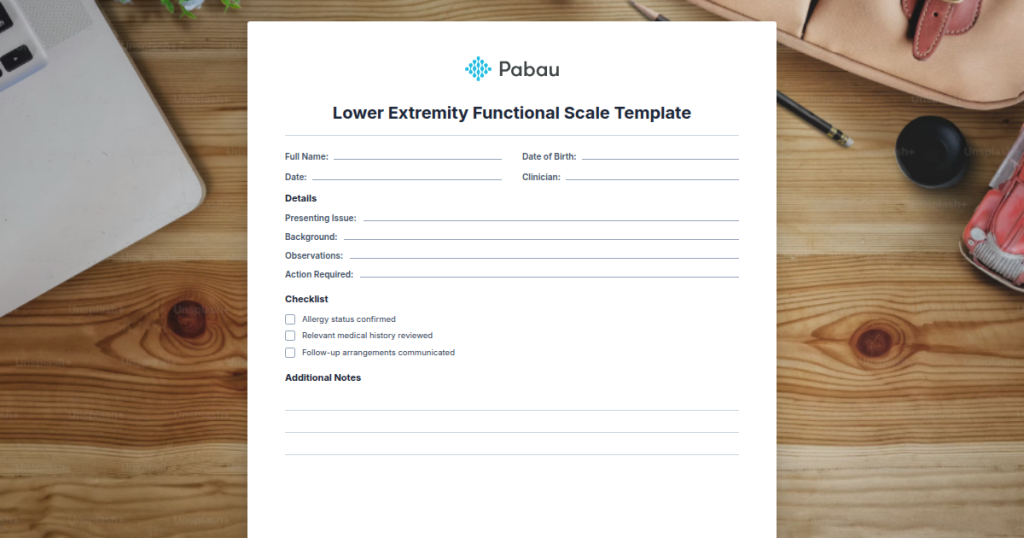
SOAP notes are the documentation foundation for physical therapy. According to APTA documentation guidelines, PT notes must capture subjective findings, objective measurements, clinical assessment, and the ongoing treatment plan. Generic EMR templates rarely include PT-specific fields like manual muscle testing grades, gait analysis notes, or functional outcome measures. The difference between a generic clinical note and a purpose-built PT template is 10-15 minutes per visit for a busy therapist.

Platforms like WebPT and Empower EMR ship with pre-built PT SOAP templates with PT-specific fields. (Note: Medicare’s Functional Limitation Reporting (FLR) and associated G-codes were discontinued effective January 1, 2019, though many platforms retain optional functional outcome tracking.) Pabau offers digital intake forms and customizable clinical note templates that can be configured for physiotherapy workflows, trading some out-of-the-box specificity for flexibility across multiple disciplines.
Standardized outcome measures (DASH, LEFS, Oswestry Disability Index, PSFS) are increasingly required for insurance authorization and clinical benchmarking. While CMS discontinued mandatory Functional Limitation Reporting in 2019, standardized outcome measures remain critical for insurance authorization, value-based care contracts, and clinical benchmarking. A PT EMR that integrates outcome measure scoring directly into the clinical note – rather than requiring a separate paper form – saves significant time and reduces transcription errors.
Before selecting a platform, verify which specific outcome measures are built in versus which require manual data entry. This is one area where specialist PT EMRs have a clear advantage over general-purpose systems.
Physical therapy billing has specific complexity: multiple CPT codes per visit, modifier requirements, authorization tracking, and Medicare-specific rules including the therapy cap exceptions. Platforms built for PT (WebPT, Raintree, PT Everywhere) include clearinghouse integrations, ERA/EOB posting, and denial management workflows tailored to these requirements. For practices that rely heavily on insurance revenue, this depth is difficult to replicate with a general billing tool.

Cash-based and private-pay PT practices have different needs. They require clean invoicing, package management, and payment collection rather than insurance ERA processing. That’s where platforms like Pabau, with its claims management and integrated payment processing, compete more directly with specialist tools.
The right platform depends on practice model, payer mix, and whether PT is your only service or one of several. These five questions narrow the field quickly.
| Question | If Yes, Prioritize | If No, Reconsider |
|---|---|---|
| Is 60%+ of revenue insurance-billed? | WebPT, Raintree, PT Everywhere | Pabau, Jane App, SimplePractice |
| Do you offer PT alongside other services? | Pabau, Jane App | Single-specialty PT EMRs |
| Do you need detailed Medicare-compliant therapy documentation (KX modifier, plan of care, progress notes)? | WebPT, Empower EMR, PromptEMR | Any general-purpose EMR |
| Are you multi-location or planning to expand? | Raintree, Pabau multi-location | Solo-practice tools (HelloNote, Agile EMR) |
| Is home exercise program delivery critical? | Platforms with HEP integration (Physitrack-compatible) | Documentation-only EMRs |
Practices serving a hybrid mix of insurance and private-pay patients often find that single-discipline platforms over-engineer the insurance side while neglecting retail, membership, and package features. This is the gap that multi-specialty platforms fill. If you’re also managing physiotherapy clinic management across multiple service lines, that distinction matters operationally.
Run a documentation audit before selecting a PT EMR. Count how many distinct templates your clinicians use in a typical week (SOAP notes, evaluation reports, progress notes, discharge summaries). Any platform demo should show you those specific templates in action, not just a generic note editor. If the vendor can’t demonstrate PT-specific fields in the first 15 minutes, that’s your answer.
Every PT EMR marketed to US practices should be HIPAA-compliant as a baseline. PT Everywhere explicitly states HIPAA compliance on their homepage. Raintree, WebPT, and SimplePractice all publish their security practices publicly. For practices outside the US, equivalent data protection requirements apply: GDPR in the UK and EU, provincial privacy legislation in Canada.
Understanding compliance requirements for physiotherapy clinics goes beyond the EMR itself. The platform is one control layer. Staff training, BAA agreements with vendors, access controls, and incident response procedures are equally required. A HIPAA-compliant EMR does not automatically make your practice compliant – it provides the infrastructure for compliance.
Questions to ask vendors on security before signing:
Adherence to home exercise programs is one of the most consistent challenges in physical therapy. Patients who complete their HEP between visits recover faster and require fewer total visits – but delivering, tracking, and adjusting HEPs through a separate app creates workflow friction. Platforms that integrate exercise prescription into the EMR solve this, though the integration maturity varies significantly.
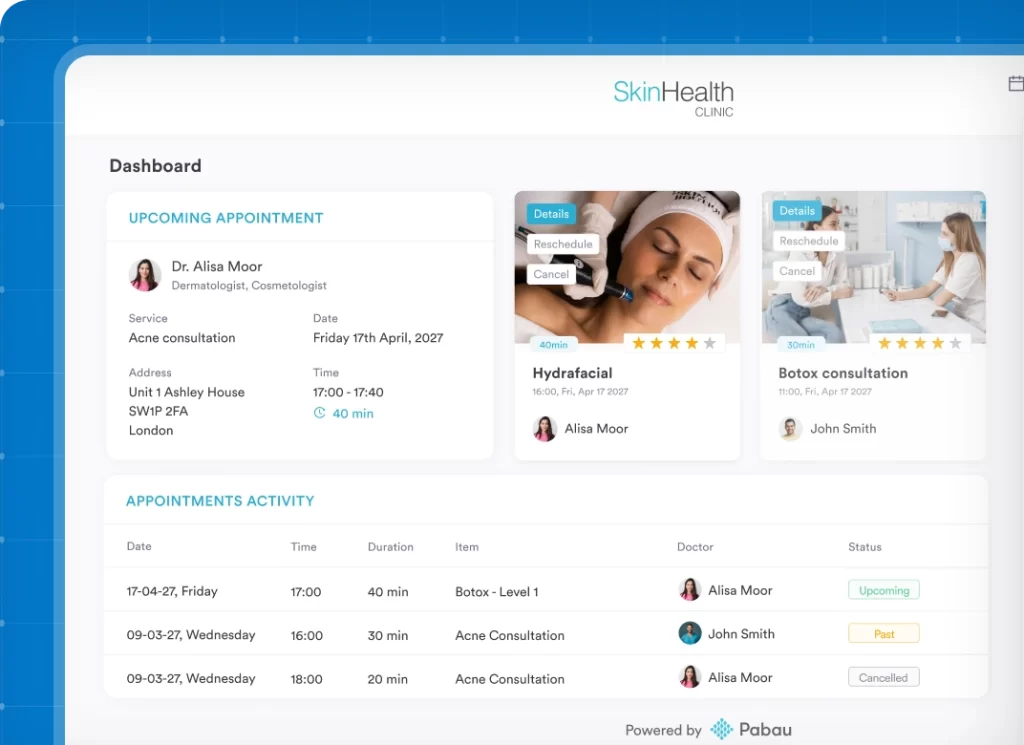
The client portal capabilities across PT platforms range from basic appointment reminders to full secure messaging, document sharing, and outcome measure self-reporting. SimplePractice and Jane App are particularly strong on patient portal and telehealth, supporting remote consultation and secure video sessions. Pabau includes online booking, automated reminders, and a client-facing portal suited to clinics where the patient experience includes retail, memberships, or wellness services alongside PT.
Platforms with telehealth capabilities built into the EMR reduce the need to route patients through a separate video platform. This matters most for follow-up consultations, HEP reviews, and progress check-ins where an in-person visit is not clinically necessary.

Pabau connects scheduling, clinical documentation, patient engagement, and billing in one platform – built for multi-specialty clinics that include physiotherapy alongside other services. Book a demo to see it in action.

AI documentation tools are moving from novelty to operational infrastructure across healthcare. For physical therapy, the use case is straightforward: therapists spend significant time transcribing treatment notes after sessions when that time would be better spent with patients. AI scribes that listen during sessions and generate structured SOAP notes from the conversation reduce that burden substantially.
Raintree describes itself as an AI-powered EMR built for PT and rehabilitation organizations. Empower EMR markets AI-assisted documentation as a core differentiator. Pabau’s AI-assisted clinical documentation supports note generation across multiple clinical disciplines, including physiotherapy workflows, without being limited to a single specialty context.

Beyond documentation, automated workflows reduce administrative overhead across the patient journey: automated appointment reminders cut no-shows, post-treatment care instructions send without manual staff action, and recall campaigns bring discharged patients back for follow-up episodes of care. For a PT practice managing 80-120 appointments per week, these automations have measurable revenue impact.
Test any AI documentation feature with a real clinical scenario before committing. Ask the vendor to demonstrate how the tool handles a complex evaluation note with multiple objective measurements, rather than a simple follow-up SOAP note. The gap between demo performance and clinical reality is widest in documentation AI.
Single-discipline PT EMRs are optimized for practices where every patient is a rehab therapy patient. That design makes sense for a pure PT clinic billing predominantly to insurance. For clinics that mix physiotherapy with aesthetics, wellness services, IV therapy, sports medicine, or occupational therapy, the specialist platform creates operational friction – different systems for different service lines, no unified patient record, separate billing workflows.
Pabau is built for exactly this multi-specialty model. A clinic offering physiotherapy, sports massage, and IV therapy can manage every service line from one platform: unified patient records, one scheduling system, consolidated billing, and a single client-facing portal. The occupational therapy software capabilities extend this further, making Pabau a practical choice for interdisciplinary rehabilitation clinics.
The trade-off is honest: Pabau does not ship with the deepest US-specific Medicare therapy documentation tooling (KX modifier tracking, therapy threshold workflows, plan of care certification) or US insurance clearinghouse integrations out of the box. Insurance-heavy US PT practices with complex payer contracts will find more purpose-built tools in specialist platforms. The value of Pabau’s breadth becomes apparent when you calculate how many separate tools a multi-specialty clinic replaces, and what those subscriptions cost individually compared to one consolidated platform.
Pabau holds a 4.5/5 rating from 370 verified reviews on Capterra, with reviewers consistently noting the platform’s strength for multi-specialty clinic management, strong onboarding support, and the all-in-one approach that reduces reliance on multiple tools.
PT EMR pricing varies considerably by practice size, feature tier, and billing model. Understanding the cost structure before comparing sticker prices matters because per-provider, per-visit, and flat-rate models produce very different total costs at different practice volumes.
Hidden costs to probe: clearinghouse transaction fees, implementation and onboarding fees, training costs, and add-on charges for features listed separately from the base plan. A $99/month plan that requires $500/month in clearinghouse fees to process insurance claims has a different true cost than the headline suggests. Budgeting properly for opening a physiotherapy clinic means accounting for total platform cost, not base subscription.

Need a compliance framework for your PT clinic? Mandatory compliance for physiotherapy clinics covers the regulatory requirements UK and international PT practices need to address before selecting any software platform.
Running physiotherapy alongside other services? Physiotherapy clinic management software breaks down how multi-service clinics can consolidate their tools without losing clinical functionality.
Considering opening a new PT clinic? Opening a physiotherapy clinic walks through the operational and compliance steps from pre-launch planning through first patient.
Want to understand broader practice management options? Practice management software provides a full-category guide to how modern platforms compare across clinical specialties.
The documentation burden in physical therapy is real, and the right EMR directly reduces it. For pure PT practices with high insurance volumes, specialist platforms like WebPT and Raintree provide the billing depth and regulatory compliance tooling those practices need. For multi-specialty clinics where physiotherapy is one service among several, those tools create operational silos rather than solving them.
Pabau’s unified platform handles physiotherapy alongside aesthetics, wellness, sports medicine, and allied health in one system, with AI-assisted documentation, automated patient workflows, and a client portal that works across every service line. To see how Pabau manages physiotherapy within a multi-specialty clinical environment, book a demo and bring your actual documentation workflows to the conversation.
The best physical therapy EMR software depends on practice model. Insurance-heavy US PT practices are well served by WebPT, Raintree, or PT Everywhere for their billing depth and regulatory compliance tools. Cash-based, private-pay, or multi-specialty clinics offering PT alongside other services often find more value in flexible platforms like Pabau or Jane App that consolidate multiple service lines without requiring separate systems.
An EMR (Electronic Medical Record) is a digital chart scoped to a single practice. An EHR (Electronic Health Record) implies interoperability – the ability to share clinical data with external systems like hospitals and referring physicians under HL7 FHIR standards. Most PT-focused platforms are technically EMRs. Practices with hospital affiliations or complex referral networks should verify whether a platform supports true EHR interoperability under the 21st Century Cures Act before committing.
PT EMR pricing typically ranges from $62/month for entry-level flat-rate platforms up to $250 or more per provider per month for specialist enterprise platforms. Per-visit pricing models exist but are less common. Always calculate total cost including clearinghouse transaction fees, onboarding, and add-on modules – these can double the effective monthly cost compared to the base subscription price.
Prioritize SOAP note templates with PT-specific fields, outcome measure integration (DASH, LEFS, Oswestry), a CPT and ICD-10 code library, HIPAA-compliant data storage, scheduling with recurring visit support, and patient engagement tools including automated reminders. Insurance-billing practices additionally need clearinghouse integration, ERA/EOB posting, and Medicare-compliant therapy documentation (plan of care certification, progress notes, KX modifier tracking). Multi-specialty clinics should also evaluate how well the platform handles non-PT service lines within the same patient record.
Most specialist PT EMRs are designed for single-discipline practices and lack native support for services like aesthetics, IV therapy, or wellness. Platforms like Pabau and Jane App are built for interdisciplinary clinics, maintaining a unified patient record and single scheduling and billing system across multiple service lines. This matters operationally for clinics where PT is one of several revenue streams rather than the only clinical offering.