Musculoskeletal & Pain Management Physical Therapy
Physical Therapy Business Plan: What to Include and Why
Most physical therapy clinic failures happen before the first patient walks in. ...

April 28, 2026


Buy now, pay later is now available in Pabau

Covers patient demographics, consent understanding, and signature blocks
Screens for contraindications and medical history before PRP treatment
Protects clinics by documenting informed consent and risk acknowledgement
Integrates with digital workflows for paperless clinic operations
Supports multi-jurisdiction compliance (HIPAA, GDPR, DHA requirements)
A platelet rich plasma prp consent form is the clinical and legal foundation for any PRP therapy procedure. Whether delivering aesthetic PRP treatments for facial rejuvenation or orthopedic PRP injections for joint regeneration, clinics must obtain documented informed consent before proceeding. This template guides practitioners through the form structure, implementation workflow, and compliance requirements that protect both patient safety and clinic liability.
The form captures essential patient information, screens for contraindications and pregnancy-related risks, documents treatment understanding through a consent statement, discloses known risks including swelling, bruising, and infection potential, and secures signatures from both patient and treating physician. In regulated healthcare environments (UK, UAE, US), proper consent documentation is not optional-it’s a legal and professional requirement. This guide explains how to use the template, why each section matters, and how to integrate it into your clinic’s digital workflow.
A ready-to-use consent form for PRP therapy covering patient demographics, medical history screening, treatment understanding, risk acknowledgement, aftercare responsibilities, and dual signature requirements for both patient and treating physician.
Download template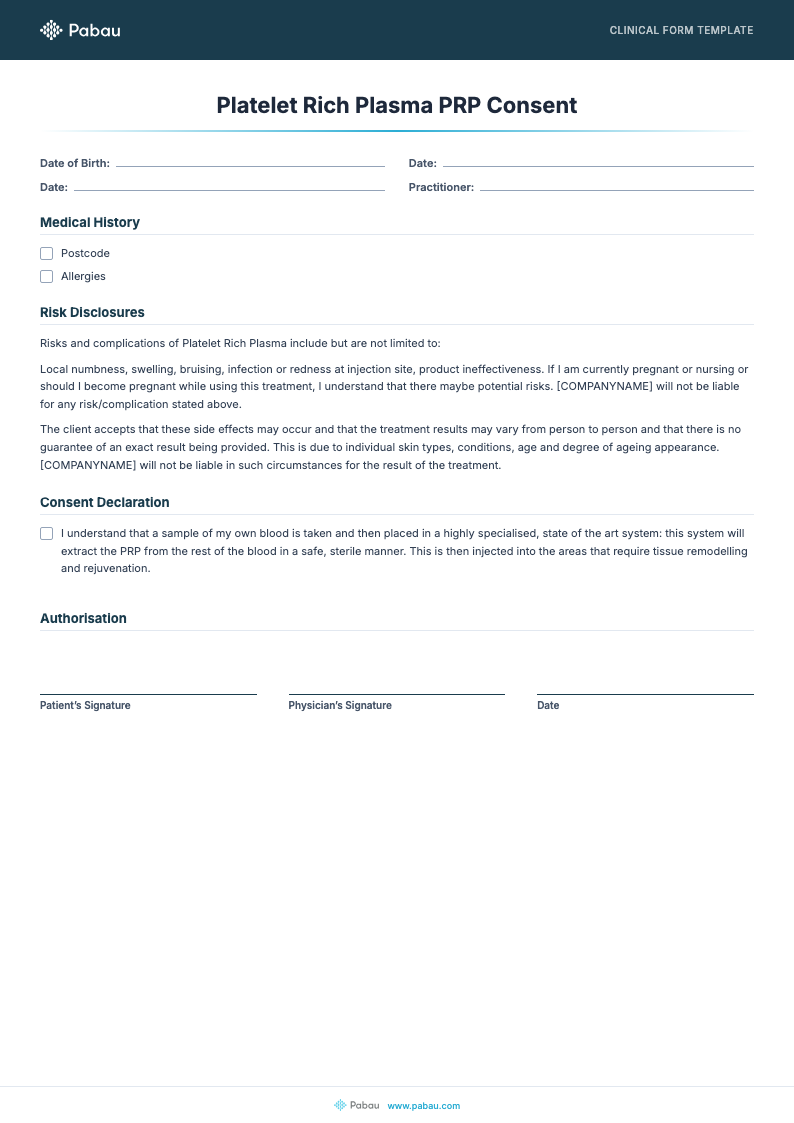
A platelet rich plasma prp consent form is a standardised medical and legal document that confirms a patient’s informed understanding of PRP therapy before treatment begins. The form documents that the patient comprehends the procedure (autologous blood extraction, centrifugation, and reinjection), acknowledges known risks (swelling, bruising, infection, numbness, ineffectiveness), and agrees to follow aftercare protocols.
In clinical practice, PRP therapy is used for two primary applications: aesthetic rejuvenation (facial PRP for skin texture, tone, and collagen stimulation) and regenerative medicine (orthopedic PRP for joint healing, tendon repair, and musculoskeletal pain). Both contexts require explicit patient consent because PRP uses the patient’s own blood and involves injection-based delivery. Digital consent forms via a patient portal system eliminate paper and reduce appointment check-in time.
Regulatory bodies including the FDA (US), MHRA (UK), and DHA (UAE) classify PRP therapy as a medical procedure requiring documented informed consent. The consent form serves three critical functions: (1) It educates the patient about what PRP is, how it works, and what results are realistic. (2) It protects the clinic by demonstrating that the patient understood the risks and accepted them voluntarily. (3) It creates a documented record for compliance with medical device regulations and patient safety standards. Without a signed consent form, clinics face liability risk, regulatory penalties, and potential loss of insurance coverage.
Implementing a PRP consent form into your clinic workflow requires five distinct operational steps, each mapped to a critical patient safety and compliance checkpoint. The following steps align with the template structure and are based on how leading aesthetic and regenerative clinics administer digital consent workflows.

Automate pre-appointment form collection, medical history screening, and digital signature capture in a single unified platform.

Aesthetic clinics and medical spas: Clinics offering PRP facial rejuvenation, PRP hair restoration, or skin rejuvenation treatments use this consent form to document patient consent before injectable procedures. The form’s emphasis on aesthetic results variability and realistic outcome expectations aligns directly with cosmetic consultation protocols.
Regenerative medicine and orthopedic clinics: Practices delivering PRP therapy for joint pain, tendon injury, or osteoarthritis use the form to screen for contraindications (pregnancy, active infection, anticoagulation therapy) and document informed consent for regenerative procedures. The form supports compliance with sports medicine and orthopedic association guidelines.
Dermatology and skin clinics: Dermatologists offering PRP microneedling, PRP for alopecia, or collagen stimulation use the template to ensure patients understand the mechanism of action, realistic timelines for results, and potential side effects including temporary swelling and bruising.
Multi-specialty clinics and franchise operations: Clinics operating across multiple locations or multiple treatment modalities use standardised consent forms to ensure consistency, reduce litigation risk, and simplify training for new staff. The template provides a baseline that clinic directors can customise for regional compliance requirements.
Regulatory and legal protection: A signed, dated consent form demonstrates to regulators (CQC in UK, State Medical Boards in US, DHA in UAE) that the clinic obtained informed consent before treatment. If a patient later claims they were unaware of risks or didn’t understand the procedure, the form is documentary evidence that the clinic met its duty of disclosure. This protection extends to professional liability insurance claims-insurers require evidence of informed consent.
Reduced patient complaints and disputes: Patients who read and sign a consent form-especially one that explicitly names potential side effects like bruising and swelling-are less likely to dispute the outcome or claim they were misled. The form sets realistic expectations and creates a shared understanding between patient and clinician about what PRP can and cannot achieve. Professional liability insurance requires documented informed consent before treatment begins.
Workflow efficiency and automation: Digital intake forms sent via patient portal eliminate paper, reduce appointment check-in time, and create searchable records linked to each patient’s treatment history. Automated reminders decrease no-show rates because patients engage with the form before arrival.
Staff training and consistency: A standardised form ensures every staff member covers the same contraindications, risks, and aftercare requirements. New clinical staff can reference the form as a training document, ensuring they don’t omit critical disclosure points. Multi-location clinics benefit from having one approved template rather than ad-hoc handwritten notes.
Compliance with international standards: HIPAA (US), GDPR (EU/UK), and DHA (UAE) all require documented evidence of patient consent for medical procedures. Using a formal consent form (rather than verbal consent alone) satisfies these regulatory expectations and demonstrates that the clinic operates with professional standards.
Screen for pregnancy and breastfeeding status before the appointment. If a patient is pregnant or currently breastfeeding, discuss PRP risks with the treating physician and document the discussion in the patient record. Some clinics defer PRP until after breastfeeding ends; others proceed with documented physician approval. Document the decision either way-this paper trail protects both the clinic and the patient.
The PRP consent form captures essential medical history items that flag potential contraindications before treatment. The form collects postcode (for geographic follow-up if adverse events are reported), allergies, pregnancy and breastfeeding status, occupation, and any documented medical conditions. Clinics should use this section as a gating mechanism-if red flags appear, the treating physician must review before proceeding.
Pregnancy and breastfeeding: PRP during pregnancy is generally contraindicated due to unknown fetal effects. Breastfeeding does not contraindicate PRP, but if the patient is planning to conceive soon, some clinics defer treatment. The form explicitly asks about both statuses, and the signature block confirms the patient disclosed this information accurately.
Active infection and immunosuppression: Patients with active infection (skin infection at injection site, systemic infection, or fever) should not receive PRP until cleared. Patients on immunosuppressive therapy (for autoimmune conditions, organ transplant, or cancer treatment) may have reduced platelet function and slower healing. These scenarios require physician review before consent is finalised.
Anticoagulant therapy: Patients taking anticoagulants (warfarin, DOACs) or high-dose aspirin may experience increased bruising and haematoma formation after PRP injection. Some clinics request temporary cessation of anticoagulants under physician guidance; others proceed with documented awareness of increased bleeding risk. Document the decision in the patient record.
Allergies to local anaesthesia or blood-derived products: Rare, but clinically significant-if a patient reports allergy to lidocaine, prilocaine, or other local anaesthetics, the form flags this so the clinician can prepare alternative anaesthesia or adjust the treatment plan. Reactions to blood-derived products (serum sickness, severe transfusion reactions in history) warrant additional caution.
The PRP consent form explicitly lists documented risks: local numbness, swelling, bruising, infection or redness at the injection site, and treatment ineffectiveness. Swelling and bruising typically resolve within 7-14 days; numbness is transient and resolves within weeks in most cases. The form discloses that results vary based on individual skin type, age, and degree of ageing, with no guarantee of specific outcomes.
Managing patient expectations post-injection: Patients who anticipate bruising and swelling because they read the consent form are less likely to contact the clinic in distress 24 hours after treatment. Pre-treatment education via the consent process-not just a cursory verbal mention-significantly reduces post-procedure anxiety calls and negative reviews stemming from normal inflammatory responses.
Infection prevention and recognition: The form names infection risk and emphasises clinic responsibility for sterile technique. Patients are implicitly committed to following post-treatment care instructions (avoiding makeup, harsh skincare, swimming, or strenuous exercise for 24-48 hours) because they’ve signed acknowledgement. If infection develops, the documented risk disclosure supports communication: “This is a rare but possible complication we discussed before your treatment.”
Liability protection through documented risks: By naming each specific risk in writing and obtaining the patient’s signature, the clinic demonstrates it did not hide or minimise potential complications. If a patient develops bruising or swelling post-treatment and later claims they were uninformed, the signed consent form is powerful evidence that they were informed and consented despite understanding the risks.
Treatment ineffectiveness and revision management: The form states that results may be ineffective or suboptimal based on individual factors. Pre- and post-treatment documentation (including before-and-after photos) should be linked to the consent form in the patient record for comprehensive treatment tracking. Rather than viewing the patient as “failed” by treatment, the consent framework repositions PRP as a variable-outcome procedure, and revision is part of the normalised treatment pathway.

Need to streamline form distribution and digital signature capture? Digital Forms & Capture automates pre-appointment form collection, medical history screening, and patient signature workflows in a single integrated platform.
Want to generate clinical notes automatically from form responses? Echo AI Scribe transforms patient-submitted form data into structured clinical documentation, reducing clinician typing time and improving note consistency.
Looking for more consent form templates? Dermal Filler Consent Form Template provides another ready-to-use consent resource for injectable aesthetic treatments.
A properly implemented PRP consent form is the cornerstone of ethical, legal, and professional practice in regenerative and aesthetic medicine. The form documents informed consent, screens for contraindications, sets realistic expectations, and protects both patient autonomy and clinic liability. By integrating digital consent workflows into your clinical operations, you automate form distribution, accelerate medical history screening, and create auditable records that demonstrate regulatory compliance.
Download the template, customise it for your jurisdiction and clinical context, and integrate it into your patient workflow starting at appointment booking. Your patients will appreciate the transparency and structure, and your clinic will operate with defensible, documented informed consent practices.
Yes, in most jurisdictions. The FDA (US), MHRA (UK), and DHA (UAE) classify PRP therapy as a medical procedure requiring documented informed consent. Professional liability insurance policies typically require evidence of signed consent before treatment. Clinics without documented consent face regulatory penalties, insurance claim denials, and litigation risk.
Verbal consent alone is insufficient and provides no documentation. Written, signed consent is the professional standard. In litigation or regulatory review, verbal consent is difficult to prove. Always use a documented form signed and dated by both patient and treating physician.
Do not proceed with treatment. Document the refusal in the patient record, note the date and time, and explain that informed consent is a requirement for all PRP procedures. Offer to discuss concerns or refer the patient to another provider. Proceeding without consent exposes the clinic to serious liability.
Yes. Customise the template to include your clinic name, treatment protocols, aftercare instructions, and jurisdiction-specific compliance statements. Have your legal counsel or clinic medical director review customised versions to ensure they meet local regulatory requirements.
Retain signed consent forms for the duration of the patient relationship plus a minimum of 6-7 years (varies by jurisdiction and statute of limitations for medical malpractice). HIPAA requires patient records, including consent forms, to be retained and protected from unauthorised access. Digitally archived forms should be encrypted and accessible only to authorised clinic staff.
Yes. If clinical evidence identifies new risks or complications from PRP therapy, update the form to reflect current knowledge and practice standards. Use updated forms for new patients and document the date of revision. Existing patient records retain the consent form version they signed.