CPT code 52648: Laser ablation of the prostate billing guide
What CPT code 52648 covers, and what it bundles in CPT code 52648 is the code fo...

Last Updated: Oct 21, 2026

CPT code 99243 covers an outpatient consultation with low level medical decision making, or 30 minutes of total time.
Prescription drug management is a moderate risk element, so it points to 99244 rather than 99243.
All three Rs are mandatory: a written request, the reason for consultation, and a written report back to the requester.
CPT 99241 was deleted in 2023, and Medicare has not paid outpatient consultation codes since 2010.
Pabau’s claims management software prompts for each consultation element and submits cleaner claims through Claim.MD.
The American Medical Association (AMA) CPT code set defines CPT code 99243 as an office or other outpatient consultation. It applies to a new or established patient. The record must show a medically appropriate history and/or examination, plus low level medical decision making (MDM).
When total time drives code selection instead, 30 minutes must be met or exceeded on the date of the encounter. That covers the whole date of service, not just the face-to-face portion.
The code sits in the outpatient consultation family, 99242 through 99245. CPT 99241 was deleted from the code set on January 1, 2023, so the family now starts at 99242.
The 2023 E/M revisions also removed history and physical examination as elements of code selection. Complexity now rests on either the MDM level or total time on the date of the encounter. The number of elements documented in the note no longer decides the code.
Medicare stopped paying the outpatient consultation family effective January 1, 2010. Under the CMS Medicare Physician Fee Schedule, practices must bill E/M codes 99202-99215 for Medicare Part B beneficiaries.
CPT code 99243 is still recognized by many commercial payers and some state Medicaid programs. Verify each payer contract before you bill it.
Low level MDM is the clinical threshold for CPT code 99243 under MDM-based coding. The 2023 AMA E/M guidelines define MDM across three elements. Those elements are the number and complexity of problems addressed, the amount and complexity of data reviewed, and the risk of complications or morbidity.
To qualify as low complexity, at least two of the three elements must meet the low threshold. The table below summarizes what each element requires.
Risk is where 99243 claims go wrong most often. Prescription drug management sits at the moderate risk level, so it supports 99244 instead of 99243. A consultation that starts or adjusts a prescription rarely stays at low complexity.
Clinical judgment and complete documentation determine the final code selection. Upcoding to 99244 or 99245 when the record supports only low complexity is a documented OIG audit trigger. The AAPC’s CPT code reference provides detailed MDM crosswalk tables.
Providers who prefer time-based coding can report CPT code 99243 once total time reaches 30 minutes. The 2023 guidelines replaced the old “typical time” wording with a threshold that must be met or exceeded. Total time covers pre-encounter work, face-to-face time with the patient, and post-encounter work on the same calendar date.
The consultation family time thresholds are:
CPT 99241 no longer appears in this family, so a 20-minute straightforward consultation now maps to 99242. Watch the 55-minute figure for 99245 as well. The 80-minute threshold that circulates in older reference material belongs to 99255, an inpatient consultation code.
The inpatient and observation consultation range starts at 99252, which covers straightforward medical decision making. Its AMA time threshold is 35 minutes.
Time must be documented accurately in the medical record. The note should state the total time and the activities performed. Inflating encounter time is fraud under federal billing law. When clinical complexity clearly supports a different MDM level than the clock does, code from MDM instead.
Consultation codes carry a documentation requirement that standard E/M codes do not: The three Rs. All three must appear in the medical record before the claim is payable, wherever 99242-99245 is recognized. Miss one and the encounter isn’t a billable consultation.
Practices submitting electronic 837P claims should confirm that the three Rs are captured in structured fields. Free-text notes alone aren’t enough. Payers audit consultation claims specifically for these elements. A missing report is the most common documentation-related denial reason for this code family.
Document the report element with a note in the patient record. Show the date, the method (fax, EHR message, letter), and the recipient of the communication back to the referring provider. A one-line notation is sufficient, but it must be present.
Because CMS stopped paying consultation codes under Medicare Part B in 2010, CPT code 99243 is not payable on a Part B claim. Practices billing Medicare patients for consultation-type encounters must use the appropriate E/M code, 99202-99215, based on the complexity of the visit.
CMS still publishes relative value units for the code, but assigns it a status that blocks Part B payment. Many commercial payers use those published values as their benchmark anyway. The CMS Physician Fee Schedule lookup tool is the official source for that reference data.
At the 2026 conversion factor of $33.40 for nonqualifying participants, the code’s 3.37 total RVUs work out to roughly $113 before geographic adjustment. Contracted commercial rates are usually set as a percentage of that benchmark. Confirm the contracted rate with each payer rather than assuming a national average.
Where CPT code 99243 is recognized, payers typically apply different rates depending on the place of service. Non-facility rates (office setting, POS 11) are higher, because the practice absorbs overhead costs.
Facility rates (hospital outpatient, POS 22) are lower, because the facility bills separately for overhead. Using the wrong place of service code is a common denial trigger, covered in more detail below.
Relative value units determine how consultation fees are calculated. CPT code 99243 carries the non-facility RVU structure below, taken from the Medicare Physician Fee Schedule file. The values shift a little each year, so pull the current release before you quote a rate.
Facility practice expense RVUs run lower, since the hospital claims the overhead component itself. Verify both sets against the current CMS release before you model consultation revenue.
The payment benchmark equals total RVU multiplied by the CMS conversion factor. Your locality’s Geographic Practice Cost Index (GPCI) then adjusts it. Practices in high-cost metropolitan areas receive a higher GPCI adjustment than rural practices. Check the remittance advice from each payer to confirm the adjusted rate being applied.
Several modifiers may apply to CPT code 99243 depending on the clinical circumstances. Incorrect modifier use is an OIG audit priority, so apply these only when the clinical record supports them.
Modifier 57 deserves a second look on a 99243 claim. A decision for elective major surgery is at least a moderate risk element, so that encounter usually supports 99244 or 99245. Always verify modifier requirements with the specific payer, since some commercial plans set rules that differ from AMA or CMS guidance.
The most common coding error in this family is the choice between 99243 and 99244. The dividing line is risk. CPT 99243 covers low risk management, while 99244 covers moderate risk, including prescription drug management. The comparison below sets the two side by side.
When the consultation ends with reassurance, observation, or an over-the-counter regimen, 99243 fits. When it ends with a new or adjusted prescription, CPT code 99244 is usually correct. Documenting the risk element in plain terms is what separates the two on audit. The diagram below traces both routes to a code, and the element that overrides them.
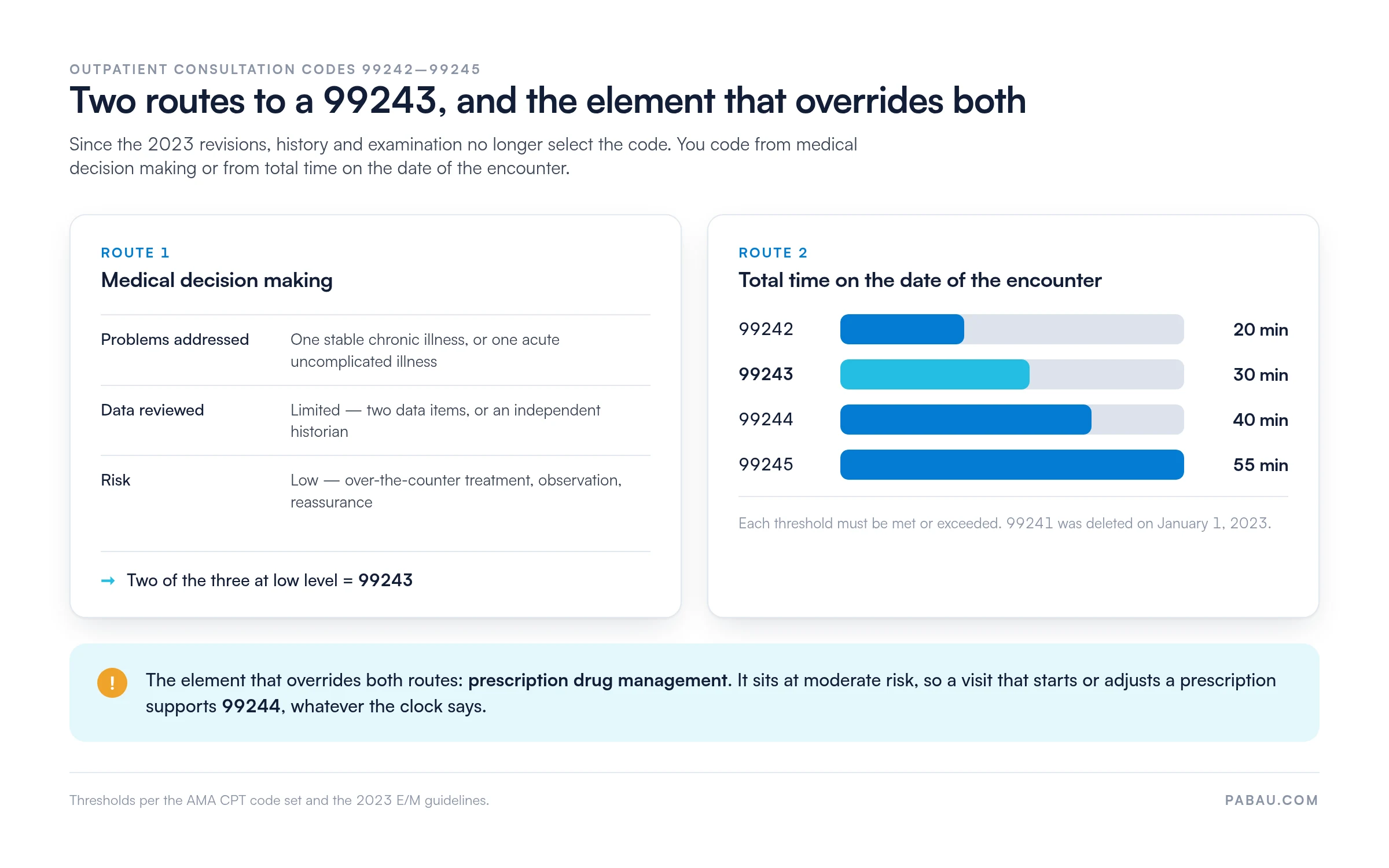
CPT 99241 left the code set on January 1, 2023. The AMA deleted it because it shared the straightforward MDM level with 99242, which made the pair redundant. A 20-minute straightforward consultation now maps to 99242.
Check your fee schedule, superbill, and EHR pick lists for the retired code. Any claim that still carries 99241 comes back as invalid, and the rework lands on the billing team.
CPT code 99243 is used across specialties when an outpatient consultation meets the low complexity threshold. The paired diagnosis codes vary by specialty. They usually reflect stable chronic conditions or uncomplicated acute problems referred for a specialist opinion.
The diagnosis code must reflect the condition addressed during the consultation, not the general referral reason. Payers cross-reference ICD-10 codes against the billed CPT code to confirm medical necessity, so specificity matters. Our ICD-10-CM code lookup covers the diagnosis side of the same claim.
A diagnosis never sets the MDM level on its own. The same hypertension code can support 99243 when the condition is stable, and 99244 when the visit starts a new antihypertensive. Management drives the level, not the label.
Denials on consultation codes cluster around a predictable set of errors. A pre-submission check that flags each one is what stops the rework. The eight below are the ones worth building into that check.
Tracking clean claim rates by code is the fastest way to see which of these errors drives your denial rate. A claim that needs correction and resubmission adds 15 to 30 days to the payment cycle.
Payer policy is the variable that decides whether CPT code 99243 gets paid at all. The variation between plans is wide, and it changes from one contract year to the next.
Commercial payers fall into three categories regarding outpatient consultation codes:
State Medicaid programs are equally variable. Some states fully recognize the consultation code family, and others have adopted E/M substitution. Practices billing across multiple payers should keep a payer-specific rules table and review it when contracts renew. Policies change mid-year, and a stale table is how a whole month of claims goes out wrong.
Consultation coding errors are almost always documentation failures rather than clinical ones. The three Rs get forgotten, the MDM table never gets checked, and the place of service auto-fills wrong. Practice management software like Pabau catches those failures before the claim leaves the building.
Pabau is built for cleaner claims management, so encounter documentation feeds straight into claim submission. Billing staff can see whether the three Rs are captured during chart review, before the claim goes out. Consultation note templates prompt for the request, the reason, and the report on every encounter.
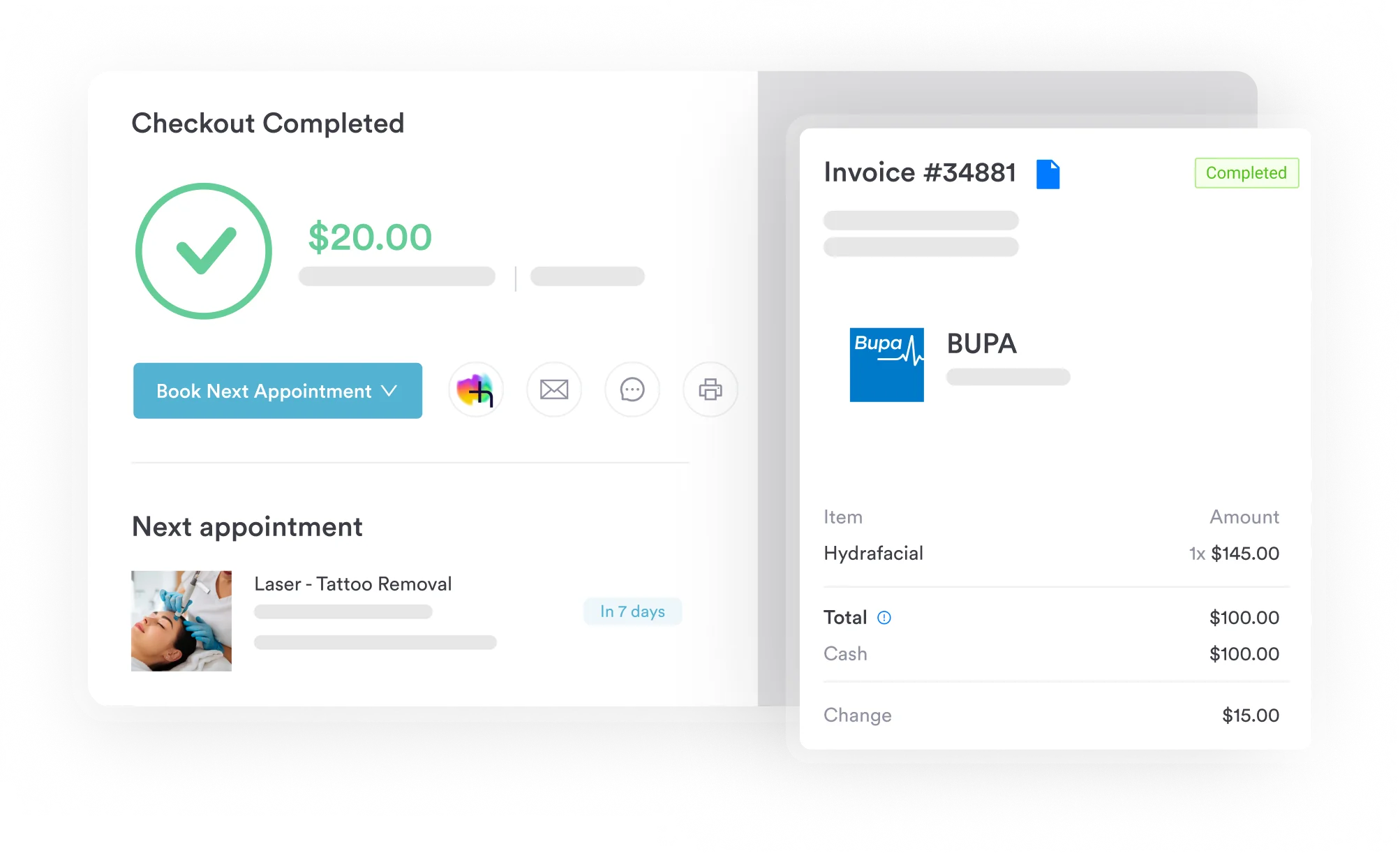
Claims route to payers through the Claim.MD clearinghouse, which supports real-time eligibility checks, 837P submission, and ERA/835 remittance tracking. So a practice can confirm whether a payer recognizes 99243 before submitting, rather than after a denial arrives.
The superbill generated at the point of care feeds directly into the claim, which removes the re-keying step. Referring provider details captured on digital intake forms pre-populate the request and reason elements, so staff never rebuild them from memory at claim time.
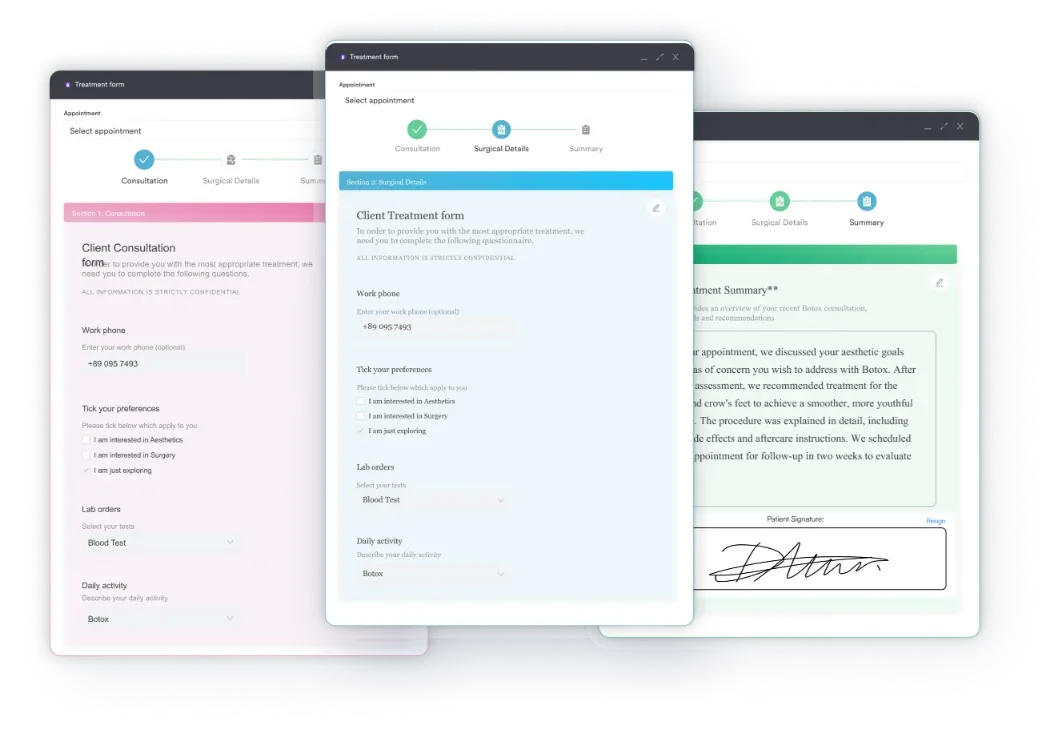

Pabau helps specialty practices manage consultation documentation, submit cleaner claims, and track ERA responses through an integrated workflow built for clinical teams.

CPT code 99243 isn’t a hard code to get right. The record has to carry the request, the reason, and the report, and it has to show low level risk. If the visit ends in a prescription, the code is 99244.
Get those elements right before submission and most of the rework goes away. One trade-off is worth remembering. A correctly coded 99243 still gets rejected by a payer that requires E/M substitution, so run the payer check before the coding check. Book a demo to see how Pabau ties consultation documentation to a clean claim.

Need guidance on revenue cycle fundamentals? Revenue cycle management explained covers the end-to-end billing process from charge capture to payment posting.
Want to reduce administrative overhead on claims? Claim.MD clearinghouse overview explains how electronic claim routing reduces manual billing touchpoints.
Managing denials across multiple payers? Denial codes in medical billing provides a reference guide to the most common CARC and RARC denial reason codes.
CPT code 99243 bills an office or outpatient consultation with low level medical decision making. You can also select it when total time on the date of the encounter reaches 30 minutes. Specialists use it after a formal referral request, once they complete the consultation and report findings back to the requesting provider.
The three Rs are required: a written request from the referring provider, the reason for the consultation, and a written report of findings sent back. The record must also support low level MDM, or document 30 minutes of total time on the date of service.
No. CMS stopped paying outpatient consultation codes under Medicare Part B on January 1, 2010. Practices billing Medicare patients for consultation-type encounters must use the appropriate E/M code, 99202-99215. Some commercial payers and state Medicaid programs still recognize 99243, so verify each payer policy individually.
CPT 99243 requires low level MDM, with a 30-minute time threshold. CPT 99244 requires moderate complexity MDM, with a 40-minute threshold. The clearest separator is risk. Prescription drug management is a moderate risk activity, so a consultation that starts or adjusts a prescription usually supports 99244.
No. The AMA deleted CPT 99241 from the code set on January 1, 2023. It shared the straightforward MDM level with 99242, so the two were merged. Report 99242 for a straightforward outpatient consultation. Claims that still carry 99241 come back as invalid.
CPT 99245 requires high complexity MDM, or 55 minutes of total time on the date of the encounter. The 80-minute threshold belongs to 99255, the highest-level inpatient consultation code. Mixing the two families is a common source of miscoded claims.
The most common denial is a missing request, reason, or report. MDM documentation that does not reach the low complexity threshold is next. An incorrect place of service code is another frequent cause. Submitting to a payer that requires E/M substitution triggers an immediate rejection.
The three Rs are the mandatory documentation elements for consultation codes. Request means a written request from the referring provider is documented. Reason means the specific clinical question is stated. Report means findings and recommendations go back to the requesting provider in writing.