








Pabau vs SimplePractice: OT Practice Management Software
Occupational therapy practice management software: Pabau vs SimplePractice compa...

June 16, 2026


Occupational therapy practice management software handles scheduling, documentation, billing, and telehealth in one platform.
SimplePractice leads on US insurance billing depth and out-of-the-box OT-specific documentation templates.
Pabau scales better for multi-location and multi-practitioner OT clinics with a broader operational feature set.
Pabau supports UK, international, and cash-pay OT practices; SimplePractice is built primarily for US insurance workflows.
Choosing the wrong occupational therapy practice management software costs more than you might expect. Billing errors pile up. Documentation gaps create compliance exposure. And if your platform can’t scale with your team, you’re rebuilding workflows every 18 months. Two platforms come up repeatedly for OT practices: Pabau and SimplePractice. They serve different kinds of practices, and picking the wrong one is a costly mistake.
This guide evaluates both platforms across scheduling, documentation, billing, telehealth, client portals, and pricing. Whether you run a solo OT private practice or a growing multi-location clinic, here’s what you need to know before deciding.
Before the detailed breakdown, here’s how both platforms compare on the metrics that matter most to OT practice owners.
Pabau is an all-in-one clinic management platform built for clinical practices across aesthetics, wellness, physical therapy, and occupational therapy. It supports multi-location scheduling, customizable documentation, integrated payments, and a branded client portal. Practices running teams of two or more practitioners typically get the most out of it.
SimplePractice is a US-focused practice management platform serving over 250,000 health and wellness practitioners, according to their website. It’s built around the solo and small-group private practice model, with deep US insurance billing integration, OT-specific progress note templates, and a clean, approachable interface that reduces the learning curve for new users.
Neither platform is the universal winner. The right choice depends on your practice size, geography, billing model, and how much workflow flexibility you need.
Scheduling is where the two platforms diverge most sharply at the operational level.
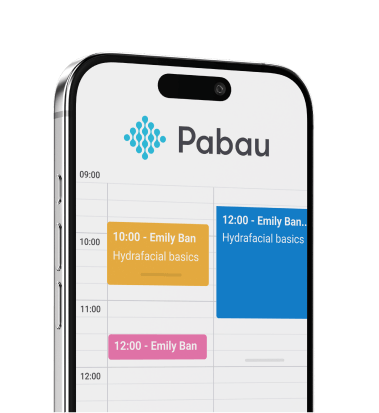
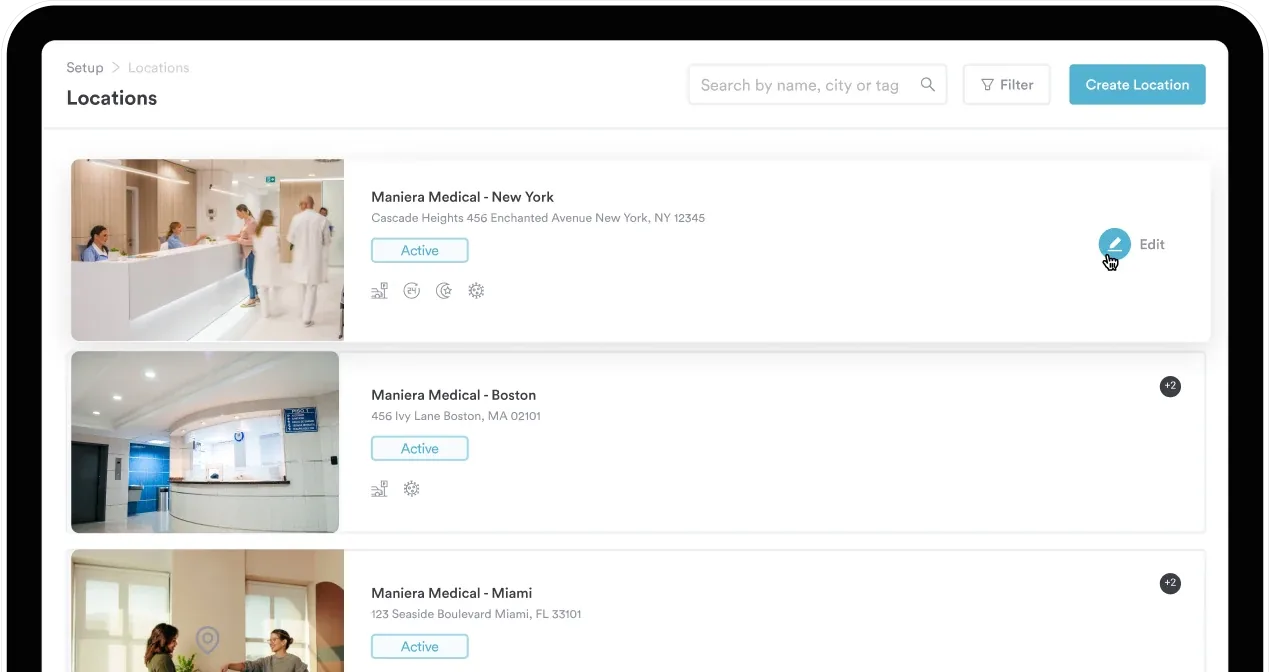
Pabau’s calendar handles multi-practitioner, multi-location management natively. A clinic owner running two OT locations can view all appointment slots, staff availability, and room bookings from one dashboard. Online booking with real-time availability, waitlist management, and automated SMS and email reminders are all included. For group practices managing multiple therapists across locations, this is a meaningful operational advantage.
SimplePractice’s scheduling is clean and highly usable. Clients can request appointments online, and the platform manages waitlists and automated reminders via text and email. The self-booking flow is particularly well-regarded by solo practitioners: clients land on a branded scheduling page and pick their own slot without back-and-forth emails. The interface requires very little training, which matters when you’re a solo OT running everything yourself.
Key difference: Pabau scales across teams and locations. SimplePractice is optimized for individual practitioners and small groups where simplicity outweighs operational complexity.
Documentation is one of the highest-friction areas for OT practices. Progress notes, SOAP notes, assessment forms, and discharge summaries all need to be fast to complete and defensible if audited.
SimplePractice includes OT-specific progress note templates with ICD-10 code auto-population from a diagnosis search. Practitioners can build treatment plans with specialty-based structure already in place. For an occupational therapist who wants to start seeing clients quickly without building templates from scratch, this is a genuine advantage.
Pabau takes a different approach. Its digital intake forms and clinical note templates are highly customizable, allowing OT practices to build their own assessment flows, outcome measure forms, and progress note structures. This flexibility suits clinics with non-standard workflows, such as OT practices also offering sensory integration, hand therapy, or workplace rehabilitation programs.
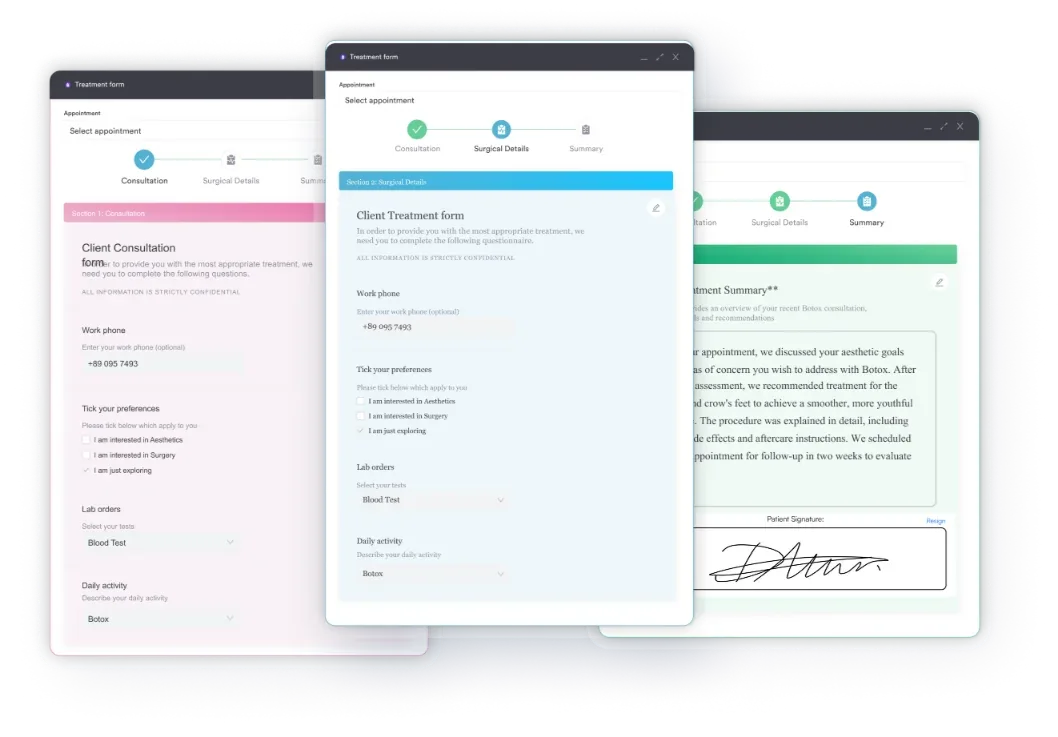
Pabau also includes an AI-assisted documentation feature (Pabau Scribe) that helps practitioners generate clinical notes faster. SimplePractice does not currently offer an equivalent AI scribe tool.
Key difference: SimplePractice wins on out-of-the-box OT template specificity. Pabau wins on customization depth and AI-assisted note generation for practices with varied clinical workflows.

From multi-location scheduling to customizable clinical forms and integrated payments, Pabau gives OT clinic owners the operational tools to run and grow their practice.

This is the section where your geography and billing model should drive the decision.
SimplePractice is built for US insurance billing. It generates CMS-1500 forms and superbills, processes ERA/EOB files, and includes HIPAA-compliant card processing. According to their billing specialty page, the platform handles the full insurance claim workflow from submission through remittance. For a US-based OT practice billing commercial insurers and Medicare, SimplePractice’s billing infrastructure is mature and well-documented.
Pabau’s billing tools center on integrated invoicing, online payment collection, and financial reporting. It’s well-suited to cash-pay OT practices, UK private practices, and international clinics where US CMS-1500 workflows don’t apply. For practices operating outside the US insurance system, Pabau’s payment and reporting tools cover the essentials without the overhead of US-specific insurance infrastructure.
According to the American Occupational Therapy Association (AOTA), OT practitioners billing Medicare and Medicaid must meet specific CPT coding and documentation requirements. If your practice handles that billing volume, SimplePractice’s CMS-1500 and ERA processing is worth weighing carefully.
Key difference: SimplePractice leads on US insurance billing depth. Pabau is the better fit for cash-pay, UK, and international OT billing models.
Both platforms include built-in video consultation, but the feature sets differ in meaningful ways.
SimplePractice’s telehealth supports individual and group sessions with up to 15 clients, according to their telehealth specialty page. Sessions are HIPAA-compliant, and automated reminders, session notes, and billing all connect to the same appointment record. For OT practitioners running group therapeutic programs remotely, the group session capability is a practical differentiator.
Pabau’s telehealth software integrates video consultations directly with appointment records and client notes. It suits one-to-one OT sessions well, with reminders and post-session documentation handled inside the same workflow. Group session functionality in Pabau is less developed than SimplePractice’s at this stage.
Key difference: SimplePractice’s telehealth is stronger for group OT sessions. Pabau’s is well-integrated for individual consultations within a broader clinical workflow.
Pricing structures differ fundamentally between the two platforms, and the gap widens as your team grows.
The structural difference matters at scale. Pabau’s pricing scales by location and user count, which can work out more cost-effective for a practice with six or more practitioners. SimplePractice’s per-clinician model is straightforward for a solo OT but adds up quickly as headcount grows. Check Pabau’s pricing page for current rates and plan details.
Before comparing per-seat pricing, calculate your fully-loaded monthly cost for 12 months, not just the base rate. Include add-on modules, billing features, and any per-transaction fees. A platform that looks cheaper at two clinicians can be more expensive than a flat-rate alternative at five.
Review data provides useful signal on day-to-day experience, separate from feature lists.
According to Capterra reviewers, Pabau earns 4.7 out of 5 from over 600 verified reviews. Positive themes center on the comprehensive all-in-one feature set and the platform’s suitability for multi-practitioner clinics with varied service offerings. Reviewers consistently praise the customizable templates and forms. Common criticisms point to a learning curve for new users and occasional delays in support response time during peak periods.
SimplePractice holds a 4.6 out of 5 on Capterra and 4.2 out of 5 on G2. Reviewers consistently highlight ease of use, the intuitive interface, and the reliability of the insurance billing workflow as standout strengths. Negative feedback clusters around the per-clinician pricing becoming expensive as team size grows, and limited customization options for practices with non-standard documentation needs. Some reviewers note occasional telehealth connectivity issues.
The decision comes down to three variables: your geography, your billing model, and your practice size.
Choose Pabau if you run a multi-location or multi-practitioner OT clinic, operate in the UK or internationally, bill on a cash-pay or private-pay basis, or need deep customization for non-standard OT workflows. Pabau’s platform is also worth considering if you want AI-assisted documentation to reduce note-writing time, or if you’re running OT alongside other clinical services under one roof. The occupational therapy software page covers how Pabau supports OT-specific workflows in detail.
Choose SimplePractice if you’re a solo OT practitioner or run a small-group US private practice, your revenue depends heavily on US insurance billing (commercial insurers, Medicare, or Medicaid), you run group telehealth sessions with multiple clients, and you want a platform that requires minimal configuration to get started. SimplePractice’s OT-specific templates and clean interface make it genuinely fast to deploy for a solo or two-clinician practice.
No single platform wins across every OT practice type. SimplePractice is the stronger choice for solo US-based practitioners who need US insurance billing handled well and want to start quickly without heavy configuration. Pabau is the more capable platform for group and multi-location OT clinics, UK and international practices, and any clinic that needs operational depth beyond basic scheduling and documentation.
If your practice is growing, adding locations, or operating outside the US insurance system, Pabau’s flexibility pays off over time. Book a demo to see how it fits your OT clinic’s specific workflows.

Running an OT clinic and exploring your software options? Occupational therapy software covers the core features OT practices need to manage clients, documentation, and billing.
Want to understand how patient portals compare across platforms? Benefits of patient portals explains what a strong client portal delivers for both practitioners and patients.
Considering telehealth as part of your OT service offering? Telehealth in GP clinics covers the clinical and operational considerations for integrating video consultations.
The best occupational therapy practice management software depends on your practice model. Pabau is the stronger choice for multi-location and international OT clinics, while SimplePractice leads for solo US-based practitioners who need deep insurance billing integration. Other platforms such as WebPT and Zanda serve specific practice types as well.
Yes, SimplePractice works well for occupational therapy. It includes OT-specific progress note templates, ICD-10 code auto-population, CMS-1500 billing, superbill generation, and telehealth. It is best suited to solo and small-group US-based OT private practices rather than large or multi-location clinics.
Costs vary by platform and practice size. Pabau starts from $65 per month and scales by location and user count, making it competitive for growing group practices. SimplePractice uses a per-clinician pricing model across Starter, Essential, and Plus tiers; check their website for current rates. Solo practitioners typically pay less, but costs rise as team headcount grows.
An EMR (Electronic Medical Record) is a digital version of a patient’s chart within a single practice. An EHR (Electronic Health Record) is designed to share clinical data across multiple providers and care settings. For most OT private practices, the distinction is less important than whether the platform supports the clinical documentation, billing, and scheduling workflows your practice actually uses.
Yes. Pabau supports UK, Australian, and international OT practices with localized billing, compliance tools, and documentation workflows. SimplePractice is designed primarily around US insurance billing infrastructure and is less suited to practices operating outside the US market.