Dehydration isn’t just a summer thing. In Arizona, it’s practically a year-round sport.
Add in a health-conscious crowd that loves their marathons, yoga retreats, and wellness getaways, and you’ve got a recipe for an IV hydration therapy business to thrive.
The IV therapy industry in Arizona is growing fast, but it’s not as simple as hanging an ‘open’ sign and stocking up on saline. Arizona has its rulebook for:
Who can give IV drips
How clinics are licensed
How patient care has to be managed
In this guide, we’ll break down exactly what those rules are, go through the legal, clinical, and business requirements you need to know before you hang your shingle in the Grand Canyon State.
Let’s start!
What are IV hydration services, and why are they booming in Arizona?
IV hydration therapy involves infusing fluids, electrolytes, vitamins, or medications directly into a patient’s bloodstream. It’s a booming business in Arizona thanks to the state’s hot climate, active lifestyle culture, and growing wellness tourism industry.
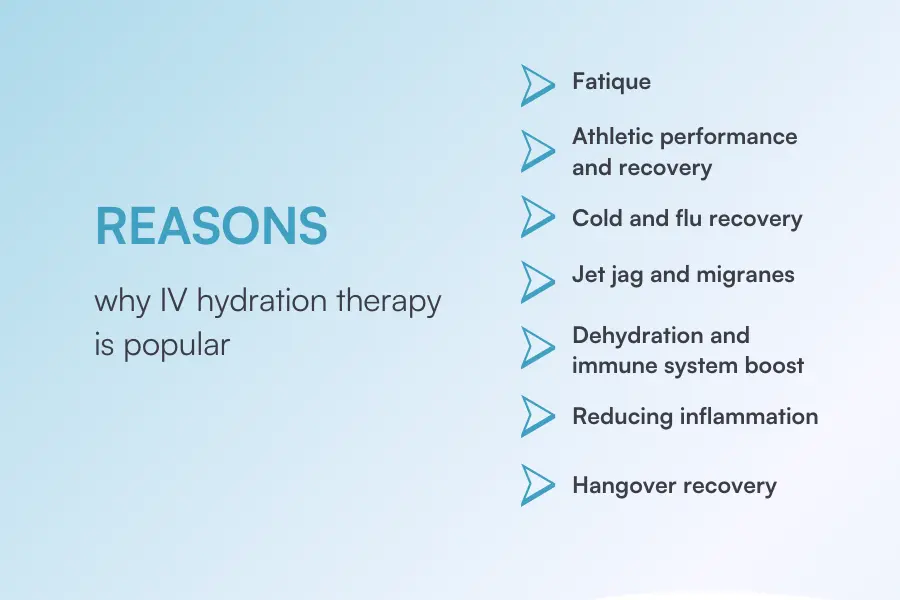
Also, unlike oral supplements, it delivers nutrients rapidly, making it popular for several good reasons, such as:
These factors drive the wellness trend, making IV hydration a fast-growing service to consider when building your med spa menu or expanding your services.
Who can legally offer IV hydration in Arizona?
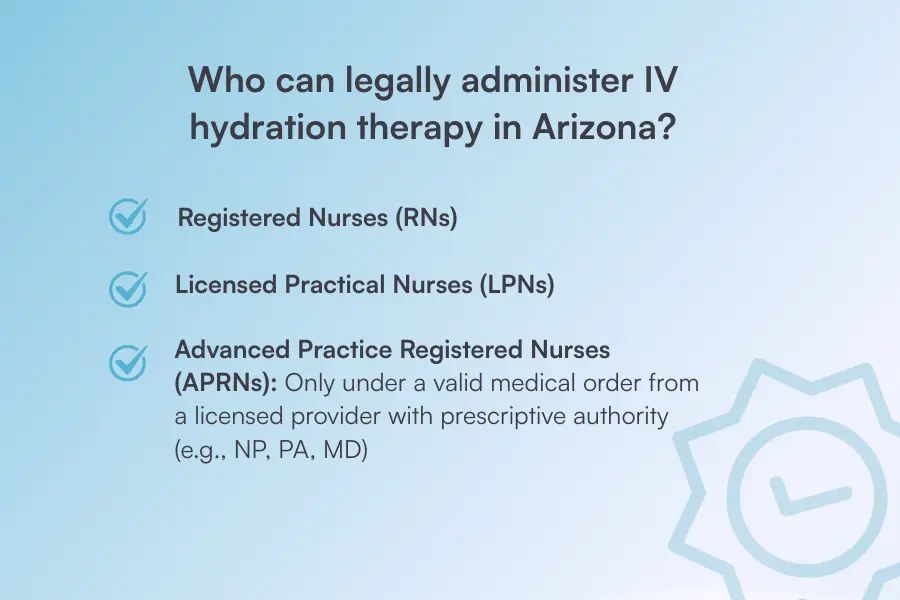
Not everyone can hook up a drip and start infusing vitamins. Arizona law strictly regulates who can administer IV hydration therapy and under what circumstances.
Here are the professional medical roles that are allowed to offer this kind of service:
📌Nurses cannot compound IV solutions themselves; they may only administer pre-mixed or pharmacy-compounded products.
Every patient must also undergo a patient-specific evaluation, which ensures that the treatment is appropriate for the individual’s condition and needs.
That means your operational model must include licensed prescribers who issue individualized orders and oversee evaluations. You cannot rely on blanket directives or nurse-delegated protocols without provider involvement.
Licensing and registration requirements for IV hydration clinics
In Arizona, IV hydration isn’t just another spa service. The law recognizes this service as a medical treatment, meaning whoever plans to start this business must comply with specific requirements and rules.
❗There is one narrow exemption: If your IV therapy services are provided in a private practice of a licensed healthcare professional (an MD, DO, NP, or PA), you may qualify for exemption from ADHS licensure. However, this only applies if all services occur within that professional office setting.
Meet all state inspection and operational standards for your facility type
Hire a licensed medical professional: A physician, nurse practitioner, or physician assistant on staff as your medical director if your business isn’t run through a licensed provider’s clinic
Also, don’t forget about local requirements. This depends on where your IV hydration business will be located, as your city or county health department. For example, the Maricopa County, may require additional permits, especially around:
Planning to launch in a new market? Start with IV hydration business requirements in Arizona so you understand who can administer drips, what licensing you’ll need, and how good-faith exams work.
💡Tip: Since the rules can vary depending on your business model, it’s worth talking to a healthcare attorney or compliance consultant before you embark on this journey.
Understanding good faith exams and medical orders in Arizona
A good-faith exam is a thorough evaluation by a licensed provider to ensure IV hydration therapy is safe and medically necessary.
However, remote exams must fully comply with verification and documentation rules. If your IV hydration business lacks in-house prescribers, partnering with third-party physicians or telehealth services is a smart way to meet this requirement.
For example, a tool like Pabau can help you simplify this process by integrating compliant client documentation with its video conferencing feature for consultations, pre-treatment, and one-to-one aftercare.
With Pabau’s Telehealth, you can pull your client information, raise invoices, share information, all in a single window, and talk in a secure, private environment.
Choosing the right business entity and medical director
✅Review and approve medical orders and standing policies
✅Participate in incident reviews and risk-management decisions
✅Ensure compliance with ADHS regulations and the Arizona Board of Nursing
✅Issue valid orders so no patient gets an IV hydration treatment without a legally compliant, medically justified reason
You’ll also need to decide on a business structure that fits your needs. In Arizona, common choices include:
Limited Liability Company (LLC): It’s the simplest business structure to set up, can be owned by individuals or other companies, but needs a licensed medical director to handle the clinical side
Professional Limited Liability Company (PLLC): Owners must be licensed healthcare providers (nurses, doctors, dentists)
Professional Corporation (PC): Stricter rules on record-keeping, board structure, and taxes; often chosen for larger practices or when there are multiple licensed owners
Also, your business entity choice must align with Arizona’s rules on provider ownership, so consulting an attorney or accountant here is just as important as during the licensing phase.
Even if you have a medical director and the right licenses, your team’s qualifications and your clinic’s day-to-day procedures will determine your compliance.
Regardless of whether you’re opening a med spa or an IV hydration business, there are key roles that Arizona expects when it comes to skill, safety, and pricing your services appropriately, such as:
A Medical Director (MD): To provide clinical oversight and guidance on protocols and ensuring compliance with regulations, can be hired as part-time or consulting
RNs or LPNs: To handle IV treatments, patient assessments, and monitoring; must be trained in IV protocols and document IV certification, BLS, and infection control training
Admin staff: To deal with scheduling, billing, and client management
Mobile tech staff: To perform mobile IV therapy services (of offered as such)
IV therapy clinics should also establish clear standard operating procedures (SOPs) to ensure safety and compliance, including:
Using sterile techniques during preparation and infusion
Proper disposal of sharps and medical waste
Following strict cleaning and sanitation protocols
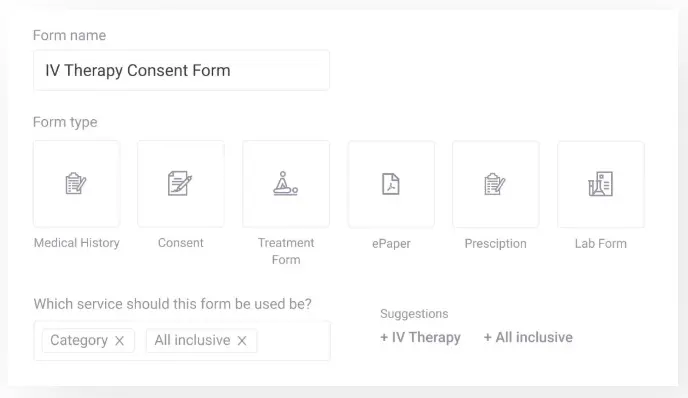
Collecting informed consent forms that outline risks and potential side effects before any infusion
In addition, depending on the state and business model, a supervising physician or NP may also be required to oversee the clinic and its staff.
Recordkeeping, documentation, and HIPAA compliance
A robust, all-in-one practice management software like Pabau has built-in features that can help ensure compliance with this by offering:
Consent forms that streamline client intake are automatically linked to the specific treatment, sent after booking, and ensure all necessary approvals are securely documented
Centralized digital patient records that keep all client information organized, accessible, and fully HIPAA compliant
Detailed audit trails tracking every action in the system
Patient safety isn’t just about proper infusion techniques. It also means being ready for the unexpected, such as adverse reactions, equipment issues, or medical emergencies, which can happen anytime.
That’s why having clear emergency plans, proper equipment, and trained staff is critical for patient safety and compliance. To stay prepared, IV hydration clinics must:
Maintain emergency equipment such as AEDs, oxygen supplies, and essential medications (e.g., epinephrine, antihistamines, IV fluids)
Develop and document clear emergency protocols and regularly train staff to respond to adverse reactions or emergencies
Ensure a licensed medical professional or prescriber is available onsite to oversee treatments and authorize care
Keep these in check, and you’ll turn any emergency into another handled day.
Can you run a mobile IV hydration business in Arizona?
Yes, the law in Arizona allows you to run a mobile IV hydration business. This refers to offering IV therapy services to clients’ homes, offices, or hotels.
However, you must still meet the same regulatory requirements as administering IV drips in a clinic.
✅Unless operating under a licensed provider’s office exemption, you’ll need a Health Care Institution License from ADHS for mobile units
✅Medical oversight and good-faith exams remain mandatory
✅Vehicle permits or zoning clearance from the local area
✅Proper transport and storage of IV solutions
✅Proper transport and storage of supplies and IV solutions
✅OSHA standards focusing on a sanitized infusion environment
✅Emergency preparedness outside clinical settings
✅Mobile-capable EMR to securely access and update patient records in real time
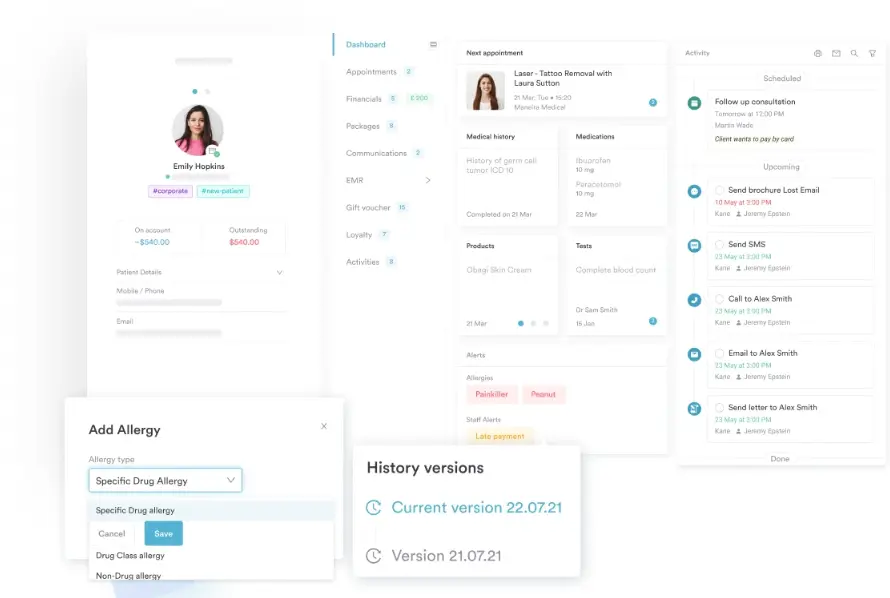
A robust software solution like Pabau, with its built-in EMR feature, is ideal for keeping your patient records safe, secure, and easily accessible on any device with a secure internet connection, regardless of your location.
As you can see from the image above, with it, you can:
Access real-time patient data: Use your phone or tablet to pull up the client’s full medical record, anywhere they go, with the Pabau GO app
Upload photos and documents from the phone: Take before and after treatment photos, log vitals, and attach consent forms
Document each visit with customizable IV therapy treatment notes and not miss a detail
The bottom line is that you can run mobile IV therapy in Arizona, but only if you treat it like a fully compliant rolling clinic with proper oversight and documentation.
🚀How Pabau helps IV hydration businesses stay compliant and scale
Once you understand the clinical, legal, and operational complexities of running an IV hydration business, the challenge is keeping up with them day by day.