Professional development record
A professional development record is a structured log of a healthcare practition...

8
Last Updated: Oct 8, 2026

Every IV drip in Arizona needs a valid medical order from a physician, nurse practitioner, or physician assistant.
Wellness branding changes nothing, because the state Board of Nursing names drip bars and homes as covered settings.
Most IV hydration businesses need a health care institution license from the Arizona Department of Health Services.
Mobile and at-home service is legal in Arizona under exactly the same licensing and medical-order rules.
The audit-trail checklist below shows the record chain an inspector follows through one patient’s visit.
Arizona treats a vitamin drip as a medical treatment, not a spa service. The state Board of Nursing requires a valid provider order before a nurse starts any infusion. That rule holds at a drip bar, in a hotel room, and in a patient’s living room.
One rule shapes every other decision in Arizona IV therapy. It decides who you hire, which license you apply for, and what your charts have to show two years later.
This guide walks the legal, clinical, and business requirements in order. It ends with a compliance audit trail, which is the exact record chain an inspector reads through a single patient’s visit.

An IV hydration business sells fluids, electrolytes, vitamins, or medications infused straight into a patient’s bloodstream, usually as an elective purchase. In Arizona that classification makes it a medical practice rather than a retail wellness concept. Everything else in this guide follows from that one point.
Typical IV hydration services range from a plain saline and electrolyte bag to multi-vitamin blends, anti-nausea medication, and NAD+ infusions. Practices sell them one at a time, in packages, or on a monthly membership. Many of these same practices operate as longevity clinics, layering NAD+ into broader membership-based care plans.
Demand in Arizona is unusual for three reasons. Summers push heat illness into a genuine clinical category rather than a marketing hook. A large seasonal population arrives each winter with money and time. Year-round hiking, golf, and endurance sport keep recovery drips selling in months when other states go quiet.
The same drivers make IV hydration a common addition to an existing med spa service menu. Adding it, though, changes what your practice is licensed as.
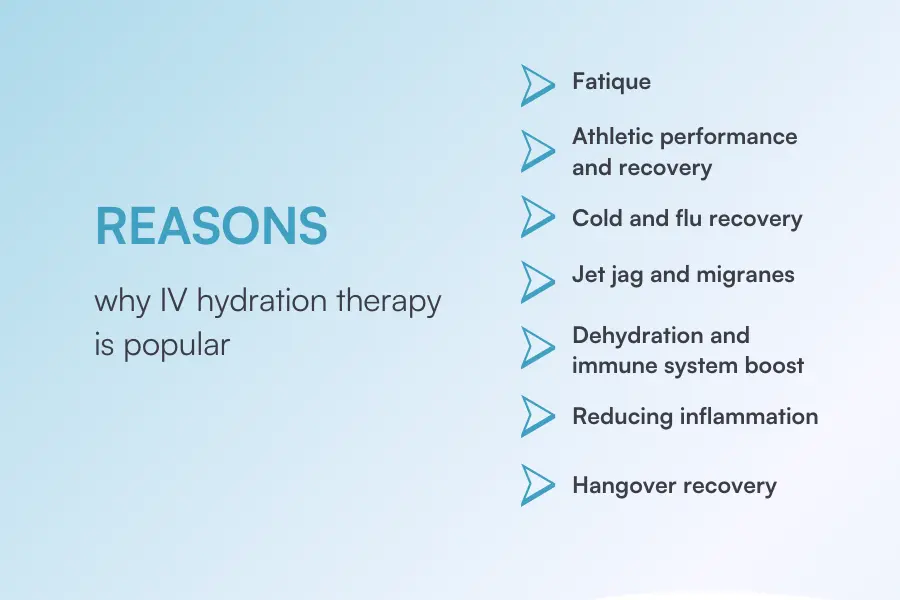
An IV hydration nurse in Arizona may start and run the infusion, but may not decide that the patient should have it. That decision belongs to a licensed provider who issues an individualized order first.
The Arizona State Board of Nursing set this out in its advisory opinion. Registered nurses, licensed practical nurses, and advanced practice registered nurses may administer IV therapies when they hold a valid order. The order has to come from a licensed provider, which the Board defines as a nurse practitioner, physician assistant, or physician.
Two limits catch new operators. Nurses may administer compounded products but may not compound them, so your solutions come premixed or from a pharmacy. And orders must be individualized to the patient, with a medical rationale recorded for that specific treatment.
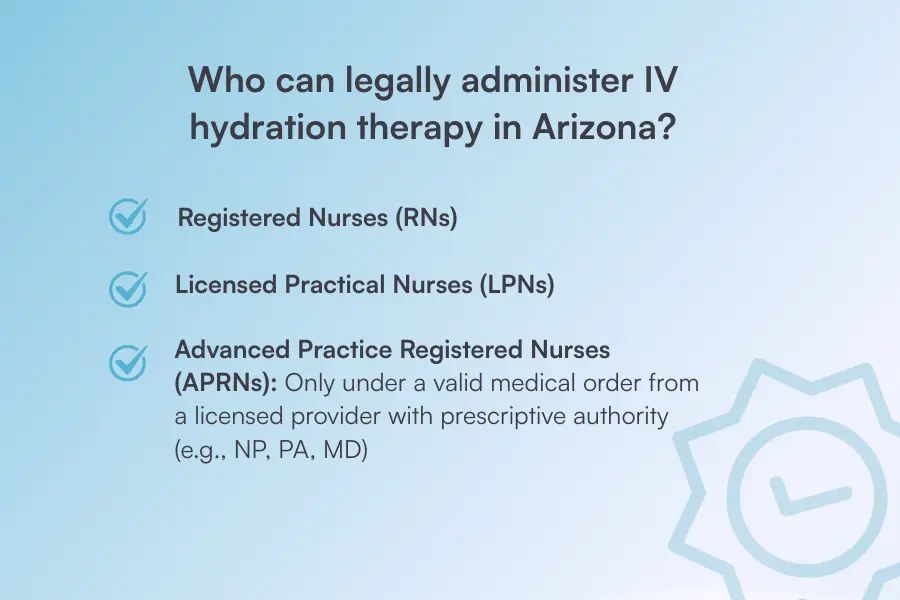
The table below splits those two jobs apart across every role you are likely to put on the schedule.
| Provider type | Can order IV therapy? | Can administer under an order? | Prescriptive authority |
|---|---|---|---|
| Physician (MD or DO) | Yes | Yes | Full, including controlled substances with a DEA registration |
| Nurse practitioner (NP) | Yes. Arizona grants NPs full practice authority | Yes | Independent, Schedules II to V with a DEA registration |
| Physician assistant (PA) | Yes, as a licensed provider | Yes | Yes, though a supervision agreement applies below 8,000 certified clinical hours |
| Registered nurse (RN) | No | Yes, with a valid order for that patient | None |
| Licensed practical nurse (LPN) | No | Yes, with a valid order and documented IV training | None |
| Medical assistant | No | No. IV therapy is not on Arizona’s authorized list for medical assistants | None |
| Esthetician | No | No. The license covers skin care, not injections or infusions | None |
Two details in that table are Arizona-specific and worth checking against your staffing plan. Arizona gives nurse practitioners full practice authority, so an NP can run the ordering side without a supervising physician. Since January 2024, physician assistants with at least 8,000 clinical hours certified by the state PA board can practice without a supervision agreement.
If you are weighing an NP as your clinical lead, the nurse practitioner medical director question has a different answer in almost every state. Under Ohio’s IV hydration requirements, for example, an NP still needs a standard care arrangement with a collaborating physician.
No. A phlebotomist draws blood, and Arizona does not license phlebotomy or grant it any IV-administration scope. Starting and running an infusion is nursing or medical practice.
That means the person placing the line has to be an RN, LPN, nurse practitioner, physician assistant, or physician, working from a valid order. A national phlebotomy certificate does not change this, because the obstacle is licensure rather than training.
Phlebotomists are still useful hires. They can handle venipuncture for lab draws, patient prep, and specimen handling, which frees your nurses for the infusions themselves.
Most Arizona hydration rooms need a health care institution license from the Arizona Department of Health Services, known as ADHS, before treating a single patient. The license covers the premises, not the practitioner.
One narrow exemption exists. It covers IV therapy delivered inside the private practice of a licensed healthcare professional, meaning an MD, DO, nurse practitioner, or physician assistant. The exemption only holds if every service takes place in that professional’s office.
If you are not exempt, three things have to happen before you open:
The state fees are smaller than most people expect and are set in rule rather than quoted. Arizona charges a $50 application fee for a health care institution license. The annual licensing fee for an outpatient treatment center with no licensed beds is $365. Those two numbers are the floor, not the cost of opening.
Local permits sit on top of the state license, and they vary by city and county. In Maricopa County, AZ, for example, licenses and permits can cover sanitation, infection control, medical waste disposal, zoning, and building code. Check these before you sign a lease, not after.
Branding does not move any of this. Calling the space a drip bar changes your marketing, not your license.
The Board of Nursing’s advisory opinion lists drip bars alongside homes and mobile hydration clinics. All three are settings where a medical order still applies. The Board named them because operators had assumed a wellness label put them outside the rules.
The wider startup sequence, including build-out and staffing, is covered in our guide to opening an IV clinic.
A good faith exam is a licensed provider’s assessment that this patient should receive this infusion, documented before the nurse starts it. Arizona’s Board of Nursing made the requirement explicit for IV hydration in a 2023 advisory opinion.

The exam can happen in person or by telehealth. A remote exam is not a lighter exam, so the same identity verification and charting standards apply either way.
Standing orders are where operators get caught. The Board advised that issuing standing orders for elective IV therapies does not satisfy an advanced practice nurse’s duty to the patient. Each order has to be individualized and based on that patient’s needs.
In practice, this rules out the most common shortcut in the industry. You cannot write one protocol for the Myers-style menu and treat everyone who walks in under it. Someone qualified has to look at each patient and record why the drip is appropriate.
If you have no in-house prescriber, contract a telehealth provider group for the exam and the order. Whichever route you choose, the platform has to hold patient data properly, so start with HIPAA-compliant telehealth platforms rather than a consumer video tool.

A non-clinician can own an IV hydration business in Arizona, because the state has no statutory ban on the corporate practice of medicine. Clinical judgment still has to sit with licensed people, and that boundary is what the rules police. Georgia repealed its statutory ban in 1982, yet Georgia IV hydration requirements still limit the professional corporation to physician shareholders.
Arizona’s corporate practice of medicine position comes from court decisions rather than a single statute. The practical effect is straightforward. A lay owner can hold the business, but only individuals can hold a medical license, and no investor can direct a clinical decision.
Incorporate as a professional entity and Arizona restricts how much non-licensed owners may hold. It also restricts who can sit in director and officer roles. Get the exact split from a healthcare attorney before you file, because unwinding it later is expensive.
The three structures Arizona operators usually choose between:
Whichever entity you pick, the medical director carries the clinical load. That role is not a name on a letterhead, and Arizona expects it to be doing real work:
Settle both questions early. Your IV hydration business plan should name the medical director and the entity type. Do that before you talk to a landlord or a lender, because both change your cost base. Our guides on hiring a medical director and medical spa ownership rules cover the hiring side.
Arizona checks licenses, not job titles. The IV hydration jobs you post will usually cover four roles, and each one has to be evidenced in a personnel file:
Standard operating procedures are the other half of the inspection. Write them down and train against them:
Two operational areas deserve a decision rather than a default. Anything you mix on site counts as compounding, which brings USP General Chapter 797 sterile-compounding standards and pharmacy oversight into play. Buying premixed or pharmacy-compounded product avoids that whole category of risk.
The second is controlled substances. If your protocols include them, the ordering provider needs a current DEA registration, and Arizona’s controlled-substance storage, logging, and reporting rules apply to your site.
Arizona requires a provider to keep an adult patient’s medical records for at least six years after the last date of service. Records for a child are kept longer. HIPAA governs how you store, transmit, and disclose all of them.
Six years is a long time to reconstruct a decision from memory, which is why the record chain matters more than any single form.
Here is the record chain for a single Tuesday-afternoon drip, in the order an auditor or a plaintiff’s attorney reads it:
The chain usually breaks at step one, and it breaks quietly. A good faith exam has a shelf life that you set. Nobody notices it lapsed until a repeat patient turns up for their sixth monthly drip. By then the exam on file is from spring.
Membership models make this worse, because the whole point of a membership is that the patient stops booking consciously. The wellness framing gives you no cover here. The Board’s opinion reaches elective, wellness-marketed services by name.
So pick a re-exam interval, write it into your protocol, and put the expiry date somewhere the front desk sees it at booking. That single habit closes the most common finding in the whole chain.
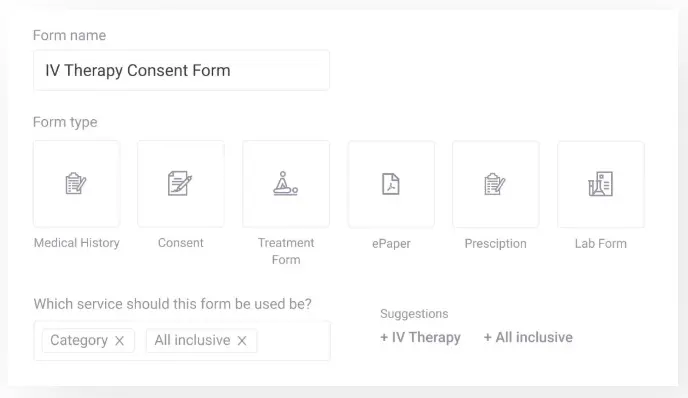
For storage, three controls do most of the work:
A shared drive of scanned PDFs fails the third one. If you cannot show who touched a record, you cannot prove the chain held. Our comparison of the best IV therapy EMR walks through what to check, and if you already use a general medical platform, weighing alternatives to Semble can surface systems built for this audit trail. The IV therapy intake template covers the first form in the chain.
Adverse events in IV hydration are rare but fast. Anaphylaxis to an additive, vasovagal syncope, infiltration, and phlebitis all happen with a patient already connected to a line.
Arizona expects three things to be in place before that happens:
Mobile services carry the extra risk, because a hotel room is minutes further from help than a treatment chair near a hospital. Decide in advance which patients and which protocols are off-limits away from the practice.
Log every reaction, however minor. A documented pattern of IV therapy complications is what lets you change a protocol before a regulator asks you to.
Yes. Mobile IV hydration is legal in Arizona, and it carries the same licensing, ordering, and documentation requirements as a fixed hydration room. Nothing about the model relaxes the rules.
IV hydration at home is the most common version. The nurse travels to a house, hotel room, or office. Those are the settings the Board of Nursing named when it confirmed the order requirement.
What changes is logistics, not law:
That last point decides whether the model works. If the nurse writes on paper in the van and types it up that evening, the record lags the treatment by hours. That happens on every visit.
Our guide to running a mobile IV therapy business covers routing and pricing. A practice management app keeps the record open on the phone while the nurse is in the room.
Practice management software like Pabau exists to stop that chain breaking. The six records in the audit trail above sit on one patient timeline instead of six systems. The exam, the order, the consent, and the treatment note are read in sequence.
Consent and intake forms attach to the IV therapy service itself and go out when the patient books. The signed copy is on file before the appointment starts. Treatment notes, vitals, lot numbers, and photos are added against the same record during the visit.
Version history then shows who changed what. That is the part a folder of scanned PDFs can never give you.
A smaller benefit shows up every day. Your front desk can see when a repeat patient’s last exam was without calling a nurse over. Staff license and certificate expiry dates live with the staff record instead of a spreadsheet nobody owns.
Pabau is used across IV therapy practices and broader wellness practices, from a single treatment room to multi-location groups.


Pabau holds the good faith exam, the provider order, the signed consent, and the treatment note on one patient record. Version history sits behind each change, so your team can prove the chain held.

Arizona is not a hard state to open an IV hydration business in. It is a hard state to run one casually, because the rules that bite are documentation rules, and they bite months after the treatment.
So build the record chain before you build the menu. Decide who signs orders, how long an exam stays valid, and where a nurse’s license expiry lives. Those three answers cost nothing in week one and are painful to retrofit across a few hundred patient files.
The trade-off worth remembering is that the wellness framing selling the service is the same framing that gets owners in trouble. Market wellness, run a practice. Book a demo to see how Pabau keeps Arizona good faith exams, consents, and treatment records on one patient timeline.

Ready to map the whole launch? How to open an IV therapy clinic walks the build-out, equipment, and hiring sequence that sits underneath these Arizona requirements.
Taking the service on the road? Mobile IV therapy business covers routing, pricing, and the operational trade-offs of treating patients away from a fixed site.
Writing your emergency protocol? IV therapy complications lists the adverse events worth training your nurses against, and how each one presents.
Need a handout for patients after treatment? Hydration handout template gives patients daily fluid targets and a fluid intake tracker.
Need the first form in the chain? IV therapy patient intake template gives you a starting intake form to adapt before your good faith exam workflow goes live.
Yes, IV hydration therapy is legal in Arizona when a licensed provider orders it and a licensed nurse administers it. The Board of Nursing treats elective and wellness-marketed drips the same way it treats any other infusion. What breaks the law is running the drip without that order.
Yes, unless the business runs inside a licensed provider’s own private practice. Someone has to issue individualized orders, approve protocols, and take part in incident reviews. In practice that means a physician, nurse practitioner, or physician assistant on staff or under contract.
Yes. Arizona has no statutory ban on the corporate practice of medicine, so a non-clinician can own the business. The limit is control rather than ownership, because clinical decisions must stay with licensed people. Professional entities such as a PLLC or PC carry extra restrictions on who may hold shares.
The state fees are small and published. Arizona charges a $50 application fee for a health care institution license. The annual licensing fee for an outpatient treatment center with no licensed beds is $365. Everything else varies too widely to quote, including lease, fit-out, medical director retainer, stock, and malpractice cover.
Arizona’s guidance focuses on whether the order is individualized and clinically justified, not on a fixed number of days. Set a re-exam interval in your own protocol and document it. Repeat and membership patients are where lapsed exams turn up, so track the expiry date at booking.