Leaving the NHS isn’t a decision clinicians take lightly.
For some, it’s about escaping the growing administrative load, burden, and burnout, all of which take a toll on their mental health. For others, it’s the appeal of greater autonomy, flexibility, and reward for their hard work.
Some feel bogged down by red tape, while others seek a healthier work-life balance to safeguard their well-being.
But, while private practice can be incredibly fulfilling, it’s not without trade-offs. It brings freedom, yes, but also financial risks, business responsibilities, and the need to wear multiple hats.
Let’s take a look at what makes private practice so appealing for UK practitioners and what you should be prepared for before making the big leap.
The key advantages of private practice in the UK
Private practice gives doctors something the NHS often can’t, and that is control.
Whether it’s setting your schedule, shaping patient care, or growing your own business, this route offers a more flexible and personally rewarding way to practice medicine.
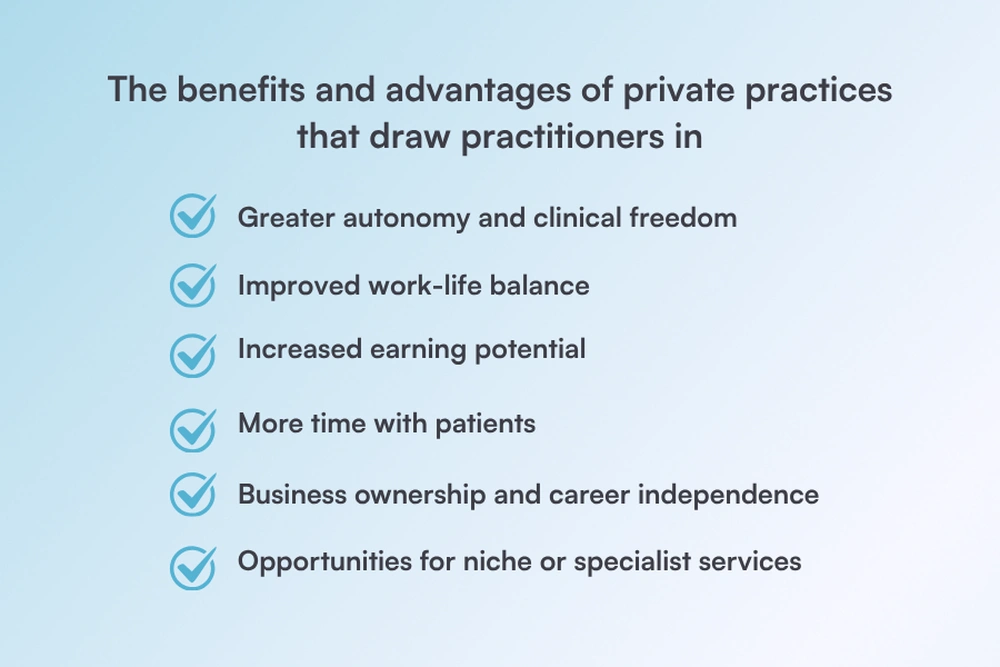
Here are some of the biggest benefits and advantages of private practices that draw practitioners in.
Greater autonomy and clinical freedom
One of the biggest perks for doctors working in private practice is the freedom it offers. They give doctors the autonomy and freedom to call the shots and take full responsibility for decision-making, deciding on things like:
🗹 How long to spend with each patient
🗹 How to structure your consultations and provide personalized care, having room to listen and diagnose patients
🗹 What treatments to offer
A private GP in London, for example, might choose to offer 30–45-minute appointments so that patients never feel rushed. That not only improves patient satisfaction but also gives the doctor time actually to practice medicine the way they envisioned when they trained.
At the end of the day, autonomy is what turns medicine back into a vocation rather than a conveyor belt.
Improved work-life balance
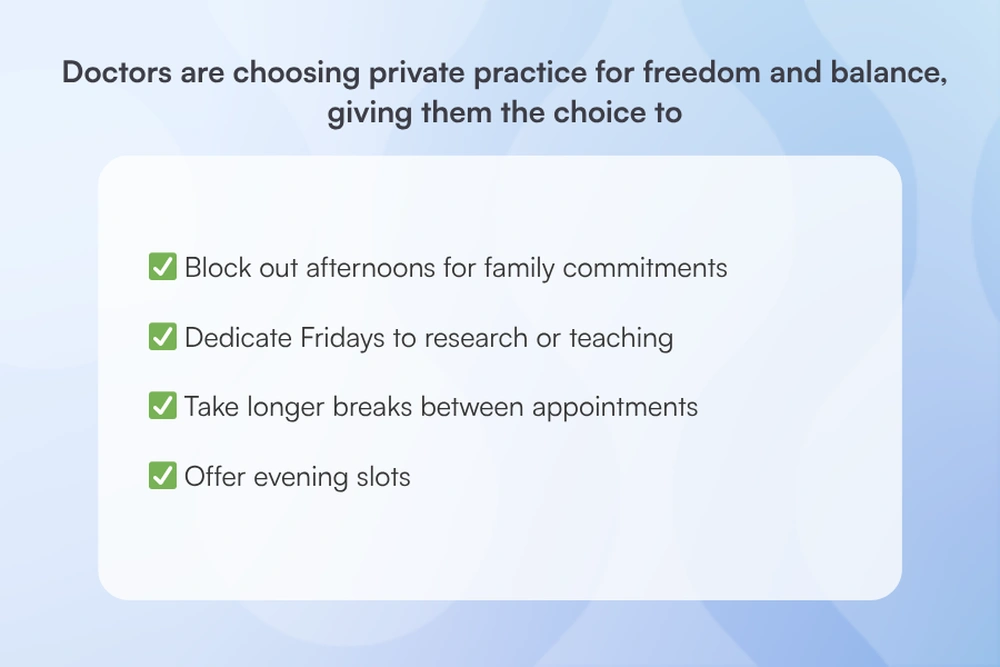
Having flexibility in the work environment allows doctors to shape their work schedule around their life, making it way easier to hit that sweet spot between career and personal time.
Additionally, private practice typically comes with a lower administrative burden and fewer bureaucratic requirements. You won’t be drowning in endless forms and reporting requirements, which frees up mental energy, making your day-to-day far more manageable.
💡The takeaway: The balance between work and life feels more achievable when you’re the one setting the rhythm.
For private practice doctors, the clock isn’t the enemy, it’s on their side.
You can spend 30, 45, or even 60 minutes with patients if you need to, without worrying about the queue outside your door. This extra time not only enhances diagnostic accuracy but also helps build trust and rapport.
Patients notice the difference too. They feel heard and valued, which often leads to better outcomes and loyalty in the long run.
Another plus is the continuity of care. You’re more likely to see the same patients repeatedly, allowing you to track their progress and genuinely impact their long-term health.
Business ownership and career independence
Running an independent practice means running a business.
For many doctors, it turns them from employees into entrepreneurs, which is a big part of why they choose to move from the NHS to private practice, which also means they can:
Build something on their own, their own brand that reflects their values and vision
Call the shots and decide their opening hours, staff, technology, and even design their patient experience
Control their income potential and reinvest profits directly into growth and innovation
Also, owning the business opens doors to long-term independence from NHS bureaucracy. Instead of waiting months for approval on a new service, you can introduce it as early as next week
Opportunities for niche or specialist services
Private practices give doctors room to specialize in what they truly have an interest in.
Maybe you’re passionate about dermatology, women’s health, or mental wellbeing. Or perhaps you’ve noticed a gap in your local area, such as pediatric nutrition or aesthetic medicine, which are often limited in the NHS.
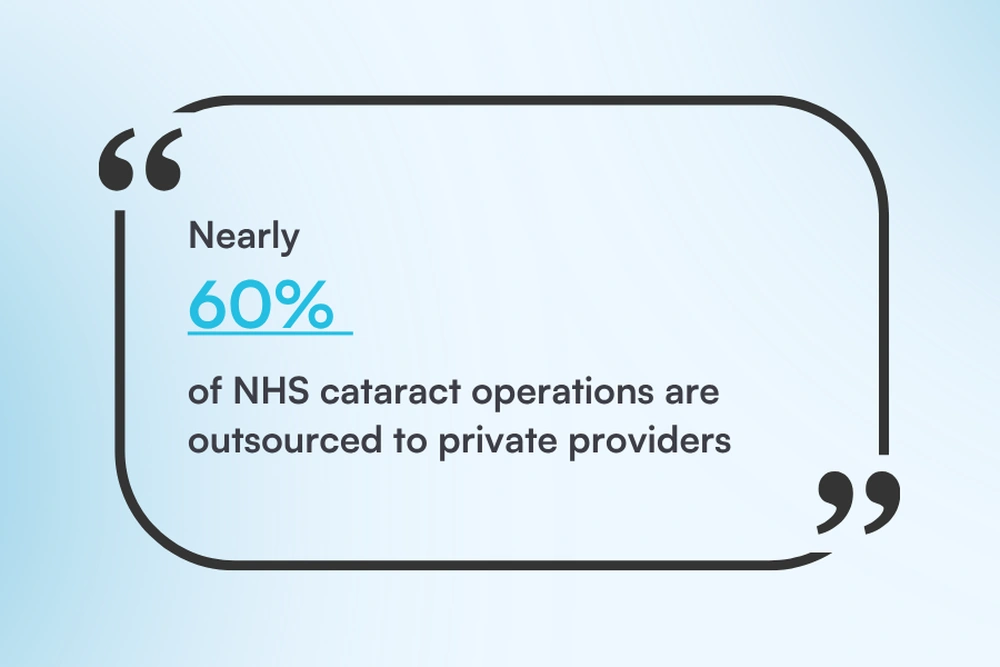
According to the Guardian, nearly 60% of NHS cataract operations are outsourced to private providers, creating opportunities for private referrals in high-demand niches.
By focusing on branching out for an underserved niche, you can set yourself apart and build a reputation by offering high-demand services that can be very financially rewarding.
Considerations and challenges of private practice
Private practice has its perks, no doubt, but it also comes with challenges that can sneak up on you. Knowing what’s ahead makes it easier to plan and stay ahead of the curve.
Let’s take a look at what you should know about this.
Financial risk and uncertainty
Starting a private medical practice in the UK comes with significant financial commitments.
Initial setup costs can range, depending on the scale and location of the practice. These are expenses from insurance companies for a medical indemnity insurance, practice management software, office equipment, and staff salaries.
Additionally, practitioners are responsible for their own benefits, such as:
📌Their own pensions
📌Sick pays
📌Maternity benefits
Unlike NHS employment, where these are typically provided. That’s why effective cash flow management is crucial, as income can be unpredictable, especially in the early months.
It’s essential to consider these financial responsibilities thoroughly, as the risks can sometimes outweigh the rewards.
Business and administrative responsibilities
When you move into your own private practice, you gain autonomy, but you also lose the NHS infrastructure. This means that tasks such as staffing, payroll, billing, compliance, and tax will all be on your shoulders, which can quickly pile up and eat into the time you hoped to reclaim.
The good news is that with the right systems in place, it’s all manageable when you have the right, all-in-one practice management software solution by your side.
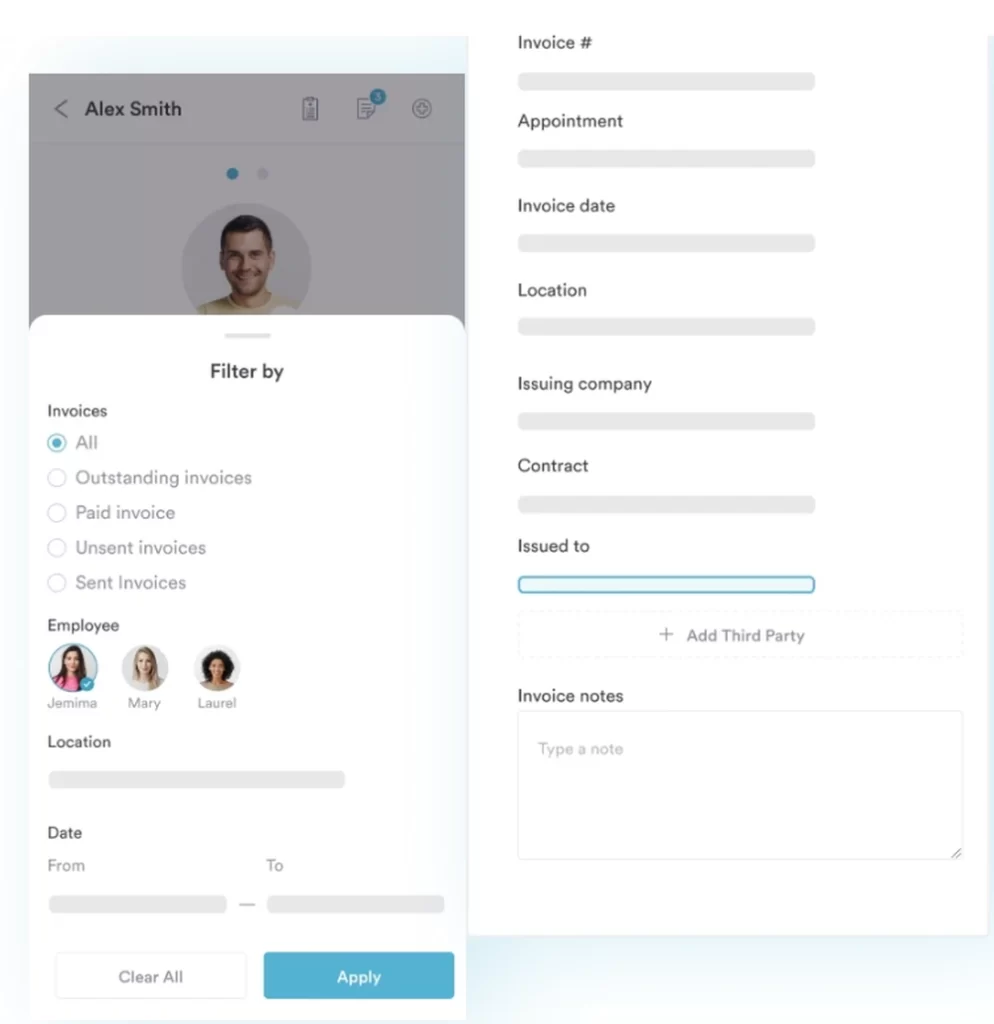
For example, a high-quality and comprehensive system like Pabau can help you with these challenges and alleviate the administrative burden, so you won’t be buried in spreadsheets or manually chasing payments.
Plus, all your patient records, treatment notes, forms, and more are safely stored and accessible within a couple of clicks within the system, so you don’t waste hours trying to find a document while your patients are already in.
Building and retaining a patient base
Unlike the NHS, patients in private practice won’t come automatically. They need to be earned, and attracting and keeping them requires effort. Especially in the early days or in highly competitive areas, word of mouth will be your strongest marketing tool, speaking louder than any ad campaign.
In addition to that, you’ll also need:
Online presence (building a Google Business account), plus being visible and consistent on social media
Targeted campaigns to build visibility: Partnerships with gyms, health centers, influencers, etc
And once patients do come, retention depends on delivering consistently excellent care.
Regulatory and legal obligations
Working privately doesn’t free you from meeting regulatory and legal obligations. Even though you might be working solely, you’ll still be responsible for:
Register with the Care Quality Commission (CQC)
Maintain GDPR compliance for patient data
Ensure a proper clinical indemnity
For this purpose, many clinics utilize integrated digital platforms to secure patient data, manage consent forms, and maintain audit trails in one centralized location.
This type of compliance is crucial because regulators won’t accept “I didn’t know” as an excuse.
Is private practice right for you?
Private practice can be rewarding, but it’s not for everyone. The decision often comes down to your goals, risk appetite, and lifestyle preferences.
If you crave independence, want to shape your career on your own terms, and don’t mind rolling up your sleeves for the business side, private practice could be a great fit. If you prefer stability, guaranteed income, and focusing purely on clinical care, the NHS may be a better match.
It’s worth taking time to reflect, talk to colleagues who’ve made the switch, and map out your finances before diving in.
Get your private practice up and running with Pabau
Going private is not all freedom and money.
There’s a lot of behind–the–scenes work that a healthcare provider doesn’t see when looking forward to launching their own practice, including tasks such as booking appointments, managing patient records, billing, compliance, and more.
That’s where Pabau helps. It’s not magic, but it can make running a private practice a hell of a lot easier. It’s an end-to-end practice management software solution that offers everything private practices need, such as:
Online booking and appointment scheduling
Patient records
Billing
Compliance
Marketing
… and more
Book a demo today and discover how Pabau can help your practice get started strong, stay organized, and focused on delivering exceptional care.