

Pabau vs Square Appointments: Which Is Better in 2026?
Pabau vs Square Appointments: Which Is Better for Your Clinic in 2026? Choosing ...

March 20, 2026


Buy now, pay later is now available in Pabau

Pabau offers comprehensive clinical workflows for healthcare practices, Square focuses on simple appointment booking
Square Appointments starts at $29/month per location, Pabau pricing scales with practice size and features
Pabau includes EHR, medical billing, and HIPAA compliance by default, Square requires additional configuration
Square excels at ease of use and quick setup, Pabau provides deeper operational control for growing clinics
Choosing between Pabau and Square Appointments hinges on whether your practice needs a purpose-built healthcare management platform or a streamlined appointment scheduler. Pabau is designed for medical, aesthetic, and wellness clinics requiring comprehensive patient records, treatment documentation, and insurance billing workflows. Square Appointments serves businesses across industries with straightforward booking, automated reminders, and integrated payment processing through the Square ecosystem.
The platforms diverge sharply in operational depth. Pabau supports multi-practitioner scheduling with treatment-specific protocols, photo documentation for aesthetic procedures, and audit trails for regulatory compliance. Square handles basic client profiles and appointment history without the clinical complexity. For a solo GP managing 15 patients daily, Square’s simplicity may suffice. For a multi-location dermatology practice processing insurance claims and tracking treatment outcomes, Pabau’s infrastructure becomes essential.
This comparison evaluates scheduling capabilities, clinical record management, billing complexity, compliance features, pricing models, and real-world implementation timelines. Both platforms have strengths in distinct use cases.
Before diving into feature-by-feature analysis, here’s how Pabau and Square Appointments stack up across key decision factors for clinic operators.
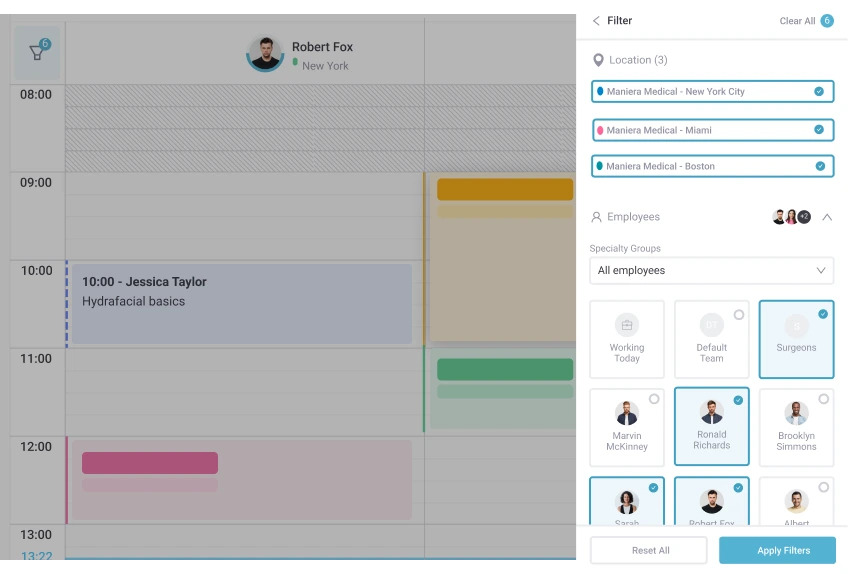
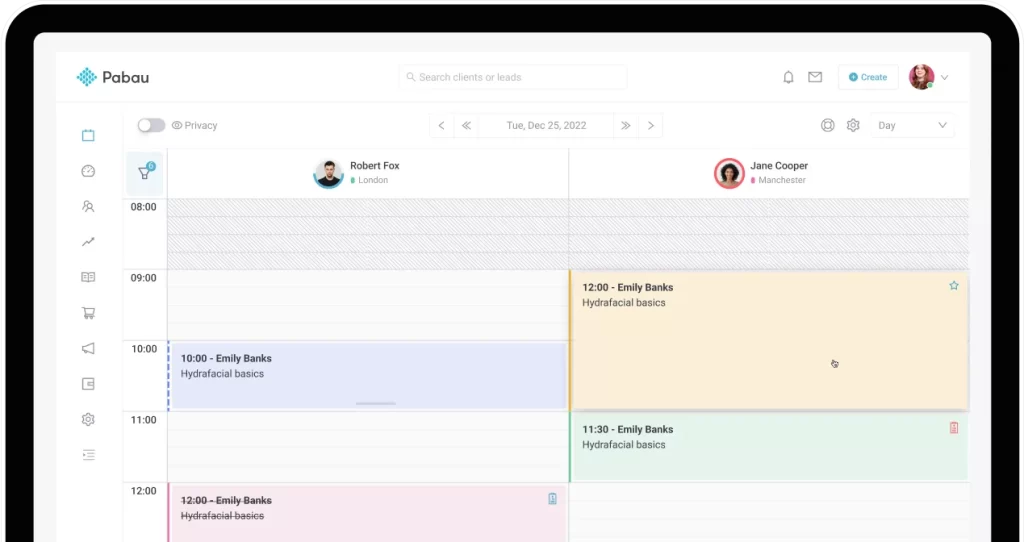
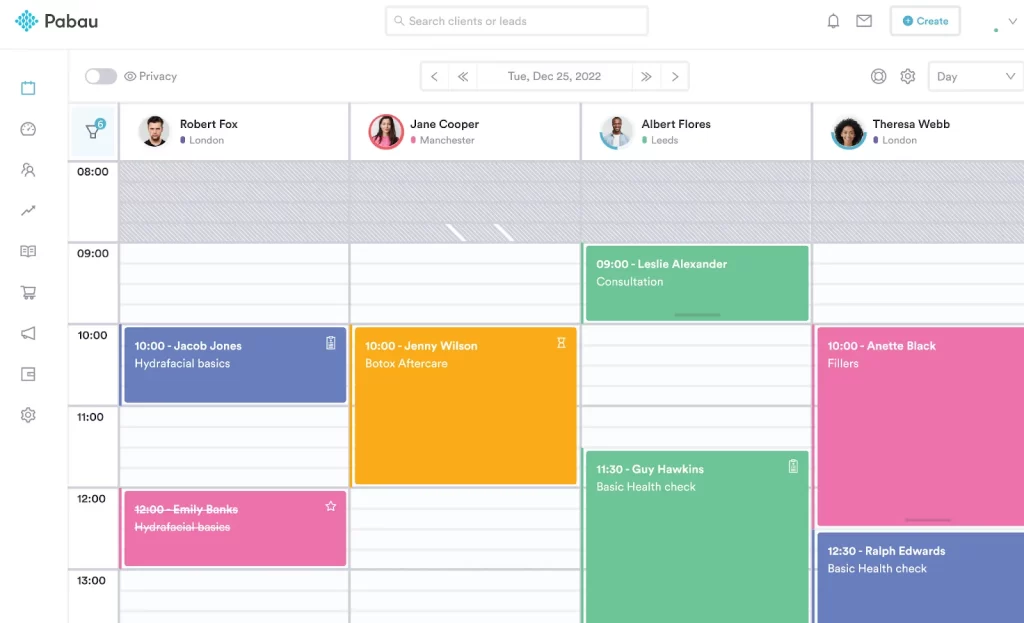
Pabau positions itself as an all-in-one clinic management platform for healthcare and aesthetic practices. The software combines appointment scheduling, electronic health records, medical billing, and marketing automation within a single system. Clinics use Pabau to manage treatment workflows for Botox injections, IV therapy sessions, physical therapy protocols, and wellness consultations. The platform includes built-in compliance features aligned with HIPAA, GDPR, and CQC standards.
Square Appointments operates as a general-purpose booking tool within Square’s broader business ecosystem. The platform handles appointment scheduling, client communications, and payment collection across industries including salons, fitness studios, and healthcare practices. Square’s strength lies in its simplicity and immediate integration with Square payment hardware. Businesses can start accepting appointments within hours of setup without technical configuration.
The operational difference becomes apparent in daily workflows. A dermatology clinic using Pabau can document pre-treatment photos, track product batch numbers for injectables, generate insurance claims with CPT codes, and maintain audit trails for each patient interaction. The same clinic using Square Appointments would handle scheduling and payment processing but would need separate systems for clinical documentation, inventory tracking, and billing submissions to payers.
According to Capterra reviewers, Pabau users highlight comprehensive feature sets tailored for medical practices. Square Appointments users on Capterra emphasize quick implementation and intuitive navigation.
Pabau’s scheduling system accommodates complex clinical scenarios. Practitioners can block time for specific treatment types, enforce buffer periods between appointments, and coordinate multi-practitioner procedures. A cosmetic clinic running lip filler sessions requires a treatment room, a practitioner, and post-procedure recovery time. Pabau’s calendar logic accounts for all three resources simultaneously. The system also supports recurring appointments with automatic insurance pre-authorization checks.

Square Appointments handles straightforward appointment booking with calendar synchronization and automated SMS reminders. Clients book through a customizable booking page, receive confirmation emails, and get reminder notifications before their appointments. The platform syncs with Google Calendar and iCal, allowing practitioners to manage personal and business schedules in one view. Square’s mobile app lets staff update availability and check-in clients from anywhere.
The difference manifests in treatment-specific requirements. Physical therapy practices need to schedule initial evaluations differently from follow-up sessions, track treatment plan progress, and coordinate equipment availability. Pabau’s calendar system supports these variables through custom appointment types, automated treatment plan scheduling, and resource allocation rules. Square manages basic appointment duration and staff assignment without clinical protocol support.
For multi-location practices, Pabau provides centralized scheduling with location-specific staff rosters, inventory levels, and reporting. Square Appointments charges per location, with each site operating as a separate entity within the account.
Pabau includes a full electronic health record system with treatment notes, consent forms, medical history questionnaires, and photo documentation. Aesthetic practitioners document injection sites using the injection plotting tool, upload before-and-after photos with timestamp metadata, and attach lab results to patient files. The system maintains version history for all documents and supports digital signature capture for informed consent.
Square Appointments provides basic client profiles storing contact information, appointment history, and text notes. Practitioners can add internal notes about client preferences or service history, but the system lacks structured clinical documentation fields. There is no support for photo storage, treatment plans, medical histories, or clinical outcome tracking.
The clinical gap matters for practices subject to medical recordkeeping requirements. Aesthetic clinics must document patient consultations, treatment contraindications, product lot numbers, and adverse event reporting. Physical therapy practices track range of motion measurements, pain scales, and functional assessments over multiple sessions. According to research from healthcare compliance organizations, inadequate documentation accounts for a significant portion of malpractice claims and regulatory violations.
Pabau’s record structure aligns with healthcare documentation standards. Templates for SOAP notes, psychiatric evaluations, and wellness assessments come pre-configured. Square’s note field works for recording client preferences in a salon context but cannot support structured clinical data required for medical practices.

Compare Pabau's treatment-specific scheduling, EHR integration, and compliance features during a live demonstration tailored to your practice type.

Pabau supports medical billing workflows including insurance claim generation, CPT code assignment, and payment plan management. Clinics can create invoices with treatment codes, submit claims electronically to payers, and track reimbursement status. The system handles split billing when patients pay out-of-pocket portions while insurance covers the remainder. For practices accepting Bupa or other UK private insurers, Pabau generates CCSD-coded invoices that align with insurer requirements.
Square Appointments integrates with Square’s payment processing for credit card transactions, contactless payments, and digital invoicing. The platform charges standard Square processing fees (2.6% plus 10 cents per transaction in the US, 1.75% in the UK for card-present transactions). Clients can prepay for services through the booking page or pay at the time of service. Square handles refunds, partial payments, and tipping but does not generate insurance claims or track CPT codes.
A functional medicine clinic billing both insurance and cash-pay patients requires separate workflows. With Pabau, front desk staff select the payment method during checkout. The system routes insurance patients through claim generation while processing credit cards for self-pay clients. Square handles only the credit card portion, requiring separate software for insurance submissions.
Pabau also supports membership programs and package sales common in aesthetic practices. Clinics sell monthly skincare memberships or multi-session laser hair removal packages with automatic payment collection and usage tracking. Square offers similar functionality through its Appointments Plus plan but without clinical treatment plan integration.
Pabau excels at supporting multi-specialty clinics with complex operational requirements. The platform handles aesthetic clinics documenting filler placements, physiotherapy practices tracking treatment progress, and wellness centers managing IV therapy protocols within the same system architecture. Multi-location management tools centralize inventory, staff scheduling, and reporting across sites while maintaining location-specific operational control.
Customer support receives consistent praise from G2 reviewers who highlight responsive technical assistance and dedicated account management. Onboarding includes data migration support, staff training sessions, and workflow optimization guidance.
The platform’s customization capabilities allow clinics to configure intake forms, treatment templates, and automated workflows without developer assistance. A psychiatric practice can build mental health assessment forms with conditional logic, scoring algorithms, and automated follow-up protocols. According to Pabau’s case studies, clinics report significant time savings from automated recall campaigns, digital consent forms, and treatment-specific documentation templates.
The learning curve for new users represents Pabau’s most cited limitation. Practices transitioning from paper-based systems or basic scheduling tools face a steeper onboarding process compared to simpler alternatives. The comprehensive feature set requires dedicated training time for front desk staff, practitioners, and administrators.
Pricing remains opaque until practices complete a consultation process. Unlike Square’s transparent per-location model, Pabau quotes custom pricing based on practice size, feature selection, and implementation requirements. Smaller practices may find the investment higher than budget alternatives.
Some Trustpilot reviewers mention occasional system updates causing temporary workflow disruptions, though Pabau schedules updates during off-peak hours and provides advance notification.
Square Appointments delivers exceptional ease of use. Businesses set up appointment types, configure staff availability, and launch booking pages within hours. The interface requires minimal training, making it accessible for staff with limited technical experience. According to Capterra reviewers, the clean design and intuitive navigation reduce onboarding friction.
Integration with Square’s payment ecosystem provides seamless transaction processing. Businesses already using Square point-of-sale terminals benefit from unified reporting, inventory sync, and customer data consolidation. The mobile app enables practitioners to manage schedules, process payments, and communicate with clients from any location.
Pricing transparency stands out. At $29 per month per location (or free for basic scheduling), practices know exact costs before implementation. The free tier includes online booking, calendar management, and client communications, making it viable for solo practitioners testing appointment software.
Healthcare-specific features remain limited. Square Appointments lacks structured clinical documentation, medical billing capabilities, and built-in compliance tools. Practices needing to document treatment protocols, generate insurance claims, or maintain detailed patient records require supplementary software.
Customer support emerges as a pain point in reviews. Trustpilot reviewers report long wait times for technical assistance and difficulty resolving account issues. The platform relies heavily on self-service documentation rather than direct support channels.
Reporting capabilities focus on business metrics (revenue, bookings, client retention) rather than clinical analytics. A physiotherapy practice cannot track treatment outcome measures, patient progress trends, or compliance with care plans through Square’s native reporting.
This comparison evaluates operational capabilities across scheduling, documentation, billing, compliance, and integration ecosystems.
Square Appointments offers transparent tiered pricing. The Free plan includes basic appointment scheduling, automated reminders, and client profiles. The Plus plan costs $29 per month per location (approximately £23) and adds intake forms, package sales, staff permissions, and marketing tools. Businesses with multiple locations pay per site, so a three-location practice would pay $87 monthly for Plus across all sites.
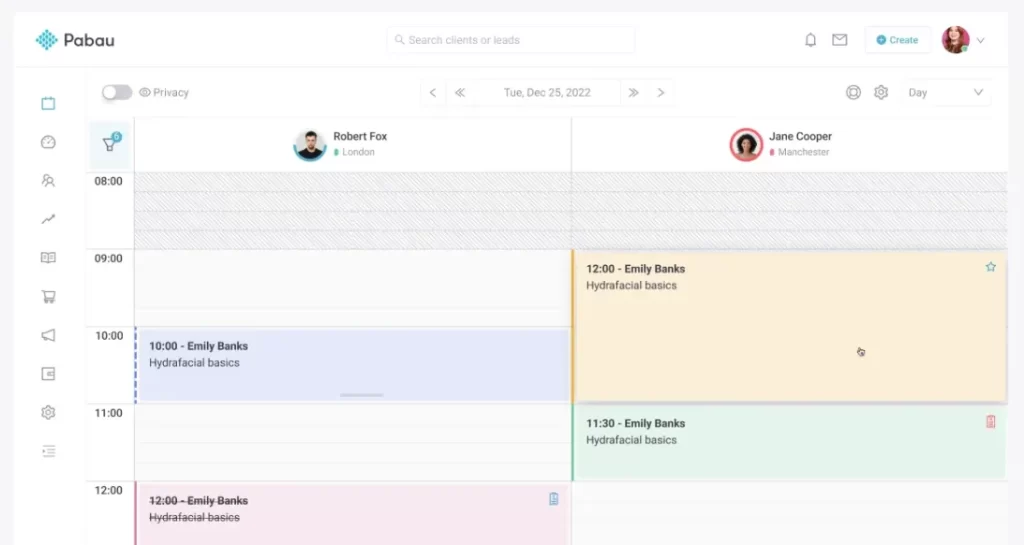
Payment processing fees apply separately. Square charges 2.6% plus 10 cents per card-present transaction in the US, or 2.9% plus 30 cents for online payments. UK rates are 1.75% for card-present and 2.5% for online transactions.
Pabau provides custom pricing based on practice size, selected features, and implementation requirements. According to Pabau’s sales materials, pricing scales with the number of users, locations, and modules activated. Practices receive quotes after consultations where account managers assess operational needs. The investment typically exceeds Square’s entry-level costs but includes comprehensive clinical management, billing, and compliance tools within the base subscription.
Total cost of ownership extends beyond subscription fees. Clinics using Square Appointments often purchase supplementary software for electronic health records, medical billing, and inventory management. These additional tools can cost $50 to $200 per month combined. Pabau consolidates these functions within one platform, potentially reducing the need for third-party integrations.
Implementation costs differ significantly. Square requires minimal setup investment since businesses configure the system themselves. Pabau includes data migration, workflow optimization, and staff training as part of onboarding, which adds value but extends the initial investment period.
Run a 90-day cost analysis comparing your current software stack’s monthly fees, payment processing costs, and staff time spent on administrative tasks. Many clinics find that consolidating onto a comprehensive platform like Pabau reduces total operational costs despite a higher headline price, while Square’s lower entry cost makes sense for practices with minimal clinical documentation needs and straightforward booking requirements.
Pabau receives a 4.5 out of 5 rating on Capterra based on over 370 verified reviews. Users highlight comprehensive features tailored for medical practices, strong customer support, and effective customization options. Common praise centers on treatment-specific workflows, automated recall campaigns, and multi-location reporting. Critical feedback focuses on the learning curve for new staff and occasional system update disruptions.
Square Appointments earns a 4.5 out of 5 on Capterra with over 580 verified reviews. According to reviewers, the platform excels at ease of use, quick setup, and seamless integration with Square payments. Users appreciate the clean interface and mobile app functionality. Negative reviews cite limited healthcare-specific features, basic reporting capabilities, and customer support response times.
On G2, Pabau holds a 4.4 rating from over 190 reviews. Users in aesthetic and wellness sectors emphasize the platform’s photo documentation tools, consent form management, and inventory tracking. On G2, Square Appointments scores 4.3 from over 420 reviews, with general service businesses (salons, fitness studios, consultants) representing the majority of reviewers.
Trustpilot scores diverge sharply. Pabau maintains a 4.2 rating on Trustpilot with 280 reviews. Square’s overall company rating on Trustpilot sits at 1.3 from over 520 reviews, though this reflects Square’s entire product suite rather than Appointments specifically. Many negative Square reviews relate to payment processing holds and account restrictions rather than scheduling functionality.
Review volume favors Square Appointments due to its broader market reach across multiple industries. Pabau’s reviews concentrate among healthcare providers, offering more relevant feedback for clinics evaluating medical practice software.
Choose Pabau if your practice requires clinical documentation, medical billing capabilities, and regulatory compliance features. Aesthetic clinics tracking treatment outcomes, physical therapy practices documenting patient progress, and multi-specialty wellness centers benefit from Pabau’s comprehensive operational infrastructure. The platform suits growing practices planning to add locations, expand service offerings, or improve operational efficiency through automation.

Choose Square Appointments if your practice prioritizes simplicity, low upfront costs, and straightforward appointment management. Solo practitioners, small wellness studios, and cash-pay practices without complex billing needs gain immediate value from Square’s ease of use. The platform works well for businesses already using Square payment processing who want unified transaction reporting.
Consider Pabau if you need to generate insurance claims, maintain detailed patient records, track clinical outcomes, manage multi-location inventory, or comply with healthcare-specific regulations. The higher investment pays returns through operational efficiency, reduced manual data entry, and consolidated software costs.
Consider Square Appointments if your booking needs are straightforward, your practice operates with minimal clinical documentation, and you value transparent pricing with no long-term contracts. The platform enables rapid deployment without extensive training or implementation support.
For detailed comparisons of clinic management platforms, explore our software comparison guides covering scheduling, billing, and operational features across multiple providers.

Need comprehensive practice management beyond scheduling? Best Medical Practice Management Software evaluates platforms combining EHR, billing, and operational tools for healthcare practices.
Evaluating compliance requirements for your clinic software? HIPAA Compliance for Healthcare Software explains regulatory standards and what to look for in compliant platforms.
Comparing across multiple clinic management platforms? Pabau Software Comparisons provides head-to-head analyses of scheduling, billing, and clinical documentation features across competing systems.
Pabau and Square Appointments serve distinct practice profiles. Pabau delivers comprehensive clinical management for healthcare practices requiring documentation, billing, and compliance infrastructure. Square Appointments provides accessible appointment scheduling for businesses prioritizing ease of use and low barriers to entry.
The decision hinges on operational complexity. Practices documenting treatments, processing insurance claims, or managing clinical workflows benefit from Pabau’s purpose-built healthcare features. Practices with straightforward booking needs and minimal documentation requirements gain value from Square’s simplicity and transparent pricing.
Both platforms handle core scheduling functions competently. The difference emerges in surrounding capabilities that support daily clinical operations, regulatory compliance, and business growth over time.
Square Appointments offers some data security features that may support HIPAA compliance, but the platform requires additional configuration and a Business Associate Agreement (BAA) to meet healthcare privacy standards. Pabau includes HIPAA-aligned features by default, including audit trails, encrypted data storage, and access controls designed for medical practices.
Pabau supports medical billing workflows including CPT code assignment, insurance claim generation, and electronic submission to payers. The platform tracks claim status, manages patient copays, and handles split billing between insurance and out-of-pocket payments. Square Appointments focuses on credit card processing and does not generate insurance claims.
Square Appointments offers faster implementation with minimal technical requirements. Businesses can configure appointment types, staff schedules, and booking pages within hours without dedicated IT support. Pabau includes more comprehensive setup processes involving data migration, workflow optimization, and staff training, typically requiring several weeks for full implementation.
Square Appointments supports multiple locations but charges separately per site. Each location operates as an independent entity within the account. Pabau provides centralized multi-location management with unified inventory tracking, cross-location reporting, and shared patient records while maintaining location-specific operational control.
Square Appointments starts at $29 per month per location. Pabau starts at $62 per user per month for the Essentials plan, with Plus ($99/user/month) and Enterprise tiers available for larger practices. However, Pabau includes EHR, medical billing, inventory management, and compliance tools that would require separate subscriptions if added to Square Appointments.