








CPT Code 95811: Polysomnography with CPAP Titration Billing Guide
CPT Code 95811: definition and clinical description Sleep labs and billing teams...

June 16, 2026


CPT Code 95811 covers attended polysomnography with CPAP or bi-level ventilation initiation for patients age 6 and older, with 4 or more additional sleep parameters monitored.
No separate CPT code exists for a split-night study: CPT Code 95811 is the correct code for both split-night studies and standalone PAP titration studies.
Facilities must document that the study was performed in a facility-based sleep lab, not at home or in a mobile setting, or Medicare will deny the claim.
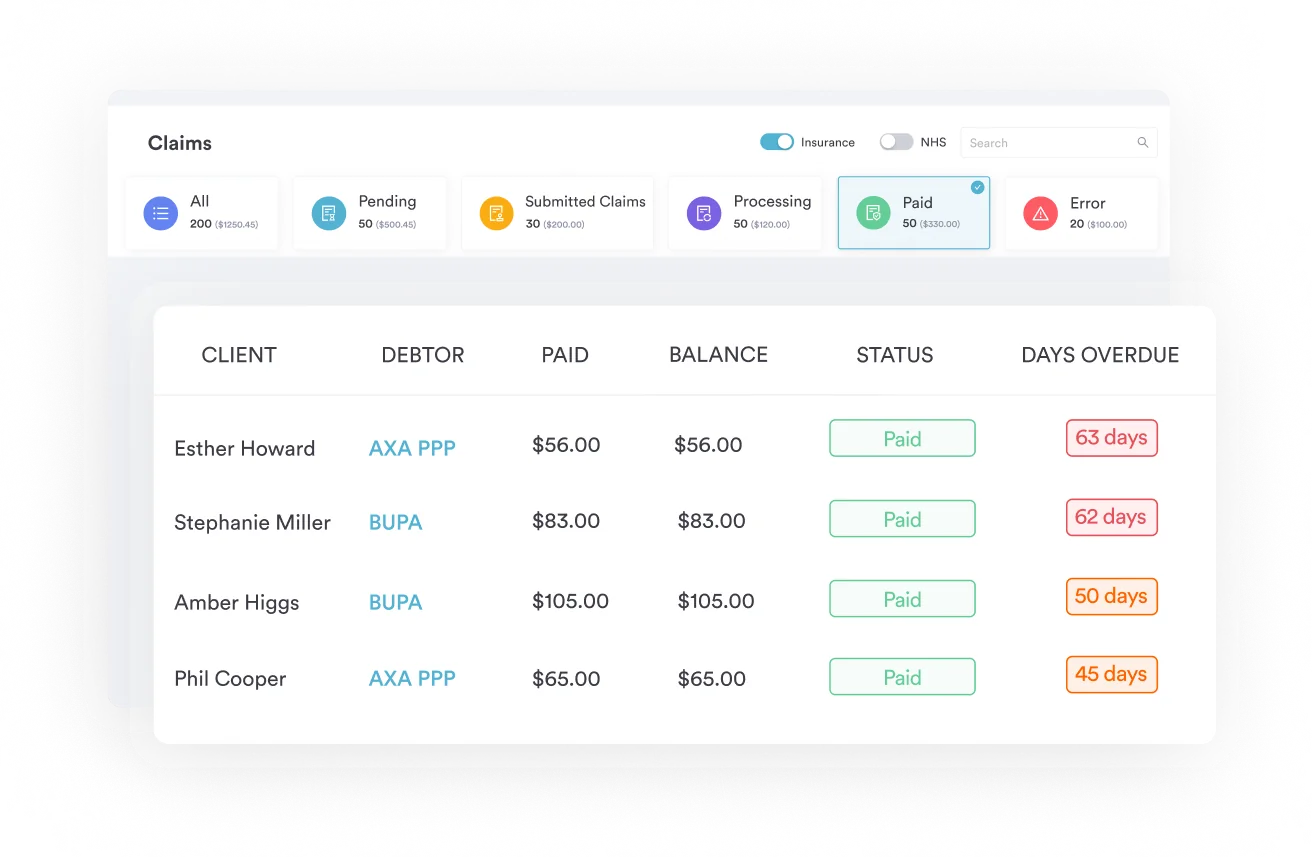
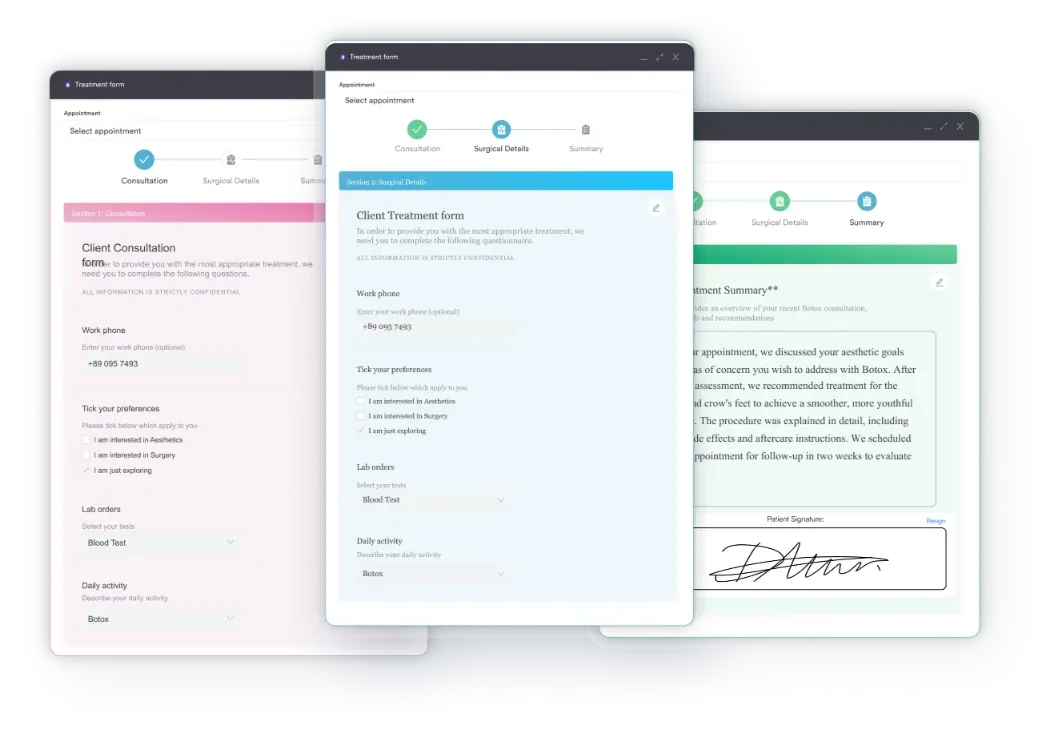
Pabau’s claims management software helps sleep labs track 95811 claim submissions, monitor denial patterns, and automate follow-up workflows.
Sleep labs and billing teams frequently confuse CPT Code 95811 with its diagnostic-only counterpart, and that confusion costs money. When a patient reaches the CPAP mask during their sleep study, the code changes entirely.
CPT Code 95811 describes: Polysomnography; age 6 years or older, sleep staging with 4 or more additional parameters of sleep, with initiation of continuous positive airway pressure therapy or bi-level ventilation, attended by a technologist. The defining element is the initiation of CPAP or bi-level ventilation during the study. Without that component, the appropriate code is 95810 or 95808, not 95811.
The American Medical Association (AMA) maintains the CPT code set, and CPT Code 95811 falls under the Sleep Medicine Testing and Long-term EEG Procedures subsection. The code requires all of the following elements to be present and documented.
All five elements must appear in the record. Missing even one creates grounds for a payer denial or audit. Pabau’s claims management software helps sleep medicine practices track whether required documentation fields are complete before claims leave the practice.
The three core polysomnography codes cover different clinical scenarios. Selecting the wrong one is the most common coding error in sleep medicine billing.
The CPT Code 95808 is the lower-complexity option: sleep staging with fewer than four additional parameters, no CPAP. CPT 95810 adds four or more parameters but still no CPAP. CPT Code 95811 is the code for any attended study where CPAP or bi-level ventilation is turned on.
For coders working across specialties, the same principle applies in other procedure families. See how parameter thresholds and clinical complexity thresholds drive code selection in related CPT reference codes for other attended procedures.
There is no separate CPT code for a split-night sleep study. That surprises many new sleep medicine billers. The split-night protocol combines diagnostic monitoring and CPAP titration in a single session: the first portion of the night identifies OSA, and the second portion initiates CPAP therapy.
Because CPAP is initiated during that same session, CPT Code 95811 is the correct code for split-night studies according to Kaiser Permanente Washington provider billing guidance and confirmed by Molina Healthcare’s 2023 Provider Memorandum on correct coding for sleep studies.
Standalone PAP titration studies — where the diagnostic study has already been performed on a prior night — are also billed under CPT Code 95811. The code does not distinguish between these two clinical scenarios. What matters is whether CPAP or bi-level ventilation was initiated and whether a technologist was present throughout.
Flag split-night studies in your scheduling system before the patient arrives. If the clinical team expects to initiate CPAP mid-study, the billing team should pre-select CPT Code 95811 rather than defaulting to 95810. Changing the code after the fact is slower and creates audit risk if the note and the claim don’t align.
The Centers for Medicare and Medicaid Services (CMS) Medicare Coverage Database article A57697 sets out the minimum documentation requirements. Three requirements generate the highest denial volume.
Blue Cross Blue Shield Florida’s medical coverage guideline (01-95828-01, reviewed August 2025) adds a further requirement for some payers: attended titration using CPT Code 95811 is appropriate only after an initial diagnostic sleep study (PSG or home sleep apnea test) has already confirmed significant obstructive sleep apnea, and only when the patient is not appropriate for unattended titration.
Thorough medical forms and clinical documentation at each stage of the patient’s sleep study workflow protects the practice during payer audits. The sleep study report, the physician order, and the patient record must all align.
CPT Code 95811 requires Place of Service (POS) code 49 (Independent Laboratory) or POS 11 (Office) for facility-based sleep labs billing the professional component. Hospital outpatient sleep labs typically bill under POS 22 (Outpatient Hospital). Billing under an incorrect POS code is a common denial trigger that is often overlooked during claim scrubbing.
Home or mobile settings do not qualify. CMS A57697 is explicit: the polysomnography must be performed in a facility-based sleep study laboratory. Any documentation suggesting the study occurred outside a licensed facility will result in denial.

Pabau helps sleep medicine practices manage claim submissions, track denial patterns, and automate follow-up so your team spends less time on billing and more time with patients.

Modifier usage for CPT Code 95811 depends on the billing entity and the payer contract. These are the modifiers coders encounter most often.
When the interpreting physician and the sleep lab are separate entities, modifier 26 and modifier TC are used to split the global service. The physician bills CPT Code 95811-26; the facility bills CPT Code 95811-TC. Both claims cannot bill the full global rate.
Maintaining HIPAA-compliant documentation practices across both the clinical record and the billing submission is particularly important when split billing occurs, because payers may request supporting documentation from either entity independently.
Medicare reimbursement for CPT Code 95811 varies by geographic location because payment is calculated using the Medicare Physician Fee Schedule (MPFS) with geographic cost-of-practice adjustments. The CMS Physician Fee Schedule lookup tool provides the current national payment rates by locality.
For 2024 and 2025, the national non-facility rate for CPT Code 95811 (global) has typically ranged between $440 and $600 depending on locality. The facility rate (professional component only, modifier 26) is lower. Use the FastRVU 2026 RVU lookup tool to calculate current Medicare payment amounts by locality and component.
Prior authorization requirements for CPT Code 95811 vary by payer and plan. There is no universal rule. Commercial payers including Blue Cross Blue Shield, United Healthcare, and Aetna frequently require prior authorization for attended polysomnography with CPAP initiation. Medicaid requirements differ by state.
The safest operational approach is to verify authorization requirements for each payer before scheduling the study. Submitting CPT Code 95811 without required prior authorization is one of the most common avoidable denial causes in sleep medicine billing. Most payers also require documentation that a diagnostic sleep study (PSG or home sleep apnea test) confirmed OSA before authorizing a titration study.
Check whether your payer accepts HCPCS G codes (G0398, G0399, G0400) for home sleep apnea testing (HSAT) or requires CPT codes (95800, 95801, 95806) instead. Per the American Academy of Sleep Medicine (AASM), some payers accept G codes while others accept only CPT codes for HSAT services. Getting this wrong on the diagnostic study can affect authorization for the subsequent CPT Code 95811 titration.
Sleep medicine billing involves a broader family of codes. Knowing where CPT Code 95811 fits helps coders choose correctly across different clinical scenarios.
According to the AAPC Codify CPT lookup, the 95800 series and CPT Code 95811 are mutually exclusive for the same date of service. A payer will bundle or deny any claim that submits both an HSAT code and an attended PSG code for the same patient on the same night.
Digital intake workflows built using digital forms can capture the clinical context (prior diagnostic study date, OSA diagnosis confirmation, physician order) before the patient arrives, reducing the administrative work required at claim submission.
Understanding why claims are denied is as valuable as knowing how to code correctly in the first place. These are the most frequent denial patterns for CPT Code 95811.
Successful appeals require the complete sleep study report, the physician order, the prior diagnostic study documentation, and evidence of facility accreditation. Practices that maintain structured documentation workflows using practice management software are better positioned to pull these records quickly when a payer requests them.
CPT Code 95811 is the correct code when CPAP or bi-level ventilation is initiated during an attended polysomnography study for a patient aged 6 or older, whether that occurs as a split-night study, a standalone titration, or a full-night CPAP study. The code is not interchangeable with 95810, and the documentation requirements are specific enough that missing elements generate denials even when the clinical service was appropriate.
Pabau’s claims management tools help sleep medicine practices build the documentation and claim submission workflows that reduce denial rates and support clean claim rates above 95%. To see how Pabau handles sleep lab billing workflows, book a demo.
CPT Code 95811 is used for attended polysomnography with initiation of CPAP or bi-level ventilation in a facility-based sleep lab, for patients aged 6 or older with 4 or more additional sleep parameters monitored. It covers split-night studies, standalone titration studies, and any attended session where PAP therapy is initiated.
CPT 95810 is diagnostic-only polysomnography with no CPAP initiation. CPT Code 95811 includes all the same components plus the initiation of CPAP or bi-level ventilation during the study.
A split-night sleep study combines diagnostic polysomnography and CPAP titration in a single overnight session, billed under CPT Code 95811. Do not bill 95810 and 95811 separately for the same night.
Yes. When the interpreting physician and sleep facility are separate billing entities, the physician bills 95811-26 and the facility bills 95811-TC. Neither party should bill the global rate.
CPT Code 95811 requires a facility-based sleep study laboratory; home and mobile settings are not eligible. Use POS 49 for standalone sleep labs or POS 22 for hospital-based sleep labs.
CPT 95808 applies when fewer than 4 additional parameters are monitored and no CPAP is initiated. If CPAP is initiated at any point, CPT Code 95811 is the correct code.