

Feelings thermometer: Free 0-10 emotion rating form
A feelings thermometer turns “How do you feel?” into a number a patient can point to. It’s a 0-10 scale, where 0 means a feeling is absent and 10 means it’s at its strongest. That one number matters because many patients, especially children, can’t name what they feel but can rate it. Tracked across sessions, […]
Talkaholic scale
The talkaholic scale is a 16-item self-report questionnaire that measures compulsive communication, often called talkaholism. James C. McCroskey and Virginia P. Richmond published it in 1993 as a research measure. It helps clinicians, therapists, coaches, and individuals see whether heavy talking is situational or a persistent pattern. Only 10 of the 16 items are scored, […]
Fear setting worksheet
A fear setting worksheet is a three-part exercise, laid out here as a three-page worksheet. It helps you name your worst-case scenarios, plan how to prevent them, and decide how you would recover if they happened. Tim Ferriss popularized the method in his 2017 TED talk, “Why You Should Define Your Fears Instead of Your […]
Piercing consent form
A piercing consent form is a signed record that a client understood a piercing’s risks, received aftercare instructions, and agreed to the procedure. It protects the client and the studio alike by proving what was explained before the piercing. Minors need more paperwork, and the rules change from state to state. Florida, for example, requires […]
Best TherapyNotes alternatives for therapy practices in 2026

The best TherapyNotes alternatives for therapy practices in 2026 are SimplePractice, TheraNest, Pabau, and Upheal. SimplePractice is the strongest all-round pick for solo therapists and small groups, especially where telehealth carries much of the caseload. TheraNest has the lowest published price per therapist, and Upheal suits therapists who want AI-drafted session notes. Pabau, the all-in-one […]
Printable values cards: What they are and how to use them in therapy
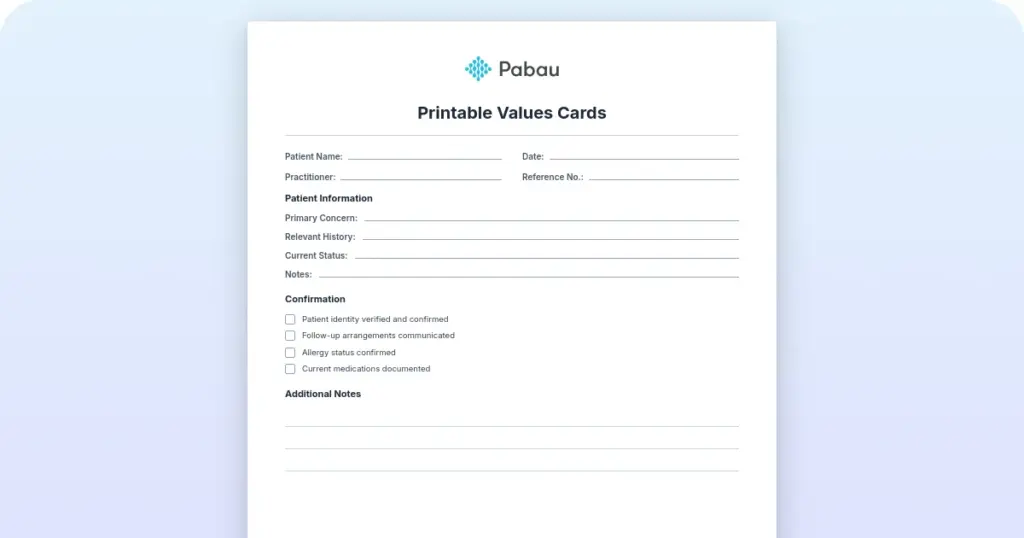
Printable values cards are a reflection tool that helps a patient work out which personal values matter most to them. This free one-page PDF explains the exercise briefly and gives the patient a blank space to write their own values. They then rate each value as very important, important, or not as important. The format […]
Termination note template + what it is and when should you write one
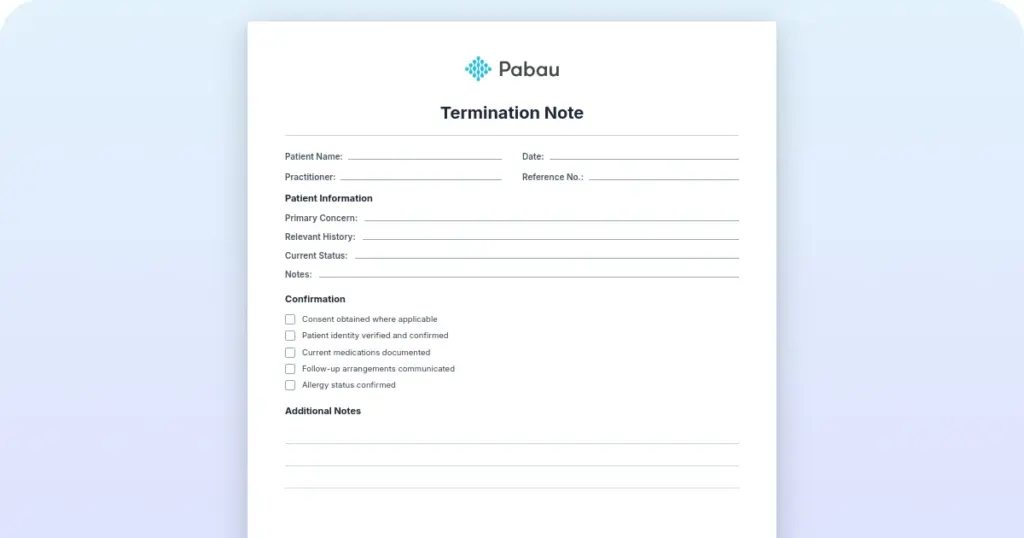
A termination note is the clinical record that closes a patient’s treatment. It documents why care ended, what the treatment achieved, and where the patient goes next. Written at or just after the final contact, it gives the next provider, an insurer, or a licensing board a signed account of the ending. It is shorter […]
Checking the facts DBT worksheet
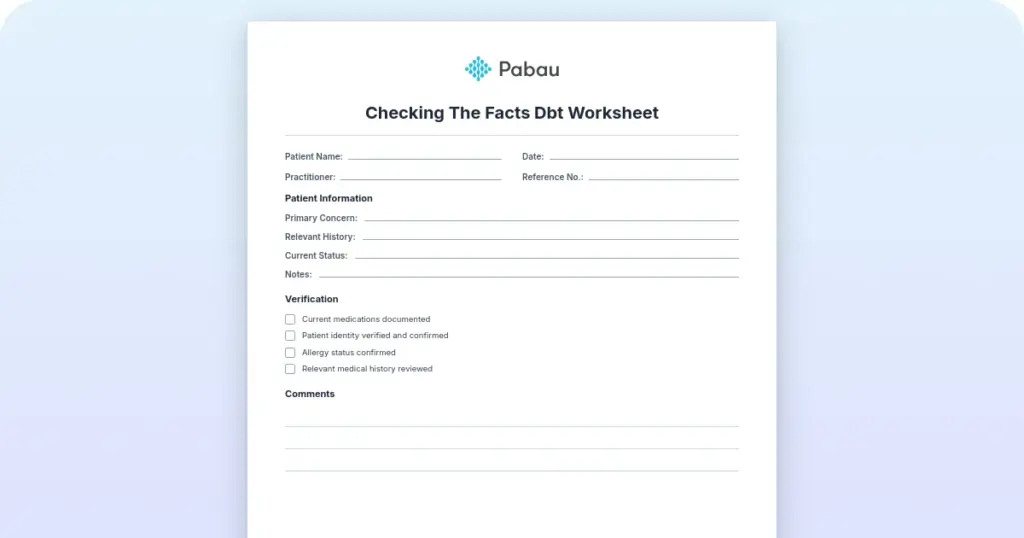
The checking the facts DBT worksheet is a clinical tool that helps patients test whether an emotional reaction matches the situation behind it. It takes the patient through four steps and ends on one question: Does this emotion fit the facts? The skill belongs to the emotion regulation module of dialectical behavior therapy (DBT), developed […]
Free stress worksheet: What it is and what it covers
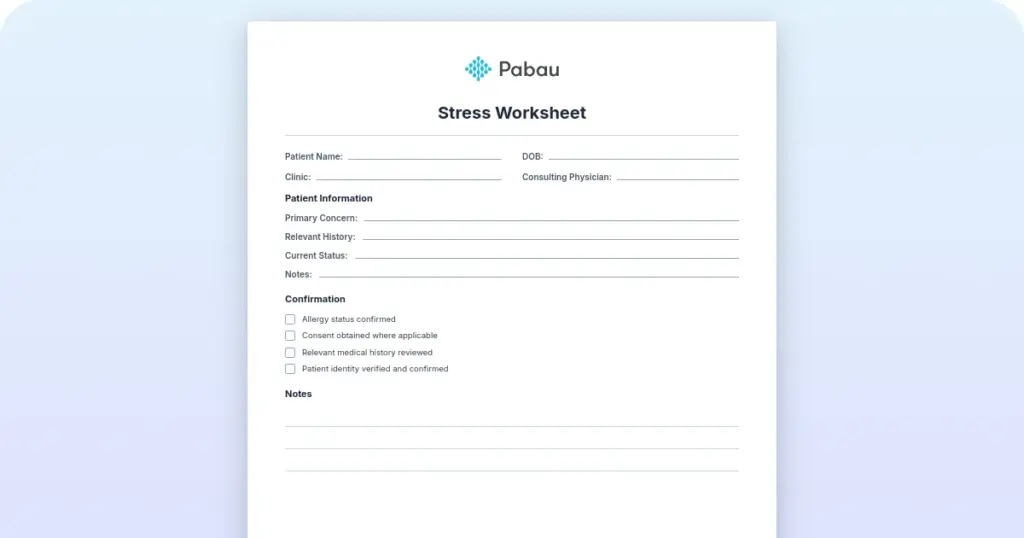
A stress worksheet is a structured form that helps patients name their stress triggers, spot their warning signs, and choose coping strategies. The free PDF below covers all five parts on one worksheet, from triggers to a one-week action plan. Therapists, counselors, occupational health teams, and coaches use it to turn a vague “I’m stressed” […]
Couples therapy questions
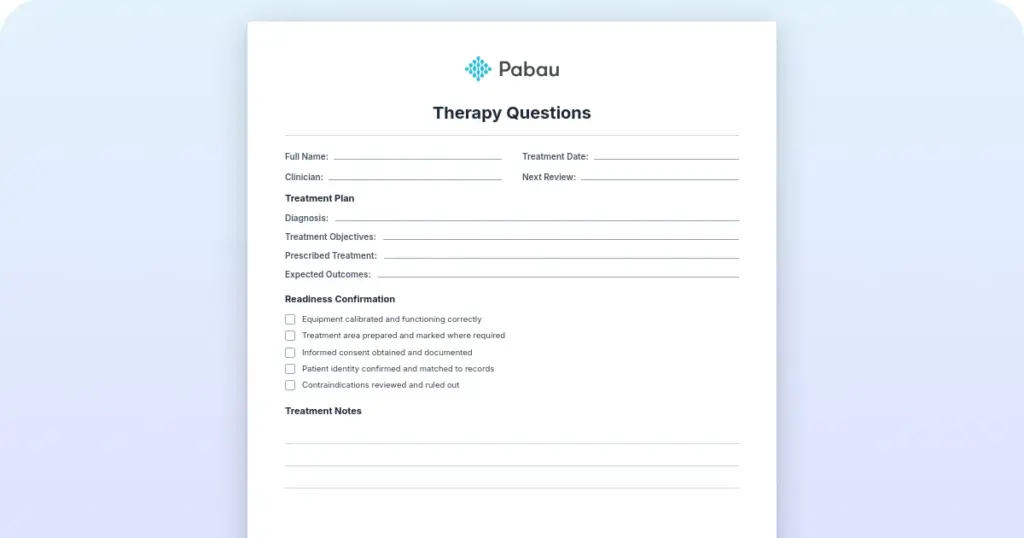
Couples therapy questions are the prompts a therapist uses to learn how a relationship works. They cover how partners talk, argue, and support each other, and what each wants from therapy. This free template gives you 15 open-ended questions for the first sessions, grouped around communication, conflict, trust, intimacy, and shared goals. Ask them with […]