Zenoti vs Vagaro: 2026 Comparison, Costs & Feature Breakdown
Compare Zenoti and Vagaro in 2026 - features, pricing, pros & cons. Find which p...

March 27, 2026


Buy now, pay later is now available in Pabau

Pabau integrates prescription management within a full clinic management system, though it lacks US EPCS certification and Surescripts connectivity
DrFirst specializes exclusively in e-prescribing with deep PDMP integration and pharmacy network reach
EPCS compliance from DEA and Surescripts certification are non-negotiable for controlled substance prescribing
Prior authorization workflows vary significantly – Surescripts offers network infrastructure while DrFirst and athenahealth provide deep in-workflow integration
Pricing models range from transparent per-provider rates to enterprise custom quotes with variable EPCS licensing fees
Electronic prescribing software has become a fundamental operational requirement for US healthcare practices in 2026, driven by federal meaningful use mandates, controlled substance prescribing regulations, and the operational necessity of reducing prescription errors. Choosing the right platform involves evaluating EPCS compliance, formulary management depth, prior authorization integration, and how prescribing workflows connect to your broader clinical operations.
This guide compares seven leading electronic prescribing platforms serving US practices: Pabau, DrFirst, Veradigm (formerly Allscripts), Practice Fusion, eClinicalWorks, NextGen Healthcare, and athenahealth. Each platform addresses different practice sizes, specialty requirements, and operational priorities-from standalone prescribing tools to enterprise EHR systems with embedded e-prescribing modules.
Before examining each platform in depth, this comparison matrix highlights core differentiators across EPCS compliance, integration approach, and pricing transparency. Pabau serves as the baseline for multi-specialty practices seeking unified clinical operations, while competitors range from prescribing specialists to enterprise healthcare IT vendors.
Pabau delivers prescription management as an integrated component within a comprehensive practice management platform serving aesthetic medicine, wellness clinics, functional medicine, and multi-specialty practices. Rather than functioning as a standalone prescribing tool, Pabau embeds prescription workflows within the same system handling appointment scheduling, clinical charting, patient intake, and billing operations. Important note: Pabau does not currently hold DEA EPCS certification or Surescripts network connectivity for the US market. Practices requiring EPCS-compliant controlled substance prescribing or direct Surescripts pharmacy routing should evaluate the other platforms in this guide. Pabau’s prescription management is best suited for practices handling non-controlled medications and internal prescription tracking.
This unified architecture reduces the data fragmentation common in practices cobbling together separate point solutions for different operational functions. Prescriptions flow directly from clinical notes into patient records, triggering automated refill reminders and connecting to insurance verification workflows without requiring manual data re-entry across multiple systems.
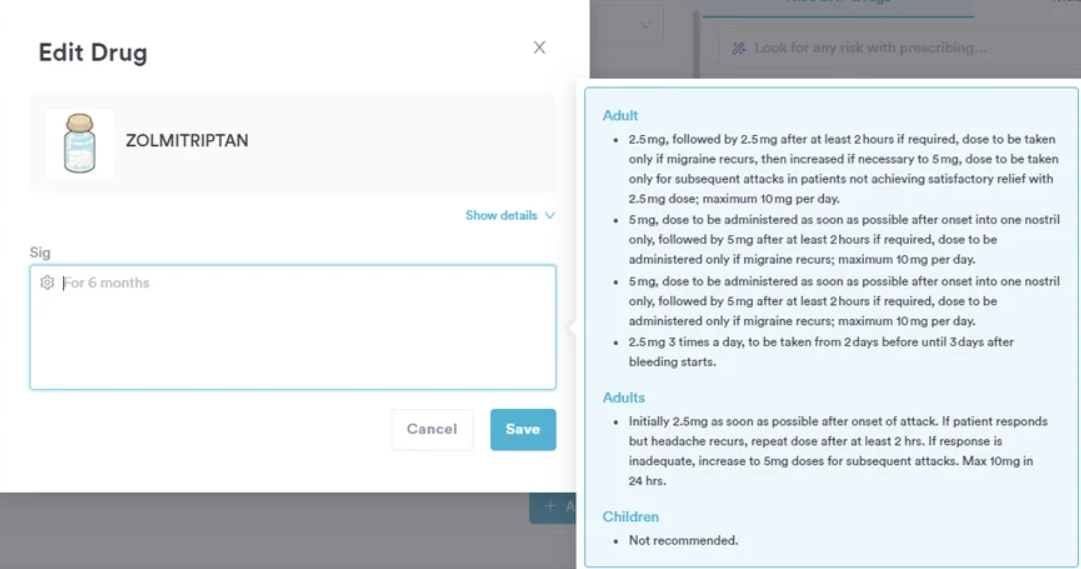
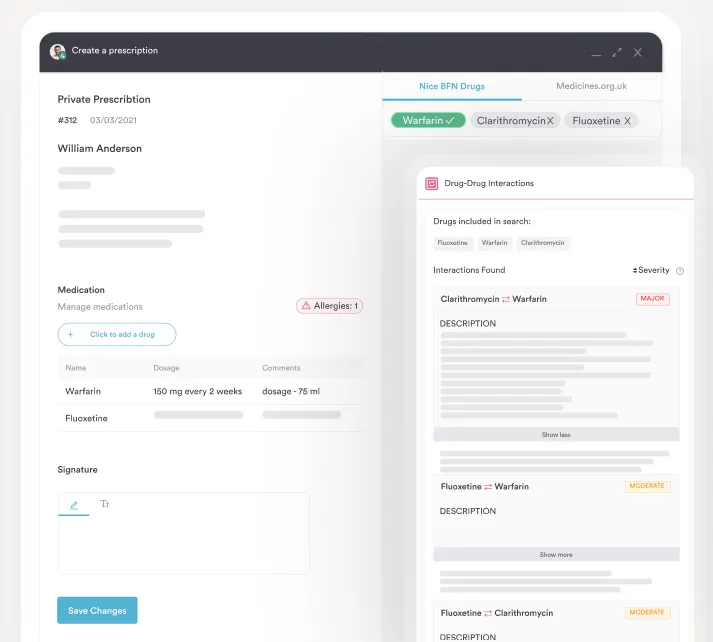
Pabau’s pricing starts at $62/month (Essential) with prescription management included within the broader practice management software subscription, avoiding separate add-on charges for prescription management. This structure benefits practices where medication tracking represents one component of broader clinical workflows rather than the primary operational focus. Note that Pabau does not include EPCS or Surescripts functionality.
Pabau holds a 4.7 out of 5 rating on Capterra based on 600+ reviews, with users praising the all-in-one clinic management approach. G2 reviewers rate the platform 4.5 out of 5 based on 275+ reviews. Note that these ratings reflect Pabau’s overall practice management capabilities rather than US e-prescribing specifically, as Pabau does not operate as a US e-prescribing platform.
DrFirst specializes exclusively in electronic prescribing infrastructure, offering deep pharmacy network integration and advanced controlled substance management tools. The platform focuses on prescription routing optimization, PDMP integration across all 50 states, and real-time benefit verification rather than broader practice management functionality.
This specialization translates into prescribing-specific features unavailable in general-purpose EHR systems: detailed controlled substance analytics, pharmacy-level dispensing insights, and routing algorithms that account for patient insurance formularies, geographic proximity, and medication availability in real time.
DrFirst pricing typically involves per-provider licensing with potential volume discounts for larger practices. The platform integrates with existing EHR systems rather than replacing them, positioning as a specialized prescribing layer atop clinical documentation systems. For practices comparing claims management workflows, this integration approach may require additional configuration versus unified platforms.
DrFirst has limited presence on mainstream review platforms due to its B2B integration model (it powers e-prescribing within other EHR systems rather than serving as a consumer-facing product). Healthcare IT professionals recognize DrFirst as an industry leader in prescription routing and PDMP integration, though direct end-user reviews are sparse on sites like Capterra.

Discover how integrated prescription management reduces administrative burden within unified clinical operations. Book a personalized demo to see how Pabau streamlines medication tracking, clinical charting, and billing workflows.

Veradigm (formerly Allscripts, rebranded in 2022) serves large healthcare organizations and hospital systems with modular EHR platforms where electronic prescribing functions as one component within broader clinical information systems. The platform targets multi-specialty ambulatory groups, integrated delivery networks, and practices requiring deep interoperability with hospital EMR systems.
This enterprise focus means prescribing workflows integrate with admission/discharge/transfer systems, laboratory interfaces, and revenue cycle platforms designed for high patient volumes and complex organizational structures. However, this architectural complexity can exceed operational requirements for smaller practices or specialty clinics not needing hospital-grade information exchange.
Veradigm pricing operates on enterprise negotiation models with implementation costs, module selection, and ongoing support contracts varying significantly based on organizational size and feature requirements. This pricing opacity contrasts with more transparent per-provider models common among smaller practice platforms.
Veradigm (Allscripts) products receive mixed reviews on Capterra, with ratings varying across their different EHR modules. Users note enterprise scalability as a strength but cite implementation complexity and interface design as areas for improvement.
Practice Fusion, now owned by Veradigm (formerly Allscripts, acquired in 2018), operates a cloud-based EHR with electronic prescribing capabilities. The platform originally attracted solo practitioners through a free ad-supported model, though pricing has evolved since the acquisition. Regulatory note: In January 2020, Practice Fusion agreed to a $145 million settlement with the US Department of Justice after admitting to accepting kickbacks from an opioid manufacturer in exchange for implementing clinical decision support alerts that prompted doctors to prescribe opioids. This was the first criminal action against an EHR company under the Anti-Kickback Statute. Practices should consider this history when evaluating the platform’s prescribing recommendation workflows.
Prescribing functionality covers basic EPCS requirements but lacks advanced features like real-time benefit checking or sophisticated PDMP analytics found in specialized platforms. Practices should verify current pricing and feature availability directly with Veradigm, as the platform has undergone significant changes since the 2020 DOJ settlement.
Practice Fusion holds a 3.7 out of 5 rating on Capterra based on 400+ reviews. Users appreciate the low cost of entry and basic EHR functionality. Common criticisms include limited customer support, occasional performance issues, and concerns about the platform’s advertising model and post-DOJ-settlement changes to clinical decision support features.
Compare the total cost of ‘free’ platforms carefully. While Practice Fusion eliminates licensing fees, practices should calculate time costs from potential workflow inefficiencies, support limitations, and whether premium add-ons eventually exceed transparent per-provider pricing from unified platforms like Pabau.
eClinicalWorks targets multi-specialty ambulatory groups and federally qualified health centers with high patient volumes and diverse clinical workflows. The platform combines electronic prescribing with population health management, patient engagement tools, and telehealth functionality within a unified cloud architecture.
This breadth positions eClinicalWorks for organizations managing thousands of patient encounters daily across multiple specialties, though implementation complexity and feature density can overwhelm smaller practices requiring simpler operational models. For practices evaluating mental health EMR workflows, eClinicalWorks offers behavioral health modules alongside general prescribing functionality.
eClinicalWorks holds a 3.3 out of 5 rating on Capterra based on 350+ reviews. Users highlight the breadth of features and telehealth integration, but common complaints include interface complexity, steep learning curves, and customer support responsiveness. The platform’s depth serves high-volume practices willing to invest in training.
NextGen Healthcare focuses on specialty practices requiring customized clinical documentation templates and workflow configurations beyond general primary care patterns. The platform offers specialty-specific formularies, treatment protocols, and reporting dashboards tailored to dermatology, orthopedics, cardiology, and other focused clinical domains.
This specialization means NextGen can support unique prescribing patterns-compounded dermatologic preparations, specialty injectables, or procedure-specific medications-but implementation requires careful configuration to realize these benefits rather than functioning effectively out-of-box.
NextGen Healthcare holds a 3.9 out of 5 rating on Capterra based on 300+ reviews. Specialty practices praise the customizable clinical workflows and specialty-specific templates. Reviewers note that realizing the platform’s full potential requires significant implementation effort and ongoing configuration.
athenahealth positions as a cloud-based network platform where clinical, financial, and administrative operations share a unified data architecture. Electronic prescribing integrates tightly with claims submission, patient billing, and payer communication workflows, emphasizing revenue cycle efficiency alongside clinical functionality.
This network model means formulary updates, payer rule changes, and regulatory modifications propagate automatically to all practices without individual software updates. However, this centralized control limits customization flexibility compared to self-hosted systems where practices maintain greater configuration autonomy. Practices considering physical therapy EMR requirements may find athenahealth’s revenue cycle focus valuable for therapy billing complexity.
athenahealth holds a 3.8 out of 5 rating on Capterra based on 800+ reviews. Users praise the cloud-native architecture and automatic regulatory updates, with the revenue cycle integration frequently cited as a key differentiator. Criticisms focus on customization limitations within the network model and occasional frustration with the percentage-of-collections pricing structure.
Selecting electronic prescribing software requires evaluating five core decision factors: EPCS compliance verification, integration architecture, specialty formulary alignment, prior authorization workflow depth, and total cost transparency. Each factor carries different weight depending on practice size, clinical specialty, and existing technology infrastructure.
Practices should prioritize DEA EPCS certification and Surescripts network connectivity as baseline requirements-these capabilities are non-negotiable for US prescribing operations. According to the Drug Enforcement Administration, controlled substance prescribing via electronic systems requires identity proofing and two-factor authentication meeting federal standards.
Beyond compliance, evaluate whether prescribing functions as a standalone need or one component within broader clinical operations. DrFirst excels when prescribing analytics and pharmacy network depth represent strategic capabilities. Pabau fits practices needing prescription management embedded within unified scheduling, charting, and billing workflows, though practices requiring US EPCS compliance should pair Pabau with a certified e-prescribing solution. Enterprise platforms like Veradigm and athenahealth serve organizations prioritizing hospital system interoperability or revenue cycle integration.
Specialty practices should verify formulary alignment before committing to platforms-aesthetic medicine, functional wellness, and integrative health operate with compounded preparations and off-label protocols poorly supported by primary care-focused systems. Request demonstration scenarios matching your actual prescribing patterns rather than generic use cases.
Prior authorization workflow efficiency varies dramatically across platforms. Surescripts CoverMyMeds integration represents industry standard, but implementation depth-whether prior auth requests launch within prescribing interface or require separate system access-impacts daily clinician efficiency. DrFirst and Pabau offer in-workflow prior authorization, while some enterprise platforms treat it as a separate administrative function.
Total cost evaluation should account for licensing models, implementation expenses, and operational costs beyond base subscription fees. Transparent per-provider pricing (Pabau starts at $62/month) enables accurate budget forecasting. athenahealth’s percentage-of-collections model (~4-7%) aligns vendor incentives with practice revenue. Enterprise custom quotes (Veradigm, NextGen) require detailed vendor negotiation and may include surprise EPCS add-on charges. Free platforms (Practice Fusion) trade licensing costs for advertising presence and feature limitations.
Consider whether the platform’s broader architecture aligns with practice growth plans. Standalone prescribing tools integrate with existing EHR systems but create ongoing maintenance burdens as you add capabilities. Unified platforms bundle prescribing within comprehensive clinic operations, simplifying technology management as practices scale but requiring commitment to a single vendor’s roadmap. For more guidance on evaluating practice management software platforms, examine how prescribing workflows connect to appointment scheduling, clinical documentation, and billing operations.

Evaluating EPCS compliance beyond vendor claims? DEA Electronic Prescriptions for Controlled Substances outlines federal requirements for identity proofing, two-factor authentication, and audit controls.
Understanding Surescripts network standards? Surescripts E-Prescribing Overview explains how prescription routing, formulary checking, and pharmacy connectivity function at the network level.
Need specialty-specific clinical workflow examples? Pabau Industry Solutions demonstrates how prescribing integrates within aesthetic medicine, wellness clinics, and multi-specialty practices.
Electronic prescribing software selection depends fundamentally on whether prescribing represents your primary operational function or one component within broader clinical workflows. DrFirst serves practices where controlled substance management, pharmacy network optimization, and prescribing analytics justify standalone tool investment. Pabau fits multi-specialty clinics seeking prescription management within unified practice operations, though US practices requiring EPCS-compliant controlled substance prescribing will need a certified platform.
Enterprise platforms – Veradigm, eClinicalWorks, NextGen, athenahealth – target large organizations prioritizing hospital interoperability, population health management, or revenue cycle integration over prescribing-specific capabilities. Practice Fusion (now owned by Veradigm) addresses solo practitioners seeking low-cost EHR access, though practices should be aware of its 2020 DOJ settlement history regarding prescribing influence. Each platform reflects different operational priorities and practice sizes rather than universal superiority across all scenarios.
DEA EPCS compliance and Surescripts certification remain non-negotiable baseline requirements. Beyond compliance, evaluate integration architecture, specialty formulary depth, prior authorization workflow efficiency, and total cost transparency including hidden implementation expenses and potential EPCS add-on fees. Request demonstrations matching your actual prescribing patterns rather than generic primary care scenarios, particularly if you operate in aesthetic medicine, functional wellness, or other specialties with unique medication protocols.
Practices experiencing operational complexity from managing separate systems for prescribing, scheduling, and clinical documentation should prioritize unified platforms like Pabau that reduce vendor management burden and data fragmentation. Organizations with dedicated IT resources and complex enterprise requirements may benefit from modular systems accepting greater implementation complexity in exchange for customization flexibility.
EPCS (Electronic Prescriptions for Controlled Substances) compliance refers to meeting Drug Enforcement Administration requirements for prescribing Schedule II-V controlled substances electronically. DEA-certified systems must implement identity proofing, two-factor authentication, and audit controls. Without EPCS certification, practices cannot electronically prescribe controlled medications like opioids, benzodiazepines, or stimulants-forcing manual prescription writing and pharmacy phone calls that increase administrative burden and error risk.
Surescripts operates the largest electronic prescribing network in the United States, connecting prescribers to over 70,000 pharmacies. Certification ensures your platform can route prescriptions directly to retail, mail-order, and specialty pharmacies with real-time medication history access and formulary checking. Non-certified systems require manual prescription printing or faxing, eliminating the efficiency gains electronic prescribing provides. Verify Surescripts certification before selecting any platform for US prescribing operations.
Standalone prescribing tools like DrFirst focus exclusively on prescription workflows, PDMP integration, and pharmacy network optimization. They integrate with existing EHR systems as add-on modules. Integrated platforms like Pabau embed prescribing within comprehensive practice management including scheduling, clinical charting, and billing. Standalone tools suit practices with established EHR infrastructure seeking specialized prescribing capabilities. Integrated platforms benefit practices wanting unified operations without managing multiple vendor relationships.
Prior authorization efficiency varies significantly across platforms. Advanced systems integrate Surescripts CoverMyMeds functionality directly within prescribing workflows, allowing clinicians to initiate prior auth requests without leaving the prescription interface. Basic systems treat prior authorization as a separate administrative process requiring external website access or phone communication. Platforms like DrFirst offer in-workflow prior authorization, while some enterprise EHR systems position it as a separate revenue cycle function handled by billing staff rather than prescribing clinicians.
Specialty practices require formulary customization beyond standard pharmaceutical databases. Aesthetic medicine needs templates for compounded preparations and off-label protocols. Functional medicine requires nutritional compounds and bioidentical hormones. Physical therapy needs procedure-specific medications and topical preparations. Verify the platform supports custom medication creation, specialty-specific dosing protocols, and templates matching your actual prescribing patterns. Request demonstration scenarios using medications you commonly prescribe rather than accepting generic primary care examples.
Prescription Drug Monitoring Programs (PDMPs) track controlled substance dispensing across pharmacies within each state. Advanced electronic prescribing platforms automatically query state PDMP databases during prescription writing, displaying patient medication history and identifying potential misuse patterns. This integration reduces the manual burden of separately logging into state PDMP portals and improves prescribing safety for opioids, benzodiazepines, and stimulants. DrFirst offers particularly deep PDMP integration with proactive risk scoring. Basic platforms may require manual PDMP queries outside the prescribing workflow.