Mental Health
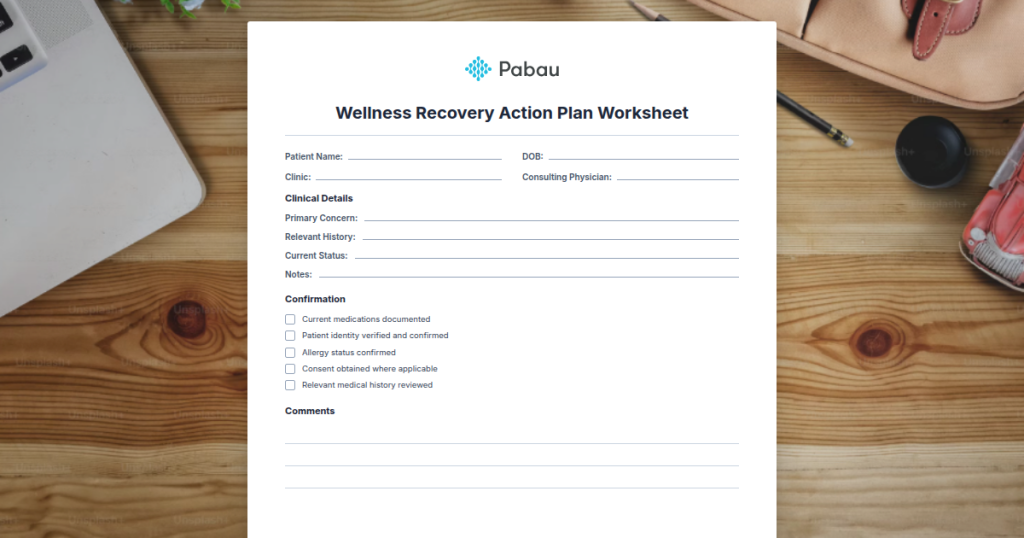
Wellness Recovery Action Plan Worksheet
Download Your Free Wellness Recovery Action Plan Worksheet Wellness Recovery Act...

May 5, 2026


Buy now, pay later is now available in Pabau

A wellness recovery action plan worksheet is a structured self-management tool that helps clients identify personal wellness resources and develop action plans for mental health recovery.
WRAP is built on the Wellness Toolbox foundation plus six sections: daily maintenance plan, triggers, early warning signs, when things are breaking down, crisis plan, and post-crisis plan.
Digital integration of completed worksheets into client records enables clinicians to track progress, reference past plans during sessions, and attach documents to appointment notes.
Pabau’s digital forms and client portal features allow therapists to send worksheets electronically, collect signed responses, and store completed plans within each client’s secure health record.
A comprehensive self-management worksheet covering wellness toolbox, daily maintenance plan, triggers, early warning signs, crisis plan, and post-crisis planning sections for mental health recovery.
Download templateA wellness recovery action plan worksheet is a structured self-management framework developed by Mary Ellen Copeland and a group in northern Vermont in 1997. This evidence-based tool empowers individuals experiencing mental health challenges to take an active role in their recovery. Unlike crisis-focused interventions, the framework shifts the perspective from symptom management to building a sustainable wellness lifestyle.
The worksheet serves multiple clinical purposes: it documents personal coping strategies, identifies early warning signs before crisis, and establishes a concrete action plan clients can reference during difficult moments. For practitioners, the worksheet becomes a living clinical document within the client’s record, informing treatment planning and enabling progress tracking across multiple sessions. The framework is recognised across mental health settings, from private therapy practices to community mental health teams.
Implementing WRAP in your practice follows a five-step operational workflow:
Store the completed worksheet in your client record system alongside session notes. This enables clinicians to reference the plan in future appointments, track which strategies clients are actually using, and adjust the plan as their recovery evolves.
The wellness recovery action plan worksheet is valuable across diverse mental health practice settings. Therapists and counsellors working with anxiety, depression, and mood disorders use it to shift treatment focus from crisis management to wellness building. Psychiatric practices integrate the worksheet into discharge planning, helping clients maintain stability after hospital episodes. Addiction recovery specialists adapt the framework to identify relapse triggers and build sustainable sobriety practices.
Coaching practitioners use this framework for high-performing clients managing stress and burnout. Group therapy facilitators employ the worksheet in peer support settings, where clients learn from each other’s strategies. The worksheet is equally applicable in occupational therapy, psychology practices, and coaching client management systems, making it a cross-discipline clinical tool.
The wellness recovery action plan worksheet delivers measurable clinical and operational benefits. Clinically, it shifts the therapeutic relationship toward client agency and self-efficacy. Clients move from being passive recipients of treatment to active architects of their recovery. This reframing improves engagement and follow-through with treatment recommendations.
Operationally, WRAP integrates seamlessly with digital forms and automated workflows, reducing manual paperwork and enabling remote completion during telehealth sessions.
The wellness recovery action plan worksheet is built on a Wellness Toolbox foundation plus six distinct sections, each serving a specific clinical function. Understanding each section helps you guide clients through completion and extract maximum therapeutic value.
Wellness Toolbox: Clients list personal resources that maintain wellbeing. Unlike generic coping skills lists, the wellness toolbox is individualised. One client’s toolbox includes running and art; another’s includes journaling and phone calls with family. The toolbox becomes the foundation for all subsequent sections.
Daily Maintenance Plan: This section documents the specific daily actions that keep clients well. It moves beyond aspirational wellness (everyone should meditate) to personalised reality (I sleep 8 hours, eat breakfast at 7am, and call my sister on Tuesday). The daily maintenance plan is what separates recovery maintenance from relapse.
Triggers (Section 2): Clients identify personal trigger events that destabilise wellness, such as anniversary dates, conflict patterns, financial stressors, or sensory environments. Naming triggers explicitly is the first step to building avoidance and response strategies into the daily routine.
Early Warning Signs (Section 3): Clients catalogue the subtle internal and behavioural signs that precede a downturn, for example mild sleep disruption, withdrawal from regular contacts, increased irritability, or appetite changes. Early warning signs create the first intervention window: noticing them allows clients to deploy wellness toolbox items before symptoms escalate.
When Things Are Breaking Down (Section 4): This section addresses the critical intervention window when symptoms have progressed beyond early warning signs but have not yet reached full crisis. Clients identify the specific signs that tell them things are breaking down (e.g., severe sleep disruption, inability to leave the house, intrusive thoughts) and document an action plan to take immediate steps using their wellness toolbox to prevent crisis escalation.
Crisis Plan (Section 5) and Post-Crisis Plan (Section 6): The crisis plan documents specific actions when symptoms are severe and the client may not be able to act on their own behalf: emergency contact numbers, preferred emergency department, medications and dosages, trusted people to notify, and treatment preferences and refusals. The post-crisis plan addresses the recovery period after a crisis episode and defines what ongoing support, follow-up appointments, medication review, and gradual reintroduction of daily maintenance activities should look like.
Pabau’s AI-powered documentation features can help clinicians quickly reference these sections during treatment planning and generate progress notes that track client engagement with their WRAP over time.
Effective use of the wellness recovery action plan worksheet requires integration into your broader clinical workflow. Digital storage within the client record ensures the document is always accessible during sessions and informs ongoing treatment decisions.
Practices using digital capture forms can send the worksheet to clients for completion between sessions, reducing appointment time spent on paperwork and improving response rates through automated reminders.
Client engagement with the plan improves when framing focuses on personal agency. Introduce it as a tool clients control and design, not a clinical requirement imposed by the practice. Many clients find that reviewing their plan regularly (weekly or monthly) helps them stay accountable to their own wellness priorities.
Encourage clients to update sections as their recovery evolves. Early warning signs may shift, new wellness tools may prove effective, and daily maintenance routines may need adjustment. The worksheet is a living document, not a static form. Regular review in sessions signals to clients that their recovery plan matters clinically.
For group therapy or peer support settings, the framework creates natural sharing opportunities. Clients learn new wellness tools from peers and recognise patterns in trigger recognition. This peer learning reinforces engagement and normalises the recovery process.
The wellness recovery action plan worksheet supports compliance across key regulatory frameworks. Under HIPAA, the completed worksheet is protected health information and must be stored securely within your EHR with appropriate access controls. In UK settings, CQC inspections recognise evidence of personalised care planning; the plan demonstrates patient-centred treatment design.
The Mental Health Parity and Addiction Equity Act (MHPAEA) requires equivalent treatment planning documentation for mental health and substance use disorders. The worksheet meets this standard by creating structured, outcomes-focused treatment records applicable to both settings.
When storing completed worksheets digitally, ensure your client portal and secure storage systems encrypt data at rest and in transit, maintaining HIPAA and GDPR compliance.
The wellness recovery action plan worksheet is a powerful clinical tool that shifts mental health treatment from crisis response to proactive wellness building. By documenting personal wellness resources, daily maintenance routines, and crisis protocols, the worksheet empowers clients to take ownership of their recovery path.
Integrating WRAP into your practice via digital forms and secure storage improves clinical documentation, enables treatment continuity across your team, and supports evidence-based recovery-oriented care. Whether you work with anxiety, depression, addiction recovery, or general wellness coaching, the WRAP framework adapts to your client population and reinforces that lasting recovery is built on individual strengths, not symptom suppression alone. See how Pabau’s digital forms and client records support WRAP implementation within your clinical workflow.
A relapse prevention plan focuses specifically on substance use recovery and targets relapse triggers for addiction. WRAP is broader and applicable to mental health, mood disorders, and general wellness maintenance. The WRAP framework can incorporate relapse prevention for clients in addiction recovery by adapting the trigger and crisis sections to substance-specific threats.
Most practitioners recommend monthly or quarterly review, or when significant life changes occur. Some clients benefit from weekly review during acute episodes. The frequency should be individualised based on client engagement and clinical need. Regular review signals that the worksheet is an active clinical tool, not a form filed away after initial completion.
Yes. Group therapy participants complete individual worksheets and may share wellness toolbox strategies with the group. This peer learning reinforces engagement and normalises recovery practices. Many group facilitators dedicate sessions to reviewing WRAP sections collectively, strengthening both individual plans and group cohesion.
The WRAP framework has been referenced in SAMHSA publications and peer-reviewed mental health literature supporting its use in recovery-oriented systems of care. While the original WRAP was developed experientially rather than through clinical trials, extensive clinical adoption and qualitative evidence support its effectiveness in improving self-management and reducing crisis episodes.
Digital storage enables rapid reference during sessions, ensures all team members see the same plan, and creates an audit trail of worksheet evolution over time. Clinicians can track which wellness tools clients actually use, how triggers have shifted, and whether the crisis plan required activation. This data informs treatment adjustments and demonstrates ongoing patient engagement with recovery planning.