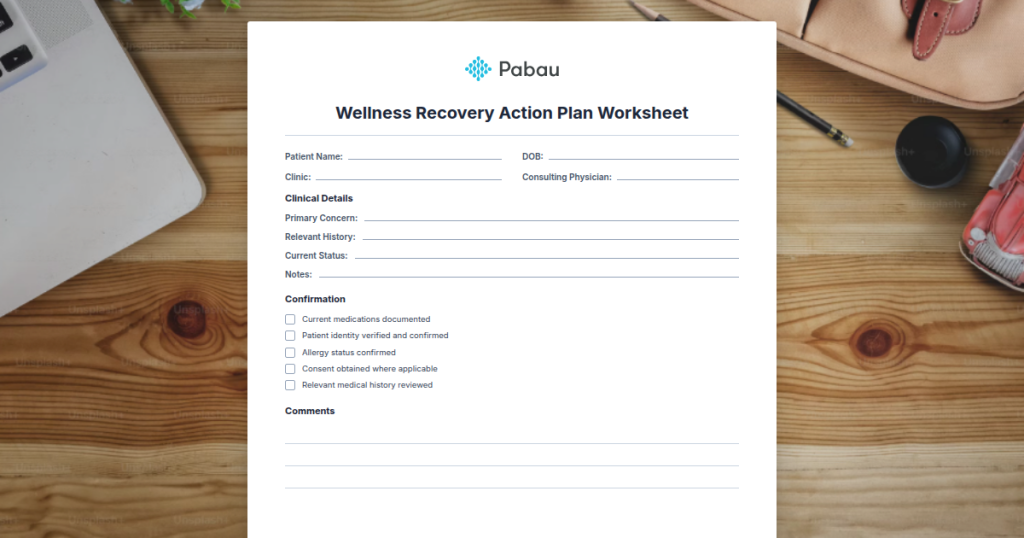
Wellness Recovery Action Plan Worksheet
Download Your Free Wellness Recovery Action Plan Worksheet Wellness Recovery Act...

May 5, 2026


Buy now, pay later is now available in Pabau

Behavioral health practice management software handles scheduling, billing, documentation, and compliance in one platform built for mental health providers.
Unlike general EHR systems, behavioral health platforms include note templates like SOAP, DAP, and BIRP that match therapy workflows and payer documentation requirements.
42 CFR Part 2 and HIPAA create stricter data-handling rules for substance use disorder records than most general medical software addresses.
Pabau’s customizable digital forms, telehealth tools, and multi-location scheduling make it a capable option for behavioral health and integrated wellness practices.
Behavioral health practice management software gives mental health providers a unified system for the operational work that surrounds clinical care. Scheduling, billing, clinical documentation, patient communication, and compliance tools sit in one platform rather than across five disconnected applications. For a mental health EMR, this integration matters because therapy workflows have specific documentation standards that generic medical software ignores.
According to SAMHSA’s 2024 National Survey on Drug Use and Health, approximately 61.5 million US adults (23.4%) experienced any mental illness in the past year. Behavioral health providers are scaling to meet that demand, and administrative bottlenecks are one of the fastest ways practices lose capacity. Understanding what practice management software does in a behavioral health context helps you evaluate platforms against the work your practice actually performs.
This guide covers the core feature categories, the compliance considerations unique to behavioral health, how this software differs from general EHRs, and what to prioritize when evaluating platforms for your practice.
Not all practice management platforms are built for therapy and psychiatry workflows. These are the features that distinguish behavioral health practice management software from generic clinic software.
Behavioral health documentation follows formats that differ from medical charting. SOAP notes (Subjective, Objective, Assessment, Plan), DAP notes (Data, Assessment, Plan), and BIRP notes (Behavior, Intervention, Response, Plan) are standard across therapy disciplines. Platforms built for behavioral health include these templates out of the box, reducing note-writing time and ensuring payer-compliant documentation.
Structured note templates also support measurement-based care. When a platform allows you to embed standardized outcome measures directly into progress notes, clinicians can track symptom trajectories over time without separate spreadsheets. Pabau’s digital clinical forms are fully customizable, so practices can build SOAP, DAP, or specialty-specific templates that match their workflows. AI-assisted documentation tools can further reduce the time clinicians spend transcribing session content into structured notes.
Therapy practices run on recurring appointments. A good behavioral health scheduling system supports recurring booking patterns, tracks session counts against authorization limits, and sends automated reminders that reduce no-shows. For group practices, multi-provider calendars with individual availability rules are essential.
Pabau’s multi-location scheduling and client portal let patients book online and manage appointments themselves, which is particularly valuable for reducing front-desk workload at high-volume behavioral health practices. Automated workflows can trigger appointment reminders, pre-session intake forms, and post-session satisfaction surveys without manual staff intervention.
Behavioral health billing has its own complexity. Mental health CPT codes for individual therapy (90834, 90837), group therapy (90853), and psychiatric evaluation (90791) have specific documentation requirements and payer rules that differ from standard medical codes. Insurance authorization limits mean practices need to track session counts and trigger re-authorization requests before coverage lapses.
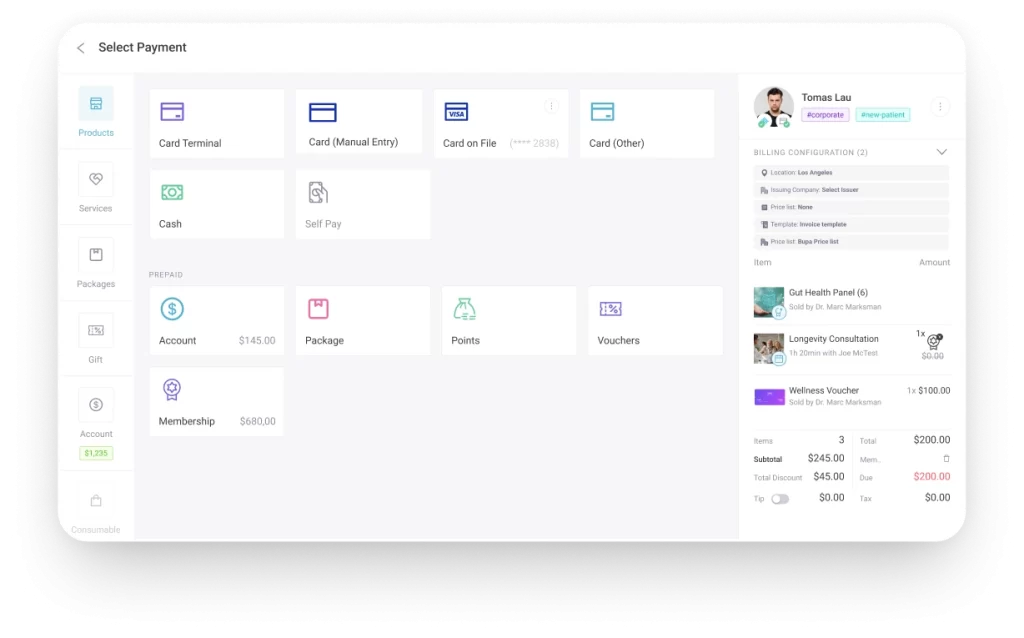
Pabau’s claims management tools support invoicing and payment collection within the platform. Practices with more complex insurance RCM needs should evaluate whether specialized behavioral health billing workflows match their payer mix.
Remote therapy is now a standard delivery model, not an exception. The American Psychological Association has published guidelines for telepsychology that cover platform security, informed consent, and clinical considerations. Behavioral health practice management software should include telehealth capabilities that are natively integrated with clinical notes and scheduling, rather than requiring a separate video platform that creates documentation gaps.
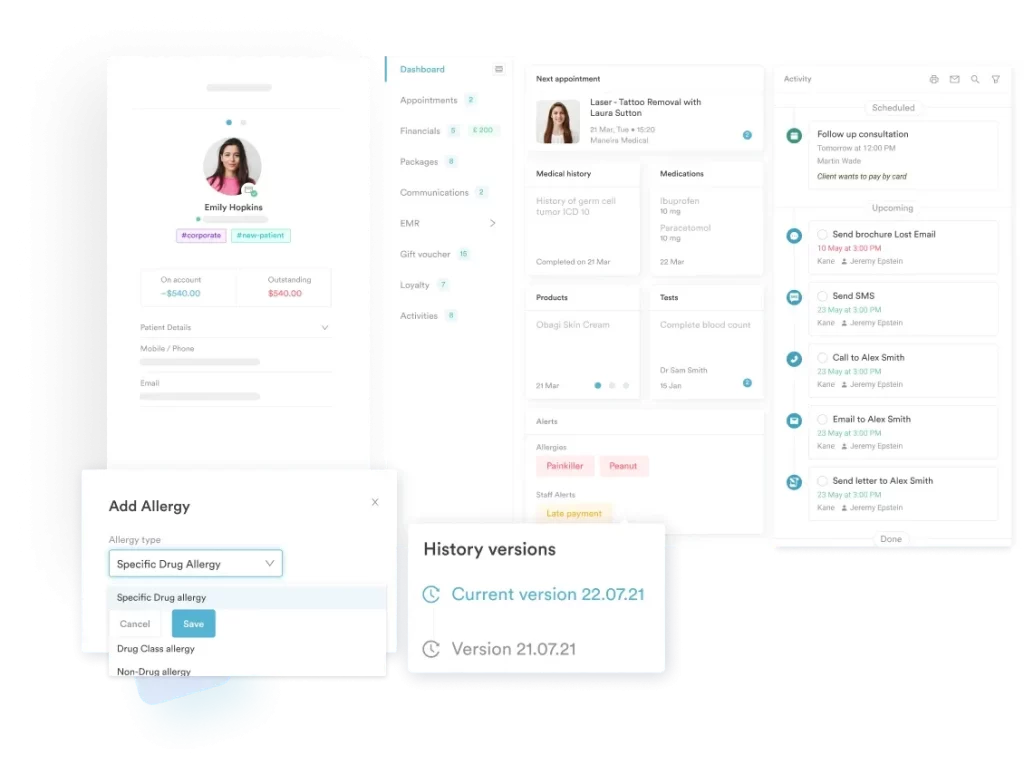
HIPAA-compliant video sessions, session documentation linked to the appointment record, and automated pre-session patient communications should all connect within the same system. Fragmented telehealth workflows add administrative time per session that compounds across a full caseload.
Behavioral health practices operate under a more complex regulatory environment than most medical specialties. Two frameworks require particular attention when evaluating software.
HIPAA applies to all protected health information, but behavioral health records carry additional sensitivity. Psychotherapy notes have specific protections under HIPAA that differ from standard medical records: they are not subject to the general right of access and require separate authorization to release. The platform you choose must handle these distinctions correctly at the record and permission level.
Review your practice’s HIPAA compliance requirements before evaluating software. Key questions: Does the vendor sign a Business Associate Agreement (BAA)? Is data encrypted in transit and at rest? Are audit logs maintained for record access? The HHS Office for Civil Rights publishes guidance on HIPAA requirements for behavioral health providers.
Practices treating substance use disorders face regulations beyond HIPAA. 42 CFR Part 2 prohibits the disclosure of substance use disorder treatment records without explicit patient consent, even to other treating providers. This is stricter than standard HIPAA sharing rules. Software used in integrated behavioral health settings must be able to segregate SUD records and enforce disclosure restrictions at the data level, not just through policy.
Practices operating under 42 CFR Part 2 should specifically confirm how any platform handles record segmentation before signing a contract.
Run a compliance checklist against any behavioral health practice management software before signing. Confirm the BAA, ask specifically about 42 CFR Part 2 record segmentation if you treat SUD patients, and verify audit log availability. Most vendors will provide a security documentation package on request.
General medical EHR systems are built around physician workflows: problem lists, medication management, lab orders, and procedure notes. Behavioral health practices have different clinical rhythms. Here is where the distinction shows up in practice.
A general EHR can be configured to support therapy workflows, but that requires significant customization effort and ongoing maintenance. Platforms built specifically for behavioral health include these structures by default, reducing the implementation burden for practices that need to be operational quickly.
Pabau sits in a useful middle position. It is a full practice management platform with clinical record capabilities, scheduling, billing, and compliance tools that can be configured for behavioral health alongside medical aesthetics, occupational health, and other specialties. That makes it particularly suitable for integrated wellness and behavioral health practices that serve patients across disciplines.

Pabau combines scheduling, clinical documentation, billing, and patient communication in a single system built for multi-discipline clinic environments. See how it works for behavioral health practices.

The right platform depends on your practice structure, payer mix, and clinical specialty mix. These five criteria should anchor your evaluation.
For practices running psychiatry workflows alongside therapy, the platform also needs to handle e-prescribing or prescription logging and medication management notes, not just therapy session documentation.
Pabau is not a therapy-only platform, and that is part of its value for a specific type of behavioral health practice. Practices that combine mental health services with wellness treatments, occupational health, or medical services benefit from a system where all those disciplines share one patient record, one scheduling system, and one billing workflow.
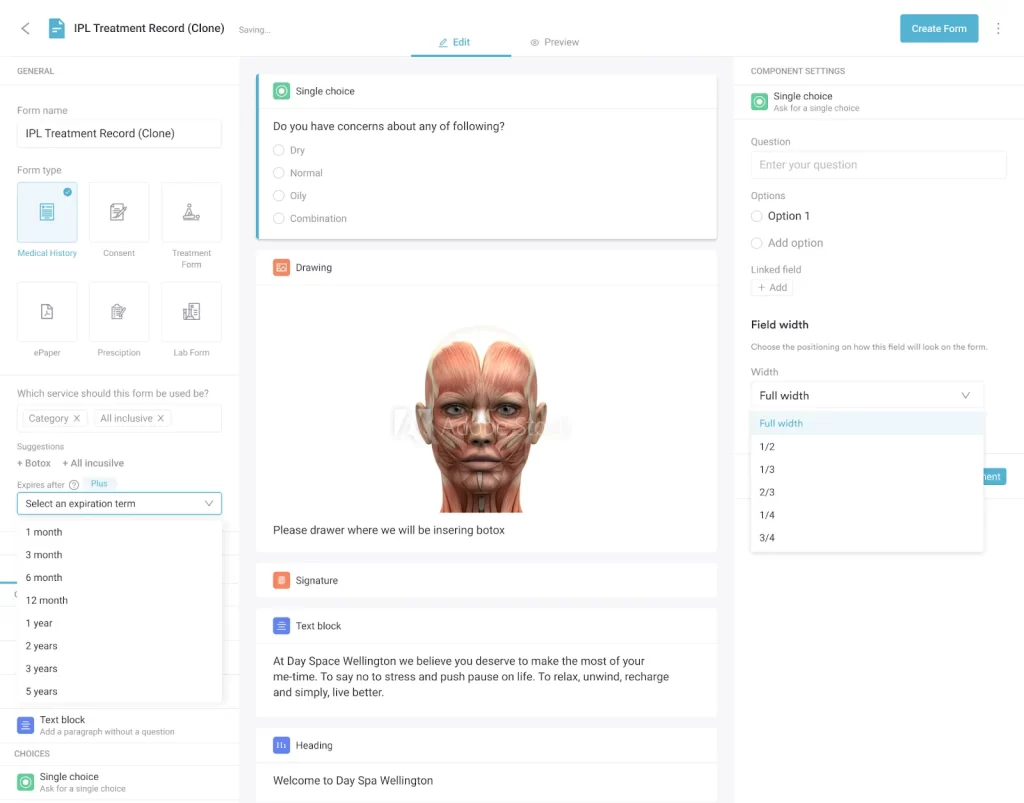
Here is where Pabau’s feature set maps to behavioral health operational needs:
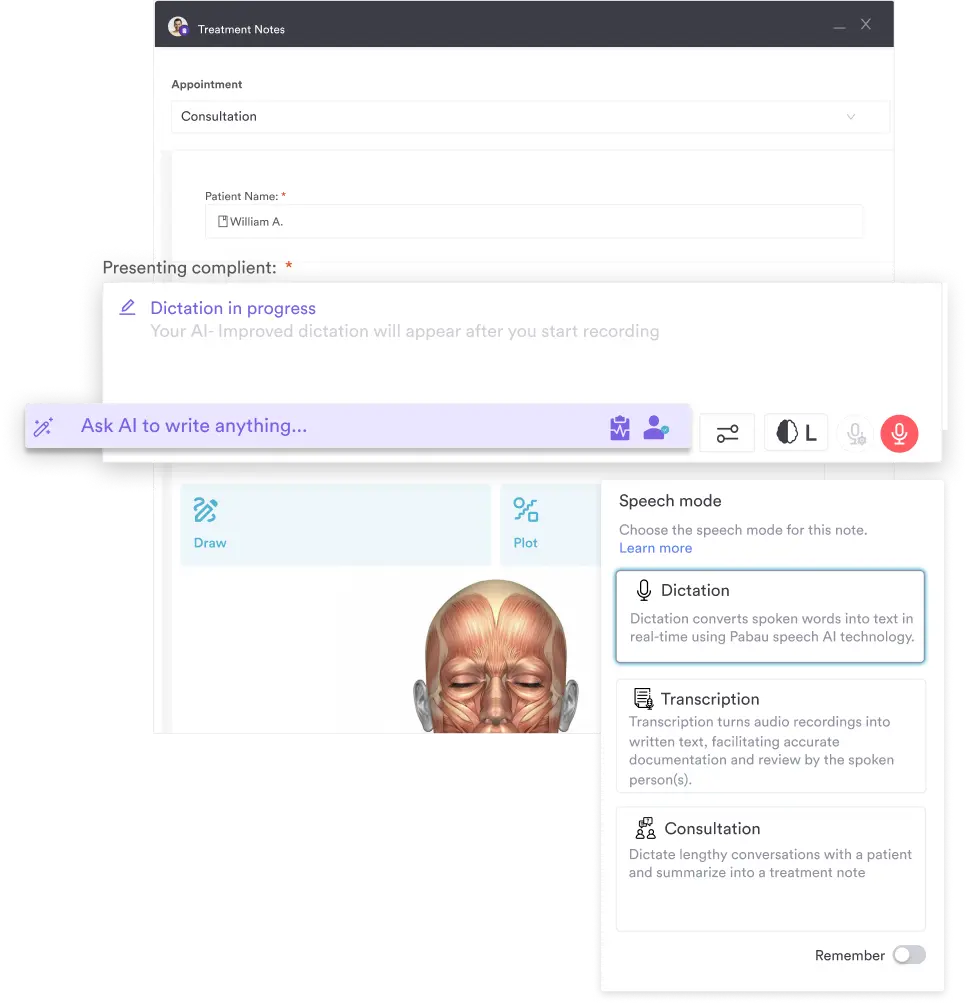
Pabau is rated 4.7/5 across 600+ verified Capterra reviews, with users highlighting the comprehensive feature set and multi-location support as key strengths. Practices evaluating Pabau for behavioral health use should note that the platform’s compliance positioning is strongest for GDPR and UK/EU regulatory environments, while US-specific insurance RCM workflows may require additional configuration.

Need a structured psychiatric evaluation framework? Psychiatric Evaluation Template provides a step-by-step guide for comprehensive mental health assessments that can be adapted for behavioral health intake workflows.
Running a therapy-focused practice? Therapy practice management covers the operational considerations for solo and group therapy practices, including scheduling models and documentation requirements.
Concerned about burnout in your behavioral health team? Therapist Burnout Signs, Causes and Prevention explores how administrative burden contributes to clinician burnout and what practices can do about it.
Behavioral health practices lose clinical capacity to administrative overhead when software does not match their workflows. Behavioral health practice management software addresses this by combining scheduling, documentation, billing, and compliance in one system built for mental health and therapy environments.
For practices that need flexible documentation tools, multi-location scheduling, and a platform that can grow with an expanding team, Pabau’s customizable clinical forms, automated workflows, and integrated telehealth make it a strong operational foundation. Book a demo to see how Pabau handles behavioral health and integrated wellness practice workflows.
Behavioral health practice management software is a platform that handles the operational and clinical workflows of mental health and therapy practices. It typically includes scheduling, clinical documentation with therapy-specific note templates, billing for mental health CPT codes, and HIPAA-compliant patient communication tools in one integrated system.
At minimum: SOAP/DAP/BIRP note templates, recurring appointment scheduling with authorization tracking, mental health CPT billing support, telehealth integration, HIPAA-compliant patient communication, and a client portal. Practices treating substance use disorders should also confirm 42 CFR Part 2 record handling.
General medical EHRs are built around physician workflows: medication management, lab orders, and procedure documentation. Behavioral health platforms prioritize therapy note formats, session-based scheduling, mental health billing codes, outcome measure tracking, and the specific compliance requirements that apply to psychotherapy and substance use disorder records.
Reputable behavioral health software vendors offer HIPAA-compliant platforms and will sign a Business Associate Agreement (BAA). However, HIPAA compliance requires both a compliant platform and internal policies. Always verify that the vendor provides a BAA and confirm how the platform handles psychotherapy notes and, if relevant, 42 CFR Part 2 substance use disorder records.
Yes, with the right configuration. Platforms with flexible form builders, customizable note templates, and open billing setups can be adapted for behavioral health workflows. The trade-off versus specialty-specific platforms is the upfront configuration effort. Practices combining behavioral health with other disciplines often find general platforms more practical for managing all services under one system.