How to Get More Therapy Clients: A Private Practice Growth Guide
Most therapists in private practice are not struggling because they lack clinica...

April 10, 2026


Buy now, pay later is now available in Pabau

Psychology Today and Zencare are among the highest-converting directory sources for private practice therapists.
Referral relationships with PCPs and psychiatrists often generate warm, motivated leads that convert faster than cold traffic.
A frictionless intake process, including online booking and automated reminders, is where most practices lose clients silently.
Pabau’s automated scheduling, digital intake forms, and recall workflows reduce admin overhead so therapists can take on more clients.
Most therapists in private practice are not struggling because they lack clinical skill. They are struggling because their systems are working against them. Leads arrive through directories, referrals, or Google, then disappear before the first appointment because the booking process is slow, the intake form is emailed as a PDF, or the follow-up never happens. According to the American Psychological Association, ethical, client-centered marketing is both appropriate and necessary for sustaining a healthy practice. The question is not whether to market, but how to do it efficiently. This guide covers how to get more therapy clients through directory optimization, referral networks, local search, niche positioning, and intake systems that stop the leak.
Therapy directories remain the fastest path to visibility for private practice therapists. Psychology Today is the most widely used by prospective clients searching for a therapist, and an optimized profile there consistently ranks as a top referral source across Reddit communities and practice-building blogs alike. Being listed is not enough. The profile has to do real persuasion work.
One directory decision that matters most: whether to accept insurance panels. Practices that carry at least one widely used insurer, particularly state-funded plans that few private practitioners accept, often fill faster. A therapist on Reddit described accepting three insurances in year one, including a state Medicaid plan, and filling their caseload within a year before having to turn clients away. Insurance acceptance is not the right model for every practice, but for new therapists, it accelerates visibility while you build private pay referrals in parallel.
Psychology Today costs around $30 per month. If one client stays for eight sessions, that investment pays back many times over. The calculus is simple: a paid directory listing is profitable if it generates even one retained client per quarter. Start with the two or three directories that dominate your local search results, then expand from there.
Referral relationships with primary care physicians, psychiatrists, and other therapists generate some of the highest-converting leads in private practice. A client referred by their GP arrives with trust already established. They are not browsing. They are ready to book.
Building this network takes consistent, low-pressure outreach. Introduce yourself to PCPs in your area, not to pitch your services, but to establish who you are and what you specialize in. Psychiatrists who prescribe medication frequently need a therapist to co-manage their patients’ care. Other therapists outside your niche are natural referral partners because they regularly encounter clients who are not a fit for them but could be a fit for you.
| Referral Source | Best Approach | Lead Quality |
|---|---|---|
| Primary care physicians | In-person introduction, leave a card with your specialty and availability | High – client is already seeking help |
| Psychiatrists | Reach out for co-management partnerships, especially for medication management clients | Very high – structured care need |
| Other therapists | Connect through peer consultation groups, offer reciprocal referrals | Medium-high – pre-screened by peer |
| Community organizations | Attend local events, offer free workshops or lunch talks | Medium – relationship-building phase |
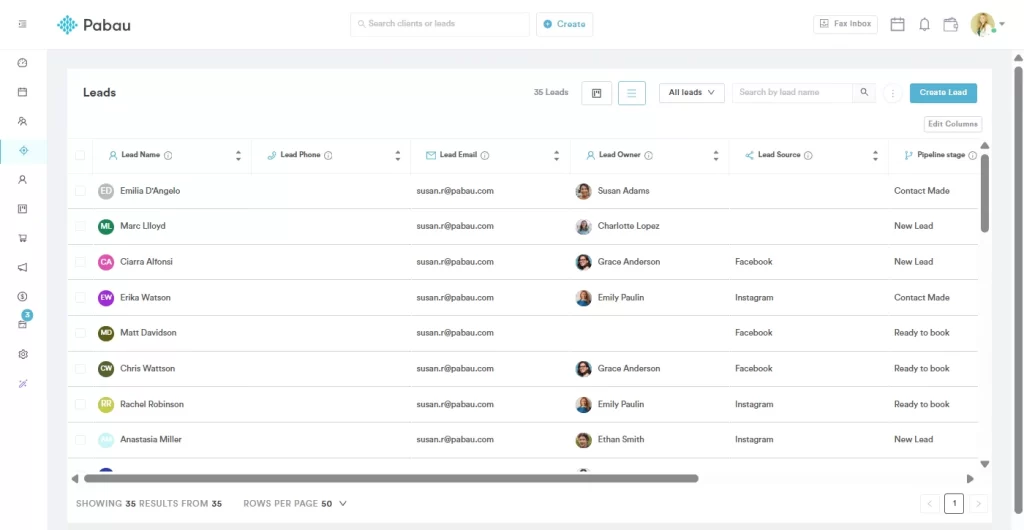
The key discipline is tracking. Which referral sources are actually producing clients? A therapist who reviewed their referral data discovered they had been spending marketing energy on sources that felt productive but converted rarely, while their highest-volume source (a single PCP) had received almost no attention. Pabau’s lead management tools let practices track where new clients come from so you can double down on what works and stop investing in what does not.
Make it effortless for referrers to send you clients. Have a ready-to-share link to your booking page or intake form. Keep a short one-pager describing your specialty, availability, and session format. Follow up warmly when a referral converts, within HIPAA-appropriate boundaries, so referrers know their clients landed well. That confirmation encourages more referrals.
When someone searches “therapist near me” or “CBT therapist [city]”, Google’s local results appear before organic listings. A Google Business Profile (GBP) puts your practice in those results. Many therapists have not claimed or optimized their GBP, which means they are invisible to a substantial slice of local search traffic.
Your practice website reinforces local SEO. Include the city and state in your page titles, headings, and meta descriptions. A page titled “Anxiety Therapist in Austin, TX” ranks differently than a page titled “Services.” If you support telehealth, specify which states you are licensed in. For UK practitioners, the British Association for Counselling and Psychotherapy (BACP) provides guidance on ethical self-promotion that applies to online presence as much as print advertising.
Audit your Google Business Profile every quarter. Update your availability, refresh your description with your current specialties, and check that your booking link works. An outdated or broken profile pushes clients to the next result on the page.
Generalist therapists compete on price. Specialists compete on fit. A therapist who works with everyone must justify their rate against every other therapist in the area. A therapist who specializes in perinatal mood disorders, complex trauma in first-generation immigrants, or anxiety in high-achieving professionals gets found by clients who are already certain they need exactly that person.
Niche positioning reduces price sensitivity because the client is not comparison shopping on cost. They are looking for the one person qualified to help with their specific situation. Private Practice Skills describes this directly: “folks looking for someone who specializes in what you do will be less focused on shopping for the lowest rate and more focused on their relief in finding someone who specializes in exactly what they’re looking for.”
Defining a niche does not mean turning away every client outside it. It means leading with your specialty in your directory bio, website, and referral conversations. You will attract more clients who are a strong fit, which also tends to improve retention because the therapeutic work is more resonant.
For therapists considering a mental health practice built around a specific clinical population, the niche shapes everything: which directories to prioritize, which referral sources to cultivate, and which CE credits to pursue to deepen authority in that space.

Pabau handles scheduling, digital intake, automated reminders, and client record management so you can focus on clinical work, not administration. Book a demo to see the full workflow.

The intake process is where most therapy practices lose clients silently. A prospective client finds your profile, feels ready to reach out, then hits a wall: a contact form with no response for 48 hours, a phone number that goes to voicemail, a PDF intake form sent via unencrypted email. Each friction point is a drop-off event. The Group Practice Exchange identifies five common failure points in the intake process where therapy clients stop progressing to booked appointments.

Practices that tighten these five touchpoints consistently report higher conversion from lead to booked appointment. The clients are already motivated. The system just needs to get out of their way. Pabau’s client portal gives prospective clients a single access point for booking, forms, and communication, reducing the number of tools both the therapist and the client have to manage.
Filling a practice is not just about acquiring new clients. Retention matters as much as acquisition. A therapist who consistently loses clients after four to six sessions needs a much higher referral volume than one whose clients stay for twelve or more. Retention starts with the quality of the therapeutic alliance, but systems play a role too.
Consistent scheduling, session reminders, and between-session check-ins all reinforce the client’s sense of being held in the therapeutic relationship. When life gets busy and a client is tempted to skip a session, a timely reminder shifts the decision back toward attending. For practices managing a mix of in-person and telehealth clients, telehealth tools that integrate directly with scheduling reduce the friction of remote sessions and improve attendance for clients who would otherwise cancel due to travel or schedule constraints.
Retention also means proactively reaching out to inactive clients. A client who paused therapy three months ago may be ready to return. An automated recall sequence, sent at intervals you define, keeps your practice top of mind without manual effort. Pabau’s email and SMS campaigns support exactly this kind of structured outreach for therapy practices managing larger caseloads.
Solo therapists approaching full capacity face a different decision than group practice owners. For group practices, client acquisition scales differently: each new clinician added to the roster represents new availability, new specialty areas, and new referral relationships. The challenge shifts from “how do I get more clients?” to “how do I match the right client to the right clinician quickly?” A practice management platform that tracks clinician availability, specialty, and caseload across the team makes that matching faster and more consistent.

Want to reduce no-shows across your therapy practice? How to Improve Your Patient No-Show Rate covers reminder sequences and cancellation policy strategies that work for mental health practices.
Ready to set up a digital intake workflow? Pabau Digital Forms lets you build HIPAA-aware intake forms that clients complete before their first session.
Looking for guidance on therapy practice operations? Therapy Practice Management explains how Pabau supports scheduling, clinical notes, and client communications for therapists in private practice.
Need a framework for practice marketing? Marketing for Clinics outlines the channels and tactics that consistently drive new patient acquisition across healthcare practices.
The core problem most therapists face is not a shortage of people who need help. It is a visibility and systems gap: the right people cannot find them easily, and when they do, the intake process loses them before they book. Closing that gap requires consistent directory presence, active referral relationships, and a frictionless path from inquiry to first session.
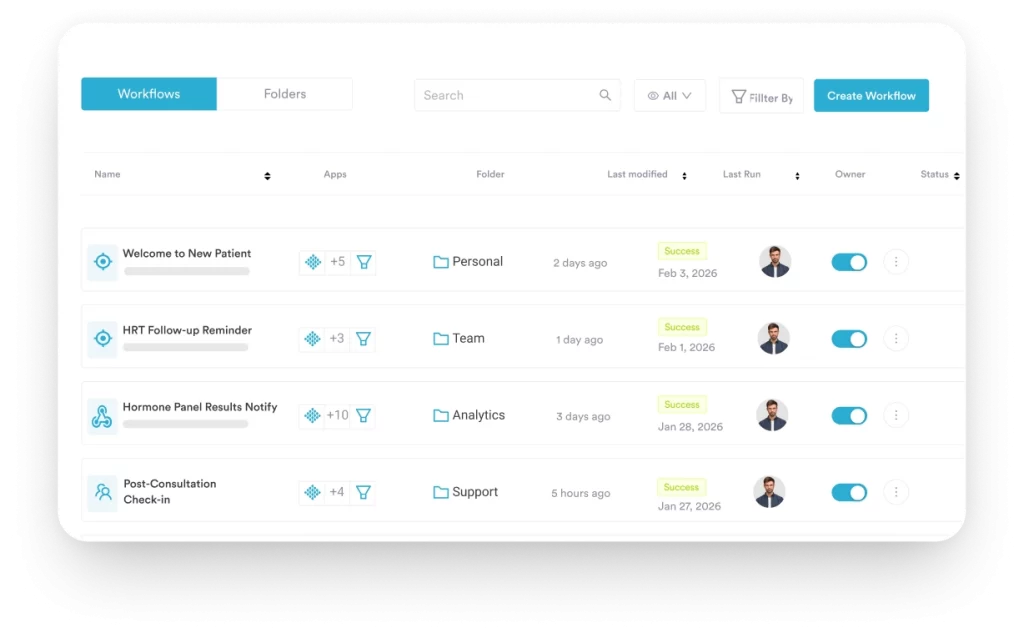
Pabau’s automated scheduling, digital intake forms, appointment reminder sequences, and recall campaigns give therapy practices the infrastructure to convert more leads and retain more clients without adding administrative hours. To see how these workflows operate in practice, book a demo and walk through the full client journey from inquiry to retained client.
Most therapists get their first clients through a combination of directory listings (especially Psychology Today) and warm introductions to PCPs or other mental health professionals in their area. Accepting at least one insurance panel early on can accelerate referral volume because in-network therapists appear in insurer directories and often have shorter wait times for prospective clients searching by coverage.
Niche specialization is the most reliable lever for attracting private pay clients at a sustainable rate. When you are positioned as the expert for a specific population, clients are less focused on comparing fees and more focused on finding the right fit. A well-optimized website, active directory profile on Zencare or TherapyDen (which skew toward private pay searchers), and referral relationships with PCPs who serve your target demographic all support private pay growth.
The most common culprits are incomplete directory profiles, a slow or friction-heavy intake process, and inconsistent follow-up with leads. A prospective client who submits a contact form and receives no response within 24 hours will typically move on. Review your inquiry-to-booking conversion rate and identify where the drop-off occurs before investing further in lead generation.
Psychology Today has the largest reach and is the most commonly cited source by clients. Zencare attracts higher-income private pay searchers and has strong coverage in major US cities. TherapyDen is popular with LGBTQ+ and BIPOC-affirming searchers. For insurance-eligible clients, Headway and Zocdoc are worth adding. Start with the two directories that dominate your local search results before expanding.
Directory optimization, Google Business Profile management, referral network development, and a well-structured website can fill a caseload without any social media presence. Many therapists successfully maintain full practices through referral relationships alone. Consistent outreach to PCPs, psychiatrists, and peer therapists in adjacent specialties typically delivers higher-converting leads than social media content, particularly in the first two years of private practice.