

Fertility Reproductive & Sexual Health
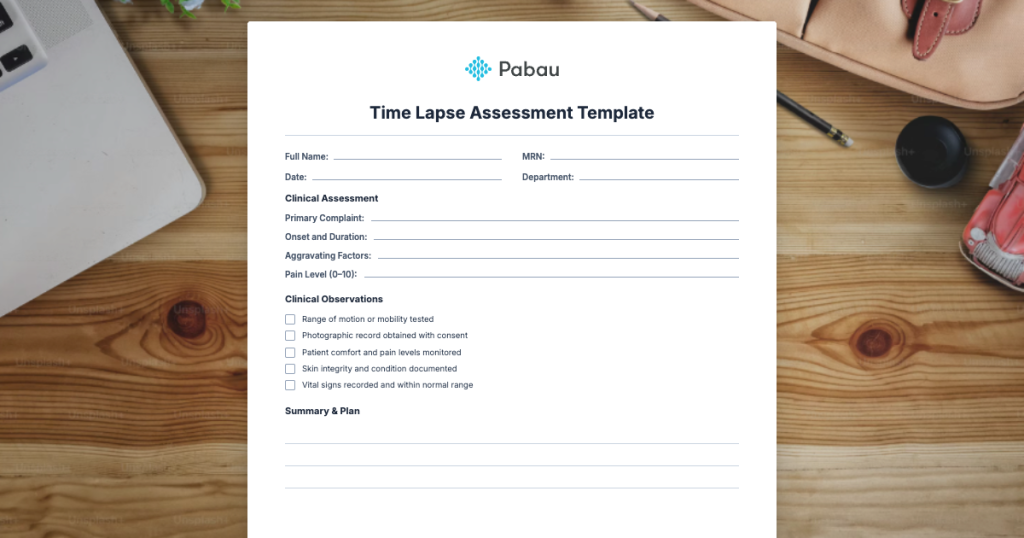
Time Lapse Assessment Template
Download Your Free Time-Lapse Assessment Time-Lapse Assessment A comprehensive t...

March 30, 2026


Buy now, pay later is now available in Pabau

Structured 75-day fitness and mental toughness challenge combining two workouts, nutrition discipline, and personal development
Track daily progress with a dedicated PDF template covering workouts, hydration, dietary compliance, and accountability
Monitor all programme requirements systematically to avoid restarts and maintain consistency across the full 75 days
Support clients or staff through intensive wellness programmes with clear documentation and habit formation tracking
The 75 Hard Challenge is a transformative mental toughness programme created by Andy Frisella that combines intensive fitness, nutritional discipline, and personal development over 75 consecutive days. For wellness professionals, coaches, and healthcare practitioners managing clients through this demanding challenge, a 75 Hard Challenge PDF Template is essential to track daily progress, ensure accountability, and monitor compliance with all programme requirements. This guide explains how to use a tracking template effectively and provides a free downloadable resource to support your clients throughout their 75-day journey.
A comprehensive tracking document designed to monitor patient and client progress during the 75 Hard mental toughness challenge. Includes sections for fitness tracking (two daily workouts), dietary discipline, hydration accountability, personal development activities, and daily compliance checkboxes across all 75 consecutive days.
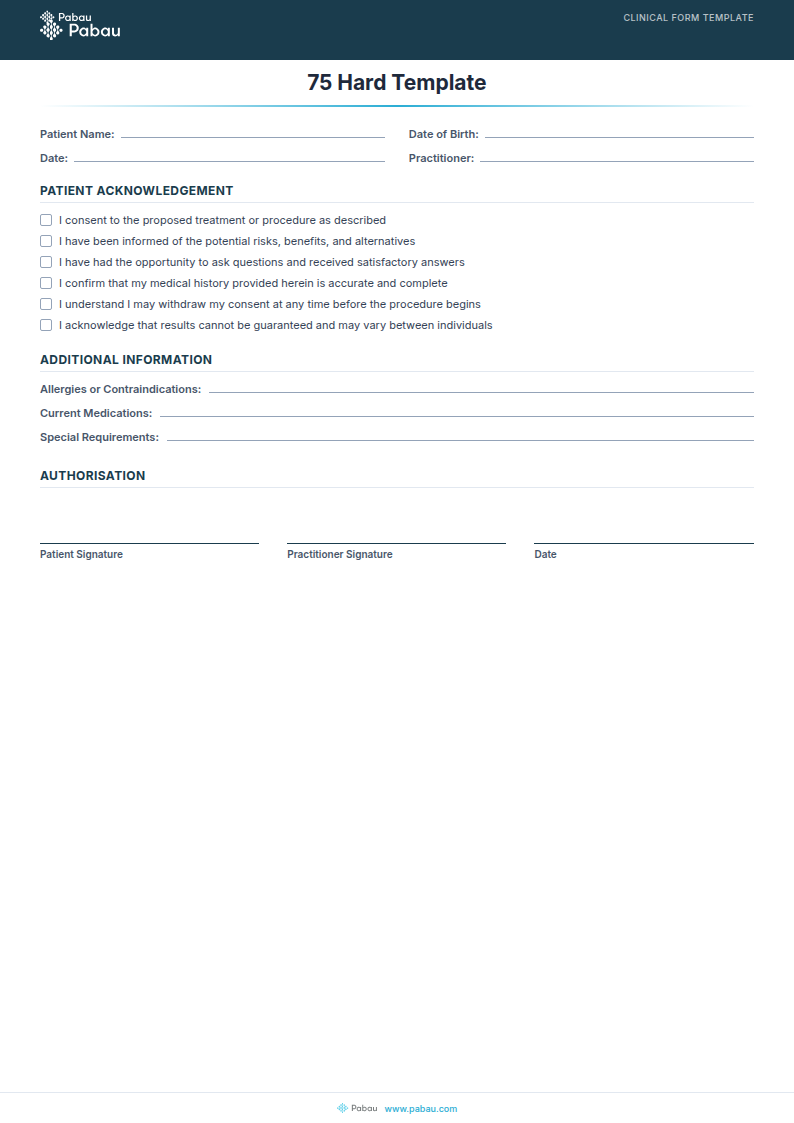
The 75 Hard Challenge PDF Template is a structured tracking document that helps practitioners and clients document daily progress throughout the 75-day mental toughness programme. Created by entrepreneur Andy Frisella, the 75 Hard Challenge requires participants to complete five non-negotiable daily tasks for 75 consecutive days, with a single missed requirement triggering a restart from day one. This creates intense accountability pressure and builds resilience through consistent habit execution, supported by wellness clinic software platforms that automate tracking across multiple clients.
A tracking template serves as the operational backbone of this programme. It records daily compliance across all programme elements: two 45-minute workouts (one indoors, one outdoors), drinking one gallon of water daily, following a disciplined diet, reading 10 pages of a non-fiction book, and taking a progress photo. Practitioners use the template to monitor which clients meet daily requirements, identify patterns of struggle, and provide targeted support when compliance wavers. Research from the National Institutes of Health on habit formation demonstrates that consistent daily tracking accelerates habit consolidation; structured documentation transforms conscious effort into automatic behaviour.
For wellness coaches, personal trainers, and healthcare professionals managing clients through intensive behaviour-change programmes, a PDF template provides documented evidence of engagement, compliance trends, and outcome tracking. This documentation supports professional accountability and allows practitioners to adjust coaching strategies based on real compliance data rather than client perception alone.
Implement the 75 Hard Challenge PDF Template using a five-step daily tracking workflow that keeps clients accountable whilst providing practitioners with clear compliance data for coaching decisions. Many clinics scale this manual tracking by connecting template data to client management systems that automate documentation and generate compliance reports automatically.
Wellness clinics and coaching practices managing multiple clients through intensive programmes need systems that go beyond spreadsheets. Book a demo to see how clinic software streamlines client tracking, progress documentation, and accountability workflows across your entire practitioner team.
The 75 Hard Challenge PDF Template supports multiple practitioner roles managing clients through intensive wellness and behaviour-change programmes. Personal trainers use the template to document whether training clients complete required workout sessions and maintain dietary compliance, transforming client self-reports into objective tracking records. Fitness coaches running group challenges or client cohorts use templates to monitor entire populations at once, identifying which members struggle with specific requirements so targeted group coaching addresses common barriers. Client portal systems can streamline this tracking by allowing clients to self-report daily progress, reducing administrative burden on practitioners.
Mental health and wellness practitioners use the template to track how clients build habit consistency whilst managing underlying anxiety, depression, or motivation challenges. The 75-day structure creates natural therapy discussion points: exploring what day a client restarted reveals stress triggers, while consistent completion signals growing resilience and self-efficacy. The American Psychological Association outlines how resilience and self-efficacy in mental health are cultivated through repeated mastery experiences — precisely the mechanism the 75-day structure is designed to trigger. Nutritionists tracking clients through strict dietary protocols use the template’s nutrition field to document adherence patterns and problem-solve when clients struggle with specific meal types or social eating situations.
Corporate wellness coordinators running employee fitness challenges, healthcare clinic teams supporting patient lifestyle change programmes, and life coaches guiding clients through personal transformation all benefit from structured daily tracking. The template converts subjective “how’s the challenge going?” conversations into objective completion data that informs whether a client needs additional support, stronger accountability structures, or a modified programme.
Objective Accountability Data. The template converts subjective client reports into documented daily compliance records. Research consistently demonstrates that self-monitoring behaviour change outcomes are significantly stronger when participants track progress with structured tools rather than relying on recall alone. Rather than asking “Did you stay on track?”, practitioners review completed tracking sheets that show exactly which requirements the client met, creating undeniable accountability and eliminating rationalisation. Clients take the challenge more seriously when they know daily completion is being documented and reviewed. This accountability principle underpins effective client management in coaching practices.
Early Intervention on Lapses. Tracking templates reveal patterns before full programme abandonment occurs. When a client misses water intake three days running or skips outdoor workouts consistently, practitioners spot the trend and can intervene with targeted support-problem-solving access barriers, adjusting accountability structures, or identifying life circumstances driving non-compliance. Early pattern recognition prevents cascading failures.
Restart Documentation and Learning. The 75 Hard Challenge’s “reset to day one” rule creates psychological challenge; tracking which requirement triggers restarts teaches both practitioner and client what drives programme abandonment. Some clients discover they can handle intensity but struggle with dietary restriction; others find workouts manageable but fail on reading discipline. Documented restart patterns inform future programme modifications or coaching focus areas.
Progress Visibility Beyond Scale Weight. Tracking fitness workouts, hydration consistency, dietary compliance, and reading completion creates multi-dimensional progress visibility. Many clients experience weeks where scale weight plateaus; visible completion of all five daily requirements reinforces that progress is occurring even when physical changes pause, sustaining motivation through frustrating periods.
Practitioner-Client Communication Structure. Weekly template reviews create natural coaching conversation anchors. Practitioners examine compliance data and ask “I notice you completed workouts consistently but struggled with water intake on Wednesdays-what was happening those days?” This data-driven discussion replaces vague accountability conversations with specific, solvable problem identification.
Track restart triggers separately from daily compliance. When a client restarts on day 47, document which requirement failed (workout, diet, water, reading, or photo) in a summary field. Patterns across clients reveal which 75 Hard Challenge requirements are universally difficult-this intelligence guides how you structure accountability support and adjust client expectations.
The 75 Hard Challenge’s five daily requirements build mental toughness through cumulative discipline rather than any single extreme element. The 75 Hard Challenge PDF Template must track each requirement precisely because deviation in any single area triggers programme restart. Two 45-minute workouts daily require significant time commitment but are achievable with planning; many clients underestimate the mental difficulty of showing up outdoors during poor weather or maintaining indoor workouts after long work days. Mayo Clinic guidance on sustainable fitness routines emphasises that consistency matters more than intensity for long-term health outcomes.
The one-gallon water intake requirement creates physiological adaptation challenges — exceeding standard daily water intake recommendations for most adults; some clients experience bloating or bathroom frequency disruption during the first weeks. Tracking water completion helps practitioners normalize these temporary discomforts and encourages persistence. The strict diet requirement-no alcohol, no sugar, no processed foods-eliminates the “mostly clean eating” approach many clients use; compliance reveals whether clients can sustain true discipline or whether they have underlying food relationships requiring therapeutic work.
The daily 10-page reading requirement battles the “I don’t have time” excuse by requiring only 20-30 minutes, making non-compliance difficult to justify. Research confirms non-fiction reading cognitive benefits extend beyond knowledge acquisition into measurable improvements in analytical thinking and sustained concentration., making non-compliance difficult to justify. Practitioners using the template should ask which books clients selected; choosing books aligned with personal goals creates additional motivation layer beyond the pure habit-building exercise.
Practitioners supporting clients with specific health conditions or limitations can modify the 75 Hard Challenge PDF Template to maintain intensity whilst accommodating medical constraints. Clients with joint injuries may substitute low-impact workouts (swimming, cycling, rowing) for high-impact running, provided the 45-minute duration and two-workout requirement remain unchanged. The template should note workout substitutions so practitioners ensure clients aren’t using adaptations as difficulty-reduction excuses rather than genuine accommodations.
Clients managing insulin-dependent diabetes or specific dietary medical protocols — who should follow exercise guidelines for diabetes management — may adapt the “no sugar, no alcohol” requirement to align with medically-mandated nutrition guidelines; the template’s diet field should explicitly document the approved adaptation, preventing client self-rationalisation. Pregnant clients can reduce high-intensity workout frequency if approved by their healthcare provider, but should document the medical modification in the template to maintain coaching credibility and ensure the challenge remains genuinely demanding within their current context. The American College of Obstetricians and Gynecologists publishes detailed prenatal exercise safety guidelines that practitioners should reference when approving any workout modifications for pregnant clients. in the template to maintain coaching credibility and ensure the challenge remains genuinely demanding within their current context.
The critical principle when adapting the template: the 75 Hard Challenge retains its power through uncompromising daily requirements. Adaptations for legitimate health constraints are appropriate; casual excuses eroding requirements defeat the programme’s mental-toughness purpose. The template should make this distinction explicit through separate “standard requirement” and “modified per medical recommendation” fields.

Looking to track client wellness programmes more efficiently? Digital Forms allows you to move template tracking from PDFs into your clinic software, automating daily compliance documentation and generating analytics dashboards that show client progress patterns instantly.
Need to document clinical notes alongside challenge tracking? Echo AI streamlines clinical documentation so you can write session notes whilst the software automatically structures progress tracking data into client records.
Want to scale accountability across multiple clients? Wellness Clinic Software coordinates tracking, scheduling, and progress monitoring across your entire practitioner team, transforming manual PDF templates into integrated client management.
The 75 Hard Challenge’s intensity and uncompromising daily requirements create powerful behaviour change-but only when practitioners have systems to track, document, and respond to compliance data. A 75 Hard Challenge PDF Template transforms client self-reports into documented daily evidence, revealing exactly which requirements drive struggle and where practitioners should focus coaching support. By tracking all five daily elements systematically across 75 consecutive days, practitioners build accountability structures that sustain client motivation, enable early intervention when lapses occur, and create learning data that informs future programme design.
Download the free template above and begin implementing structured tracking with your next client cohort. Each completed tracking sheet becomes both accountability evidence and coaching intelligence-the foundation of intensive wellness programmes that actually deliver sustained behaviour change.
If any single requirement is missed-even reading just one page instead of 10-the entire challenge restarts at day one. This uncompromising rule creates the psychological difficulty that builds mental toughness. The template’s daily compliance checkbox makes restart triggers immediately visible to both practitioner and client.
Yes, with medical approval. Clients with joint injuries can substitute low-impact activities (swimming, cycling, rowing) for high-impact workouts, provided the 45-minute duration remains unchanged. The template should document medical modifications explicitly so practitioners ensure adaptations are genuine health accommodations, not difficulty-reduction excuses.
When a client restarts repeatedly on the same requirement, that reveals a coachable pattern. Track which requirement triggers restarts, identify the underlying barrier (time, motivation, life circumstance, or genuine difficulty), and provide targeted support. Some clients discover they need accountability partners for workouts; others need meal planning support for diet compliance.
The 75 Hard Challenge is designed for people who already have fitness discipline and are seeking mental toughness development. The two-workout requirement is demanding; beginners or deconditioned clients should establish base fitness first. The template’s tracking data helps practitioners identify when clients are genuinely underprepared versus when they’re simply lacking motivation.
Weekly reviews allow practitioners to identify patterns before they cascade into programme abandonment. A brief Sunday review of the week’s entries takes 5-10 minutes and reveals which requirements the client struggled with, enabling targeted coaching adjustments that sustain motivation and programme completion.
Absolutely. Corporate wellness coordinators and fitness studios can use the template for entire groups, collecting consolidated compliance reports that show team-wide patterns. Team competitions often increase motivation when shared progress is visible; practitioners can highlight which team members maintain perfect compliance to inspire group accountability.