Best Hair Transplant Clinic Software in the US (2026 Guide)
Compare five practice management platforms built for US hair transplant clinics ...

March 25, 2026


Buy now, pay later is now available in Pabau

Pabau supports multi-specialty private practices across aesthetics, wellness, GP clinics, and allied health with unified CRM and clinical workflows
Four GPIT-accredited GP systems (HealthOne, Helix Practice Manager, Socrates, CompleteGP) provide HSE integration and medical card billing for Irish primary care
GDPR compliance is universal, but HIQA-specific templates and local audit trails vary significantly between international and Irish vendors
Cloud deployment enables remote access and multi-location management, while local vendors offer timezone-aligned phone support during Irish business hours
Private practices prioritising treatment packages and self-pay workflows benefit most from platforms built for appointment-heavy operations
Ireland’s healthcare software market splits into two distinct segments. The ICGP’s GPIT Group accredits four GP practice management systems for Irish primary care: HealthOne, Helix Practice Manager, Socrates (all Clanwilliam Group), and CompleteGP (independent). Multi-specialty platforms serve the expanding private practice, aesthetics, and allied health sectors where treatment packages and self-pay workflows drive revenue. Both require GDPR compliance under HIQA oversight, but operational priorities differ sharply. A GP surgery processing 300 medical card consultations monthly needs different infrastructure than a multi-practitioner wellness clinic running 120 private appointments daily across physiotherapy, aesthetics, and functional medicine.
This guide evaluates five electronic health record systems available to Irish practices in 2026. We compare clinical documentation depth, billing workflow alignment, regulatory compliance features, and practice type suitability. Pricing data, integration capabilities, and implementation requirements appear where vendors publish them. Platform selection depends on your practice model, payer mix, and growth trajectory-not marketing claims.
Each platform serves distinct practice types and operational workflows. Pabau anchors multi-specialty private clinics requiring appointment-heavy scheduling and treatment package management. HealthOne, Helix Practice Manager, Socrates, and CompleteGP are the four GPIT-accredited GP practice management systems serving Irish primary care with HSE integration and medical card billing. The comparison below summarises core positioning before detailed evaluation.
Pabau serves multi-disciplinary private clinics across aesthetics, wellness, physiotherapy, private GP services, and allied health. The platform consolidates appointment-heavy scheduling, treatment package management, automated client communications, and clinical documentation into a unified system. Practices running 15-30 appointments daily across multiple practitioners and service lines benefit from workflow automation that reduces administrative overhead while maintaining detailed clinical records.
Irish clinics using Pabau typically operate private-pay or mixed-billing models. The system supports VHI, Laya Healthcare, and Irish Life Health claims workflows, treatment package sales, and self-pay invoicing. Cloud deployment enables multi-location management and remote access, aligning with the growth trajectory of expanding private healthcare operations. Regulatory compliance includes GDPR-compliant data processing, encrypted patient records, and role-based access controls meeting Data Protection Commission Ireland requirements.
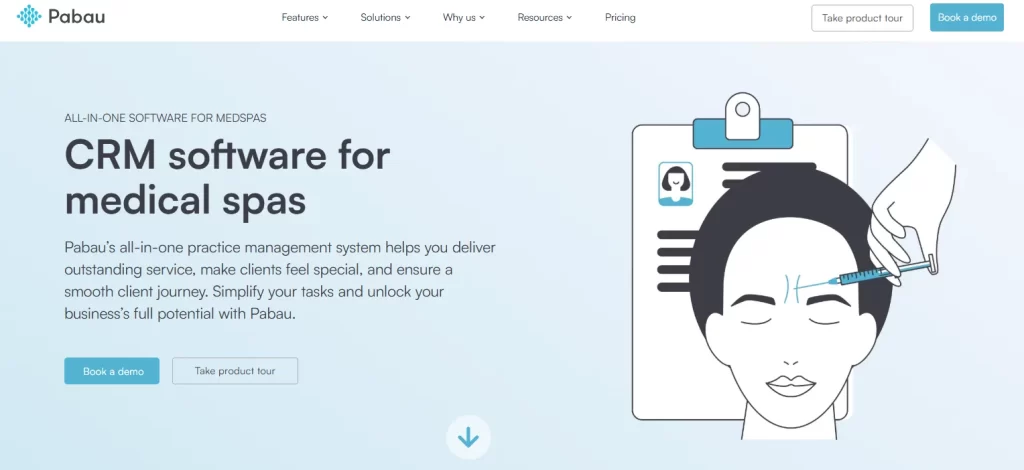
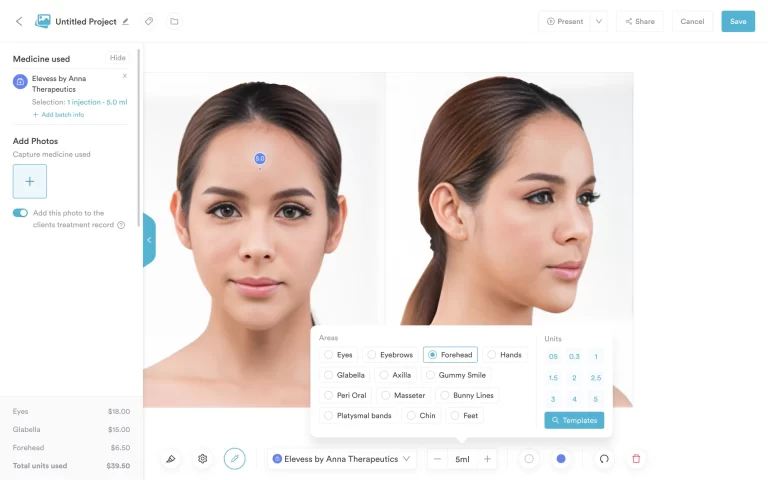
The platform integrates AI-powered clinical documentation through Echo AI, automating treatment note generation from voice dictation. Injection plotting tools support aesthetic practitioners documenting Botox and filler treatments. Before-and-after photography workflows include facial mapping, timestamped galleries, and secure client portal access. These features address documentation requirements specific to cosmetic and aesthetic procedures where visual records complement written notes.
According to Capterra reviewers, Pabau receives a 4.5 out of 5 rating based on over 370 verified reviews. Users highlight the platform’s comprehensive feature set for multi-specialty practices, treatment package automation, and responsive support team. Common feedback notes the learning curve for complex automation workflows and the investment required for full onboarding.

Discover how Pabau streamlines multi-specialty clinic operations with treatment package automation, integrated payments, and GDPR-compliant documentation workflows designed for private healthcare delivery in Ireland.

Helix Practice Manager (HPM), developed by Clanwilliam Health, is one of the four GPIT-accredited GP practice management systems in Ireland. The platform has been certified in every GPIT review cycle since 1999 (including 2003, 2008, 2014, 2018, and 2022), making it one of the longest-continuously-accredited systems in Irish primary care. HPM serves GP surgeries processing high volumes of GMS-contracted consultations where PCRS claim accuracy and HSE connectivity determine operational viability.
The system connects directly to HSE infrastructure for chronic disease management (CDM) programmes, Individual Health Identifier (IHI) validation, e-referrals, and e-prescriptions. Medical card billing automation includes PCRS claim generation with GMS number validation directly against the PCRS database. HPM supports Covid vaccination records, childhood immunisation schedules, and electronic laboratory result imports from Irish hospital networks.
Helix Practice Manager provides a Health Summary view giving GPs patient information at a glance with drug allergy alerts and clinical flags. The prescribing module supports batch printing for repeat prescriptions, and the exams management feature organises blood and laboratory results from hospitals. GDPR Sentinel tools handle data subject access requests, auditing, and right-to-be-forgotten compliance.
Helix Practice Manager pricing requires direct consultation with Clanwilliam Health. Licensing models typically involve per-GP fees with additional charges for modules, training, and implementation services. As part of the Clanwilliam Group (which also operates HealthOne and Socrates), practices may benefit from group licensing arrangements.
Helix Practice Manager appears on Capterra with reviews from Irish GP users. Positive feedback highlights the pathology request system, spell-checking, and remote access capabilities. Criticism centres on customer service responsiveness and difficulty extracting patient data when transferring between systems.
Socrates, another Clanwilliam Health product and GPIT-accredited system, targets Irish primary care practices requiring regulatory compliance workflows and clinical decision support. The platform serves GP surgeries and health centres managing chronic disease programmes, childhood immunisation schedules, and preventative care initiatives where documentation standards determine quality metrics and funding eligibility. Practices participating in HSE-contracted programmes benefit from embedded protocol templates and audit trail automation.
The system includes pre-built templates for diabetes management, cardiovascular screening, and asthma reviews aligned with HSE chronic disease management frameworks. Automated recall systems track patient review dates, generate reminder communications, and flag overdue assessments. This supports practice participation in quality improvement programmes where outcome measurement drives reimbursement levels.
Socrates integrates with Irish laboratory networks for electronic result delivery. Test orders transmit directly from the clinical record to diagnostic providers. Results populate patient files automatically with abnormal findings flagged for GP review. This reduces transcription errors and accelerates clinical decision-making for acute and chronic condition management.
Socrates pricing requires vendor consultation. Licensing typically involves per-practitioner fees with support packages and implementation services quoted separately. Practices should clarify chronic disease module costs and training requirements during evaluation.
Public review data for Socrates is limited on international review platforms. As a GPIT-accredited Clanwilliam Group product, Socrates operates primarily through direct relationships with Irish GP practices. Users report value in chronic disease management templates and HSE programme compliance workflows.
CompleteGP is the only independently-owned GPIT-accredited GP practice management system in Ireland (the other three are owned by Clanwilliam Group). Based in Sandyford, Dublin, CompleteGP brings 19 years of clinical experience to Irish general practice. The platform is built natively on SNOMED CT, ICD-10, ICPC-2, and LOINC coding systems, positioning it as the most standards-aligned GP system in the Irish market.
The system provides full HSE/PCRS integration including automated STC submission, Healthlink connectivity for laboratory results and hospital correspondence, Healthmail for secure doctor-to-doctor referrals, and DEASP integration. CompleteGP supports voice-activated data entry, clinical flowcharts auto-filled from laboratory imports, and direct device integration for blood pressure monitors, ECGs, and INR meters. The platform also includes a Warfarin dosing calculator and automated eGFR calculations.
CompleteGP supports both GMS and private billing workflows with accounting exports to Sage and TAS Books. Multi-practice linking enables GP groups to share patient data across locations, and laptop synchronisation supports off-site home visits with secure remote access. The platform holds both GPIT accreditation (2022 standard) and EuroRec certification.
CompleteGP pricing requires direct vendor consultation. As an independent provider (not part of Clanwilliam Group), pricing structures may differ from the three Clanwilliam-owned alternatives. Practices should request demonstrations comparing CompleteGP’s SNOMED CT coding depth against other accredited systems.
Public review platform data for CompleteGP is not available on Capterra or G2. The platform operates primarily through direct relationships with Irish GP practices. Vendor case studies and the SNOMED International case study document clinical coding implementation benefits.
HealthOne, developed by Clanwilliam Health and GPIT-accredited since the programme began, targets GP practices prioritising patient self-service and digital health record access. The platform serves clinics where patient engagement, online appointment booking, and transparent health information sharing differentiate service delivery from traditional GP models. Practices attracting digitally-native demographics (25-45 age cohorts) or operating subscription-based membership models benefit from HealthOne’s patient portal depth.
The system provides patients with comprehensive digital access to consultation notes, test results, prescription history, and appointment scheduling. Patients book appointments through web and mobile interfaces without phone call requirements. They receive automated reminders, complete pre-visit questionnaires, and access care summaries post-consultation. This reduces administrative workload while meeting patient expectations for healthcare transparency.
HealthOne includes subscription management features for practices operating membership-based GP services. Annual membership billing, family account grouping, and tiered service packages integrate within the clinical platform. This supports private GP models where recurring revenue from registered patients funds enhanced access and extended consultation times compared to traditional per-visit billing.
HealthOne pricing requires vendor consultation. Licensing models vary based on practice size, patient volume, and feature selection. Practices should clarify subscription management module costs and portal customisation options during evaluation.
Public review data for HealthOne is limited on international platforms. As a Clanwilliam Group product alongside Helix Practice Manager and Socrates, HealthOne operates primarily through direct sales within the Irish GP market. Irish practitioners report value in patient portal depth and digital access capabilities.
When evaluating EHR systems for Irish practices, request demonstration environments pre-configured for your specific practice type. GP surgeries should test medical card billing workflows. Private clinics should verify treatment package automation and self-pay invoicing. Multi-specialty practices should assess calendar management across different service lines. Generic demos mask workflow mismatches discovered only during implementation.
Platform selection depends on practice type, payer mix, and operational model rather than feature checklists. Five decision criteria determine suitability across Irish healthcare contexts. Ireland’s Digital for Care 2024-2030 framework is accelerating digital health adoption, making platform selection increasingly strategic.
Practice type alignment: GP surgeries require HSE integration, medical card billing, and chronic disease templates. Private aesthetics and wellness clinics need treatment package automation, injection plotting, and self-pay workflows. Allied health practices (physiotherapy, occupational therapy) benefit from appointment-heavy scheduling and insurance claim management. Multi-specialty operations consolidating diverse service lines under unified management favour platforms supporting cross-specialty workflows. Misalignment here causes workflow fragmentation and administrative overhead increases.
Payer mix compatibility: Practices where medical card consultations exceed 50% of volume require platforms with GMS contract automation and HSE system connectivity. Mixed-billing clinics (private insurance, self-pay, medical cards) need flexible invoicing supporting VHI, Laya Healthcare, and Irish Life Health claims alongside out-of-pocket payments. Predominantly private-pay operations prioritise treatment package sales, deposit collection, and online payment processing. Revenue cycle efficiency deteriorates when billing workflows mismatch primary payment sources.
Regulatory compliance depth: All platforms must meet GDPR requirements, but HIQA-specific templates and Irish audit trail workflows vary significantly. GP surgeries benefit from pre-configured chronic disease protocols and medical card documentation standards. Private practices require customisable consent forms and aesthetic procedure documentation templates. Data residency requirements (EU-based servers) and Data Protection Commission audit readiness become critical during regulatory inspections. Generic international platforms require manual configuration for Irish compliance standards.
Scalability trajectory: Single-site practices under 5 practitioners prioritise ease of use and immediate workflow adoption. Multi-location operations (2+ sites) require centralised management, cross-site reporting, and practitioner mobility. Growing practices planning geographic expansion benefit from cloud platforms supporting rapid site additions without infrastructure changes. Practice networks coordinating care across independent surgeries need shared patient visibility and standardised protocols. Switching costs increase exponentially when outgrowing initial platform capabilities.
Implementation and support model: Local Irish vendors provide on-site implementation, timezone-aligned phone support, and in-person training during Irish business hours. International cloud platforms offer remote onboarding, 24/7 access, and global feature development roadmaps. Practices should evaluate training requirements, go-live support depth, and ongoing assistance channels. Implementation timelines range from 4 weeks (simple cloud deployments) to 6 months (complex multi-site configurations). Budget both licensing costs and internal change management resources.
Platform evaluation should include live demonstration environments configured for your specific practice workflows. Test core processes (appointment booking through to invoicing) using realistic patient scenarios. Involve practitioners, administrative staff, and management in assessment sessions. Request customer references from similar practice types and geographic locations within Ireland. Software selection determines operational efficiency for 3-5 years minimum given switching costs and data migration complexity.

Evaluating clinic software for Ireland? GP Clinic Software Guide compares features for primary care, private practice, and multi-specialty operations.
Planning multi-location expansion? Multi-Location Management Features explains centralised scheduling, cross-site reporting, and practitioner mobility tools.
Need treatment package automation? Treatment Package Strategy demonstrates pre-paid course management, recall workflows, and revenue optimisation for aesthetics and wellness clinics.
Irish healthcare software divides into two operational models. Traditional GP systems excel at HSE integration, medical card billing, and chronic disease management workflows. Multi-specialty platforms serve private practices, aesthetics clinics, and allied health providers requiring appointment-heavy scheduling, treatment package automation, and self-pay workflows. Both meet GDPR compliance requirements, but regulatory template depth and local support models differ significantly between vendors.
Pabau positions as the broadest multi-specialty platform, consolidating aesthetics, physiotherapy, wellness, and private GP services under unified operational management. The system serves appointment-heavy practices where treatment packages, automated recalls, and visual documentation tools (injection plotting, before-and-after photography) drive clinical workflows. Cloud architecture supports multi-location expansion and remote practitioner access without infrastructure constraints.
The four GPIT-accredited GP systems – HealthOne, Helix Practice Manager, Socrates (all Clanwilliam Group), and CompleteGP (independent) – serve Irish primary care through HSE/PCRS connectivity, medical card billing automation, and chronic disease management templates. CompleteGP stands out for SNOMED CT native coding aligned with Slaintecare interoperability goals. Helix Practice Manager and Socrates offer proven GPIT track records spanning over two decades of continuous accreditation.
Platform selection should align with practice type, payer mix, and growth trajectory rather than feature breadth. GP surgeries prioritise HSE integration and medical card workflows. Private multi-specialty clinics require treatment package automation and appointment density optimisation. Mixed-billing practices benefit from flexible invoicing supporting medical cards, private insurance, and self-pay transactions. Implementation support models (local vs international), regulatory compliance depth (HIQA templates vs manual configuration), and scalability pathways determine long-term operational effectiveness. Request practice-type-specific demonstrations, evaluate workflows using realistic scenarios, and verify customer references from similar Irish healthcare operations before committing to multi-year licensing agreements.
For private GP practices, HealthOne (Clanwilliam) offers strong patient portal depth and subscription model support. CompleteGP provides the most advanced clinical coding with native SNOMED CT and ICD-10. For multi-specialty private practices combining GP services with aesthetics, wellness, or allied health, Pabau offers unified appointment scheduling, treatment package management, and clinical documentation across all service lines.
The four GPIT-accredited systems – HealthOne, Helix Practice Manager, Socrates (Clanwilliam Group), and CompleteGP (independent) – provide native HSE/PCRS integration supporting medical card billing, GMS contract management, and electronic prescribing through Irish national infrastructure. These platforms automate claim generation, submission tracking, and payment reconciliation for publicly-funded consultations. International platforms like Pabau focus on private-pay and insurance workflows without direct HSE connectivity.
All evaluated platforms state GDPR compliance through encrypted data storage, role-based access controls, and audit trail logging. HIQA sets health information standards for Irish practices beyond basic GDPR. Verify data residency (EU-based servers), data processing agreements, and Data Protection Commission audit readiness during procurement. Cloud platforms require internet connectivity for real-time access, while some local systems offer offline functionality with delayed synchronisation.
Pabau consolidates multi-specialty workflows across aesthetics, physiotherapy, wellness, and allied health services. The platform provides unified appointment scheduling, cross-specialty clinical documentation, treatment package automation, and centralised reporting. Practitioners access role-specific interfaces while management gains visibility across all service lines through integrated dashboards and business analytics.
Implementation timelines range from 4 weeks for simple cloud deployments (single-site, straightforward workflows) to 6 months for complex configurations (multi-location, extensive customisation, data migration from legacy systems). Factors include practice size, feature complexity, staff training requirements, and historical data conversion scope. Budget both vendor implementation fees and internal change management resources during transition periods.
Platforms supporting private insurance workflows enable practitioners to generate itemised invoices meeting insurer requirements for patient claim submission. Direct integration with VHI, Laya Healthcare, and Irish Life Health varies by vendor. Practices should verify claim template availability, diagnostic code support, and invoice formatting compliance during evaluation. Most systems support patient-facing invoices for self-submission rather than direct insurer billing.