ADHD Assessment Mental Health & Therapy
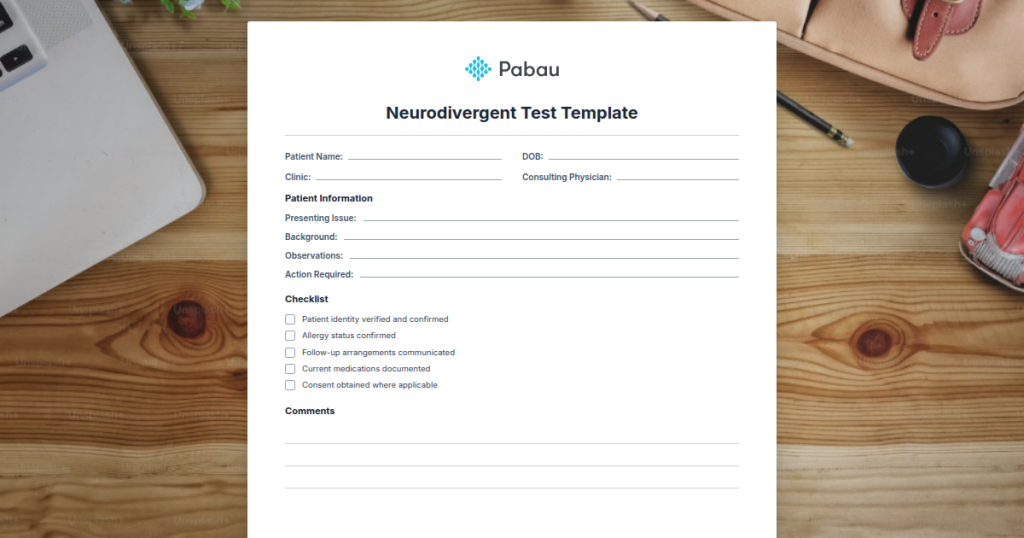
Neurodivergent Test Template
A neurodivergent test template is a clinician-facing screening form that healthc...

April 3, 2026


Buy now, pay later is now available in Pabau

Wise Mind Worksheet Template integrates emotional and rational thinking for balanced client decisions
DBT-based tool helps mental health professionals guide clients through structured reflection
Ready-to-use template saves session time and improves documentation consistency
Effective for anxiety, depression, decision-making, and emotional regulation work
The Wise Mind Worksheet Template is a structured therapeutic tool designed for mental health professionals working with clients in dialectical behaviour therapy, mindfulness-based practice, and cognitive-behavioural frameworks. This evidence-based resource guides clients through identifying emotional responses, rational thoughts, and discovering the balanced “wise mind” perspective that synthesises both elements for clearer decision-making and improved emotional wellbeing. By using this template consistently in your practice, you create a repeatable clinical pathway that strengthens client self-awareness while documenting progress that supports both therapeutic outcomes and clinical record requirements.
A ready-to-use clinical worksheet covering emotional awareness, rational analysis, and wise mind decision-making. Includes space for client reflection, grounding techniques, and actionable next steps aligned with DBT and mindfulness principles.
Download templateA Wise Mind Worksheet Template is a structured clinical handout grounded in dialectical behaviour therapy (DBT) principles developed by psychologist Marsha Linehan. The worksheet operationalises the core DBT concept of “wise mind”-the synthesis of emotional mind (feelings-based thinking) and reasonable mind (logic-based thinking)-into a practical, session-ready tool. Rather than treating emotions and logic as opposing forces, the wise mind worksheet guides clients toward integration, helping them make decisions that honour both their emotional validity and rational assessment of situations.
Clinically, this template serves multiple functions. It documents client understanding of their emotional and rational perspectives in a single session artifact. It creates a permanent record of the therapeutic framework you’ve introduced, supporting continuity across appointments. For mental health practices using EMR systems, a completed wise mind worksheet template becomes part of the clinical narrative, demonstrating structured emotional work aligned with evidence-based protocols.
The worksheet respects informed consent requirements by clearly labelling each section’s purpose and therapeutic rationale. It avoids prescriptive language-clients generate their own content rather than selecting from dropdown lists. This maintains professional accountability while ensuring the template remains adaptable across different client presentations and diagnostic contexts.
Using a wise mind worksheet template effectively requires situating it within your broader DBT or mindfulness framework. Follow these five operational steps to integrate the template into your workflow:
Store completed worksheets in your digital forms system so they link to the client’s record. This ensures continuity: in future sessions, you can reference previous wise mind decisions and track how clients implement them.
This template is most valuable for mental health professionals working with adults and older adolescents who benefit from structured reflection. Target audiences include:
The wise mind worksheet template is equally applicable across primary care settings (GP practices with psychological interventions), occupational health services, and multi-discipline therapy clinics. Any setting serving clients navigating significant decisions or emotional challenges will benefit from this tool.
Structured emotional documentation: The template creates a clinical record of your therapeutic intervention. Rather than notes describing what you discussed, you have the client’s own words about their emotional and rational perspectives. This strengthens your clinical defensibility and demonstrates evidence-based practice in audits or supervision.
Accelerated insight and decision clarity: By externalising the three perspectives onto a worksheet, clients often move from emotional rumination to actionable clarity within a single session. The visual structure reduces cognitive load. Research on DBT worksheets shows clients retain framework learning better when they’ve written it themselves rather than heard it passively.
Improved session consistency and replicability: When every client with emotional decision-making work completes the same worksheet structure, you create predictable clinical pathways. New team members can follow the template and deliver consistent care. Supervision and peer review become easier-you’re comparing like-for-like artifacts rather than narrative-only notes.
Enhanced client ownership and accountability: The wise mind worksheet template shifts agency to the client. They identify their emotions, they assess facts, they synthesise the decision. This non-directive structure increases client buy-in compared to therapist-driven recommendations.
Wise Mind Worksheet Templates are just the beginning. Pair this tool with AI-assisted clinical documentation to convert completed worksheets into structured progress notes automatically. Manage all your therapeutic templates, client records, and compliance workflows in one psychology practice management platform designed for therapists. Book a demo to see how practices are cutting session admin time by up to 40% while strengthening clinical quality.
The Wise Mind Worksheet Template rests on three distinct cognitive-emotional modes that clients experience continuously. Understanding these distinctions helps you introduce the template with clarity and helps clients recognise these states in real time.
Emotional Mind is the state where feelings dominate perception and decision-making. In emotional mind, the client’s fear, anger, or despair feels like absolute truth. A client in pure emotional mind might think: “I’m worthless; nobody will ever want to be my friend; there’s no point trying.” The emotional mind is valid-it’s real data about how the person is experiencing the world-but it’s also narrow. The wise mind worksheet template makes space to acknowledge this perspective without letting it drive the entire decision.
Reasonable Mind operates through logic, facts, and past evidence. In reasonable mind, the client evaluates: What does the evidence show? What are the realistic probabilities? What have I learned from similar situations? Reasonable mind is invaluable for planning and risk assessment. However, reasonable mind alone can feel cold and invalidating. A purely reasonable response to grief or loss (“Well, statistically most people recover from this”) dismisses the legitimate emotional experience happening right now.
Wise Mind is the integration-the voice that says, “My sadness is real, and the evidence suggests I can move forward.” It honours both dimensions. When clients access wise mind, they feel validated and directional simultaneously. The wise mind worksheet template is the clinical tool that makes this abstract concept concrete and repeatable in your sessions.
Track which situations, relationships, or decisions consistently activate your clients’ emotional mind dominance. Design wise mind worksheet templates tailored to those triggers. A client with relationship anxiety might use the template specifically when facing conflict decisions. Someone managing health anxiety might complete it before medical appointments. This targeted approach deepens the framework’s relevance and increases client follow-through between sessions.
Explore deeper frameworks and practice guidance on related areas:

Need structured documentation for psychiatric assessments? Psychiatric Evaluation Template provides a comprehensive framework for initial mental health assessments.
Looking to digitise all your therapy forms? Client Portal lets clients complete intake and between-session worksheets securely before appointments.
Want to build custom worksheets for your practice? Digital Forms Software allows you to create unlimited therapy handouts and worksheets aligned with your clinical model.
The Wise Mind Worksheet Template bridges a fundamental gap in therapy: translating abstract emotional concepts into concrete, actionable client work. Grounded in decades of DBT research and now adopted by thousands of practitioners, this template delivers measurable benefits-clearer clinical documentation, faster client insight, and more consistent therapeutic delivery. Whether you’re new to DBT or refining an established practice, having a structured wise mind worksheet template ready ensures every client accessing emotional decision-making work gets the same high-quality framework, consistently applied and clearly documented.
Yes, with age-appropriate language adjustments. Adolescents benefit from structured frameworks, though you may simplify the emotional vocabulary or shorten the worksheet. Always assess maturity level and cognitive capacity first.
Typically once per session when addressing emotional decision-making, or as needed for specific crisis or life transitions. Over-use can feel mechanical; reserve it for moments where integration of emotion and logic is clinically indicated.
Yes. It operationalises Dialectical Behavior Therapy principles, a treatment approach with robust research support for emotion dysregulation, particularly in borderline personality disorder and suicidality contexts. DBT and wise mind concepts are documented in clinical literature.
Absolutely. While the core structure (emotional mind, reasonable mind, wise mind synthesis) should remain, adapt language, examples, or spacing to align with your client population and therapeutic orientation.
Store them as part of your clinical record, linked to the session note and client file. Digital forms integrated with your practice management system ensure secure storage, easy retrieval, and audit compliance.