ADHD Assessment Mental Health & Therapy
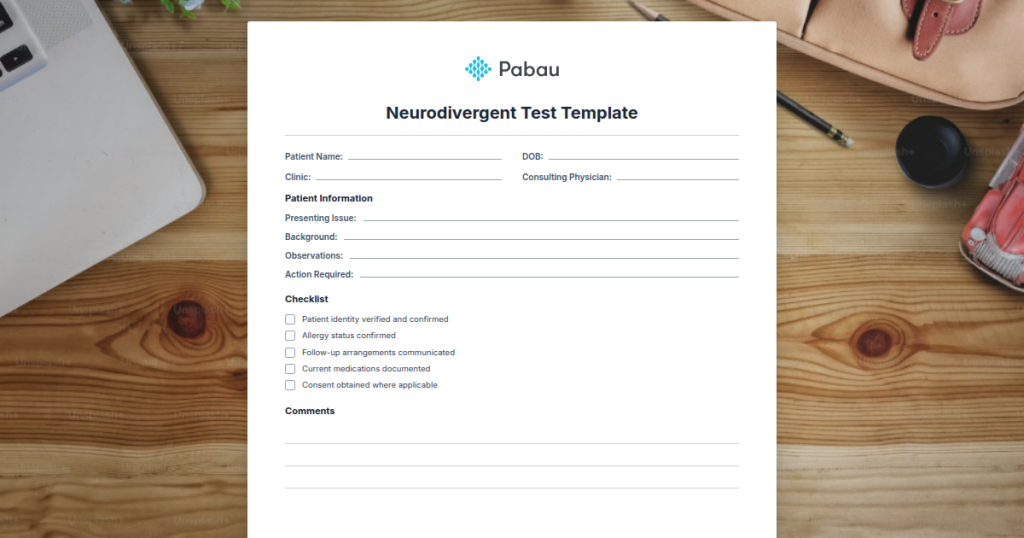
Neurodivergent Test Template
A neurodivergent test template is a clinician-facing screening form that healthc...

April 3, 2026


Buy now, pay later is now available in Pabau

Loving kindness meditation scripts provide structured guidance for practitioners leading metta sessions with clinical populations.
Ready-to-use templates reduce session preparation time and ensure consistent, evidence-informed delivery.
Scripts are adaptable for individual therapy, group wellness sessions, and specific patient populations.
Integration with practice management software streamlines scheduling, documentation, and client follow-up.
Clinical evidence supports loving kindness practices for anxiety, depression, and compassion fatigue management.
Therapists, counsellors, and wellness practitioners increasingly integrate loving kindness meditation into clinical practice. A loving kindness meditation script offers a structured framework for guiding patients through metta (compassion-focused) mindfulness-without requiring practitioners to improvise language in real time. This downloadable resource provides session-ready guidance grounded in both Buddhist meditation traditions and evidence-based therapeutic approaches.
Whether you’re introducing mindfulness to anxious clients, supporting trauma recovery, or offering wellness group sessions, a carefully structured loving kindness meditation script ensures consistency, clinical safety, and therapeutic depth. The template below is ready to download, customise, and use immediately in your practice.
A ready-to-use loving kindness meditation script with step-by-step guidance for leading compassion-focused mindfulness practices. Includes variations for individual and group sessions, multiple session lengths (5-20 minutes), and clinical application guidance for therapists and wellness practitioners.
Download templateA loving kindness meditation script is a detailed written guide that walks practitioners and clients through the step-by-step process of metta bhavana-a Theravāda Buddhist practice adapted for contemporary therapeutic settings. Metta bhavana in Theravāda tradition describes the classical five-stage structure of compassion cultivation that underpins modern clinical adaptations. The script provides exact language, timing cues, and breathing instructions, enabling therapists to deliver consistent, quality-controlled sessions without ad-libbing.
At its foundation, loving kindness meditation involves directing compassion progressively: first toward oneself, then toward a loved one, a neutral person, a difficult person, and finally all beings. This structured expansion cultivates emotional resilience, reduces defensive reactivity, and builds what the American Psychological Association (APA) describes as emotional flexibility-a core therapeutic outcome.
Unlike improvised meditation guidance, a scripted approach ensures all clients receive the same framework, reducing variability in session quality and enabling outcome tracking. In clinical contexts-particularly therapy practices offering mindfulness-based cognitive therapy (MBCT) or compassion-focused therapy (CFT)-scripts serve as standardised treatment protocols.
The script is grounded in informed consent and clinical safety principles. It includes clear signposting for clients who have trauma histories, explicit acknowledgement that the practice is optional, and flexibility for clients who find self-directed compassion emotionally challenging.
Integrating a loving kindness meditation script into your clinical workflow follows five key operational steps. Each step anchors the script into practitioner-led delivery, client engagement, and post-session documentation.

Pabau's practice management platform lets you schedule group mindfulness sessions, document client responses post-session, and build mindfulness into your service menu-all in one system.

Loving kindness meditation scripts are most valuable for mental health practitioners, wellness clinic teams, and complementary health professionals offering structured mindfulness services. Your practice likely benefits from this resource if:
Therapists and counsellors integrate mindfulness into CBT, ACT, or compassion-focused therapy protocols. Loving kindness practices directly support clients managing anxiety, depression, self-criticism, and interpersonal conflict. A ready-made script ensures you can embed the practice seamlessly into session time without sacrificing therapeutic rapport or clinical accuracy.
Group facilitators and wellness clinics offering mindfulness-based stress reduction (MBSR) or group therapy use scripts to maintain consistency across multiple facilitators and cohorts. When five therapists each lead differently, scripting ensures all clients encounter the same evidence-informed structure.
Occupational therapists, physiotherapists, and holistic practitioners add meditation to their service menu-for trauma recovery, chronic pain management, or nervous system regulation-often use scripts to maintain clinical credibility alongside their primary interventions.
Psychiatric and psychology clinics embedding mindfulness into treatment plans for bipolar disorder, PTSD, or personality disorders benefit from structured scripts that balance therapeutic depth with safety guardrails. A written script also serves as a compliance and audit record, demonstrating that the practice was delivered with informed consent and clinical fidelity.
Consistency and fidelity. Every client receives the same therapeutic framework, language, and pacing. This reduces practitioner variability and enables you to track outcomes across a cohort-essential for audit, supervision, and evidence-building. When a client reports “that meditation helped my anxiety drop by 30%,” you can replicate the exact conditions next session.
Time efficiency. Session preparation is minimal. Rather than designing unique meditation guidance each week, you reference the script and focus energy on clinical assessment, client response, and post-session integration. This is particularly valuable in high-volume group programs where facilitator burnout is a risk.
Clinical safety and trauma-informed practice. A well-designed script includes explicit opt-out language, grounding techniques for distressed clients, and modifications for trauma survivors. Written guidance ensures you won’t accidentally escalate a client in distress-the script prompts you to pause, ground, and check in.
Regulatory and documentation readiness. In UK healthcare settings, Care Quality Commission (CQC) inspections increasingly examine whether psychological interventions are documented, outcome-tracked, and evidence-informed. A scripted loving kindness practice demonstrates clinical rigor, informed consent, and fidelity-strengthening your compliance profile.
Training and staff development. If you supervise multiple clinicians or run a team, sharing a standardised script becomes a training asset. New therapists can learn the exact phrasing, timing, and safety considerations without ad-hoc mentoring consuming supervision time.
Evidence-informed outcomes. Research from the UCLA Mindful Awareness Research Center (MARC) and peer-reviewed studies consistently show loving kindness meditation reduces anxiety, depression, and self-criticism while building emotional resilience. A meta-analysis of loving kindness outcomes published in the Journal of Happiness Studies found consistent positive effects on positive emotions, self-compassion, and reduced negative affect across clinical and non-clinical populations. A scripted protocol ensures your clients access these evidence-supported benefits.
Integrating loving kindness meditation into clinical workflows works best when the practice is embedded into your broader treatment framework. In cognitive-behavioural therapy (CBT), loving kindness serves as a behavioural activation strategy-scheduling the meditation as part of session homework to build emotional momentum and reduce rumination. In acceptance and commitment therapy (ACT), it supports the “self-as-context” work, helping clients experience compassion for their struggles without fusion or avoidance. Compassion-focused therapy principles developed by Paul Gilbert specifically integrate loving kindness practices as a core mechanism for reducing self-criticism and shame.
For trauma-informed care, a loving kindness script includes trauma-specific modifications: a slower pace, explicit permission to adjust the practice (sitting vs. lying), and options to use third-person language (“they may be safe”) instead of first-person if direct self-compassion feels unsafe. NICE guidelines on trauma treatment increasingly reference mindfulness approaches; scripted loving kindness offers a fidelity-controlled intervention you can confidently reference in treatment summaries.
In group settings-particularly in group therapy or wellness classes-the script becomes a shared anchor point. When you offer a loving kindness meditation class monthly, clients who attend multiple sessions build familiarity with the structure, deepening their practice each time. This repetition, combined with consistent language, strengthens the therapeutic effect.
Many practitioners create audio versions of their script, recording it at a natural pace and tone. Clients then access the recording through your secure digital forms system or client portal-enabling asynchronous engagement and homework compliance. This approach also accommodates clients who miss sessions, ensuring the intervention remains accessible.
Children and adolescents. Loving kindness meditation for young people requires simplified language, shorter session lengths (3-5 minutes), and relatable target people (parents, pets, friends). Some youth-focused scripts replace traditional phrases with language like “May I feel calm. May I feel safe. May I feel happy.” Adolescents often respond well to the practice as an alternative to rumination about social conflict.
Chronic pain and medical populations. For patients with fibromyalgia, chronic fatigue, or oncology-related distress, loving kindness shifts the frame from “fixing the body” to “building compassionate self-acceptance.” The practice reduces secondary emotional suffering (anxiety about pain, depression about disability), allowing patients to engage more actively in rehabilitation or palliative care. Mindfulness for chronic pain evidence published in JAMA Internal Medicine confirms that mindfulness-based interventions produce meaningful reductions in pain-related psychological distress.
Burnout and compassion fatigue. Healthcare practitioners, therapists, and carers themselves benefit dramatically from loving kindness meditation. For clinicians experiencing burnout, a self-directed script allows 5-10 minutes of midday practice that rebuilds emotional reserves. Clinician burnout and loving kindness research shows clinicians with regular loving kindness practice report lower burnout, improved empathy, and better work-life boundaries.
Group and team settings. Wellness clinics offering corporate mindfulness days, team-building meditation workshops, or group therapy cohorts use standardised scripts to deliver professional, consistent experiences. A scripted loving kindness group session typically runs 20-30 minutes and concludes with a brief reflection or journaling prompt, deepening integration.
Population-specific script variations are often included in downloadable templates-allowing you to select the version matching your client group without designing custom guidance from scratch.

Need guidance on trauma-informed meditation delivery? Crisis Intervention Strategies for Clinicians covers safety-first approaches to mindfulness in acute mental health settings.
Looking to standardise mindfulness across your team? Digital Forms and Intake Templates help you create consistent pre- and post-meditation assessment forms, tracking client readiness and practice outcomes.
Want to schedule group meditation sessions? Classes and Group Session Management allows you to schedule recurring mindfulness groups, send automated reminders, and manage attendance-keeping wellness offerings organised.
Ready to improve clinical documentation? AI-Powered Clinical Notes automatically generates meditation session summaries from your spoken observations, capturing client responses and enabling quick outcome tracking.
A loving kindness meditation script guides you through four key repeated phrases: “May you be safe,” “May you be healthy,” “May you be happy,” and “May you live with ease.” These are directed toward yourself first, then progressively toward loved ones, neutral people, difficult people, and all beings. The exact wording varies by script; some use phrases like “May I be at peace” or “May you be free from suffering.” The script ensures consistent, evidence-informed language.
A well-structured loving kindness meditation script includes: an introduction establishing clinical intent and informed consent, a grounding phase, sequential phases targeting each person (self, loved one, neutral person, difficult person, all beings), timing cues for silence and breathing, trauma-informed modifications, and a closing/return phase. For clinical use, scripts should reference the target phrases explicitly, provide pacing guidance, and include pause instructions. Most practitioners adapt existing scripts rather than writing from scratch, ensuring evidence-informed language and therapeutic safety.
The classic four phrases are: “May you be safe,” “May you be healthy,” “May you be happy,” and “May you live with ease.” Some variations include “May I be at peace,” “May I be free from fear,” or “May you be at peace.” Different traditions and clinical applications use slightly different wording, but these core four phrases represent the essential aspirations in loving kindness practice: physical safety, wellbeing, emotional happiness, and ease of living.
Yes. Loving kindness meditation is an evidence-supported component of multiple therapeutic approaches, including cognitive-behavioural therapy (CBT), acceptance and commitment therapy (ACT), and compassion-focused therapy (CFT). Research shows benefits for anxiety, depression, self-criticism, and emotional regulation. Therapists using loving kindness typically integrate it as a homework task, in-session practice, or adjunctive tool supporting the primary treatment modality. A clinical script ensures the practice aligns with your treatment framework and maintains informed consent and safety guardrails.
Yes. Peer-reviewed research (meta-analyses in the Journal of Happiness Studies, Frontiers in Psychology, and JAMA Internal Medicine) demonstrates that loving kindness meditation reduces symptoms of anxiety, depression, and self-criticism. NICE guidelines on mindfulness-based cognitive therapy (MBCT) for recurrent depression include loving kindness as an adjunct practice. Research from UCLA’s Mindful Awareness Research Center and the Center for Mindfulness at UMass Medical School provides robust evidence for clinical effectiveness. Effect sizes are moderate and outcomes are population-dependent, but the evidence base is strong.
“Metta” is the Pali word for the practice; “loving kindness” is the English translation. They are the same meditation-metta bhavana in Theravāda Buddhism, now adapted for secular clinical and wellness contexts. In modern therapeutic settings, the terms are used interchangeably. Metta emphasises the quality of unconditional goodwill across all beings, while loving kindness highlights the emotional warmth and compassion cultivated. Both terms refer to the same structured practice of directing compassion progressively toward self and others.
A loving kindness meditation script transforms mindfulness from an improvised practice into a clinical tool-structured, repeatable, and evidence-informed. Whether you’re a therapist integrating compassion-focused work, a wellness clinic standardising group offerings, or a practitioner supporting trauma recovery, a ready-made script removes preparation barriers and ensures every client receives quality-controlled guidance.
The template available above provides the framework you need to start immediately. Customise it to match your clinical population, your session length, and your therapeutic approach-then use it consistently to build measurable outcomes and strengthen your practice’s clinical credibility.