Aesthetics & Beauty Medspa
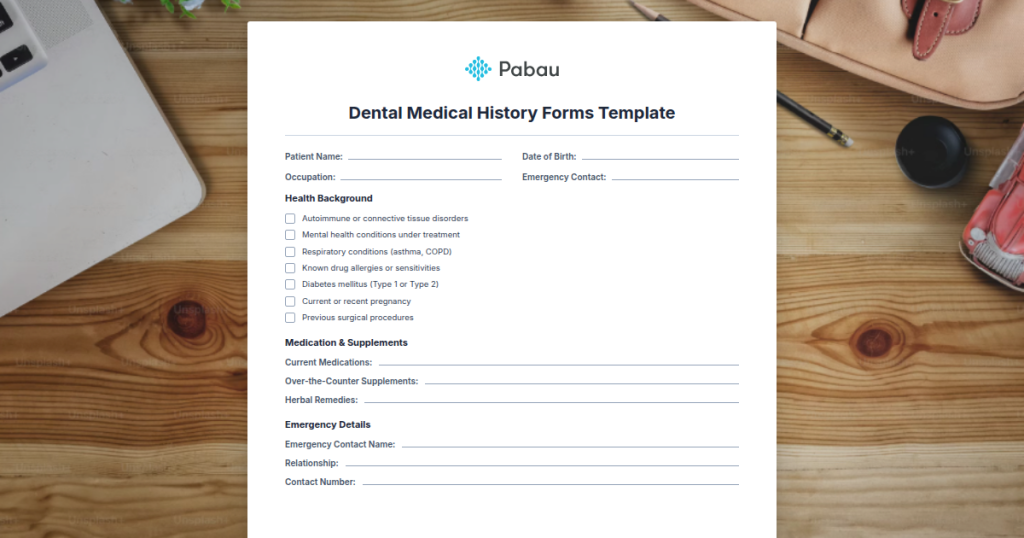
Dental Medical History Forms Template
A dental medical history form template is a standardised patient intake document...

March 16, 2026


Buy now, pay later is now available in Pabau

Protects both surgeon and patient by documenting informed consent and risk acknowledgement
Covers silicone gel and saline implant options, complications, and 18-month scar maturation
Meets legal and regulatory requirements for cosmetic surgery documentation
Streamlines clinic workflows with pre-filled templates and digital signature capture
Establishes clear post-operative care expectations and patient accountability
Obtaining informed consent before breast augmentation is non-negotiable in cosmetic surgery practice. A breast augmentation consent form serves as both a clinical and legal safeguard, ensuring patients understand the procedure, potential complications, implant choices, and aftercare responsibilities before surgery. For aesthetic clinics and plastic surgery practices, a well-structured consent form reduces malpractice risk, improves documentation clarity, and demonstrates professional accountability to regulatory bodies. This guide explains why a breast augmentation consent form matters, what it must include, and how to integrate it into your clinic’s digital workflows for seamless patient management.
A ready-to-use consent form covering patient details, contraindication screening, implant type options (silicone gel and saline), risk disclosures, surgical authorisation, anesthesia consent, post-operative instructions, and signature blocks for both patient and surgeon.
Download template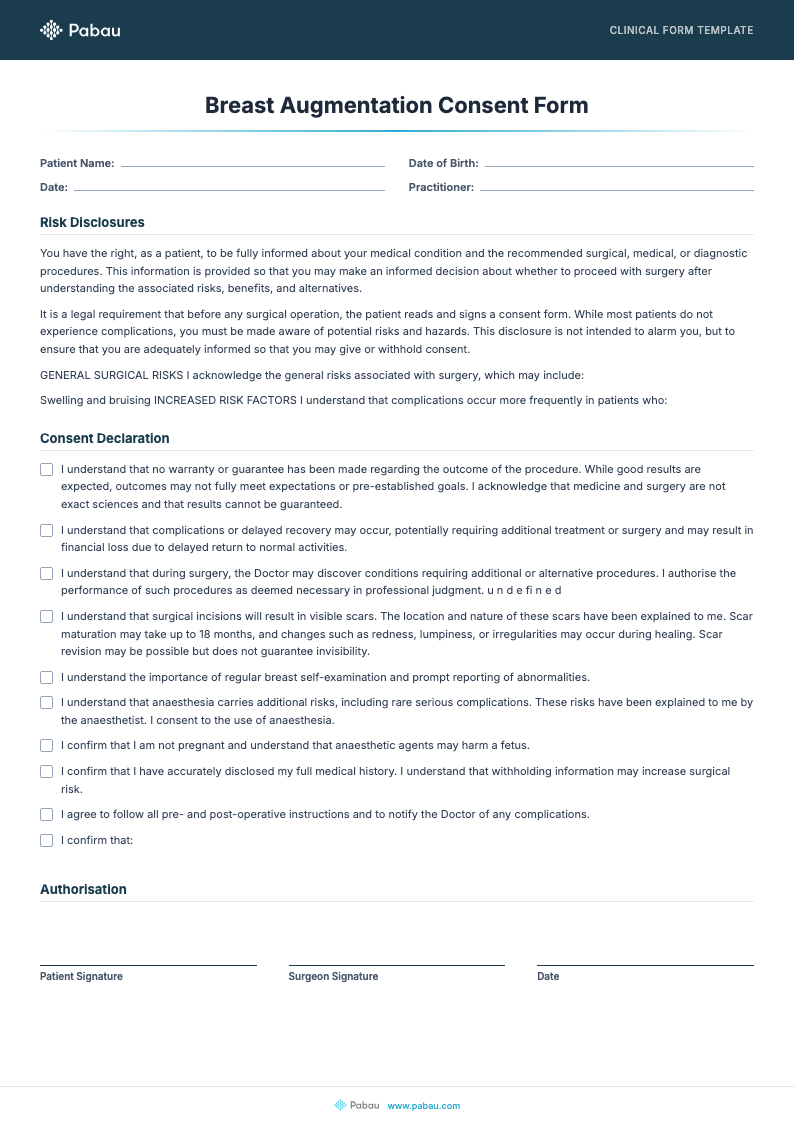
A breast augmentation consent form is a legal document that documents a patient’s informed decision to undergo cosmetic breast enhancement surgery. It serves as written evidence that the patient understands the procedure, potential risks, benefits, and realistic outcomes before the surgeon operates. Unlike standard medical forms, a breast augmentation informed consent form is specifically tailored to the anatomy, implant materials, and complications unique to breast augmentation.
The form addresses several critical elements: confirmation that the patient has read and understood information about silicone gel-filled implants and saline-filled implants; acknowledgement of surgical risks including infection, implant rupture, capsular contracture, and sensory changes; and explicit agreement to follow pre- and post-operative instructions. Many practices also include a statement confirming the patient is not pregnant and has disclosed their complete medical history, as certain medications and conditions increase surgical complications.
From a legal standpoint, a properly executed consent form demonstrates that your clinic followed professional standards and obtained explicit patient authorization. The form protects both surgeon and patient by creating a documented record of the conversation and agreement. Courts and regulatory bodies examine whether consent was truly informed – meaning the patient received material information about risks, alternatives, and outcomes. A dated, signed consent form significantly strengthens your legal position if a complication or dispute arises.
Regulatory bodies including the American Society of Plastic Surgeons (ASPS) and state medical boards expect practices to maintain comprehensive consent documentation. Many insurers and malpractice carriers also audit consent practices and documentation workflows during claim reviews, making form quality a factor in coverage decisions.
Implementing the Breast Augmentation Consent Form into your clinic workflow requires a structured approach that ensures patients thoroughly review the document and your team captures signatures securely. Follow these five operational steps to integrate the form seamlessly into your practice.
Digital consent workflows using paperless forms and e-signature capture reduce administrative burden and improve compliance tracking. Your practice management software can log the date and time the form was signed, identify which staff member witnessed the signature, and automatically flag incomplete forms before the patient leaves the clinic.

Capture patient signatures digitally, store signed forms in the patient record, and automate reminder emails for pre-operative checklists – all within your clinic management system.

A breast augmentation consent form is essential for any practice performing cosmetic breast enhancement surgery. This includes board-certified plastic surgeons, aesthetic nurse practitioners, and cosmetic surgery clinics operating in private practice or hospital settings.
Plastic surgery practices performing breast augmentation as a core service rely on detailed consent forms to document the decision-making process and manage liability. Practices that regularly perform silicone gel and saline implant surgeries need form language addressing both implant types and their unique risk profiles.
Medical spas and aesthetic clinics offering injectables and non-surgical treatments often partner with surgeon consultants for surgical procedures. These clinics need a standardised consent template that integrates with their patient management workflows and reflects their clinical protocols.
Multi-location aesthetic practices benefit from a single, standardised breast augmentation consent form that ensures consistent messaging across all clinic locations. Using the same template – customised with location-specific details like surgeon names and facility addresses – maintains compliance standards while reducing administrative duplication.
Practices managing high patient volumes need efficient consent workflows. A templated form accelerates the consent process, reduces the risk of missing critical risk disclosures, and ensures every patient receives identical material information before signing.
Reduces legal and malpractice risk. A signed, dated consent form creates documented evidence that the patient made an informed decision. If a complication arises, the form demonstrates that material risks were disclosed and understood. This significantly strengthens your defense in a malpractice claim and may reduce your malpractice insurance premiums by showing rigorous informed consent practices.
Meets regulatory and compliance requirements. State medical boards, the FDA, and professional organisations like ASPS expect documented informed consent for surgical procedures. Audits by your malpractice carrier or regulatory bodies will examine whether your consent forms meet professional standards. A comprehensive form demonstrates your commitment to patient safety and regulatory adherence.
Improves clinical communication. Walking a patient through a detailed consent form ensures thorough discussion of implant types, surgical risks, and post-operative care. This conversation reduces mismatched expectations, improves patient satisfaction, and clarifies what patients should do to support healing (smoking cessation, activity restrictions, scar care).
Streamlines documentation and retrieval. A standardised form is faster to administer than handwritten notes or ad-hoc consent conversations. Digital forms with e-signature capture allow you to store signed documents in the patient record for instant retrieval during follow-up appointments, complications, or regulatory reviews.
Facilitates team consistency. Whether your surgery is performed by one surgeon or multiple practitioners, a standardised form ensures every patient receives identical risk disclosures. This consistency protects your practice from allegations that certain patients were given incomplete information.
Screen contraindication responses during intake. Flag patients with bleeding disorders, current pregnancy, or recent cosmetic procedures before the consultation. Document your review and any clinical discussions in the patient record. This creates a clear audit trail showing informed decision-making even if complications later arise.
Cosmetic breast augmentation carries real surgical risks that informed patients need to understand. The consent form serves as the vehicle for transparent risk communication.
General surgical risks apply to all breast augmentation procedures. Infection can occur despite sterile technique and prophylactic antibiotics; early signs include increasing warmth, redness, and pus-like drainage around the incision. Bleeding and haematoma (blood pocket under the skin) may require drainage. Seroma (fluid collection) is common and usually resolves spontaneously within weeks, though some patients require needle aspiration. Recovery timelines and post-operative care instructions should be documented in your consent form and reinforced at follow-up appointments.
Implant-specific complications deserve particular attention. Capsular contracture occurs when scar tissue around the implant tightens, causing firmness, distortion, or discomfort – this is the most common implant-related complication and may require surgical revision. Implant rupture is rare but more likely in older implants; silicone gel implants may rupture silently (without symptoms), requiring periodic MRI screening, while saline implant rupture causes obvious deflation. Sensory changes in the breast or nipple are common initially and usually improve within months, though some patients experience permanent numbness or increased sensitivity.
Scar visibility varies based on incision placement. The form must disclose that scars are permanent, though they typically fade over 18 months. Revision or repositioning surgery may be needed if the patient is unhappy with appearance or implant position, and revision carries the same risks as primary surgery.
Post-operative restrictions matter for healing outcomes. Patients must avoid heavy lifting and intense exercise for 4-6 weeks, avoid smoking for several weeks (smoking restricts blood flow and increases infection and delayed healing risk), and attend all follow-up appointments. A signed consent form confirms the patient’s commitment to following these instructions, reducing the risk of self-inflicted complications and disputes about post-operative care responsibilities.
Modern aesthetic clinics increasingly use digital consent workflows rather than printed forms. This shift improves efficiency and compliance, but only if the technology and process meet HIPAA privacy and security requirements.
Digital signature requirements. HIPAA does not prohibit electronic signatures; in fact, the E-Sign Act legally recognises electronically signed documents. However, your e-signature solution must create an audit trail showing who signed, when they signed, and from which device. Many clinics use HIPAA-compliant form software that logs these details automatically and links the signed document to the patient record.
Patient portal delivery. Sending the consent form through a secure patient portal ensures HIPAA-compliant transmission. Avoid email (unencrypted) or text message (insecure). Your clinic software should allow patients to access the form securely, fill it out from home, and return a signed copy – all without printing paper or visiting the clinic early.
Document storage and retention. Signed consent forms must be retained in the patient’s permanent medical record for the duration of your required retention period (typically 5-7 years post-treatment, longer if minors are involved). Store the signed PDF in your EMR or document management system with version control, so you can always retrieve the exact form the patient signed. Avoid storing paper originals unless your shredding protocols and storage areas meet security standards.
When consent workflows are digital, patient experience improves: less office paperwork, faster check-in, and reduced administrative friction. Your staff also benefits – fewer missing signatures, automatic reminders for incomplete forms, and instant access to signed documents during appointments or audits.

Need to automate consent collection workflows? Digital Forms helps clinics capture, store, and manage consent forms entirely within the practice management system with e-signature integration and HIPAA-compliant patient portal delivery.
Looking for plastic surgery-focused clinic software? Plastic Surgery EMR Software provides specialised features for documenting cosmetic procedures, tracking before-and-after photography, and managing surgical outcomes.
Want to streamline pre-operative checklists? Automated Workflows allows you to send reminder emails, capture missing form data, and flag incomplete documentation before the surgery appointment.
A well-designed breast augmentation consent form is more than a legal requirement – it’s a cornerstone of patient safety and practice protection. By documenting informed consent clearly, addressing implant-specific risks, and capturing patient signatures, your clinic demonstrates professional accountability and reduces liability exposure. Download the Breast Augmentation Consent Form template above and customise it with your clinic’s details, surgeon information, and facility-specific protocols. Pair the form with a digital consent workflow to streamline administration and ensure every patient receives consistent, documented informed consent before surgery.
A comprehensive breast augmentation consent form must cover: patient identification and procedure details, implant type options (silicone gel and saline), general surgical risks (infection, bleeding, seroma), implant-specific risks (capsular contracture, rupture, sensory changes), scar permanence and 18-month maturation timeline, right to alternative procedures, anesthesia risks, pregnancy status, medical history disclosure, post-operative instruction compliance, and signature blocks for patient and surgeon.
Yes, electronic signatures are legally valid under the E-Sign Act and do not violate HIPAA. However, your e-signature solution must create an audit trail showing who signed, when, and from which device. Use HIPAA-compliant form software that logs these details and integrates with your patient portal or EMR.
Retain signed consent forms in the patient’s permanent medical record for at least 5-7 years after treatment, or longer if required by your state medical board. Some practices retain forms indefinitely. Check your state’s medical record retention laws and your malpractice insurer’s requirements.
Yes. A comprehensive form should address both silicone gel-filled and saline-filled implant options, highlighting the key difference: silicone implants require periodic MRI screening for silent rupture detection, while saline rupture causes obvious deflation. Ensure the patient selects their implant choice and acknowledges the specific monitoring or safety considerations.
The consent form should explicitly ask whether the patient is pregnant or could be pregnant. If yes, surgery should be postponed because anesthetic agents may harm a developing fetus. Document the patient’s answer, and if they are pregnant, note in the medical record that surgery was deferred per protocol. This protects your clinic from liability and prioritises patient and fetal safety.
Yes. Customise the template with your clinic’s name, logo, specific surgeon names, facility address, and any facility-specific protocols (e.g., your smoking cessation timeline, your implant brand preferences, your follow-up schedule). Customisation ensures the form reflects your clinical practice and demonstrates attention to detail during audits.