Top 7 Coaching Management Software UK (2026 Guide)
Disclosure: Pabau is our product. We have included it alongside independent plat...

March 13, 2026

Discover free eBooks, guides and med spa templates on our new resources page


Buy now, pay later is now available in Pabau

Read case studies from our satisfied clients

Compare Pabau with alternative systems
 Integrations
 Measure Pabau savings
  Our security commitment
  About us
Learn why this holistic care and aesthetic medicine clinic chose Pabau to power patient care and performance.
Read more

Pabau is purpose-built for medical aesthetics and healthcare with integrated EMR, clinical documentation, and HIPAA compliance.
Acuity Scheduling excels at appointment booking across industries but lacks medical-specific features like treatment notes and before/after photos.
Pabau starts at $69/month per location with all clinical features included; Acuity begins around $16-20/month per calendar.
Acuity offers broader general business integrations through Squarespace; Pabau focuses on healthcare-specific tool connectivity.
Choose Pabau for comprehensive practice management; choose Acuity for straightforward scheduling without clinical workflows.
Clinic owners evaluating practice management software often compare Pabau and Acuity Scheduling because both platforms handle appointment booking. The comparison ends there. Pabau is a comprehensive clinic operating system designed for medical aesthetics, med spas, and healthcare practices requiring clinical documentation, compliance frameworks, and treatment-specific workflows. Acuity Scheduling is a general-purpose appointment scheduler serving fitness studios, beauty salons, consultants, and wellness businesses with straightforward booking needs.
The decision between these platforms depends on whether your practice requires medical documentation capabilities, regulatory compliance tools, and integrated billing workflows, or whether you need only calendar management and client communications. This comparison examines feature sets, pricing structures, compliance support, and operational workflows to help medical practice owners, aesthetic clinic managers, and spa operators determine which platform aligns with their clinical and business requirements.
Pabau operates as an all-in-one medical spa software platform with integrated electronic medical records (EMR), treatment planning, consent management, before/after photo documentation, and claims submission. The platform targets medical aesthetics, dermatology, physiotherapy, mental health, and multi-specialty clinics where practitioners document clinical encounters, track patient outcomes, and maintain regulatory compliance. According to Capterra reviewers, Pabau receives a 4.56 rating based on 397 verified reviews, with users highlighting its comprehensive feature set and responsive customer support.
Acuity Scheduling, owned by Squarespace, functions as a standalone appointment booking system emphasising calendar management, automated reminders, and payment collection. The platform serves professionals across wellness, fitness, beauty, coaching, and service industries who require client scheduling without medical documentation requirements. Capterra reviewers rate Acuity at 4.78 out of 5 based on 5,609 reviews, praising its user-friendly interface and straightforward setup process.
The fundamental difference lies in clinical workflow integration. Pabau embeds scheduling within a practice management ecosystem that includes patient records, treatment histories, prescription management, and inventory tracking. Acuity provides scheduling as an isolated function that integrates externally with other business tools through Zapier connections and API access. This architectural difference shapes every operational aspect of how each platform supports clinic operations.
Pabau includes integrated EMR capabilities with structured clinical charting, treatment notes, before/after photo management, and consent form workflows. Practitioners document consultations, record treatment parameters, plot injection sites using the injection plotting tool, and maintain longitudinal patient records within the same system where they manage appointments. The platform supports custom form builders for intake questionnaires, medical history collection, and post-treatment assessments, all stored as part of the patient’s permanent record.
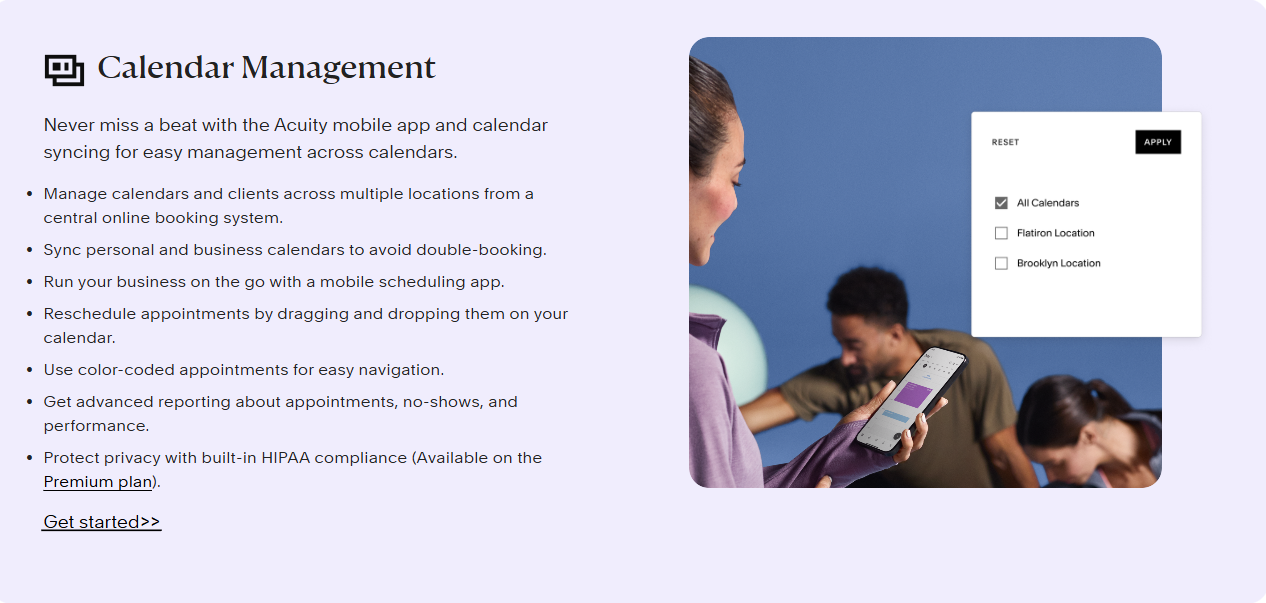
Acuity Scheduling provides basic appointment notes and intake forms but does not include medical-specific documentation features. Users can attach intake questionnaires to booking types and collect client information during the scheduling process. These forms serve administrative purposes rather than clinical documentation. The platform lacks before/after photo capabilities, treatment tracking, clinical charting templates, or longitudinal health record management. Practices requiring medical documentation must integrate Acuity with separate EMR systems or maintain parallel documentation workflows outside the scheduling platform. This limitation is a primary reason healthcare providers seek alternatives to Acuity that offer native medical charting.
Pabau supports multi-session treatment plans where practitioners map out recommended protocols, track progress across appointments, and document outcomes over time. The platform includes measurement tracking for body contouring, facial aesthetics, and physiotherapy metrics, allowing clinicians to demonstrate treatment efficacy through quantified data. Prescription management features enable controlled substance tracking and medication dispensing records directly within patient charts.
Acuity does not include treatment planning functionality. The platform tracks appointment history but provides no structured way to document treatment protocols, measure clinical outcomes, or link multiple sessions to a unified care plan. Service providers using Acuity for healthcare appointments must document treatment plans in external systems or paper records, creating operational friction between scheduling and clinical workflows.
Pabau includes HIPAA compliance as a core platform feature with Business Associate Agreements (BAA), encrypted data storage, role-based access controls, and comprehensive audit trails. The platform restricts access to protected health information (PHI) based on user roles, logs all record access and modifications, and maintains data encryption both in transit and at rest. HIPAA compliance tools are built into the platform architecture rather than requiring additional configuration.
Acuity Scheduling offers HIPAA compliance features but requires proper configuration and may need supplementary tools for full healthcare regulatory alignment. The platform provides BAA execution and encrypted communications, yet the basic scheduling focus means practices must configure security settings, establish access protocols, and potentially integrate additional compliance tools to meet full regulatory requirements. According to G2 reviewers, some healthcare users report needing to implement additional security measures beyond Acuity’s default settings.
Pabau maintains SOC 2 Type II certification and undergoes regular security audits to verify compliance with healthcare data protection standards. The platform includes automatic session timeouts, two-factor authentication, and data breach response protocols aligned with HIPAA requirements. UK-based practices benefit from GDPR compliance frameworks integrated into the platform’s data handling processes.
Acuity implements standard security measures including SSL encryption and secure payment processing. The platform’s compliance framework prioritises general business security rather than healthcare-specific regulatory requirements. Practices handling sensitive health information through Acuity must verify that their configuration meets jurisdictional healthcare privacy laws and industry standards beyond the platform’s baseline security offerings.

Explore integrated EMR, compliance tools, and practice management features designed for healthcare providers.

Both platforms provide robust appointment scheduling with online booking, automated reminders, and calendar synchronisation. Acuity excels in scheduling flexibility with features like group appointments, class bookings, and complex availability rules. The platform allows unlimited appointment types, custom intake forms per service, and sophisticated booking logic including buffer times, preparation periods, and location-based scheduling.
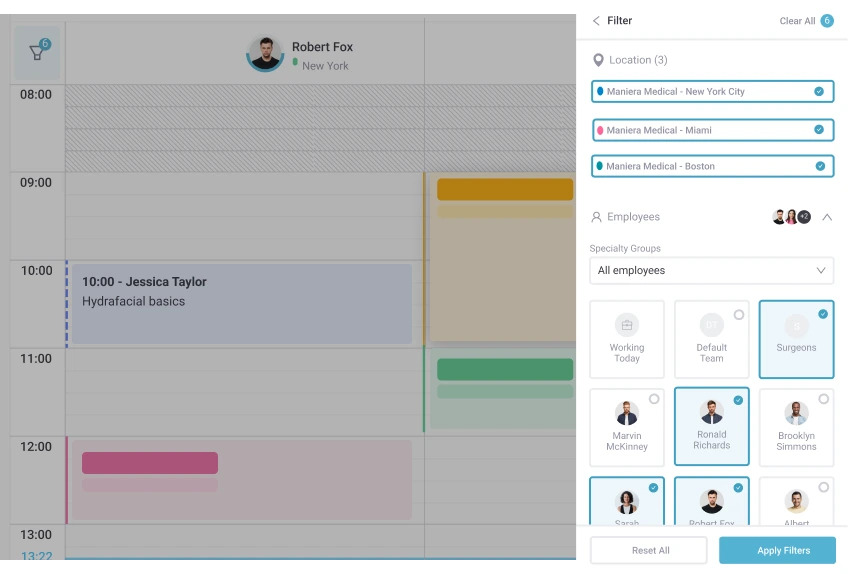
Pabau’s scheduling system integrates with clinical workflows, linking appointments to patient records, treatment histories, and required documentation. The platform supports recurring treatment protocols, multi-practitioner bookings for combined services, and automated pre-care instructions based on scheduled procedures. Appointment confirmations can trigger digital consent form delivery, ensuring compliance documentation completion before clinic visits.
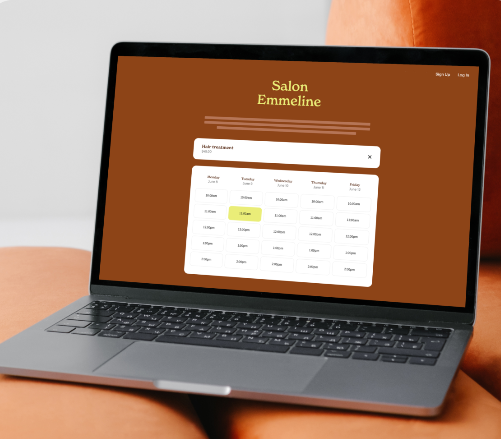
Acuity provides highly customisable online booking widgets that embed into websites or function as standalone scheduling pages. Clients select services, choose preferred practitioners, and complete intake forms during the booking process. The platform supports package sales, gift certificates, and membership bookings directly through the scheduling interface.
Pabau’s client portal extends beyond booking to include access to medical records, treatment histories, before/after photos, and purchased product inventories. Patients schedule appointments, complete required consent forms, and review post-treatment care instructions through a unified portal. The booking interface recognises returning patients and pre-populates medical history, streamlining repeat appointment scheduling while maintaining clinical documentation continuity.
Pabau includes comprehensive billing functionality with treatment-specific pricing, package management, subscription billing, and integrated payment processing. The platform handles complex pricing scenarios including tiered service menus, bulk treatment packages, and membership-based billing models common in medical aesthetics. Payment processing integrates with clinical workflows, allowing practitioners to collect deposits, process treatment payments, and manage retail product sales within patient encounters.
Acuity focuses on appointment-based payment collection with deposit requirements, prepayment options, and cancellation fee processing. The platform integrates with Stripe, Square, and PayPal for payment processing but handles transactions as standalone events rather than integrated billing encounters. Service providers can require deposits at booking, collect full payment in advance, or enable pay-at-time-of-service options through connected payment processors.
Pabau supports multi-session treatment packages where clients purchase bundled services and redeem individual sessions over time. The platform tracks package balances, manages expiration dates, and automatically applies package pricing when scheduling included services. Membership functionality enables recurring revenue models with tiered benefit structures, automatic renewals, and member-exclusive pricing.
Acuity offers package booking capabilities where clients purchase and redeem multiple sessions. The platform handles basic package tracking but lacks the depth of membership management found in dedicated practice management systems. Service providers offering membership programs through Acuity often supplement the platform with external membership management tools or manual tracking systems.
Configure deposit requirements strategically when implementing either platform. Medical aesthetics clinics using Pabau typically collect 20-30% deposits on consultation bookings and 50% deposits on procedure appointments to reduce no-show rates. Acuity users in wellness industries often implement cancellation fee structures rather than upfront deposits to maintain booking friction at acceptable levels while protecting revenue.
Acuity provides extensive integration options through its Squarespace ecosystem, Zapier connectivity, and open API. The platform connects natively with Squarespace websites, Google Calendar, Outlook, QuickBooks, Mailchimp, and numerous marketing automation tools. According to G2, users highlight Acuity’s integration breadth as a significant advantage, particularly for businesses operating across multiple software platforms.
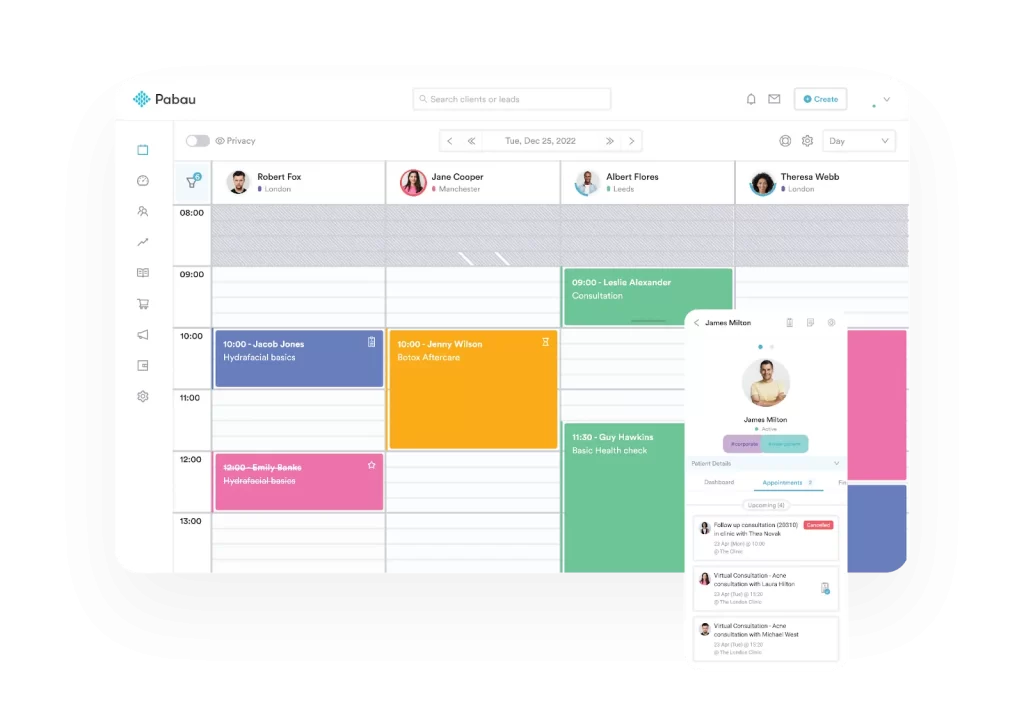
Pabau focuses on healthcare-specific integrations including payment processors, SMS gateways, accounting software, and clinical tools. The platform includes native connections to Stripe, Klarna, Xero, QuickBooks, Mailchimp, and Twilio. Integration architecture prioritises operational workflow efficiency over integration quantity, ensuring connected tools support clinical and practice management functions rather than general business operations.
Both platforms integrate with email marketing and SMS communication tools. Pabau includes built-in marketing automation with patient segmentation, campaign templates, and recall management specific to treatment cycles. The platform automates post-treatment follow-ups, birthday campaigns, and review requests based on clinical appointment data.
Acuity connects to external marketing platforms through integrations but does not include native campaign management. Service providers build marketing workflows by connecting Acuity booking data to tools like Mailchimp, Constant Contact, or HubSpot through Zapier. This approach provides flexibility but requires configuration across multiple platforms to achieve automated marketing capabilities.
Pabau delivers comprehensive practice management for healthcare and aesthetic clinics through integrated EMR, scheduling, billing, and marketing automation within a unified platform. Practitioners document clinical encounters, track treatment outcomes, and manage regulatory compliance without switching between multiple software systems. According to Capterra reviewers, users appreciate how the all-in-one approach eliminates the need for separate EMR, scheduling, and billing tools, reducing operational complexity and subscription costs.
The platform excels in workflow automation for treatment-based businesses. Appointment confirmations trigger consent form delivery, completed consultations generate treatment plans, and purchased packages automatically update client records. Multi-location practices benefit from centralised reporting, standardised workflows across sites, and unified patient data management. HIPAA compliance features are embedded throughout the platform rather than requiring separate configuration, simplifying regulatory adherence for medical practices.
The platform’s extensive feature set creates a steeper learning curve compared to simpler scheduling-focused tools. New users report initial setup complexity when configuring treatment types, customising forms, and establishing automated workflows. According to G2 reviewers, onboarding requires dedicated time investment to utilise the full range of clinical and practice management capabilities.
Pabau’s integration ecosystem, while sufficient for healthcare operations, is narrower than general business platforms. Practices requiring extensive third-party tool connectivity beyond core practice management functions may find integration options more limited compared to platforms designed for broader business contexts. The pricing structure reflects comprehensive functionality, positioning Pabau at a higher cost point than basic scheduling tools suitable only for appointment management.
Acuity excels in straightforward appointment scheduling with an intuitive interface that requires minimal training. Service providers configure booking types, set availability rules, and embed scheduling widgets into websites within hours rather than days. The platform’s simplicity makes it accessible for solo practitioners, small wellness businesses, and service providers who need only calendar management without clinical documentation requirements.
Integration breadth through Squarespace connectivity and Zapier support allows businesses to build custom workflows connecting Acuity to diverse business tools. According to Capterra, users highlight responsive customer service and frequent feature updates as platform strengths. The pricing model, based on individual calendars rather than locations, provides cost-effective entry points for practitioners requiring basic scheduling functionality.
Acuity’s appointment-centric design limits suitability for healthcare practices requiring clinical documentation, treatment tracking, and regulatory compliance tools. The platform lacks before/after photo management, clinical charting templates, prescription tracking, and longitudinal patient record maintenance. Medical practices using Acuity must implement separate EMR systems and manage patient data across disconnected platforms.
The basic reporting functionality provides appointment and revenue summaries but does not support the depth of analytics required for practice performance optimisation. Healthcare providers cannot analyse treatment outcome data, track patient retention by service type, or measure clinical productivity through the platform. According to user reviews, practices with complex billing needs involving treatment packages, membership tiers, and multi-session protocols find Acuity’s payment handling insufficient without supplementary tools.
Pabau implements per-location pricing starting at $69 per month with all clinical features, EMR functionality, and compliance tools included in the base subscription. The pricing structure scales based on practice size, number of locations, and advanced feature requirements. Multi-location practices receive centralised billing with volume-based pricing adjustments. The platform does not charge per-user fees, allowing practices to add unlimited staff members within location-based pricing tiers.
Acuity Scheduling uses per-calendar pricing beginning around $16-20 per month for individual practitioners on basic plans. The platform offers tiered subscription levels (Emerging, Growing, Powerhouse) with feature access expanding at higher price points. Multiple practitioners require separate calendar subscriptions, making the total cost dependent on staff size. Group class features, multiple calendar management, and advanced integrations unlock at higher subscription tiers.
Practices evaluating total ownership costs must consider supplementary tool requirements beyond base subscription fees. Pabau’s all-in-one architecture eliminates separate EMR, billing, and marketing automation subscriptions, potentially reducing overall software expenditure despite higher platform pricing. A medical spa running Pabau pays one consolidated fee covering scheduling, clinical documentation, inventory management, and marketing automation.
Acuity users often supplement the scheduling platform with external EMR systems, payment processors, marketing automation tools, and practice management software. While individual Acuity subscriptions cost less than comprehensive practice management platforms, accumulated software subscriptions across disconnected tools can exceed integrated platform costs. Service providers requiring only appointment booking without clinical workflows find Acuity’s lower entry pricing advantageous.
Calculate total software expenditure across all practice management functions before comparing platform pricing. Medical aesthetics clinics typically require EMR ($50-150/month), scheduling ($30-80/month), marketing automation ($40-100/month), and payment processing fees (2-3% per transaction). Consolidated platforms like Pabau may deliver cost savings despite higher headline pricing when replacing 3-5 separate software subscriptions.
According to Capterra, Pabau receives a 4.56 rating based on 397 verified reviews. Users consistently praise the platform’s comprehensive feature integration, noting how the all-in-one approach eliminates operational complexity from managing multiple software systems. Medical spa owners highlight responsive customer support and frequent feature updates aligned with healthcare industry needs. Common criticisms mention the learning curve associated with extensive functionality and higher pricing compared to basic scheduling tools.
G2 reviewers rate Pabau at 4.5 out of 5 based on 370 reviews, with aesthetic practitioners specifically valuing clinical documentation features including before/after photo management, consent form workflows, and treatment tracking. Users report time savings from automated recall campaigns, pre-care instruction delivery, and integrated billing workflows that streamline patient encounters from booking through post-treatment follow-up.
Capterra reviewers award Acuity Scheduling a 4.78 rating across 5,609 verified reviews, highlighting the platform’s intuitive interface and straightforward setup process. Service providers across wellness, fitness, and beauty industries appreciate the scheduling flexibility, automated reminder system, and seamless payment collection. Negative reviews from healthcare users note limitations in clinical documentation capabilities and the need for external EMR systems when managing patient records.
According to G2, Acuity receives a 4.7 rating based on 393 reviews. Users praise the platform’s reliability, responsive customer service, and extensive integration options through Zapier and Squarespace connectivity. Healthcare practitioners using Acuity for appointment scheduling mention supplementing the platform with separate practice management tools to handle clinical documentation, treatment planning, and regulatory compliance requirements.
Choose Pabau if you operate a medical aesthetics clinic, med spa, dermatology practice, physiotherapy clinic, or any healthcare business requiring clinical documentation, regulatory compliance tools, and integrated practice management. The platform suits multi-specialty clinics needing longitudinal patient records, treatment outcome tracking, and before/after photo documentation within operational workflows. Practices prioritising all-in-one functionality over point solution flexibility benefit from Pabau’s comprehensive feature integration. Visit the Pabau vs Acuity comparison page for additional platform details.
Choose Acuity Scheduling if you provide wellness services, fitness classes, beauty treatments, coaching, or professional services where appointment management represents the primary software requirement. The platform excels for solo practitioners and small businesses needing straightforward scheduling without clinical documentation complexity. Service providers comfortable managing disconnected software tools and requiring lower entry pricing find Acuity’s focused scheduling functionality sufficient for operational needs.
Healthcare practices transitioning from basic scheduling tools to comprehensive practice management systems should evaluate data migration requirements, staff training timelines, and workflow integration complexity. Pabau provides dedicated onboarding support including data migration assistance, staff training, and workflow configuration guidance. The implementation timeline typically spans 2-4 weeks for single-location practices and 4-8 weeks for multi-location operations.
Acuity’s simpler architecture enables faster deployment with minimal configuration required beyond availability rules and service menu setup. Most practitioners complete Acuity implementation within days rather than weeks, making the platform suitable for immediate scheduling needs without extensive planning requirements. The trade-off between deployment speed and feature depth shapes platform selection based on practice complexity and clinical workflow requirements.

Looking for comprehensive practice management beyond scheduling? Practice Management Software examines feature requirements for medical and aesthetic clinics.
Need to compare medical spa software options? Best Medical Spa Software evaluates platforms designed for aesthetic and wellness practices.
Evaluating HIPAA compliance requirements? HIPAA Compliance for Clinic Software outlines regulatory considerations for healthcare practice software.
Pabau and Acuity Scheduling serve different market segments with minimal functional overlap beyond appointment management. Pabau operates as a comprehensive clinic operating system embedding scheduling within clinical workflows, documentation requirements, and practice management operations. The platform targets healthcare providers requiring EMR capabilities, regulatory compliance tools, and integrated billing workflows alongside appointment booking.
Acuity excels as a focused scheduling solution prioritising ease of use, broad integration options, and straightforward appointment management across diverse service industries. The platform suits wellness professionals, fitness instructors, beauty service providers, and consultants who need reliable booking functionality without clinical documentation complexity or healthcare-specific compliance frameworks.
The decision between platforms depends on whether your practice requires medical documentation capabilities and regulatory compliance tools integrated with scheduling, or whether standalone appointment management meets operational requirements. Healthcare practices documenting clinical encounters, tracking treatment outcomes, and maintaining patient records benefit from Pabau’s unified architecture. Service providers focused primarily on appointment logistics find Acuity’s streamlined approach sufficient for business needs.
Acuity Scheduling provides online appointment booking, automated reminders, calendar synchronisation, intake form collection, payment processing, and class/group booking capabilities. The platform focuses on scheduling functionality with integrations to external business tools through Zapier and API access.
Acuity Scheduling pricing begins around $16-20 per month per calendar on basic plans, with tiered subscription levels (Emerging, Growing, Powerhouse) offering expanded features at higher price points. Multiple practitioners require separate calendar subscriptions.
Acuity Scheduling offers HIPAA compliance features including Business Associate Agreements (BAA) and encrypted communications, but requires proper configuration to meet full healthcare regulatory requirements. Practices handling protected health information should verify their Acuity setup aligns with jurisdictional healthcare privacy laws.
Acuity supports appointment scheduling for medical practices but lacks clinical documentation features including EMR functionality, before/after photo management, treatment planning, and longitudinal patient record maintenance. Healthcare providers using Acuity typically integrate separate EMR systems for clinical documentation.
Acuity integrates natively with Squarespace websites, Google Calendar, Outlook, QuickBooks, Stripe, Square, PayPal, and Mailchimp. The platform connects to hundreds of additional tools through Zapier and provides API access for custom integrations.