








Screen For Child Anxiety Related Disorders (SCARED) Template
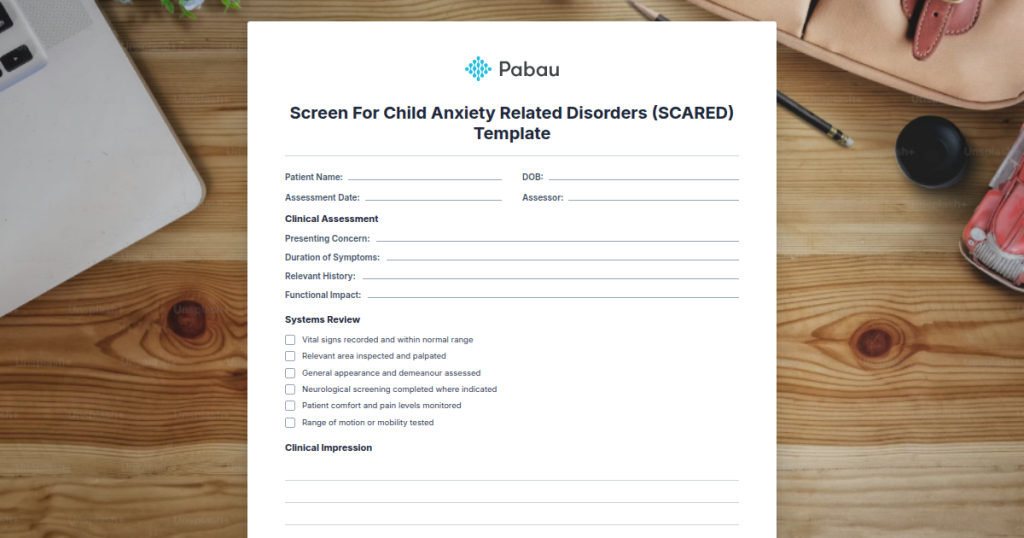
Download Your Free Screen For Child Anxiety Related Disorders (SCARED) Template Screen for Child Anxiety Related Disorders (SCARED) A validated 41-item self-report screening tool designed for children and adolescents aged 8-18 years to assess anxiety disorder symptoms across five domains: panic/somatic, generalised anxiety, separation anxiety, social phobia, and school avoidance. Download template What is a […]
Psychopath Spectrum Test Template
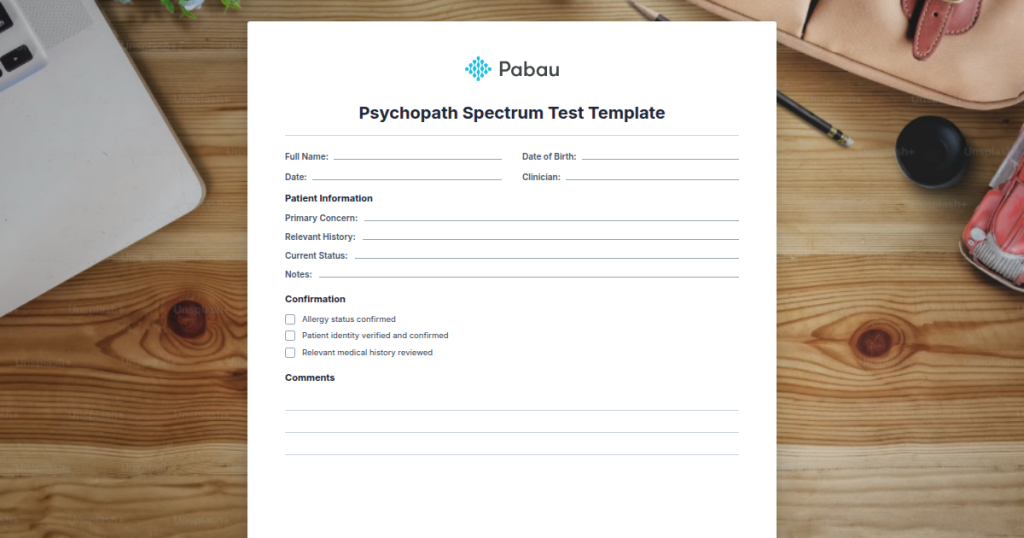
Mental health practitioners screening for personality disorders need reliable, structured assessment tools. The psychopath spectrum test template provides clinicians with an evidence-informed framework for evaluating psychopathic traits and antisocial personality characteristics across a continuum. Unlike categorical diagnostic systems, a psychopath spectrum test template recognises that these traits exist along a spectrum of severity, complexity, and […]
Pollyanna Syndrome: Excessive Optimism in Psychology
Pollyanna syndrome represents a pattern of excessive optimism that extends beyond healthy positive thinking into territory where it actively interferes with decision-making, risk assessment, and reality testing. Named after Eleanor Porter’s 1913 novel character who maintained relentless cheerfulness regardless of circumstances, the term describes a psychological pattern where individuals systematically discount or deny negative information, […]
Cannon-Bard Theory: Emotion & Physiology Explained

When a patient reports chest tightness during panic, does the physical sensation trigger fear, or do both arise at once? The Cannon-Bard theory of emotion, developed in the 1920s by physiologist Walter Cannon and his student Philip Bard, proposed a radical answer: emotional experience and physiological arousal happen simultaneously through independent neural pathways. This challenged […]
MoCA Assessment: A Clinical Guide for Practitioners
The MoCA assessment – short for the Montreal Cognitive Assessment – is one of the most widely used cognitive screening instruments in clinical practice today. Developed by Dr Ziad Nasreddine in 1996, it assesses six cognitive domains in approximately 10-15 minutes, giving clinicians a structured, validated starting point for identifying patients who may need further […]
MMPI-2: Clinical Scales, Validity Scales, and Interpretation Guide
The MMPI-2 sits at the centre of clinical personality assessment in ways few instruments can match. Developed by Starke Hathaway and J. Charnley McKinley at the University of Minnesota, it was first published in 1940 and underwent a major restandardisation in 1989 – producing the MMPI-2 that mental health clinicians rely on today. For psychologists, […]
Montreal Cognitive Assessment Test: Complete Clinical Guide
Most cognitive screening tools were designed to catch moderate-to-severe dementia. The Montreal Cognitive Assessment test was built to catch what those tools miss. Developed by Dr Ziad Nasreddine in 1996 and validated in a landmark 2005 study published in the Journal of the American Geriatrics Society, the Montreal Cognitive Assessment test identifies mild cognitive impairment […]
Biopsychosocial Assessment: A Complete Clinical Guide
A patient presents with chronic lower back pain. The scans are normal, the physical examination is unremarkable, but they have missed six appointments in two months. Without a biopsychosocial assessment, the clinical picture stays incomplete. Stress at work, social isolation, and a prior history of depression may all be driving the presentation – none of […]
Highly Sensitive Person: Traits, Therapy and Clinical Guidance
A highly sensitive person experiences the world with a depth of processing that most people simply do not share. Noise, social dynamics, emotional atmosphere, lighting – each of these registers more intensely for someone high in Sensory Processing Sensitivity (SPS). The term “highly sensitive person” was coined by psychologist Dr Elaine Aron in the early […]
Cognitive Triangle
What Is the Cognitive Triangle in CBT? The cognitive triangle is one of the most clinically useful frameworks in mental health practice. Developed by psychiatrist Aaron Beck in the 1960s as part of his cognitive therapy model for depression, it illustrates how thoughts, feelings, and behaviours are not independent states – they are continuously influencing […]