7 day gout diet plan PDF: free low-purine template
Download your free 7-day gout diet plan A two-page plan with patient fields, foo...

6
Last Updated: Nov 13, 2026
The usual HSP meaning is highly sensitive person, someone high in sensory processing sensitivity, a temperament trait rather than a diagnosis. Elaine and Arthur Aron defined the trait in 1997, and a 2019 critical review of sensory processing sensitivity calls it common, heritable and evolutionarily conserved.
Seeing HSP on a chart or referral instead? There it usually means Henoch-Schönlein purpura, and our guide to the HSP medical abbreviation covers it with the ICD-10 codes. This page covers the trait: what it looks like, how common it is and how to support it in practice.

HSP means highly sensitive person, someone high in sensory processing sensitivity, a trait Elaine and Arthur Aron defined in 1997.
Being an HSP is not a diagnosis, and the 27-item HSP Scale measures how sensitive a person is rather than screening for a disorder.
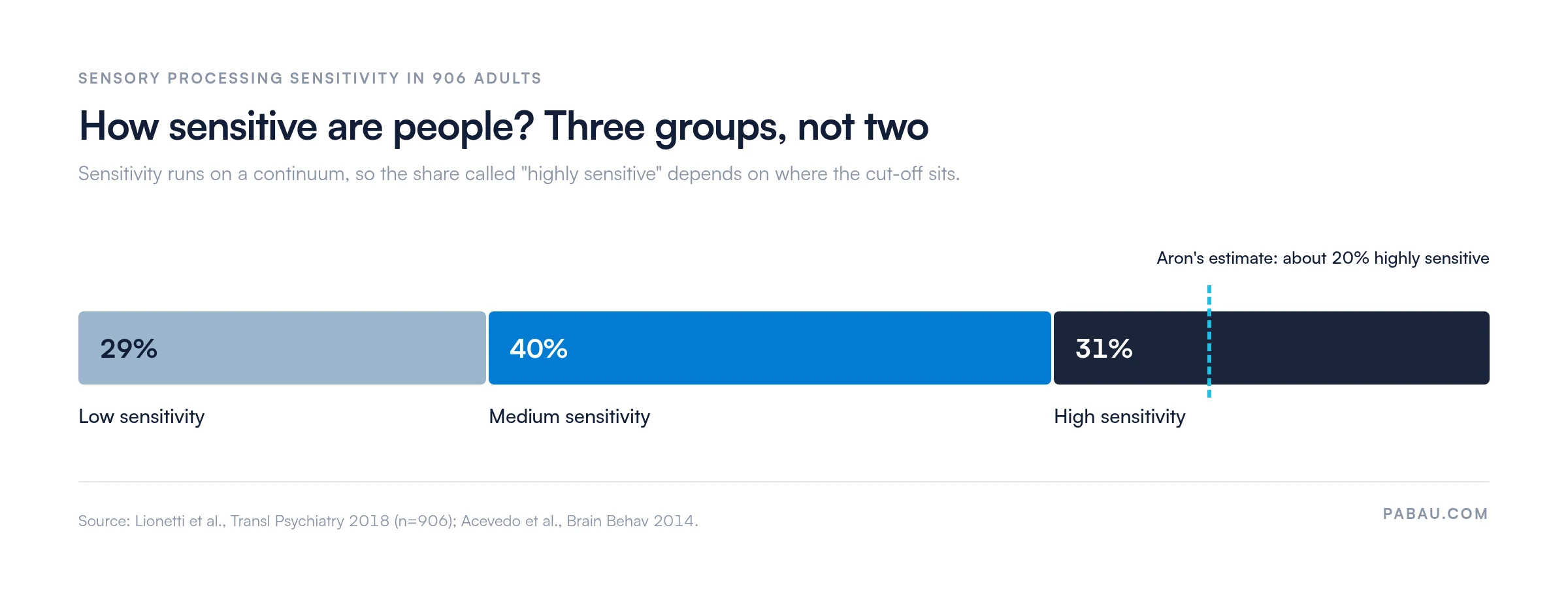
Prevalence depends on the cut-off: Aron’s group puts it near 20%, while a 906-adult study placed 31% in its high-sensitivity group.
An fMRI study linked higher HSP Scale scores to more activity in brain regions tied to awareness, empathy and action planning.
High sensitivity can look like anxiety, ADHD or autism, so a differential assessment comes before any label.
A highly sensitive person processes sensory and emotional information more deeply than most people do. Psychologists call the trait sensory processing sensitivity (SPS). Elaine Aron popularized the term in her 1996 book The Highly Sensitive Person, and Aron and Aron’s 1997 paper introduced the 27-item HSP Scale.
One fMRI study notes that the trait appears in roughly 20% of humans and in over 100 other species. That spread points to an evolutionary strategy rather than a pathology.
Aron summarizes the trait with the acronym DOES:
In that fMRI study, higher HSP Scale scores went with more activity in brain regions tied to awareness, empathy and action planning. The sample held only 18 adults, so treat the finding as a lead rather than a settled mechanism.
Prevalence depends on the cut-off. Aron’s work puts highly sensitive people at about 20% of the population. A 2018 study of 906 adults found three groups instead of two: 29% low, 40% medium and 31% high sensitivity. Both figures come from self-report scales, so read them as estimates.
Highly sensitive person traits cluster into two domains: emotional and social processing, and sensory and environmental responsiveness. Both come from the same depth of processing, but they show up differently in daily life and in the consulting room.
A highly sensitive person typically feels emotions more intensely and for longer than average. Joy runs richer, disappointment lands harder, and other people’s distress can feel almost physical.
In therapy, these patients often read relational dynamics closely. They may notice a therapist’s hesitation, read between the lines of clinical language and feel unsettled by sudden changes in routine or tone.
This social awareness cuts both ways. Many highly sensitive people are attentive listeners, creative and loyal in close relationships. The same attunement leaves them prone to emotional exhaustion where conflict, ambiguity or criticism come often.
Highly sensitive people also report sharper awareness of sensory input: bright lighting, background noise, strong smells, temperature and texture. A busy waiting room, harsh fluorescent light or an intake with too many demands at once can all trigger overstimulation. That shapes how a practice should design its spaces and workflows.
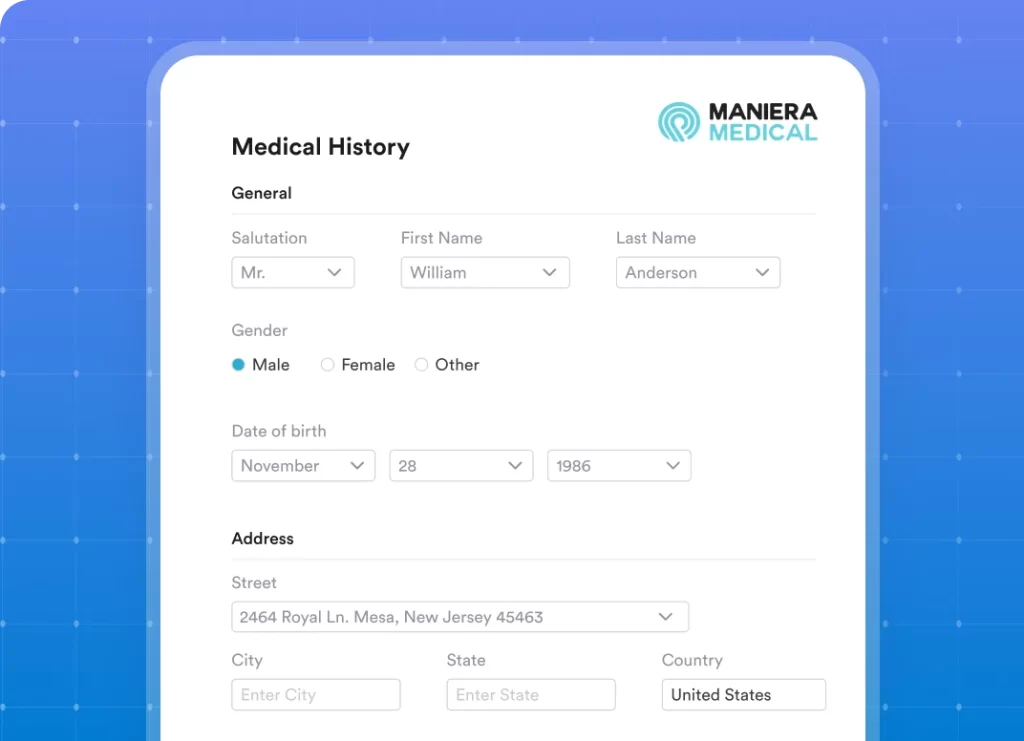
Digital intake forms and a patient portal let highly sensitive patients finish pre-visit paperwork in their own surroundings. They skip the sensory load of arriving somewhere new and being handed a clipboard straight away.
No, HSP is not a diagnosis. No diagnostic manual lists high sensory processing sensitivity as a disorder, and the HSP Scale measures a trait rather than screening for one. A practitioner who frames high SPS as pathology risks misdiagnosis, the wrong treatment pathway and a strained therapeutic relationship.
The American Psychological Association’s personality resources describe personality as enduring characteristics that differ from person to person. SPS fits that framework as a dimensional trait. Lionetti’s team found SPS scores continuous and normally distributed.
High SPS can still coexist with diagnosed conditions. Anxiety disorders, ADHD, autism and sensory processing disorder can all resemble the highly sensitive person profile on the surface. Careful differential assessment matters, because generalized anxiety disorder needs a different pathway than distress driven mainly by overstimulation.
When you assess a patient who identifies as a highly sensitive person, record their environmental and relational triggers in their own words. That record sharpens the differential assessment and keeps SPS apart from anxiety or sensory processing disorder in your notes.
Context shapes how high SPS feels day to day. A highly sensitive person in a calm, autonomous setting may show few signs of distress. In a loud, demanding or unpredictable setting, the same person may show fatigue, withdrawal, irritability or emotional flooding. Those responses reflect a mismatch with the environment rather than the trait itself.
Open-plan offices, back-to-back meetings, frequent interruptions and heavy emotional labor are commonly reported stressors for highly sensitive people. Clear structure, meaningful work, supportive colleagues and manageable sensory demands tend to help. Burnout risk climbs when workload and surroundings clash with the trait.
For clinicians, the trait is worth exploring when therapist burnout signs appear. A highly sensitive clinician in a high-throughput, emotionally intense setting faces a kind of depletion that generic burnout advice may miss.
Highly sensitive people tend to value depth over breadth, with a few close connections rather than wide networks. Many need predictability and emotional safety, so conflict or perceived rejection can hit them harder. The same processing depth makes them attentive, caring partners, friends and colleagues.
In therapy, these patients often invest deeply in the alliance and notice ruptures quickly. Transparency and consistency from the therapist help them stay engaged.
Anxiety and high SPS are easy to mix up. They share surface features such as heightened reactivity, avoidance of overwhelming situations and emotional intensity. Their mechanisms differ, and so do the right responses.
Anxiety involves fear-based appraisals, avoidance and physiological arousal out of proportion to the threat. It has established diagnostic criteria and responds to evidence-based treatment, including cognitive behavioral therapy. An anxiety tracker kept over a few weeks can show whether fear-based patterns persist outside overwhelming settings.
High SPS does not rest on distorted threat appraisal. A highly sensitive person reacts strongly because they take in more detail, while their threat detection works as expected. Settings that would tire anyone become hard to bear for them.
The difference changes treatment. Exposure-based CBT applied to an overstimulation response may feel shaming if it isn’t paced to the person. For a highly sensitive person, the aim is environments, habits and self-understanding that let the trait work as an asset.
No single therapy suits every highly sensitive person, so assess each patient before choosing one. A few principles cut across modalities: pacing, relational attunement, sensory awareness and self-compassion.
Cognitive behavioral therapy (CBT): Adapted CBT can help when it targets negative self-evaluation about sensitivity rather than the sensitivity itself. The key adaptation is framing. Help patients see the trait as neutral or positive while they build strategies for high-stimulation situations.
Person-centered therapy: Unconditional positive regard and relational depth match what highly sensitive people say they value in therapy. A warm, nonjudgmental and consistent therapist often earns steadier engagement from these patients than a technique-led approach.
Mindfulness-based stress reduction (MBSR): The US National Center for Complementary and Integrative Health reviews the evidence on mindfulness for stress, anxiety and related outcomes. One small 2010 study of 47 highly sensitive people found an eight-week MBSR course lowered stress and social anxiety. Treat it as early evidence. The course also offers tools for noticing intense inner experiences without being swept away by them.
Outside formal therapy, highly sensitive people commonly describe three coping strategies:
Psychoeducation about why they process the world differently is a low-cost first step. Short materials can fit into pre- and post-session workflows without adding much clinical time.
Create a separate appointment type for first consultations with highly sensitive patients, and allow 60 minutes instead of 45. The extra time eases the pressure that can shut down disclosure and shows that their pace matters. Track how many move from the first session to ongoing care to judge whether the format works.
Clinicians meet highly sensitive people in every specialty, not only in mental health. A physical therapist, primary care physician or aesthetic practitioner may treat patients who find exam rooms, clinical language and procedural uncertainty overwhelming. Three principles apply across settings.
Pacing matters more than efficiency. A rushed intake or consultation can trigger a stress response in a highly sensitive person. That response can affect how well they absorb information, report symptoms or give considered consent. Clear preparation before the visit lowers the load in the room.
Environment is part of the intervention. Noise, crowding, television and harsh lighting in a waiting room cause distress before the consultation starts. A full redesign isn’t needed. Quieter sound, better seating and the option to wait elsewhere or be called by text can all lower arousal.
Language shapes the therapeutic alliance. The words clinicians choose to describe a patient’s experience carry weight. Calling a highly sensitive person’s reactions “overreacting” or “too emotional”, even informally, damages trust that is hard to rebuild. Neutral, descriptive language that mirrors the patient’s own framing builds a stronger working alliance.
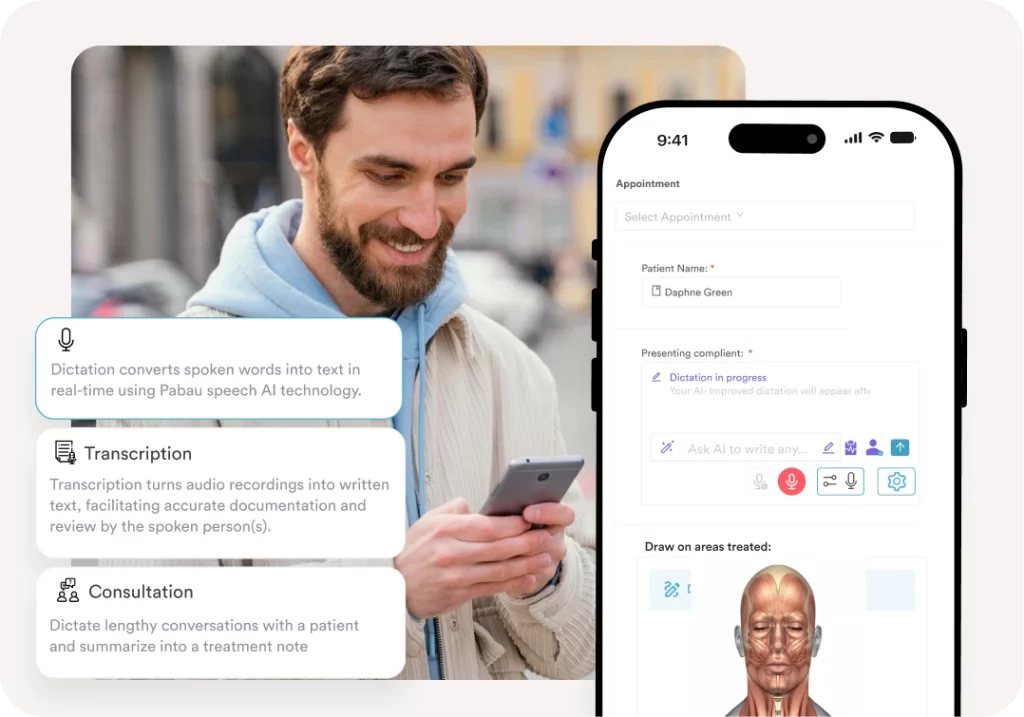
Therapy and psychology practices use Pabau to let highly sensitive patients prepare before they arrive. Through the patient portal they fill in intake forms at home, book or reschedule within your policy and pay invoices without a front-desk exchange.
The calendar lets you set a longer appointment type for first sessions, so pacing is built into the schedule.
The Measures tab charts scored measures such as GAD-7 over time. Across sessions, that record helps you tell trait sensitivity apart from a developing anxiety disorder.

Pabau’s patient portal, intake forms and outcome measures let highly sensitive patients prepare at their own pace while you track how they progress.

Treat HSP as a description of how a patient processes the world, not as a condition to code. Ask what overwhelms them, adjust pacing and environment, and screen for anxiety, ADHD or autism when distress goes beyond the trait.
The changes are small: home intake, longer first sessions and a quiet way to check in. They cost little, and they make the first visit easier for a patient who notices every detail.
Book a demo to see how Pabau helps therapy practices give highly sensitive patients a calmer path from booking to follow-up.

Want a structured way to explore temperament? Temperament test template gives you a ready-made form for mapping a patient’s temperament before you discuss sensitivity.
Is it sensitivity or an anxiety disorder? Unspecified anxiety disorder explains when anxiety symptoms meet diagnostic criteria and how the code is used.
Measuring how strongly a patient picks up on others’ emotions? Empathy test offers a scored questionnaire for the empathy side of the highly sensitive profile.
Need a full differential assessment? Psychiatric evaluation template walks through each part of a comprehensive psychiatric evaluation, from intake onward.
In psychology, HSP means highly sensitive person. Psychologist Elaine Aron coined the term for people high in sensory processing sensitivity (SPS). SPS is a personality trait marked by deeper processing of information, stronger sensory awareness and greater emotional reactivity. In medical charts, HSP usually means Henoch-Schönlein purpura instead.
No. Being a highly sensitive person is a personality trait rather than a diagnosis, and no diagnostic manual lists it as a disorder. HSP can coexist with diagnosed conditions such as anxiety disorders or ADHD. The trait itself calls for understanding and practical support rather than clinical treatment.
Common signs include processing situations deeply before acting and becoming overstimulated by noise, crowds or bright light. Many highly sensitive people also have a rich inner emotional life, feel strongly affected by other people’s moods and need time to decompress. These signs map onto the four DOES dimensions in Elaine Aron’s work.
The key difference is the mechanism. Anxiety involves fear-based appraisals and a threat response out of proportion to the situation. A highly sensitive person reacts strongly because they take in more detail and nuance. Careful differential assessment matters, because the two call for different interventions.
Yes. Therapy adapted for highly sensitive people, including person-centered therapy, adapted CBT and mindfulness-based approaches, can help. The most important factors are a strong therapeutic relationship, the right pacing and a framework that treats sensitivity as a trait to work with. Psychoeducation about SPS is a useful first step for many patients.
Estimates run from about 20% to 31% of adults, depending on the cut-off. A 2018 study of 906 adults found 31% in a high-sensitivity group, 40% medium and 29% low.