

Best Hair Transplant Clinic Software in the US (2026 Guide)
Compare five practice management platforms built for US hair transplant clinics ...

March 25, 2026


Buy now, pay later is now available in Pabau

Pabau leads with customizable EMR templates for FUE and FUT procedures, configurable graft tracking via custom form builders, and before/after photo timelines
PatientNow provides cosmetic surgery-specific EMR with RxPhoto integration for standardized before/after documentation and patient financing tools
DrChrono delivers iPad-native clinical documentation with customizable forms and dual insurance/cash-pay billing at transparent per-provider pricing
US hair restoration clinics need HIPAA-compliant software with multi-location scheduling, procedure-specific charting, and insurance coordination
All-in-one platforms like Pabau consolidate booking, EMR, billing, and marketing into a single system, reducing vendor management complexity and total software costs
Hair restoration practices face unique operational challenges that generic healthcare software cannot address. Unlike standard dermatology or medical spa workflows, hair transplant clinics must track graft counts per donor zone, document FUE versus FUT technique variations, and manage multi-stage treatment plans spanning 12-18 months. The software you choose directly impacts surgical scheduling accuracy, patient documentation quality, and revenue cycle efficiency.
This analysis evaluates five practice management platforms used by US hair transplant clinics in 2026. Each system is assessed against procedure-specific requirements: automated graft calculators, donor area mapping tools, before/after photo standardization, and cash-pay billing workflows optimized for cosmetic surgery. The comparison prioritises features that support FUE and FUT procedures rather than general aesthetic treatments.
Selecting appropriate clinic software affects three operational areas. First, clinical documentation determines whether your surgical notes meet state medical board standards for informed consent and procedural detail. Second, scheduling logic impacts room utilization when managing 4-6 hour FUE sessions versus shorter follow-up appointments. Third, payment processing architecture influences how you collect deposits, structure payment plans, and coordinate with insurance carriers for medically necessary reconstruction cases.
This matrix compares platforms on procedure-specific functionality rather than generic practice management features. Hair restoration clinics require different workflows than general dermatology or medical spa operations.
Pabau functions as an all-in-one clinic operating system designed for practices performing surgical and non-surgical hair restoration procedures. The platform supports FUE extraction workflows, FUT strip harvesting documentation, and PRP injection protocols within a single EMR. Unlike spa-focused software, Pabau’s clinical charting accommodates multi-stage treatment plans where initial consultations, surgical sessions, and 12-month follow-ups require different documentation templates.
Hair transplant clinics using Pabau document donor area density assessments, graft survival rates, and post-operative healing progression through customizable form builders. The system tracks procedure-specific metrics that generic practice management platforms omit: grafts per follicular unit, extraction site patterns, and recipient area coverage calculations. This clinical depth supports both cash-pay cosmetic cases and insurance-covered medical reconstruction procedures.
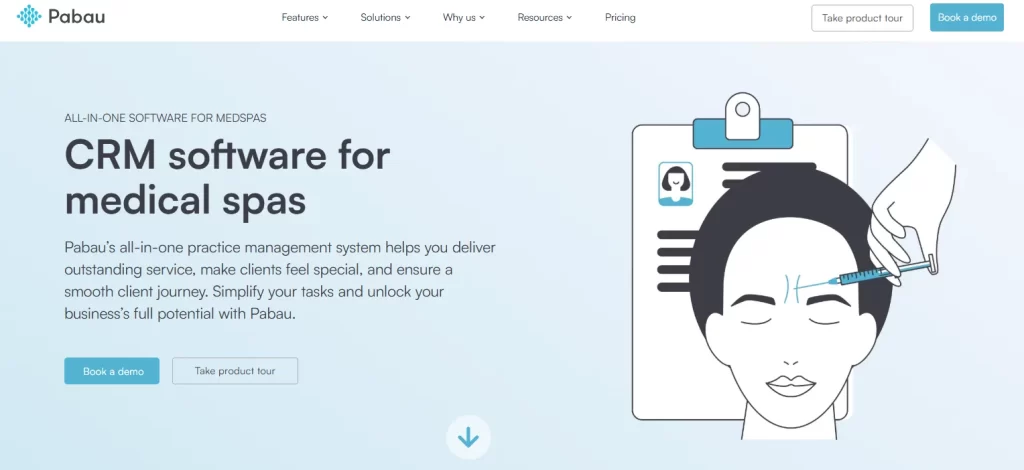
The platform integrates scheduling, clinical documentation, payment processing, and marketing automation. Hair restoration practices operate this unified system rather than connecting separate booking software, EMR, billing tools, and CRM platforms. This architectural approach reduces the technical complexity of managing multiple vendor relationships while centralising patient data in one HIPAA-compliant database.

Pabau offers three pricing tiers starting at $62/month for the Essential plan. The Plus plan at $93/month adds advanced automations, loyalty programs, and enhanced reporting. Enterprise pricing is custom for multi-location practices requiring dedicated support and custom integrations.
Pabau holds a 4.7 out of 5 rating on Capterra based on 600+ reviews, with users praising the all-in-one platform approach and customizable clinical workflows. G2 reviewers highlight the before/after photo management and multi-location capabilities as standout features for aesthetic and surgical practices.

See how Pabau's all-in-one platform handles FUE/FUT documentation, graft tracking, and cash-pay billing workflows specific to hair transplant clinics.

AestheticsPro positions itself as aesthetic-specific practice management software with emphasis on photo documentation and electronic medical records. The platform serves plastic surgery and dermatology practices where before/after imagery forms the clinical foundation for patient consultations and treatment planning. Hair transplant clinics using AestheticsPro benefit from structured photo management but must adapt workflows designed for facial aesthetics to scalp-based procedures.
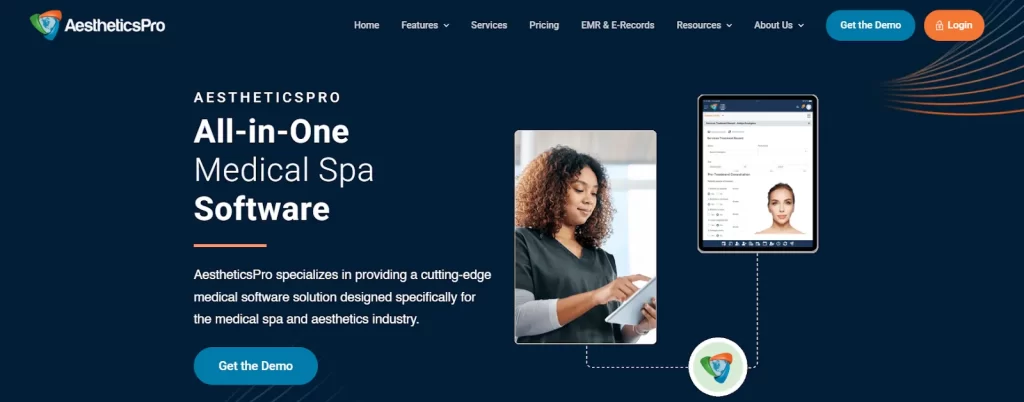
The system provides electronic prescribing functionality integrated with pharmacy networks, supporting post-operative medication management for surgical hair restoration. Clinical charting templates accommodate procedure notes, though hair-specific fields for graft counts and donor area assessment require custom configuration. Practices appreciate the photo timeline features that track healing progression across multiple follow-up appointments spanning 12-18 months.
AestheticsPro pricing starts at $160 per month for the base plan. Contact their sales team for quotes tailored to your practice size and feature requirements.
AestheticsPro holds a 4.4 out of 5 rating on Capterra based on 610+ reviews. Users highlight the photo documentation tools and aesthetic-specific EMR templates as key strengths. Some reviewers note that scheduling features could be more robust for practices managing complex surgical blocks.
PatientNow serves as a dedicated practice management and EMR platform built specifically for cosmetic surgery, plastic surgery, and medical aesthetics. The system integrates RxPhoto for standardized before/after photography, making it a strong fit for hair transplant clinics where visual documentation drives surgical planning and patient consultations. Unlike general-purpose EMR systems, PatientNow’s architecture assumes cash-pay cosmetic workflows from the ground up.
Hair transplant practices benefit from PatientNow’s procedure-specific documentation capabilities, including surgical note templates that accommodate graft counts, donor area assessments, and technique variations. The integrated CareCredit and Cherry financing connections streamline patient payment processing for procedures averaging $8,000-$15,000. The platform’s patient portal supports digital intake forms, consent management, and post-operative instruction delivery.
PatientNow uses custom pricing based on practice size and feature requirements. Contact their sales team for a quote tailored to your hair transplant clinic’s needs.
PatientNow holds a 4.0 out of 5 rating on Capterra based on 280+ reviews. Users praise the RxPhoto integration and cosmetic surgery focus, though some note that initial setup requires dedicated implementation time. G2 reviewers rate the platform similarly, highlighting the CRM and patient financing tools as standout features for cosmetic practices.
Nextech delivers enterprise-grade practice management software designed for multi-provider plastic surgery and dermatology groups. The cloud-based EMR accommodates complex surgical workflows including hair restoration procedures, though the platform’s breadth targets practices performing diverse surgical specialties rather than focusing exclusively on hair transplant operations. Larger clinics benefit from Nextech’s robust revenue cycle management and advanced analytics capabilities that smaller practices may find excessive.

The integrated CRM tracks patient acquisition channels, referral sources, and marketing campaign effectiveness across multiple service lines. Hair restoration clinics operating as part of larger aesthetic practices use these analytics to measure procedure-specific profitability and patient lifetime value. Nextech’s architecture supports practices performing hair transplants alongside facial aesthetics, body contouring, and reconstructive procedures within unified clinical and financial systems.
Nextech pricing is available through their sales team. Contact them for enterprise-level practice quotes.
Nextech holds a 4.0 out of 5 rating on Capterra based on 165+ reviews. Users praise the enterprise scalability and revenue cycle management capabilities. Some reviewers note that the platform’s breadth introduces complexity that smaller practices may find challenging to navigate without dedicated IT support.
DrChrono provides a cloud-based EHR, practice management, and medical billing platform with a distinctive iPad-first design philosophy. The system serves medical practices across specialties, with particular strength in enabling mobile clinical documentation at the point of care. Hair transplant clinics benefit from DrChrono’s customizable medical forms, built-in e-prescribing, and native iPad app that supports chairside documentation during surgical procedures.
The platform’s open API architecture enables integration with third-party tools for specialized needs like before/after photography and graft tracking. DrChrono’s medical billing module handles both insurance claims and cash-pay processing, making it suitable for hair restoration practices managing a mix of cosmetic and medically necessary reconstruction cases. The OnPatient patient portal provides digital intake, appointment scheduling, and secure messaging.
DrChrono offers tiered pricing starting at $299 per provider per month for the base plan, with higher tiers adding advanced features. Contact their sales team for hair transplant practice-specific quotes.
DrChrono holds a 4.4 out of 5 rating on Capterra based on 110+ reviews, with users highlighting the iPad-native experience and customizable forms. G2 reviewers rate the platform 4.3 out of 5, praising the modern interface and API flexibility. Some users note that customer support response times vary, particularly for complex billing configuration questions.
Selecting practice management software for hair restoration requires evaluating features against your specific operational model. Consider these decision criteria before committing to annual contracts or making upfront software investments.
Clinical documentation depth. Hair transplant procedures demand detailed surgical notes that generic EMR templates cannot accommodate. Evaluate whether the platform captures graft counts per follicular unit, donor area density measurements, extraction technique variations (FUE versus FUT), and recipient zone coverage calculations. Platforms lacking these fields force practitioners to maintain separate surgical logs, undermining the efficiency gains software should deliver. The digital forms and clinical charting capabilities must align with state medical board documentation standards for informed consent and procedural detail.
Scheduling architecture for surgical blocks. FUE procedures require 4-6 hour time blocks with equipment preparation, surgical assistant coordination, and post-operative room turnover. Software designed for 30-60 minute spa appointments cannot handle these complex scheduling requirements. Verify that the calendar system supports custom duration settings, resource allocation (surgical assistants, extraction tools, implantation instruments), and buffer time for pre-operative patient preparation. Multi-provider practices need simultaneous booking views across multiple treatment rooms to optimize facility utilization. Learn more about appointment scheduling designed for surgical practices.
Photo documentation workflows. Before/after photography forms the clinical foundation for patient consultations, surgical planning, and outcome assessment. Platforms must provide angle-standardized image capture, timeline-based organization spanning 12-18 month follow-up periods, and side-by-side comparison views. Generic photo upload features without structured workflows introduce inconsistency in image quality and viewing angles, reducing clinical utility. The system should integrate photos directly into patient records rather than requiring external storage and manual attachment. Consider platforms with before and after photo management built specifically for aesthetic procedures.
Cash-pay billing optimization. Most hair transplant procedures operate outside insurance networks as cosmetic services requiring cash payment. Software must handle deposit collection at consultation, multi-installment payment plans, and quote generation for procedures averaging $8,000-$15,000. Insurance-centric platforms optimized for claim submission provide minimal value for cash-pay practices. Evaluate payment processing fees, deposit automation capabilities, and financial reporting that tracks outstanding balances across patient cohorts. Explore payment processing designed for cosmetic surgery practices.
Multi-location coordination requirements. Practices operating 2+ facilities need centralized patient databases, unified pricing structures, and consolidated financial reporting. Location-specific scheduling must accommodate practitioner assignments while maintaining visibility into facility-level capacity utilization. Software that silos each location into separate databases creates operational friction and reporting complexity. Enterprise platforms like Pabau provide multi-location management with centralized control and location-specific operational flexibility.
Among the five platforms evaluated, Pabau delivers the widest operational coverage for hair transplant clinics through customizable clinical workflows, procedure-specific documentation templates, integrated photo management, and cash-pay billing architecture. The all-in-one approach reduces software costs by eliminating separate systems for scheduling, EMR, billing, and marketing while centralizing patient data in one HIPAA-compliant platform. Practices prioritizing hair transplant-specific functionality over generic practice management tools should evaluate Pabau’s surgical specialty capabilities.

Need standardized patient intake workflows? Hair Clinic CRM Software provides industry-specific practice management tools designed for follicular restoration procedures.
Looking to optimize surgical scheduling efficiency? Calendar Management Features explains how to configure multi-hour surgical blocks with resource allocation.
Want to understand cash-pay billing best practices? Medical Spa Payment Models compares deposit structures and installment plans for cosmetic procedures.
Hair transplant clinics require software that accommodates surgical procedure complexity rather than beauty service workflows. The five platforms evaluated each bring distinct strengths to hair restoration operations. Pabau delivers the deepest procedure-specific customization with all-in-one coverage starting at $62/month. PatientNow excels in cosmetic surgery photo documentation through RxPhoto integration. AestheticsPro provides strong aesthetic-focused EMR with e-prescribing capabilities. Nextech serves enterprise-scale multi-specialty groups. DrChrono offers iPad-native mobility with transparent per-provider pricing starting at $299/month.
Selection criteria should prioritise clinical documentation capabilities that capture graft counts, donor area assessments, and surgical technique variations. Scheduling systems must handle multi-hour surgical blocks with equipment preparation rather than short spa appointments. Payment processing should optimize cash-pay procedures with deposit collection and installment plans rather than insurance claim submission. Photo management requires timeline tracking and angle standardization rather than simple image uploads. According to the International Society of Hair Restoration Surgery, proper documentation standards support both clinical outcomes and regulatory compliance.
Practices operating as part of larger aesthetic or plastic surgery groups may find Nextech’s enterprise capabilities valuable for multi-specialty coordination. Solo practitioners and small clinics benefit more from Pabau’s balanced feature depth at accessible pricing, or DrChrono’s iPad-native workflows at a transparent per-provider cost. PatientNow suits practices prioritizing standardized photography and patient financing integration. AestheticsPro works well for clinics prioritizing photo documentation workflows with e-prescribing capabilities.
The American Academy of Dermatology emphasizes that electronic medical records must support the specific documentation requirements of dermatologic surgery including hair restoration procedures. Software selection directly impacts clinical workflow efficiency, regulatory compliance, and patient satisfaction through documentation quality and operational responsiveness. Evaluate platforms through hands-on demonstrations focused on surgical scheduling, graft tracking, photo management, and cash-pay billing rather than generic practice management features applicable to any healthcare specialty.
Hair transplant clinics require EMR templates that document graft counts, donor area density, extraction technique (FUE versus FUT), and recipient zone coverage. Before/after photo management with timeline tracking and angle standardization supports surgical planning and outcome assessment. Scheduling systems must handle 4-6 hour surgical blocks with equipment preparation and assistant coordination. Cash-pay billing workflows should process deposits, structure payment plans, and generate quotes for procedures averaging $8,000-$15,000. HIPAA-compliant patient databases maintain surgical notes, consent forms, and post-operative care protocols.
Hair restoration software requires procedure-specific clinical fields that generic EMR systems omit: grafts per follicular unit, donor area mapping coordinates, extraction site patterns, and recipient zone calculations. Photo documentation needs timeline-based organization spanning 12-18 month follow-up periods with standardized viewing angles. Scheduling must accommodate multi-hour surgical blocks rather than 15-30 minute consultation slots. Billing workflows optimize cash-pay cosmetic procedures with deposit collection rather than insurance claim submission. Generic EMR platforms force practitioners to maintain separate surgical logs and photo libraries, undermining efficiency gains.
Salon and spa platforms lack the medical documentation, surgical scheduling, and clinical charting capabilities required for hair restoration procedures. These systems optimize for short beauty services (30-90 minutes) rather than multi-hour surgical blocks requiring equipment preparation and post-operative monitoring. They provide no EMR functionality, consent form management, or HIPAA-compliant medical record keeping. Photo management features, when present, support retail product results rather than clinical before/after documentation with standardized angles and timeline tracking. Hair transplant clinics need medical-grade practice management platforms designed for surgical specialties, such as Pabau, PatientNow, AestheticsPro, Nextech, or DrChrono.
Hair restoration clinic software pricing varies based on practice size, feature requirements, and implementation complexity. All-in-one platforms like Pabau start at $62/month (Essential plan) with Plus at $93/month and Enterprise at custom pricing. DrChrono offers transparent per-provider pricing from $299/month. AestheticsPro starts at $160/month. Enterprise systems like Nextech and cosmetic-focused platforms like PatientNow use custom pricing. Implementation expenses include data migration from existing systems, staff training, and workflow customization. Request detailed quotes from 2-3 vendors comparing total cost of ownership across feature sets relevant to hair transplant operations.
Implementation timelines range from 2-8 weeks depending on system complexity and data migration requirements. Simple scheduling platforms deploy within 2-3 weeks with minimal configuration. All-in-one systems like Pabau require 4-6 weeks for form customization, automation setup, staff training, and historical data migration. Enterprise platforms like Nextech may need 6-8 weeks for multi-location coordination and integration with existing billing systems. Critical factors include patient database size, custom form requirements, staff technical proficiency, and vendor implementation support quality. Plan for a 30-day parallel operation period where old and new systems run simultaneously before complete cutover.
Integration capabilities vary significantly across platforms. All-in-one systems like Pabau include native billing functionality eliminating the need for separate accounting software. Enterprise platforms like Nextech provide API connections to QuickBooks, Xero, and other accounting systems for financial data synchronization. Many platforms export patient payment data through CSV files for manual import into billing systems. Evaluate integration requirements based on your current financial workflows: practices using dedicated accounting teams may prefer API-level integration, while solo practitioners benefit from unified billing within the practice management system. HIPAA compliance requirements restrict which data elements can transfer between systems.