Mental Health
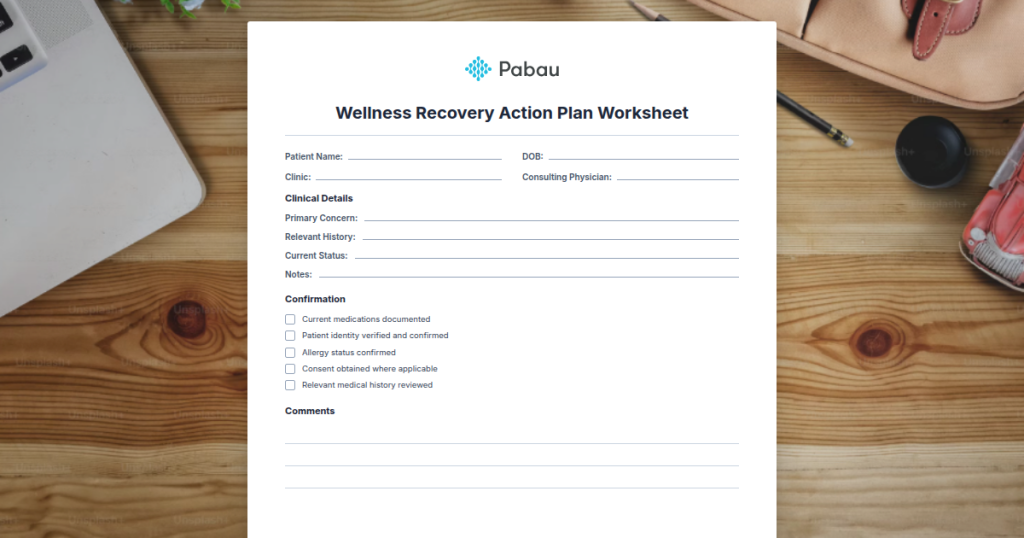
Wellness Recovery Action Plan Worksheet
Download Your Free Wellness Recovery Action Plan Worksheet Wellness Recovery Act...

May 5, 2026


Buy now, pay later is now available in Pabau

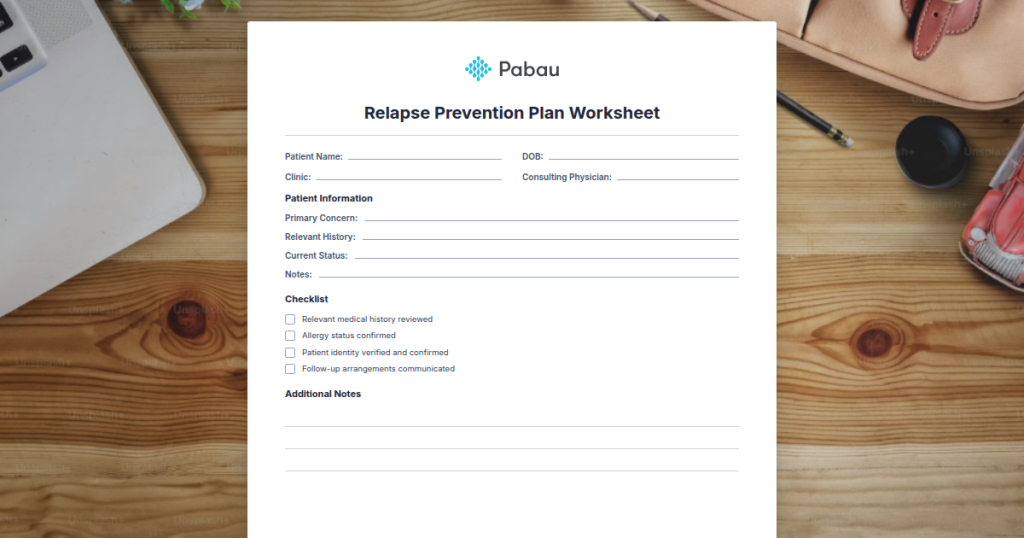
A relapse prevention plan worksheet is a clinical assessment and intervention tool that helps patients identify personal triggers, develop targeted coping strategies, and build accountability through structured planning.
The three stages of relapse (emotional, mental, and physical) are recognisable through specific warning signs-early identification at the emotional stage offers the greatest opportunity for intervention success.
High-risk situations involving stress, social pressure, negative emotions, and environmental cues are the primary relapse triggers across both substance use and mental health recovery; proactive planning for these moments significantly improves recovery outcomes.
Pabau’s digital forms and Pabau Scribe support clinicians in streamlining relapse prevention planning documentation, automating treatment notes, and tracking patient progress over time within an integrated clinical workflow.
A comprehensive clinical tool for identifying personal triggers, developing coping strategies, documenting support networks, and creating actionable relapse prevention plans for patients in recovery from substance use or mental health conditions.
Download templateA relapse prevention plan worksheet is a structured clinical tool that helps patients and clinicians collaboratively identify personal vulnerabilities to relapse, develop targeted coping responses, and establish concrete recovery action steps. The worksheet functions as both an assessment instrument and an ongoing therapeutic intervention for individuals managing substance use disorders, mental health conditions, or behavioral challenges. Grounded in the evidence-based Marlatt and Gordon cognitive-behavioral model of relapse prevention, this tool transforms abstract recovery goals into specific, measurable responses to high-risk situations. Clinically,this tool serves multiple purposes: it documents the patient’s understanding of their recovery process, clarifies warning signs before relapse occurs, and creates accountability through a written contract between patient and clinician.
From a legal and regulatory perspective, a completed the worksheet demonstrates thorough clinical assessment aligned with DSM-5 treatment planning standards and supports HIPAA-compliant documentation of substance abuse or mental health treatment. Professional licensing boards in addictions counseling, psychology, psychiatry, and social work recognize the plan as a standard component of evidence-based care. The worksheet also serves as a protective document-it demonstrates the clinician’s diligence in safety planning and risk assessment, reducing exposure to liability claims. Healthcare facilities implementing digital relapse prevention workflows through mental health practice management software can store completed worksheets securely and integrate them with clinical notes and patient outcomes tracking.
The the worksheet works best when completed collaboratively during a dedicated session or series of sessions focused on discharge or transition planning. Completingthe assessment typically takes 45-60 minutes depending on the patient’s complexity and history. The following five-step workflow guides clinicians through effective implementation:
The this tool is applicable across multiple healthcare settings and populations. Mental health practices treating depression, bipolar disorder, anxiety disorders, and trauma benefit from relapse prevention planning when patients are at risk of symptom escalation or self-harm. Addiction and substance abuse counselors use the worksheet as a core discharge document for all patients leaving residential treatment, outpatient programs, or intensive counseling. Psychiatrists and nurse practitioners prescribing medications for substance use disorders or mental health conditions integrate relapse prevention worksheets into medication management visits. Therapists working with patients in recovery from eating disorders, gambling, sexual compulsivity, or other behavioral addictions apply relapse prevention frameworks to these conditions as well.
Adolescent treatment programs use adapted versions of the worksheet that account for developmental stage, parental involvement, and school-based triggers. Correctional and forensic settings employ relapse prevention planning as part of reentry programs for individuals with histories of substance use or recidivism. Employee Assistance Programs (EAP) and occupational health clinics distribute relapse prevention worksheets to workers returning from substance abuse or mental health treatment, ensuring workplace recovery support. Regardless of specialty, any clinician documenting treatment for substance use or mental health recovery should incorporate relapse prevention planning to meet standard of care expectations and regulatory requirements.
A structured this tool strengthens recovery outcomes by creating specificity. Rather than vague advice to “avoid stress” or “stay away from old friends,” the worksheet captures the exact triggers, the patient’s personal warning signs, and the exact action they will take. Research on behavioral change confirms that specific, written plans dramatically increase follow-through compared to verbal advice alone. The worksheet also transitions responsibility to the patient-it is their document, written in their words, with their identified supports and their chosen coping strategies. This ownership model improves adherence.
Clinically, the completed the worksheet demonstrates thorough assessment and treatment planning. It documents that the clinician identified high-risk situations specific to this patient, educated them on relapse stages, verified understanding, and created an actionable safety plan. This level of documentation supports liability protection and meets regulatory scrutiny from HIPAA compliance audits, state licensing boards, and accreditation bodies like CARF or The Joint Commission. Patients and families also report that the assessment increases confidence in recovery-it transforms an abstract fear of relapse into a concrete, manageable action plan. When a high-risk moment arrives, the patient has the worksheet to reference rather than relying on memory or impulse.
The three-stage model of relapse is widely accepted across addiction medicine and mental health treatment. Emotional relapse is the earliest stage, characterised by mood shifts, social isolation, poor sleep, appetite changes, and neglect of self-care or therapy appointments. The patient is not consciously thinking about relapsing, but their emotional state is deteriorating. Early intervention at this stage is most effective. Mental relapse follows, in which the patient begins conscious or unconscious planning around relapse: thinking about old friends or environments, minimising the severity of past use, testing boundaries (e.g., “I can just have one drink”), or fantasising about relapse. Physical relapse is the final stage-actual substance use, binge eating, self-harm, or other acting out. Prevention is possible at any stage, but early intervention at emotional relapse offers the highest success rate and lowest treatment resource cost.
Personal warning signs are idiosyncratic. One patient’s emotional relapse might manifest as withdrawal and insomnia; another’s might be irritability and increased spending. The document explicitly asks the patient to identify their own warning sign constellation. This personalisation is critical-generic warning sign lists in educational materials are less effective than self-identified patterns. During review sessions, ask the patient: “What did you notice about yourself the day before you relapsed last time?” and “What are you doing differently now that tells you you’re heading in the wrong direction?” Document these verbatim observations in the worksheet for future reference.
High-risk situations are contexts in which relapse risk significantly increases. Common categories include stress (financial strain, relationship conflict, job loss), social pressure (gatherings where substance use occurs, peer influence), negative emotional states (sadness, anger, shame, boredom), and environmental cues (passing former drug use location, seeing a substance-using friend). Craving research demonstrates that cravings typically peak within 20-30 minutes and then decline if the person does not act on them-this is why coping strategies built into the plan focus on time-buying actions (call someone, exercise, shower, change environment) to outlast the craving window.
The this tool includes a high-risk situation inventory where patients rate multiple scenarios on likelihood and severity. For a patient in alcohol recovery, common high-risk situations might include social events with drinking, stressful work situations, evening boredom, and encounters with former drinking buddies. For a patient with major depression, high-risk situations might include seasonal changes, anniversary dates of losses, medication changes, or stressful life events. Explicitly plan for these situations rather than hoping they won’t arise. Include anticipatory planning: “If I run into my old drinking friends at the grocery store, I will: acknowledge them briefly, leave the store, call my sponsor.” Specific if-then plans bypass the decision-making paralysis that often precedes relapse.
Effective coping skills in relapse prevention fall into several categories. Immediate harm-reduction responses include urge surfing (sitting with the craving without acting, allowing it to naturally diminish), physical activity (15-minute walk reduces craving intensity), breathing or mindfulness (5-minute grounding exercise), environmental change (leave the location), and social contact (call a support person). Emotional regulation skills address underlying distress: mood journaling, emotion identification, assertiveness practice, or scheduled pleasant activities. Cognitive restructuring challenges relapse bargaining thoughts: “This one time won’t hurt” becomes “One use returns me to active addiction; I’ve seen it happen every time.” Lifestyle balance skills include sleep consistency, exercise routine, balanced nutrition, and meaningful social connection-these foundational activities reduce overall relapse vulnerability.
The the worksheet prompts clinicians to ensure the patient can identify at least one coping skill for each of their identified triggers and at least one skill they can access at any time (immediate, no prior planning required). Patients sometimes report “meditation helps me” without knowing how to meditate-be specific. Include the exact meditation app, YouTube video link, or class time. Vague coping skills are forgotten during crisis. Teach a coping skill during session, have the patient practice it in front of you, and document the specific version they will use at home.
A documented support system is non-negotiable in relapse prevention. The plan requires the patient to name specific individuals who will provide support during recovery challenges. These might include a therapist, psychiatrist, 12-step sponsor, family member, close friend, clergy, or peer support group facilitator. Each support contact should include name, relationship, phone number, what kind of help they provide (crisis call, daily check-in, attending meetings together), and availability. Some support people are available during business hours only; others provide 24-7 emergency support. Ensure at least one contact is always reachable.
Professional crisis resources (crisis text line, national substance abuse hotline, suicide prevention lifeline) should also be listed with phone numbers or text codes written in the worksheet. Many patients carry their this tool on their phone, but they will forget a number if it’s not written down. Verify the support system has been communicated to and agreed upon by support people. A support system that doesn’t know they’re on the list is ineffective. If appropriate, include a brief session where the clinician calls or meets with key supporters to clarify their role and availability.
Completed the worksheets are sensitive clinical documents containing personal triggers, substance use history, and support network details. They must be stored in compliance with HIPAA standards and state substance abuse confidentiality laws. Many practices store physical copies in locked files and digital copies in password-protected systems. If the patient takes a copy home, ensure it is clearly marked “confidential” and advise secure storage. If shared electronically, use encrypted email or secure patient portals rather than standard email.
Schedule the assessment review at regular intervals: 30 days, 90 days, and 180 days post-treatment, or every 6 months if the patient is in ongoing care. Update the worksheet as the patient’s life circumstances change, supports become available, or new triggers emerge. Track whether the patient used their relapse prevention coping strategies and what the outcome was. This feedback loop demonstrates whether the plan is practical and working. Integrate relapse prevention review into digital intake forms and progress notes so the worksheet is consistently available and updated across all clinicians working with the patient.
Relapse prevention planning is grounded in the cognitive-behavioral model originally established by Marlatt and Gordon (1985), with the three-stage relapse process (emotional, mental, physical) developed by Terence Gorski as part of the CENAPS model. According to SAMHSA, structured relapse prevention planning is a recommended component of comprehensive substance abuse treatment. The National Institute on Drug Abuse (NIDA) identifies trigger identification and coping strategy development as evidence-based relapse prevention practices. The American Psychological Association endorses relapse prevention frameworks across mental health and substance use treatment. Clinicians implementing the documents align with these standards and demonstrate adherence to best practices in their licensure and continuing education requirements.
Clinics embedding relapse prevention planning into discharge and ongoing care workflows improve patient outcomes and documentation quality. The Plans can be introduced during treatment intake to establish early expectations, completed during a dedicated discharge session, and reviewed at each follow-up visit. Digital integration through psychiatric assessment templates and automated clinical workflows ensures the worksheet is part of the permanent clinical record and accessible to all treating clinicians. Reminders in the patient’s chart alert clinicians to relapse prevention review dates so follow-up is not missed.
Clinics that have automated relapse prevention planning report improved patient adherence, reduced no-show rates, and lower re-admission rates for acute episodes. Practice management and clinical documentation systems supporting this integration provide templates, progress tracking, and outcome reporting, reducing clinician time while improving care consistency.

See how private GPs reduce admin, improve clinical safety, and increase revenue with Pabau.

A relapse prevention plan worksheet is a practical, evidence-based tool that transforms recovery intentions into concrete action steps. By identifying personal triggers, recognising relapse stages, and developing specific coping strategies, patients move from reactive crisis management to proactive prevention. Clinicians who use this worksheet systematically improve documentation quality, demonstrate adherence to standard of care, and support better patient outcomes. Whether you’re working in addiction treatment, mental health counseling, psychiatry, or general healthcare, integrating relapse prevention planning into your discharge and follow-up processes strengthens your clinical practice.
Download the free template above and introduce relapse prevention planning to your next patient transitioning to the recovery phase of treatment-the specificity and accountability this worksheet creates can be the difference between sustained recovery and relapse.
A comprehensive relapse prevention plan worksheet should include the three stages of relapse (emotional, mental, physical), personally identified high-risk situations and triggers specific to the patient, warning signs at each stage, concrete coping strategies for each trigger, a support network with names and contact information, potential consequences of relapse written in the patient’s words, and a schedule for reviewing and updating the plan.
Recommended review intervals are 30 days, 90 days, and 180 days following treatment completion. If the patient is in ongoing therapy or psychiatry care, review relapse prevention at least every 6 months or when significant life changes occur. Immediate reviews may be needed if the patient experiences a high-risk situation or relapse episode.
Relapse prevention planning applies to both substance use disorders and mental health conditions. It is used effectively for major depression, bipolar disorder, anxiety disorders, eating disorders, and trauma-related conditions. The framework of identifying triggers, recognising warning signs, and developing coping strategies transfers across recovery domains.
Document the patient’s refusal and the clinical rationale for recommending the worksheet. Explore barriers (shame, denial, cognitive impairment, lack of engagement) and address them. Sometimes a simpler, verbal version is acceptable as a starting point. Refusal does not negate the clinician’s responsibility to attempt discharge planning; documentation of the attempt protects the clinician and sets up accountability if the patient relapses.
Yes. Adaptations address cultural differences in family structure, spiritual beliefs, communication styles, and recovery pathways. Some cultures prioritize family-based support; others rely on religious or community institutions. Effective worksheets reflect the patient’s actual support system and values, not a generic Western model. Clinicians should adapt trigger language, coping skill options, and support network structure to match the patient’s cultural context.